
三区协同

Search documents
邢善萍在参加省政协十三届四次会议专题(联组)讨论时强调突出优势互补 强化系统联动 推动城乡区域协调发展迈出更大步伐
Shan Xi Ri Bao· 2026-01-29 00:48
Core Points - The discussion emphasized the importance of implementing the "dual-polar drive, multi-point support, and three-region collaboration" strategy to enhance urban-rural integration and promote coordinated regional development in Shaanxi [1][2] - Key leaders and committee members expressed their views on the center's work, highlighting the need for actionable measures based on their suggestions [1] Group 1 - The provincial leadership underscored the necessity of urban-rural coordinated development as a fundamental requirement for writing a new chapter in Shaanxi and becoming a model for the western region [2] - The strategy involves strengthening growth poles, key supports, and county-level foundations, with a focus on enhancing the roles of Xi'an and Yulin while accelerating the development of a county-based economic system [2] - The plan aims to promote collaboration among the three regions, enhance inter-regional synergy, and integrate urban and rural areas, while advancing technological innovation in Guanzhong, energy transformation in northern Shaanxi, and ecological upgrades in southern Shaanxi [2] Group 2 - There is a call for improving infrastructure, policy frameworks, and institutional mechanisms to meet the requirements of a unified national market, thereby optimizing resource allocation efficiency and maximizing benefits [2] - The discussion included participation from various provincial leaders, indicating a collaborative approach to addressing the outlined strategies and initiatives [3]
11项重点任务擘划陕西“十五五”蓝图
Zhong Guo Fa Zhan Wang· 2026-01-27 06:42
Core Viewpoint - The recent meeting of the Shaanxi Provincial Committee emphasizes the importance of high-quality development during the 14th Five-Year Plan period, outlining key tasks for the 15th Five-Year Plan to enhance industrial development, technological innovation, and regional coordination [1][4]. Industrial Development - The focus is on constructing a modern industrial system with Shaanxi characteristics, prioritizing the development of trillion-level industrial clusters in modern energy, advanced manufacturing, strategic emerging industries, cultural tourism, and modern services [2][3]. - The strategy includes promoting "chain-based" development and enhancing the integration of production services, with a strong emphasis on advanced manufacturing and the digital economy [2]. Innovation System - The proposal aims to enhance the overall effectiveness of the innovation system by advancing the construction of the Xi'an regional science and technology innovation center and optimizing the "Qin Chuang Yuan" innovation-driven platform [3]. Regional Coordination - The plan outlines a strategy for regional coordinated development, emphasizing the roles of Xi'an and Yulin as growth poles and promoting complementary development among the three major regions of Guanzhong, Shaanbei, and Shaannan [4]. Economic Integration - The proposal highlights the importance of integrating into the new development pattern, focusing on stimulating domestic demand and enhancing the role of Shaanxi as a strategic link in domestic and international dual circulation [5][6]. Social Welfare - The plan emphasizes improving the quality of life for residents, focusing on employment, income, education, healthcare, and social security, with specific measures to promote high-quality employment and increase residents' income levels [7]. Environmental Sustainability - The proposal includes measures to strengthen ecological security and promote green, low-carbon development, while also addressing pollution prevention and enhancing safety in key areas [8].
聚焦“内涵发展” 湖北襄阳城市更新显民生温度
Xin Lang Cai Jing· 2026-01-15 12:12
Core Viewpoint - The city of Xiangyang is focusing on urban renewal and development, transitioning from "expansion" to "in-depth development" during the 14th Five-Year Plan period, aiming to build a modern, innovative, and livable city [1] Group 1: Urban Development Strategy - Xiangyang will prioritize connotative development and optimize the layout of production, living, and ecological spaces through a coordinated approach [2] - The city plans to enhance its historical and industrial heritage by promoting the renewal of the ancient city and the protection of historical cultural districts [2] - Urban renewal projects will include the renovation of old factories, infrastructure upgrades in lagging areas, and the transformation of old residential communities [2] Group 2: Infrastructure and Technology - The renovation of old residential communities will be accompanied by upgrades to water and electricity infrastructure, with a focus on smart technologies like smart meters and IoT monitoring [2] - The city aims to ensure safety through a strategy of "retain, modify, demolish, build, and control" in urban renewal projects [2] Group 3: Cultural and Tourism Integration - The integration of livability and cultural tourism is emphasized, with plans to create high-quality living circles and enhance cultural scenes to drive tourism [4] - Suggestions include restoring historical buildings and creating immersive cultural experiences in the ancient city, while revitalizing industrial heritage in old urban areas [4] - The new urban area is envisioned as a modern window for high-end cultural and tourism experiences [4]

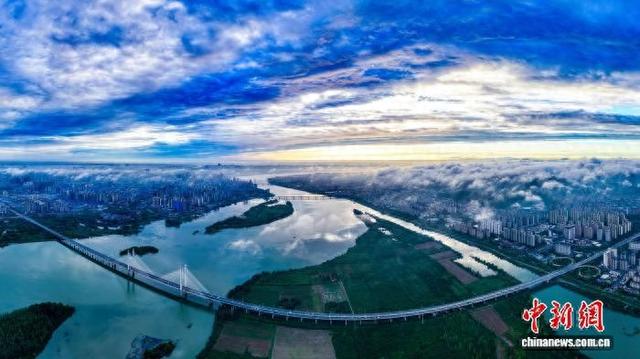
城市24小时 | 省长新年调研“第一站”,为何选这里?
Mei Ri Jing Ji Xin Wen· 2026-01-09 16:03
Core Insights - Shaanxi Province is focusing on developing Yulin as a growth engine to drive provincial development, emphasizing the importance of stabilizing growth and enhancing industrial chains [1][4] - The "14th Five-Year Plan" highlights a dual-polar development strategy with Xi'an and Yulin as key growth poles, aiming to reshape the economic landscape of Shaanxi [3][4] Economic Development - Yulin's GDP is projected to reach 754.87 billion yuan in 2024, making it the top non-provincial capital city in Central and Western China, with its contribution to Shaanxi's economy increasing from 14.4% in 2015 to 21.2% in 2024 [5] - In the first three quarters of 2025, Yulin's GDP was 565.41 billion yuan, showing a year-on-year growth of 5.3%, indicating a slowdown compared to previous years [5] Industry Focus - Yulin aims to cultivate new pillar industries in renewable energy and new materials during the "14th Five-Year Plan" period, targeting an average annual growth rate of key economic indicators above national and provincial levels [6] - The city plans to achieve an industrial output value and GDP exceeding 10 trillion yuan by 2030, focusing on modernizing the coal chemical industry towards high-end, diversified, and low-carbon development [6] Strategic Initiatives - The provincial government is pushing for project investments and consumer spending to ensure a strong start to the "14th Five-Year Plan" [1][6] - Yulin is set to leverage its rich resource base and industrial foundation to promote deep integration of technological and industrial innovation, contributing to high-quality development in Shaanxi [1][6]
榆林“上位” 陕西“双极带动”区域发展
Zhong Guo Jing Ying Bao· 2025-12-19 19:33
Core Viewpoint - The "dual-pole drive" development pattern in Shaanxi Province, featuring Xi'an and Yulin as the two core growth poles, aims to enhance regional economic coordination and high-quality development across the province [1][2][4]. Group 1: Dual-Pole Development - The "dual-pole drive" strategy emphasizes the roles of Xi'an and Yulin in driving economic growth, aiming to break down administrative barriers and promote resource optimization [1][3]. - Yulin's GDP has shown significant growth, surpassing 500 billion in 2021 and reaching 709.14 billion in 2023, making it the first non-provincial capital city in Central and Western China to exceed 700 billion [2][3]. - The dual-pole strategy is expected to enhance Yulin's economic influence and stability, contributing to the overall growth of Shaanxi Province [2][3]. Group 2: Economic Contributions and Growth - Yulin's GDP contribution to Shaanxi has increased from approximately 15% in 2020 to over 20% in 2024, solidifying its role as a key economic engine for the province [3][9]. - The second industry in Yulin grew by 6.8% year-on-year, outperforming the provincial average of 5.9%, indicating robust industrial performance [3]. - Yulin's fixed asset investment increased by 8.4%, significantly higher than the provincial growth rate of 2.9%, showcasing its investment attractiveness [3]. Group 3: Strategic Upgrades - Yulin's strategic positioning has evolved from being an "important growth pole" to being recognized as a "dual-core" alongside Xi'an, reflecting its increasing importance in addressing regional development imbalances [5][6]. - The construction of major transportation projects, such as the Baohai High-speed Railway, is aimed at enhancing Yulin's infrastructure and regional connectivity [5][6]. - Yulin's modern coal chemical industry is expected to drive economic development in surrounding areas, promoting a coordinated economic belt in Northern Shaanxi [5][6]. Group 4: Multi-Point Support Strategy - The "multi-point support" strategy includes cities like Baoji, Weinan, Yan'an, Hanzhong, Ankang, and Shangluo, which are expected to leverage their unique advantages for differentiated development [7][8]. - Baoji will focus on advanced equipment manufacturing, while Weinan aims to integrate modern agriculture with cultural tourism [7][8]. - The southern cities will develop ecological and health-related industries, contributing to the overall ecological economy of Shaanxi [8][9].
铆足干劲往前赶 接续奋斗谱新篇
Shan Xi Ri Bao· 2025-12-07 00:10
Group 1: Economic and Social Development - The provincial committee's recent meeting outlines key tasks for promoting high-quality economic and social development during the "14th Five-Year Plan" period, emphasizing the importance of mobilizing local officials and citizens to align their actions with the committee's decisions [1] - The meeting highlights the need to accelerate the development of cultural industries and services to meet the growing spiritual and cultural needs of the people, which is essential for building a culturally strong nation and achieving national stability [1] Group 2: Cultural Integration and Community Engagement - The focus on creating a tightly-knit urban-rural public cultural service community aims to enhance cultural innovation and creativity, utilizing a model that involves community input and volunteer engagement to ensure precise service delivery [1] - Local officials express commitment to integrating cultural activities with economic development, promoting cultural heritage, and enhancing community engagement through various initiatives [2] Group 3: Healthcare and Social Welfare - The meeting emphasizes the importance of improving healthcare services and integrating traditional and modern medical practices to enhance community health outcomes [3] - There is a strong focus on addressing social welfare issues, including employment, education, and healthcare, to improve the quality of life for citizens [2] Group 4: Environmental Protection and Ecological Development - The meeting outlines strategies for protecting the ecological environment, particularly in the Qinling Mountains, and promoting high-quality forestry development through organized ecological protection efforts [4] - The establishment of a 2,490-member ecological protection team aims to ensure comprehensive management of forest areas, utilizing digital tools for effective monitoring and management [4] Group 5: Rural Development and Agricultural Innovation - The meeting promotes a development model characterized by dual-polar support and multi-point collaboration, which is expected to guide high-quality rural development [5] - Local initiatives focus on leveraging ecological advantages and enhancing agricultural practices to create a sustainable rural tourism economy, with specific villages recognized for their exemplary development [5]