专利壁垒

Search documents
造不出就直接买下来!中国企业斥资260亿吞掉美国巨头,太解气了
Sou Hu Cai Jing· 2026-02-08 05:16
Core Insights - The article discusses the evolution of the Chinese printing industry, particularly focusing on the strategic acquisition of Lexmark by the Chinese company Nasda, which was valued at $3.9 billion (approximately 26 billion RMB) ten years ago, highlighting the shift in market dynamics and competitive strategies [3][14][24] Group 1: Historical Context - Ten years ago, the acquisition of Lexmark by Nasda was met with skepticism from analysts, who viewed it as an audacious gamble by a Chinese company [3][4] - The article outlines the "razor and blades" business model employed by major printing companies, where printers are sold at low prices while consumables like ink cartridges are sold at high margins, creating a dependency on original products [6][8] Group 2: Competitive Strategies - Nasda's initial approach involved basic modifications to ink cartridges, but the company soon realized that overcoming patent barriers required more sophisticated strategies, including reverse engineering and chip design [10][12] - The fierce competition led to significant price reductions for compatible ink cartridges, dropping prices to one-fifth or even one-tenth of original products, demonstrating the effectiveness of Nasda's strategies [12] Group 3: Acquisition Rationale - The acquisition of Lexmark was not merely about gaining market share but acquiring essential patents that would allow Nasda to innovate and compete effectively in the high-end printing market [14][17] - This strategic move transformed Nasda from a market disruptor to a rule-maker, enabling the development of its own brand, Pantum, and establishing a complete supply chain from chips to software and hardware [17][22] Group 4: National Security Implications - The article emphasizes that the stakes have risen beyond commercial interests to national security, as printers can pose significant information security risks if controlled by foreign entities [19][21] - The need for secure and controllable printing solutions has made domestic brands like Pantum essential for safeguarding sensitive information [21] Group 5: Industry Evolution - The printing industry in Zhuhai has evolved from merely selling ink cartridges and printers to offering comprehensive services, including print management and cloud security solutions, indicating a qualitative shift in business models [22][26] - The historical journey of the Chinese printing industry reflects a blend of resilience and strategic investment, culminating in a robust position in the global market [24][26]



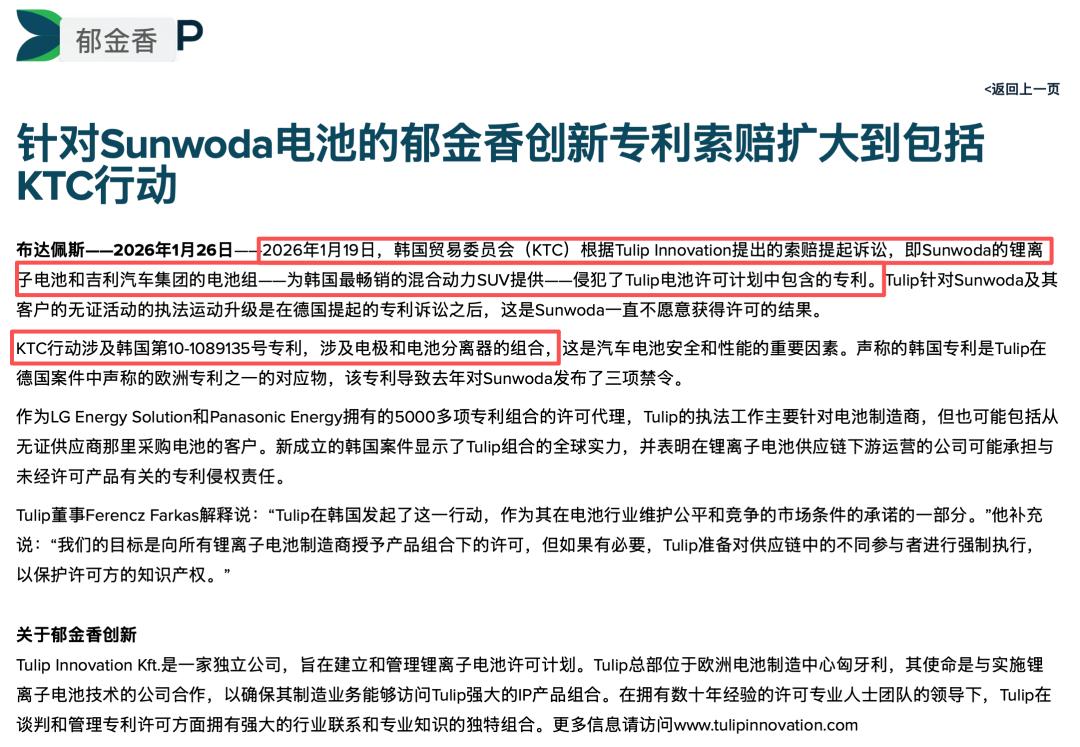
欣旺达在韩再遭诉讼,专利与质量双重围剿下溃败在即?
3 6 Ke· 2026-01-29 13:24
Core Viewpoint - The patent alliance "Tulip Innovation," formed by LG Energy and Panasonic, has initiated a patent infringement lawsuit against Xinwanda in South Korea, claiming that Xinwanda's lithium-ion battery cells and battery packs for Geely's popular hybrid SUV violate a specific patent related to electrode and separator technology [1][4]. Group 1: Patent Infringement and Legal Challenges - The lawsuit in South Korea is part of a broader strategy similar to previous actions taken in Germany, targeting core battery technologies that are critical for energy, safety, and lifespan [4][7]. - Xinwanda has previously faced three defeats and sales bans in Germany regarding the same patent, indicating the strength of the patent barriers established by the alliance [4][7]. - The lawsuit poses risks not only to Xinwanda but also to its customers, as the involved battery technology is used in Geely's hybrid SUV sold in South Korea, potentially affecting market prospects [7][11]. Group 2: Domestic Quality Issues and Financial Implications - Xinwanda is also facing a domestic lawsuit from Geely's Weirui company, claiming damages of 2.313 billion RMB due to serious quality issues with battery cells supplied between 2021 and 2023 [4][11]. - The quality issues have led to significant vehicle recalls, with estimates suggesting that tens of thousands of vehicles may be affected, aligning with the compensation amount sought [11][15]. - The financial impact of the 2.313 billion RMB claim is severe, potentially consuming 90% of Xinwanda's net profit for 2023 and 2024, with insufficient reserves to cover such liabilities [15][16]. Group 3: Industry Implications and Strategic Reflections - Xinwanda's situation serves as a warning for the industry, highlighting the risks of prioritizing cost over quality, as aggressive pricing strategies may compromise essential safety and reliability standards [20][24]. - The dual challenges of patent infringement and quality issues are forcing a reevaluation of supplier assessments, emphasizing the need for robust quality systems and independent patent strategies [20][24]. - The case of Xinwanda illustrates the complexities of international expansion for Chinese companies, where legal and technical challenges are becoming increasingly intertwined [20][24].

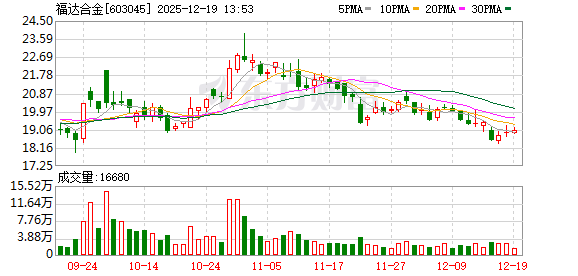
深陷专利诉讼旋涡,福达合金五次延期回复问询后终止3.5亿收购
2 1 Shi Ji Jing Ji Bao Dao· 2025-12-19 05:52
Core Viewpoint - Fuda Alloy (603045.SH) announced the termination of its acquisition of Zhejiang Guangda Electronic Technology Co., Ltd. after multiple delays in responding to inquiries from the stock exchange, potentially influenced by a patent lawsuit involving the target company [2][4][8]. Group 1: Acquisition Details - Fuda Alloy planned to acquire 52.61% of Guangda Electronic for a cash consideration of 350 million yuan, aiming to become the controlling shareholder and consolidate Guangda's financials [4][7]. - The acquisition was initially disclosed in September, but faced scrutiny from the stock exchange regarding the rationale for the acquisition and the declining performance of the target [7][8]. Group 2: Legal Challenges - The acquisition faced complications due to a patent infringement lawsuit filed by Dike Co., Ltd. against Guangda Electronic, which was accepted by the court [4][6]. - Guangda Electronic counter-sued Dike, claiming the lawsuit was malicious, but the court rejected its jurisdiction objection [4][6][9]. - Fuda Alloy's management indicated that the patent lawsuit exceeded reasonable bounds and suggested potential commercial motives behind it [9][10]. Group 3: Patent Implications - The patent in question relates to a thick film paste used in semiconductor manufacturing, with broad claims that could impact Guangda Electronic's product offerings [11][17]. - Guangda Electronic's projected revenue from its photovoltaic silver paste products is significant, with expectations of high sales proportions in the coming years, but these projections may be at risk due to ongoing patent disputes [16][17]. - The patent involved has a protection period until 2031, which raises concerns about Guangda's future product viability and may have influenced Fuda Alloy's decision to terminate the acquisition [17].