
中国出口份额

Search documents
李迅雷专栏 | 如何解读对出口引擎的“认知偏差”
中泰证券资管· 2026-03-18 11:30
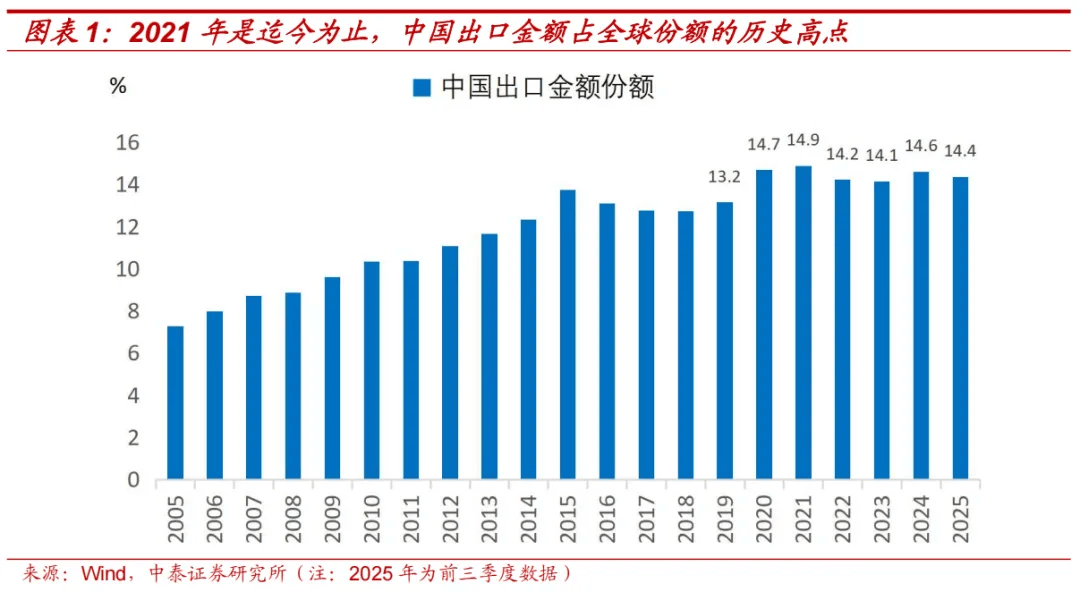
Core Viewpoint - The article discusses the divergence between intuition and data regarding China's export growth, highlighting that while export prices and exchange rates have negatively impacted dollar-denominated export growth, the quantity of exports has been steadily increasing, making exports a crucial driver of China's GDP [2][3][6]. Group 1: Export Growth Analysis - Over the past four years, only in 2024 did China's dollar-denominated exports grow faster than the global average, with lower growth rates observed in 2022, 2023, and the first three quarters of 2025 [3]. - China's share of global exports remained stable at around 13% from 2015 to 2019, with a slight increase to a range of 14%-15% from 2020 to the first three quarters of 2025 [3][6]. - In 2021, China's global export share peaked at 14.9%, but subsequent years have seen lower annual shares [3]. Group 2: Factors Influencing Export Quantity - The increase in China's export quantity share from 13.2% in 2019 to 17.0% by the first three quarters of 2025 is attributed to three main factors: accelerated industrial upgrading, declining export prices, and the expansion of new markets through the Belt and Road Initiative [6][7][8]. - The share of labor-intensive and raw material-intensive exports decreased from 18.43% and 5.13% in 2019 to 13.67% and 4.09% in 2025, while capital-intensive exports rose from 56.80% to 62.97% during the same period [7]. - China's export product prices have been declining, with a cumulative drop of 10.1% expected from 2023 to 2025, influenced by a weak demand environment [8]. Group 3: Market Diversification and Future Outlook - The Belt and Road Initiative has successfully diversified China's export markets, with increased export shares to ASEAN, Africa, Russia, India, and Mexico, while shares to the US, EU, Japan, South Korea, and the UK have decreased [8]. - The article predicts that China's export quantity share will continue to rise due to ongoing industrial upgrades, stable export prices, and improved external market conditions [9][15]. - The potential for a stronger renminbi and reduced price pressures are expected to support China's export growth in the coming years, with an estimated global export share reaching around 17% by 2030 [15][17].


李迅雷专栏 | 中国出口份额提升空间还有多大?
中泰证券资管· 2026-03-11 11:32
Core Viewpoint - The article discusses the decline in China's export share of global trade despite the importance of exports in driving economic growth, attributing this to factors such as currency depreciation and low export prices. However, when excluding these factors, China's export volume share is increasing, indicating a strong potential for future growth in export contributions to GDP [3][7][9]. Group 1: Trends in China's Export Share - China's export share of global trade peaked at 14.9% in 2021 but has been below this level from 2022 to 2025, with a projected recovery starting in 2026 [3][6]. - The analysis indicates that the decline in export share is primarily due to the impact of export prices and exchange rates, while the volume of exports continues to grow [7][9]. - The article predicts that by 2030, China's export share will stabilize around 17%, suggesting a potential increase of over 2 percentage points from current levels [5][86]. Group 2: Factors Influencing Export Growth - The article identifies three main factors supporting the increase in China's export volume share: 1. Accelerated industrial upgrading leading to a higher proportion of high-value-added products in exports [14][16]. 2. Continuous price declines in Chinese export products due to a "strong supply, weak demand" environment, enhancing competitiveness [16][18]. 3. The "Belt and Road" initiative diversifying export markets and mitigating external shocks [18][21]. Group 3: Currency and Price Dynamics - The article notes that since 2022, there has been a divergence between China's trade surplus and the actual effective exchange rate of the yuan, with expectations of yuan appreciation in the future [4][59]. - Factors limiting further declines in export prices include potential trade friction risks, optimization of export tax policies, and the linkage between domestic and foreign sales prices [43][49][52]. - The yuan's exchange rate is expected to appreciate gradually, supported by strong export performance and increased use of the yuan in international trade [61][72]. Group 4: Quantitative Assessment of Export Share - A quantitative assessment indicates that China's export share is expected to rise from 14.4% in 2025 to 17% by 2030, reflecting a recovery in export performance and favorable currency dynamics [5][86]. - The analysis suggests that the growth in export volume share will be driven by a combination of factors, including a narrowing of price declines and a stable exchange rate environment [83][84].

李迅雷:中国出口份额提升空间还有多大?| 立方大家谈
Sou Hu Cai Jing· 2026-02-13 04:14
Core Viewpoint - The depreciation of the RMB and low export prices have hindered the increase of China's export value share in the global market, despite exports being a crucial driver of China's economic growth. After reaching a historical high of 14.9% in 2021, China's export share is expected to remain below this level from 2022 to 2025. However, when excluding the impacts of price and exchange rate, the quantity of China's exports continues to increase, indicating its importance as a driver of GDP growth [1][4][7]. Group 1: Export Quantity Share - China's export quantity share is projected to rise from 13.2% in 2019 to 17.0% by the third quarter of 2025, driven by the accelerated upgrade of industries and an increase in high-value-added product exports [13][16]. - The analysis of Japan and Germany's export share decline suggests that China will maintain strong competitiveness in exports, leading to an increase in export order share [38][25]. Group 2: Price Factors - The potential for trade friction risks will limit the price reduction of certain Chinese export products, while optimizing export tax policies may increase export prices. The expected decline in China's export price will narrow, with a possibility of a temporary increase due to a low base [2][44][51]. - The export price index for Chinese goods has been in negative territory for three consecutive years, with a cumulative decline of 10.1% from 2023 to 2025, indicating a strategy of "price for volume" to enhance competitiveness [16][21]. Group 3: RMB Exchange Rate - Since 2022, there has been a divergence between China's trade surplus and the actual effective exchange rate of the RMB, with expectations of a gradual appreciation of the RMB due to strong export resilience and the goal of achieving a per capita GDP comparable to that of developed countries by 2035 [2][63][67]. - The RMB is expected to appreciate against the USD, with a projected increase of 4.4% by 2025, supported by a stable economic environment and increased use of RMB in international trade [70][77]. Group 4: Future Projections - Quantitative assessments indicate that China's export value share in the global market is expected to begin a sustained recovery starting in 2026, stabilizing around 17% by 2030, suggesting that there is still room for growth in China's export share [3][89][91]. - The analysis predicts that the factors supporting China's export growth will not reverse in the short term, indicating continued resilience in exports [20][21].
晨会聚焦:宏观张德礼:中国出口份额还有多大提升空间?-20260211
ZHONGTAI SECURITIES· 2026-02-11 11:24
Core Insights - The report discusses the potential for China's export share to increase, highlighting that despite recent challenges, there is room for growth in the global market [3][5] - It emphasizes that the decline in China's export share from its peak in 2021 is primarily due to factors such as export prices and exchange rates, rather than a decrease in competitiveness [3][4] Summary by Sections Export Share Trends - China's export share of global amounts reached a historical high of 14.9% in 2021 but has been below this level from 2022 to 2025 [3] - The analysis indicates that the decline in export share is not reflective of a loss in competitiveness, as the quantity of exports continues to rise [3][4] Factors Influencing Export Prices - Potential trade friction risks may limit the ability to lower prices for certain Chinese export products, while optimized export tax rebate policies could enhance export prices [4] - The report anticipates that the year-on-year decline in China's export prices will narrow, with a possibility of turning positive in certain phases due to a low base effect [4] Currency Exchange Rate Dynamics - Since 2022, there has been a divergence between China's trade surplus and the actual effective exchange rate of the RMB [4] - Increased use of RMB in international trade financing and payments is expected to enhance the attractiveness of RMB assets, potentially leading to RMB appreciation [4] Quantitative Assessment of Export Share - A quantitative assessment suggests that China's export share of global amounts is expected to begin a continuous recovery in 2026, stabilizing around 17% by 2030 [5] - This assessment indicates that there is still over a 2 percentage point potential increase in China's export share compared to current levels, suggesting resilience in future export growth [5]
中国出口份额还有多大提升空间?
ZHONGTAI SECURITIES· 2026-02-11 10:25
Export Trends - China's export amount as a share of global exports peaked at 14.9% in 2021 but has been below this level from 2022 to 2025[5] - The share of China's export quantity in global exports is expected to increase from 13.2% in 2019 to 17.0% by the third quarter of 2025[12] - The decline in China's export amount share is attributed to low export prices and currency depreciation, with a cumulative price drop of 10.1% from 2023 to 2025[15] Factors Supporting Export Growth - China's export quantity share is projected to continue rising due to accelerated industrial upgrading and a shift towards high-value-added products[12] - The "Belt and Road" initiative has diversified China's export markets, increasing shares in emerging economies like ASEAN and Africa[17] - Trade friction risks are expected to limit further price declines, with potential for stabilization or slight increases in export prices due to policy adjustments[39] Currency and Economic Outlook - The Chinese yuan is expected to appreciate gradually, supported by a resilient export sector and a target for GDP growth of 4.5%-5.0% in 2026[61] - The yuan's effective exchange rate has declined by 16.12% since March 2022, but a recovery is anticipated as trade surpluses continue[56] - By 2025, the yuan is projected to appreciate by 4.4% against the dollar, with increased usage in international trade financing and payments[70]