一带一路战略

Search documents
李迅雷专栏 | 如何解读对出口引擎的“认知偏差”
中泰证券资管· 2026-03-18 11:30
Core Viewpoint - The article discusses the divergence between intuition and data regarding China's export growth, highlighting that while export prices and exchange rates have negatively impacted dollar-denominated export growth, the quantity of exports has been steadily increasing, making exports a crucial driver of China's GDP [2][3][6]. Group 1: Export Growth Analysis - Over the past four years, only in 2024 did China's dollar-denominated exports grow faster than the global average, with lower growth rates observed in 2022, 2023, and the first three quarters of 2025 [3]. - China's share of global exports remained stable at around 13% from 2015 to 2019, with a slight increase to a range of 14%-15% from 2020 to the first three quarters of 2025 [3][6]. - In 2021, China's global export share peaked at 14.9%, but subsequent years have seen lower annual shares [3]. Group 2: Factors Influencing Export Quantity - The increase in China's export quantity share from 13.2% in 2019 to 17.0% by the first three quarters of 2025 is attributed to three main factors: accelerated industrial upgrading, declining export prices, and the expansion of new markets through the Belt and Road Initiative [6][7][8]. - The share of labor-intensive and raw material-intensive exports decreased from 18.43% and 5.13% in 2019 to 13.67% and 4.09% in 2025, while capital-intensive exports rose from 56.80% to 62.97% during the same period [7]. - China's export product prices have been declining, with a cumulative drop of 10.1% expected from 2023 to 2025, influenced by a weak demand environment [8]. Group 3: Market Diversification and Future Outlook - The Belt and Road Initiative has successfully diversified China's export markets, with increased export shares to ASEAN, Africa, Russia, India, and Mexico, while shares to the US, EU, Japan, South Korea, and the UK have decreased [8]. - The article predicts that China's export quantity share will continue to rise due to ongoing industrial upgrades, stable export prices, and improved external market conditions [9][15]. - The potential for a stronger renminbi and reduced price pressures are expected to support China's export growth in the coming years, with an estimated global export share reaching around 17% by 2030 [15][17].


李迅雷:如何解读对出口引擎的“认知偏差”
Xin Lang Cai Jing· 2026-02-22 03:03
Core Viewpoint - The divergence between intuition and data regarding China's export growth is attributed to the continuous drag from export prices and exchange rates, which affects the dollar-denominated export growth and global share of China's exports. Excluding these factors, the quantity of China's exports as a share of global exports continues to rise, contributing significantly to GDP growth [1][3][14]. Export Growth Analysis - The WTO data indicates that only in 2024 did China's dollar-denominated exports grow faster than the global average, while in 2022, 2023, and the first three quarters of 2025, China's export growth lagged behind the global rate [2][14]. - From 2015 to 2019, China's export share of global exports remained stable at around 13%. From 2020 to the first three quarters of 2025, this share slightly increased but fluctuated between 14% and 15%. The peak was in 2021 at 14.9%, with subsequent years showing lower shares [2][14]. Factors Influencing Export Quantity Share - China's export quantity share increased from 13.2% in 2019 to 17.0% in the first three quarters of 2025, driven by three main factors: 1. Accelerated industrial transformation and an increase in high-value-added product exports. Labor-intensive and raw material-intensive exports decreased from 18.43% and 5.13% in 2019 to 13.67% and 4.09% respectively by 2025, while capital-intensive exports rose from 56.80% to 62.97% [4][16]. 2. Continuous decline in export product prices due to a "strong supply, weak demand" environment, with a cumulative price drop of 10.1% from 2023 to 2025 [4][16]. 3. Expansion into new markets through the Belt and Road Initiative, which mitigated external shocks. Key trading partners like ASEAN, Africa, and India saw increased export shares, while traditional partners like the US and EU saw declines [5][18]. Future Export Trends - Future predictions indicate that China's export quantity share will continue to rise due to several factors: 1. The ongoing support for technology and industrial transformation as highlighted in the recent party congress [6][19]. 2. Limited likelihood of significant increases in export prices in the short term due to the absence of large-scale capacity reductions [6][19]. 3. Potential improvements in the external environment, leading to increased shares in emerging markets [6][19]. Price Factors and Currency Exchange - Price factors that have negatively impacted exports are expected to gradually weaken. The absolute level of export prices has limited room for further decline due to: 1. Trade friction risks that may restrict price reductions [7][20]. 2. Government policies aimed at stabilizing export prices and encouraging industrial upgrades [7][20]. 3. The linkage between domestic and export prices, which limits the incentive for further price cuts [7][20]. - The RMB's exchange rate is a significant factor affecting exports. Since 2022, despite a growing trade surplus, the RMB's effective exchange rate has declined by 16.12% [10][23]. Future expectations suggest a stable or rising RMB due to resilient exports and limited short-term dollar appreciation [10][23]. Long-term Export Share Projections - Estimates suggest that from 2026 onwards, China's global export share will continue to recover, potentially reaching around 17% by 2030, indicating a more than 2% increase from current levels [12][25].

如何解读对出口引擎的“认知偏差”
李迅雷金融与投资· 2026-02-19 06:57
Core Viewpoint - The article discusses the divergence between intuition and data regarding China's export growth, attributing it to the impact of export prices and exchange rates on dollar-denominated export growth and global share [1][3]. Export Growth Analysis - China's export growth has been hindered by declining export prices and exchange rates, with only 2024 showing a year-on-year increase in dollar-denominated exports compared to global averages [1][3]. - From 2015 to 2019, China's global export share remained stable at around 13%, while from 2020 to the first three quarters of 2025, it fluctuated between 14% and 15% [1][3]. Factors Influencing Export Quantity Share - The quantity share of China's exports is expected to increase from 13.2% in 2019 to 17.0% by the first three quarters of 2025, driven by three main factors [3]: 1. Accelerated industrial upgrading in China, with a shift towards high-value-added products [4]. 2. Continuous decline in export product prices due to a "strong supply, weak demand" environment, with a cumulative price drop of 10.1% from 2023 to 2025 [4]. 3. Expansion into new markets through the Belt and Road Initiative, countering external shocks and diversifying export destinations [5]. Future Export Trends - The article predicts that China's export quantity share will continue to rise, supported by ongoing industrial transformation and limited short-term price increases [7]. - Factors such as the government's export tax policies and the linkage between domestic and foreign sales prices will restrict further significant declines in export prices [9]. Currency Exchange Rate Impact - The article highlights that the actual effective exchange rate of the yuan has decreased by 16.12% since March 2022, but a stable or appreciating yuan is expected in the future due to resilient export performance [12][13]. - The increasing use of the yuan in international trade financing and payments is anticipated to enhance its attractiveness, with the proportion of yuan settlements in trade expected to rise [13]. Long-term Export Share Projections - It is estimated that China's global export share will stabilize around 17% by 2030, indicating a potential increase of over 2 percentage points from current levels, suggesting continued resilience in export growth [14].
中国产业转型升级推动出口结构优化
Xin Lang Cai Jing· 2026-02-18 07:00
Core Viewpoint - China's industrial transformation and upgrading from 2019 to 2025 is accelerating, leading to an optimization of export structure and a significant increase in the proportion of high value-added products in exports [1] Group 1: Export Structure Changes - The export share of labor-intensive and raw material-intensive goods decreased from 18.43% and 5.13% to 13.67% and 4.09% respectively [1] - The export share of capital-intensive goods increased rapidly from 56.80% to 62.97% [1] - The export share of technology-intensive goods remained stable at around 20% [1] Group 2: Factors Supporting Export Growth - The transformation of China's industry is shifting from "quantitative change" to "qualitative change," supporting a continuous increase in export quantity share [1] - Short-term significant price increases for exports are unlikely, reducing the drag from price factors on exports [1] - The "Belt and Road" initiative is opening new markets, mitigating the impact of external environmental changes and diversifying export destinations [1] Group 3: Currency and Economic Outlook - The stable appreciation of the RMB supports Chinese exports, with a low probability of short-term USD appreciation [1] - Increased use of RMB in international trade financing and payment enhances the attractiveness of RMB assets [1] - Chief economist Li Xunlei estimates that starting in 2026, China's export value share of the global market will continue to rebound, reaching around 17% by 2030, with resilient year-on-year export growth expected in the coming years [1]
未来中国出口走势预测:订单占比将进一步提升
Xin Lang Cai Jing· 2026-02-18 07:00
Core Insights - Export has been a significant driver of China's economic growth in recent years, but data from the WTO indicates that from 2022 to the first three quarters of 2025, China's export growth in USD terms is below the global average [1] - The share of China's exports in the global market has declined from a peak of 14.9% in 2021 [1] - Chief Economist Li Xunlei from Zhongtai International highlights that the divergence between intuition and data is due to the drag from export prices and exchange rates [1] Group 1 - Excluding the effects of export prices and exchange rates, China's export volume share in the global market has been steadily increasing, rising from 13.2% in 2019 to 17.0% in the first three quarters of 2025 [1] - This increase is attributed to industrial transformation and upgrading, a decline in export product prices, and the Belt and Road Initiative opening new markets [1] - Li Xunlei anticipates that China's export volume share will continue to rise, supported by the 20th Central Committee's focus on technology and industrial upgrades [1] Group 2 - The short-term export price advantage is expected to remain intact, and improvements in the external environment are anticipated [1] - The negative impact of price factors is expected to diminish, with the RMB exchange rate likely to stabilize or appreciate [1] - Li Xunlei estimates that by 2026, China's export share in the global market will rebound, stabilizing around 17% by 2030, which represents an increase of over 2 percentage points from current levels, indicating resilience in year-on-year export growth [1]
价格因素对中国出口的拖累将逐步减弱
Xin Lang Cai Jing· 2026-02-18 06:59
Core Viewpoint - Recent data indicates that China's export growth is lagging behind the global average, but long-term factors suggest that the negative impact of price factors on exports will gradually diminish [1] Group 1: Export Growth Factors - Price and exchange rate factors have constrained China's export growth measured in USD over the past few years [1] - Excluding these factors, the share of China's export volume has been continuously increasing, highlighting its significant role in global trade [1] - The increase in China's export volume share is attributed to industrial upgrades, declining product prices, and market diversification from the Belt and Road Initiative [1] Group 2: Future Outlook - The negative impact of price factors on exports is expected to weaken in the future due to trade friction risks, optimization of export tax rebate policies, and the linkage of domestic and foreign sales prices [1] - A stable and appreciating RMB exchange rate is predicted to support exports, with limited short-term potential for USD appreciation [1] - It is forecasted that by 2030, China's export value share of the global market will reach a new steady state of approximately 17%, an increase of 2 percentage points from the current level, indicating resilience in China's export performance in the coming years [1]
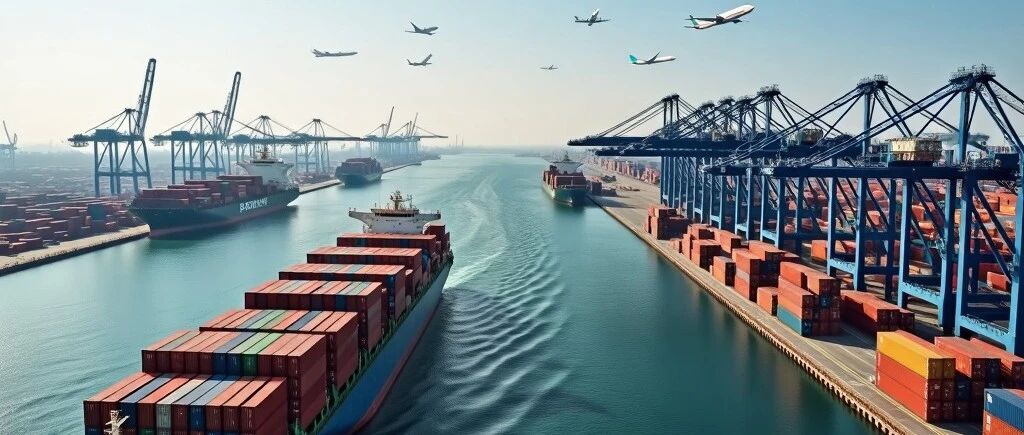
“一带一路”战略助力中国出口多元化
Xin Lang Cai Jing· 2026-02-18 06:59
Core Viewpoint - From 2019 to 2025, China is diversifying its export destinations through the "Belt and Road" initiative, increasing its global export share from 13.2% in 2019 to 17.0% in the first three quarters of 2025, despite rising protectionism in developed economies [1] Group 1: Export Market Diversification - China's market share in ASEAN, Africa, Russia, India, and Mexico has increased by 3.26, 1.44, 0.75, 0.61, and 0.51 percentage points respectively, mitigating the impact of external environmental changes [1] - The proportion of exports from the US, EU, Japan, South Korea, and the UK to China has decreased during the same period [1] Group 2: Factors Driving Export Growth - The rapid increase in China's export share is attributed to three main factors: accelerated industrial transformation and upgrading, a "strong supply and weak demand" scenario leading to continuous price declines for Chinese export products, and the successful implementation of the "Belt and Road" strategy [1] - These factors are expected to persist in the short term, with further increases in China's export share anticipated in the coming years [1] Group 3: Future Projections - The stable appreciation of the RMB against the USD and increased use of RMB in international trade financing and payment will support China's exports [1] - By 2030, China's export share is projected to stabilize around 17% of the global total [1]
李迅雷:如何理解出口引擎的“数据错觉”
Jing Ji Guan Cha Bao· 2026-02-18 05:50
Core Viewpoint - The article discusses the divergence between intuition and data regarding China's export growth, highlighting that while exports are traditionally seen as a key driver of economic growth, recent data shows a decline in China's export growth compared to global averages [1][2]. Group 1: Export Growth Analysis - According to WTO data, only in 2024 did China's export growth in USD terms exceed the global average over the past four years, with lower growth rates observed in 2022, 2023, and the first three quarters of 2025 [1]. - China's share of global exports has remained relatively stable, fluctuating between 14% and 15% from 2020 to the first three quarters of 2025, with a peak of 14.9% in 2021 [1][2]. - The actual effectiveness of China's exports as a GDP driver is masked by price and exchange rate factors, but when these are adjusted for, the quantity of exports as a share of global totals has been increasing [2][3]. Group 2: Factors Influencing Export Performance - The increase in China's export quantity share from 13.2% in 2019 to 17.0% by the first three quarters of 2025 is attributed to three main factors: accelerated industrial upgrading, declining export prices, and the diversification of markets through the Belt and Road Initiative [3][4]. - The share of high-value-added products in China's exports has risen, with capital-intensive goods increasing from 56.80% in 2019 to 62.97% in 2025, while labor-intensive and raw material exports have decreased [3]. - The prices of Chinese export products have been declining, with a cumulative drop of 10.1% in export prices from 2023 to 2025, reflecting a "strong supply, weak demand" environment [3][4]. Group 3: Market Diversification and Future Outlook - The Belt and Road Initiative has successfully opened new markets, with significant increases in export shares to ASEAN, Africa, Russia, India, and Mexico, while shares to the US and EU have decreased [4][5]. - Future predictions indicate that China's export quantity share will continue to rise due to ongoing industrial upgrades, stable export prices, and improved external conditions [5][6]. - The potential for further increases in China's global export share is estimated to be around 2 percentage points by 2030, suggesting continued resilience in export growth [11].
深圳宏业基岩土科技股份有限公司(H0422) - 申请版本(第一次呈交)
2026-02-14 16:00
香港聯合交易所有限公司與證券及期貨事務監察委員會對本申請版本的內容概不負責,對其準確性或完整 性亦不發表任何意見,並明確表示概不就因本申請版本全部或任何部分內容而產生或因倚賴該等內容而引 致的任何損失承擔任何責任。 Shenzhen Hongyeji Geotechnical Technology Co., Ltd. 深圳宏業基岩土科技股份有限公司 (「本公司」) (於中華人民共和國註冊成立的股份有限公司) 的申請版本 警告 本申請版本乃根據香港聯合交易所有限公司(「聯交所」)與證券及期貨事務監察委員會(「證監會」)的 要求而刊發,僅用作提供資訊予香港公眾人士。 本申請版本為草擬本,其內所載資訊並不完整,亦可能會作出重大變動。 閣下閱覽本文件,即代 表 閣下知悉、接納並向本公司、本公司的獨家保薦人、整體協調人、顧問或包銷團成員表示同 意: 倘於適當時候向香港公眾人士提出要約或邀請,準投資者務請僅依據呈交香港公司註冊處註冊的本 公司招股章程作出投資決定;有關文本將於發售期內向公眾刊發。 (a) 本文件僅為向香港公眾人士提供有關本公司的資料,概無任何其他目的;投資者不應根據本 文件中的資料作出任何投資決定; (b ...
益盟股份首席战略官梁宇峰:我读了上千家上市公司财报,对中国经济有信心
Sou Hu Cai Jing· 2026-01-12 03:48
Group 1 - The core basis for optimism about the Chinese economy includes continuous industrial upgrades and enhanced export competitiveness, despite profit performance being affected by intense competition [4][5] - The depreciation of the real effective exchange rate of the RMB has provided support for export competitiveness, with a significant price gap between China and the US/Europe due to differing inflation rates [4] - The "Belt and Road" initiative is recognized as a forward-looking strategy that opens up new global markets, transitioning China from globalization 1.0 to 2.0, benefiting a larger population [5] Group 2 - There is a current issue of insufficient domestic demand, with a historical context of "overcapacity" that highlights the need to convert potential demand into effective demand [6] - The RMB is expected to appreciate significantly in the long term, driven by national industrial competitiveness and purchasing power, with projections suggesting a potential exchange rate of 1:5 against the USD by 2032-2035 [7] - Expanding capital project output is necessary to achieve balance, with ongoing practices in capital output, such as investments in Africa, indicating potential for improvement in international balance of payments [7] - The need to eliminate outdated production capacity and reduce ineffective competition is emphasized as a key policy direction for the future [7]