中国新消费出海

Search documents
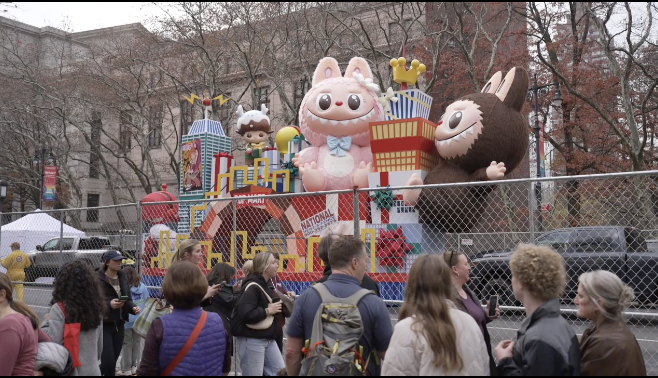
Labubu首现美国感恩节游行
第一财经· 2025-11-29 04:07
Group 1 - The article highlights the increasing popularity of the Chinese toy brand Pop Mart in the U.S. market, particularly through its character Labubu, which gained significant attention during the Macy's Thanksgiving Day Parade [3][4] - The global collectible toy market is projected to grow from 8.7 billion yuan in 2015 to 44.8 billion yuan by 2024, with a compound annual growth rate of nearly 23% [4] - North America, Europe, and China are identified as the top three markets for collectible toys, with emerging markets in Southeast Asia and Eastern Europe also experiencing rapid growth [4] Group 2 - Many Chinese consumer brands, including Pop Mart, are expanding into overseas markets to seek higher profit margins, with brands like Miniso and Luckin Coffee also making strides [6] - The COO of Pop Mart, Si De, emphasizes the vast potential of the U.S. market, noting strong consumer demand for IP design and related products, as well as the maturity of the retail landscape [7] - The development of U.S. operations offers additional benefits for Chinese consumer brands, such as enhancing brand reputation globally and leveraging the rich talent pool in the U.S. entertainment industry for better growth [7]



Labubu首现美国感恩节游行 北美成中国潮玩IP出海新热门
Di Yi Cai Jing· 2025-11-29 02:20
Core Insights - The annual Macy's Thanksgiving Day Parade showcased the presence of Pop Mart's float featuring popular characters like Labubu, marking the brand's debut in New York [2] - The global collectible toy market is projected to grow from 8.7 billion to 44.8 billion from 2015 to 2024, with a compound annual growth rate of nearly 23% [2] - North America, Europe, and China are the top three markets for collectible toys, with emerging markets in Southeast Asia and Eastern Europe also experiencing rapid growth [2] Company Insights - Chinese new consumer brands, including Miniso and Luckin Coffee, are expanding into overseas markets to seek higher profit margins, with Pop Mart's TOP TOY accelerating its international store openings [3] - The success of collectible IP companies in international markets is attributed to their creativity, global influence, and marketing capabilities, which could attract investor interest if valuations adjust to reasonable levels [3] - The future growth of Chinese new consumer brands in the U.S. market is expected to be significant, driven by strong consumer demand for IP design and related products [4] Market Dynamics - The U.S. market is characterized by high purchasing power and a mature retail environment, which presents opportunities for Chinese brands [4] - The rapid growth of the U.S. market can enhance the global reputation and brand effect of Chinese companies, as the U.S. often sets trends for other countries [4] - The entertainment industry in the U.S. is well-developed, providing access to talent that can facilitate global growth for companies [4]
Labubu首现美国感恩节游行,北美成中国潮玩IP出海新热门
Di Yi Cai Jing· 2025-11-29 02:19
Core Viewpoint - The future potential of China's new consumption sector relies on the ability to create new IPs, continuously resonate with consumers, and expand internationally [1][4]. Group 1: Market Overview - The global toy market is projected to grow from 8.7 billion yuan in 2015 to 44.8 billion yuan by 2024, with a compound annual growth rate (CAGR) of nearly 23% [3]. - North America, Europe, and China are currently the top three markets for toys, with emerging markets in Southeast Asia and Eastern Europe also experiencing rapid growth [3]. Group 2: International Expansion - Numerous Chinese new consumption companies, including Miniso, Luckin Coffee, and Heytea, are entering overseas markets to seek higher profit margins [3]. - Pop Mart's toy brand TOP TOY is accelerating its overseas store openings [3]. Group 3: Insights from Industry Experts - Keywise's fund manager Xu Tao noted that successful toy IP companies can stand out in international markets due to their creativity, global influence, penetration, and marketing capabilities [4]. - Xu emphasized that the future growth of China's new consumption sector will depend on the ability to create new IPs and resonate with consumers, with North America being a key focus for expansion [4]. Group 4: U.S. Market Potential - Pop Mart's COO, Si De, highlighted the large and strong purchasing power of the U.S. market, along with a high demand for IP design and related products [5]. - The U.S. retail environment is mature, providing a solid foundation for retail talent and shopping center systems, although the pace of product updates and creative design may not match China's efficiency [5]. - Si De mentioned that the company has spent two years building a capable team to navigate the U.S. retail landscape, leading to rapid growth since last year [5].
告别“地板价”:中国新消费的海外溢价战争
3 6 Ke· 2025-11-11 09:47
Core Insights - The article highlights the transformation of Chinese brands in the global market, moving from low-cost manufacturing to a focus on value and brand identity, reshaping the perception of "Made in China" [2][3][5] Group 1: Market Performance - Pop Mart's revenue in the Americas for Q3 increased by 1265%-1270% year-on-year, showcasing the popularity of its products [2] - Bawang Chaji's overseas GMV reached RMB 235.2 million in Q2, a year-on-year increase of 77.4% [2] - Anker Innovations reported a revenue of RMB 3.427 billion in Europe for the first half of the year, marking a 66.96% year-on-year growth [2] Group 2: Brand Strategy - The shift in Chinese brands' strategy emphasizes "value export" rather than competing solely on price, indicating a deeper engagement in global markets [3][20] - Brands are focusing on emotional connections and cultural narratives, moving from a "function economy" to an "emotional economy" [15][17] - The success of these brands is attributed to their ability to resonate with global consumers' emotional and cultural needs [10][15] Group 3: Consumer Trends - The rise of Generation Z, which constitutes about 25% of the global population, is reshaping consumption patterns, emphasizing individuality and brand values [11][15] - Z generation consumers are willing to pay a premium for brands that align with their values and provide quality experiences [11][15] Group 4: Localization and Cultural Integration - Anker Innovations has tailored its products to local markets, enhancing brand affinity through localized designs and marketing strategies [19] - Bawang Chaji's store designs and product names reflect Chinese cultural elements, appealing to consumers' aesthetic and cultural curiosity [17][18] Group 5: Future Outlook - The article suggests that the future of Chinese brands lies in defining new lifestyles and cultural identities, moving beyond mere product sales to lifestyle and cultural representation [21][25] - The concept of "value export" is seen as a critical phase for Chinese companies to enhance their global competitiveness and influence [20][25]