中美经济关系

Search documents
1.2万亿砸向中国市场!7万家美企扎根中国30年,中资在美遭遇限制
Sou Hu Cai Jing· 2026-02-23 11:16
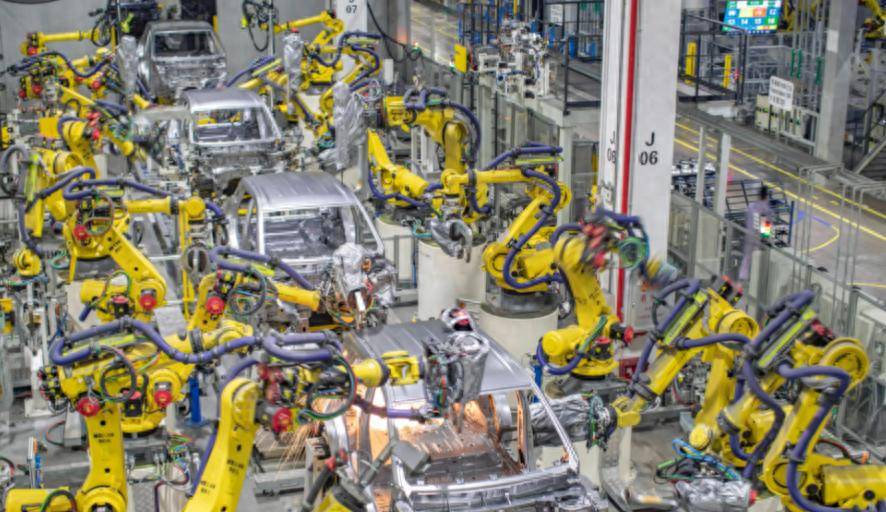
Core Insights - The disparity between the number of American companies in China (70,000) and their total investment (1.2 trillion USD) compared to Chinese investments in the U.S. (150 billion USD) highlights a significant imbalance in economic engagement between the two countries [1][5][31] Group 1: American Companies in China - American companies have established a strong presence in China, with over 70,000 firms and investments exceeding 1.2 trillion USD, indicating a long-term commitment rather than a superficial engagement [3][5] - These companies span various industries, including automotive, pharmaceuticals, semiconductors, consumer electronics, and precision manufacturing, creating a comprehensive operational ecosystem in China [3][5] - The average duration of American companies operating in China exceeds 30 years, demonstrating deep-rooted ties and a commitment to the market despite external challenges [13] Group 2: Chinese Investments in the U.S. - Chinese investments in the U.S. are significantly lower, with a focus on real estate, energy acquisitions, and entertainment assets, which are considered "buying ready-made" strategies [5][9] - Recent trends show a decline in Chinese investments due to increased regulatory scrutiny and longer approval times, particularly in technology and renewable energy sectors [5][19] - In 2023, direct Chinese investments in the U.S. fell to less than 5 billion USD, reflecting the challenges faced by Chinese firms in navigating the complex regulatory environment [19] Group 3: Market Dynamics and Strategic Differences - The efficiency of the industrial chain in China attracts American companies, which seek scale, cost control, and talent density, while Chinese firms in the U.S. are primarily looking for technology and brand resources [7][9] - The relationship between the two countries is characterized by intertwined supply chains, where American firms rely on Chinese manufacturing capabilities, making a complete decoupling impractical [11][17] - The evolving geopolitical landscape has transformed investment decisions from purely commercial considerations to strategic assessments, with increased focus on risk management [23][29] Group 4: Global Supply Chain Trends - The global supply chain is shifting from a single-center model to a multi-center approach, with China remaining a manufacturing hub while Southeast Asia and Mexico are emerging as alternative production sites [25][27] - This diversification is not about outright replacement but rather about creating a distributed network that reduces dependency on any single region [27] - The competition is now more focused on technological control and regulatory influence rather than just scale, indicating a shift in the investment landscape [29]

游戏结束!中国减持外汇资产,纳瓦罗气急败坏:美国一粒大豆也不出售
Sou Hu Cai Jing· 2026-01-21 03:36
Core Viewpoint - The economic interaction between China and the U.S. is currently in a delicate and tense balance, highlighted by China's strategic reduction of U.S. Treasury holdings amidst a rising global demand for U.S. debt [1][4]. Group 1: China's Strategy - China reduced its U.S. Treasury holdings by $6.1 billion in November 2025, bringing the total to $682.6 billion, while global U.S. debt holdings reached a record high of $9.36 trillion [1]. - This reduction is a calculated adjustment rather than a blind sell-off, reflecting China's recognition of systemic risks associated with the U.S. debt model due to increasing fiscal deficits [1][4]. - China aims to diversify its foreign exchange reserves by reducing reliance on a single asset, thus enhancing its asset safety and value growth objectives [3][4]. Group 2: U.S. Response - The U.S. has shown emotional anxiety in its economic interactions with China, particularly in the agricultural sector, as evidenced by aggressive statements from U.S. trade representatives [3][5]. - The proposal to halt soybean exports to China, which accounts for nearly 60% of U.S. soybean exports, could devastate the U.S. agricultural sector and disrupt political stability in key Republican states [5]. - The emotional responses from U.S. politicians contrast sharply with China's rational asset management approach, highlighting differing underlying logics in addressing economic challenges [5][6]. Group 3: Future Outlook - The ability of China and the U.S. to find a new balance between cooperation and confrontation will be a critical issue for the global economy [6]. - Acknowledging mutual dependencies and managing differences with a pragmatic attitude is essential for both countries to maintain stability in the unpredictable international financial landscape [6].
小泽一郎再批高市:她到底意欲何为?
Xin Lang Cai Jing· 2025-12-13 07:16
Core Viewpoint - The article discusses the criticism from Japanese lawmaker Ichiro Ozawa towards Prime Minister Sanae Takaichi regarding her comments on Taiwan, suggesting that her statements have escalated tensions in Japan-China relations [1][1]. Group 1 - Ichiro Ozawa expressed concerns on social media about Takaichi's lack of a clear strategy to address current issues, questioning her intentions [1][1]. - Ozawa indicated that the United States is maintaining a calm stance, attributing the heightened tensions to Takaichi's "reckless behavior" [1][1]. - The article notes that former U.S. President Trump has refrained from publicly commenting on the escalating tensions between Japan and China, which is interpreted as a sign of the U.S. valuing its economic relationship with China [1][1].
美国经济崩溃,对中国有什么好处?
Sou Hu Cai Jing· 2025-05-13 10:38
Group 1 - The article asserts that China's economy will eventually surpass that of the United States, but this process will take a long time, estimated at least 30 to 40 years [1] - In 2024, the trade volume between China and the U.S. is projected to be approximately $688.28 billion, with China exporting about $524.66 billion and importing around $163.62 billion, resulting in a trade surplus of $361.03 billion [3] - The ongoing trade war is characterized as initiated by the U.S., with China expressing a desire to maintain access to the U.S. market, which has a significant consumer base despite economic challenges [5] Group 2 - China holds approximately $1.5 trillion in U.S. Treasury bonds and $3.2 trillion in foreign exchange reserves, totaling $4.7 trillion, which is about 25% of its annual GDP of $18.9 trillion [7] - A sudden collapse of the U.S. economy would lead to a default on U.S. debt and devaluation of the dollar, negatively impacting China's dollar assets, which are derived from the hard work of its citizens [9] - The article emphasizes that both China and the U.S. are integral parts of the global supply and production chains, and a U.S. economic collapse would adversely affect global trade, including China's trade relations with other countries [9] Group 3 - The article concludes that while China is on a path to surpass the U.S. in various domains, it is crucial for this transition to occur gradually and without major disruptions to the global economy [11] - It is suggested that minor economic issues in the U.S. could accelerate China's rise, but significant problems would be detrimental to China as well [11]