
埃塞俄比亚咖啡

Search documents
对非零关税倒计时!非洲咖啡豆加速跑进中国市场,中企出海紧随其后
第一财经· 2026-03-29 12:28
Core Viewpoint - The implementation of zero tariffs on all products from African countries with diplomatic relations with China starting May 1, 2026, is expected to enhance the presence of African products in the Chinese market and stimulate Chinese enterprises to invest in Africa [3]. Group 1: Zero Tariff Policy - China will grant zero tariff treatment on 100% of product categories to 33 African countries and all least developed countries with diplomatic relations starting December 1, 2024, as part of an expansion of trade relations [3]. - The zero tariff policy is anticipated to attract more Chinese enterprises to invest in Africa, promoting industrialization and modernization of agriculture in the region, while also increasing the added value of African resources [3][7]. Group 2: Impact on Ethiopian Coffee - Ethiopia, as the largest producer of Arabica coffee in Africa, has already benefited from the zero tariff policy, leading to a significant increase in coffee exports to China [5]. - The price competitiveness of Ethiopian coffee has improved due to the zero tariff policy, which is expected to increase the income of local coffee growers and related workers [5][6]. - Ethiopia's coffee production is approximately 600,000 tons annually, with around 5 million small-scale coffee farmers involved in the industry [6]. Group 3: Opportunities for Chinese Enterprises - The zero tariff initiative encourages Chinese companies to view Africa as a potential global production base, sourcing raw materials locally and utilizing local labor for initial processing before exporting to China or third countries [7]. - The policy aims to integrate Africa's comparative advantages with China's industrial chain strengths, promoting deeper investment and collaboration between the two regions [8]. Group 4: Challenges in African Investment - Chinese enterprises face structural, institutional, and security pressures when investing in Africa, including inadequate transportation infrastructure, complex customs procedures, and resource nationalism [8]. - Despite the challenges, the zero tariff policy is driving a shift from traditional trade to deeper investment, joint production, and technology transfer, positioning Africa as a crucial part of the global supply chain for Chinese companies [8].


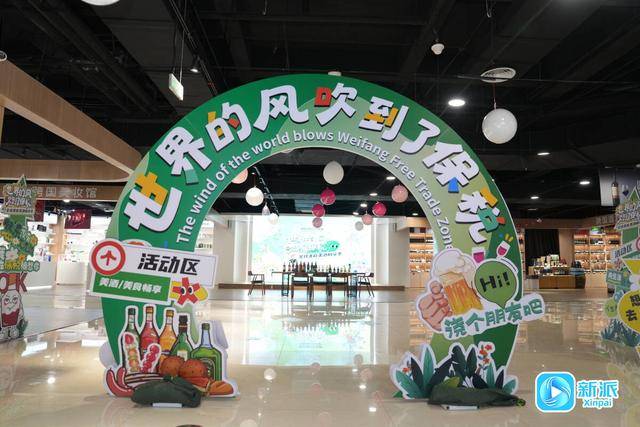
开放平台暖新春 惠民悦享启新程 潍坊综合保税区:让“全球好物”直达“百姓身边”
Sou Hu Cai Jing· 2026-02-13 11:43
Core Viewpoint - The Weifang Comprehensive Bonded Zone is leveraging its advantages in policy, function, and industry to enhance consumer experiences and promote cultural exchange, aiming to create a vibrant and festive atmosphere for the upcoming Lunar New Year [3][10]. Group 1: Consumer Experience and Events - The Weifang Comprehensive Bonded Zone is launching the "2026 Weifang New Year Consumption Season" with 12 themed events and 100 promotional activities to stimulate local consumption [3][5]. - The "Weifang Imported Goods Purchase" exhibition center is designed as an upgraded "global New Year goods market," featuring thousands of quality imported products from over 50 countries, catering to diverse consumer needs [5][6]. - The center will offer special packages like "Global Wind Gifts" and "Belt and Road Delicacies" to enhance the shopping experience during the New Year [5]. Group 2: Cultural Integration and Community Engagement - The Bonded Zone is integrating cultural elements into the shopping experience, allowing consumers to learn about the cultural backgrounds of products while shopping [8][10]. - The "Heritage Market" at the Bonded Life Plaza will showcase local traditional crafts alongside imported goods, promoting cultural interaction and enhancing community engagement [6][8]. - The initiative aims to elevate consumer behavior into a process of family bonding, emotional exchange, and cultural experience, thereby increasing citizens' sense of happiness and belonging [6][8]. Group 3: Economic Impact and Future Directions - The Weifang Comprehensive Bonded Zone is positioned as a key player in stabilizing foreign trade and enhancing industrial quality, while also serving as a platform for cultural exchange and consumer activation [10]. - The zone plans to continue expanding its policy functions and industry advantages, focusing on innovative consumption scenarios and optimizing supply structures to better serve the community [10].
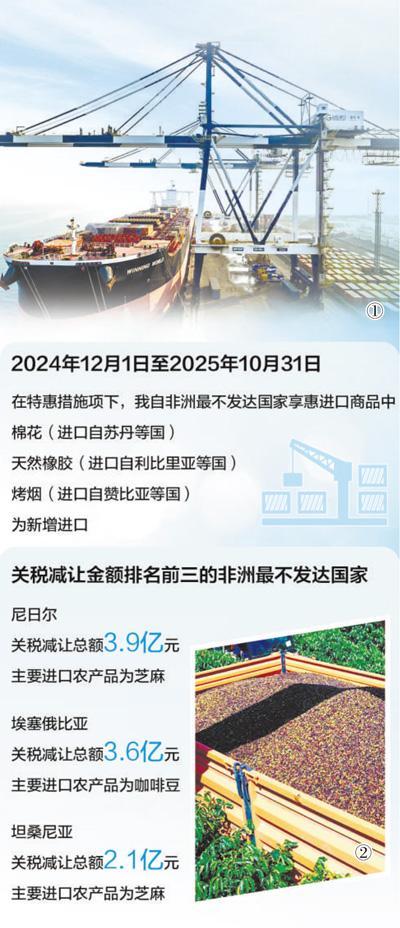
零关税助力非洲好物拓展中国市场(环球热点)
Ren Min Ri Bao· 2026-01-16 23:16
Core Viewpoint - The core viewpoint of the articles is that China's implementation of a zero-tariff policy for products from least developed countries (LDCs) that have diplomatic relations with China is a significant step in enhancing trade relations with Africa, promoting economic development, and providing a competitive edge for African products in the Chinese market [1][2][3]. Group 1: Zero-Tariff Policy Implementation - Starting from December 1, 2024, China will apply a zero-tariff rate on 100% of product categories for all LDCs that have diplomatic relations with China, including 33 African countries [2][4]. - This policy is seen as a major initiative by China to expand its unilateral openness and fulfill international obligations, marking it as the first developing country to implement such a comprehensive zero-tariff policy [2][4]. Group 2: Economic Impact on Africa - The zero-tariff policy is expected to enhance the competitiveness and export scale of African products in the Chinese market, thereby injecting new vitality into China-Africa economic cooperation [3][5]. - It will also optimize the trade structure between China and Africa, stimulate the development of related industrial chains in Africa, and promote new business models such as cross-border e-commerce [3][5]. Group 3: Long-term Benefits - In the long run, the zero-tariff policy will solidify China's position as Africa's largest trading partner and facilitate the industrialization and modernization of African economies, fostering deeper integration and mutual benefits in China-Africa economic relations [3][6]. - The policy is anticipated to create a multiplier effect on African livelihoods, contributing positively to employment, poverty reduction, and overall economic stability [7][11]. Group 4: Global Trade Context - The zero-tariff initiative is positioned as a response to global trade tensions and protectionism, particularly in light of high tariffs imposed by the U.S., providing African nations with a buffer against external economic shocks [6][7]. - It reflects China's commitment to being a reliable partner for African development and sets a precedent for fair global trade practices [6][10]. Group 5: Future Cooperation Opportunities - The policy is expected to open new growth points in various sectors, including agriculture, green economy, digital economy, and artificial intelligence, enhancing cooperation between China and Africa [11][12][13]. - As China embarks on its "14th Five-Year Plan," the zero-tariff policy will likely facilitate further economic collaboration and innovation, benefiting both Chinese consumers and African producers [11][12].
“中国·埃塞俄比亚文化旅游商务中心”在重庆揭牌
Zhong Guo Xin Wen Wang· 2026-01-10 15:02
Group 1 - The "China-Ethiopia Cultural Tourism Business Center" was inaugurated, along with the establishment of the "Ethiopian Coffee Display Center" project, aimed at enhancing trade and cultural exchanges between Chongqing and Ethiopia [1][2] - Ethiopia is positioning itself as an attractive investment destination in Africa, focusing on reforms to create a transparent, standardized, and efficient environment for investors in manufacturing, agriculture, energy, and cultural tourism [1] - The trade scale between China and Ethiopia has been expanding, with China being Ethiopia's largest trading partner, and Ethiopia is optimizing trade policies and infrastructure to unlock opportunities in various sectors [1] Group 2 - The newly established centers will provide one-stop services including policy consultation, legal support, and business matching to facilitate the entry of Ethiopian coffee and other African quality products into the western Chinese market [2] - There will be a focus on deepening interactions in cultural tourism, art exhibitions, and talent training, while promoting the export of Chongqing-made new energy motorcycles and agricultural machinery to Africa [2]
中国·埃塞俄比亚文化旅游商务中心在重庆沙坪坝揭牌
Xin Lang Cai Jing· 2026-01-10 13:16
Group 1 - The "China-Ethiopia Cultural Tourism Business Center" was inaugurated in Chongqing, aiming to promote Ethiopian coffee and other quality products in the Chinese market while facilitating the export of Chongqing-made new energy motorcycles, agricultural machinery, and municipal equipment to Africa [1] - The establishment of the "Ethiopian Coffee Display Center" is part of a broader initiative to enhance bilateral trade and cultural exchanges, focusing on sustainable and multi-faceted economic ecosystems [1] - Chongqing's Shapingba District has been actively leveraging its advantages as a source of the Western Land-Sea New Corridor, integrating into the "One Park, Two Systems" strategy, and has formed a procurement demand list of 84 items from African countries, achieving a trade volume exceeding 5 billion yuan [1] Group 2 - Ethiopia is positioning itself as an attractive investment destination by implementing reforms across manufacturing, agriculture, energy, and cultural tourism sectors, aiming to create a transparent and efficient environment for long-term investors [2] - The establishment of the "China-Ethiopia Cultural Tourism Business Center" and the "Ethiopian Coffee Display Center" will facilitate the entry of Ethiopian coffee and other African products into the Chinese market, providing comprehensive support services [2] - The Ethiopian government is committed to improving the business environment to encourage more Chinese enterprises to invest in Ethiopia, thereby deepening bilateral cooperation [2]
零关税,让更多非洲产品丰富中国市场
Huan Qiu Wang· 2025-12-03 02:43
Group 1: Trade Policy Impact - From December 1, 2024, China will implement a zero tariff policy on 100% of products from least developed countries that have diplomatic relations with China, aiming to enhance mutual development [6] - The zero tariff policy is expected to boost trade vitality between China and Africa, particularly benefiting African industries and enriching consumer choices in China [6] Group 2: Coffee Industry Growth - Ethiopia's coffee exports to China have been growing at an annual rate of 27%, with over 34,000 tons exported in the 2024/2025 fiscal year, generating over $218 million in revenue [7] - The zero tariff policy has significantly increased the competitiveness of Ethiopian coffee in the Chinese market, leading to a substantial rise in export volumes [7][8] - The Ethiopian Coffee and Tea Authority noted that China has become Ethiopia's fourth-largest coffee export market [7] Group 3: Supply Chain Efficiency - The import of sesame from Mozambique to China has become more efficient, with direct sourcing channels allowing for better quality control and smoother market entry [9][10] - The logistics process for sesame includes modern transportation methods and a streamlined customs clearance process, reducing costs and improving delivery times [10][11] Group 4: Rubber Industry Developments - The implementation of the zero tariff policy has reduced the tariff on natural rubber from Liberia from 20% to zero, saving approximately 300,000 yuan on the first batch of imports [12] - The reduction in tariff costs allows companies to invest more in research and development, leading to the creation of new products such as energy-saving tires for electric vehicles [13] - In the first ten months of the year, Shandong province's imports from Africa reached 87.645 billion yuan, a year-on-year increase of 50.3%, with natural and synthetic rubber imports growing by 50.7% [13]

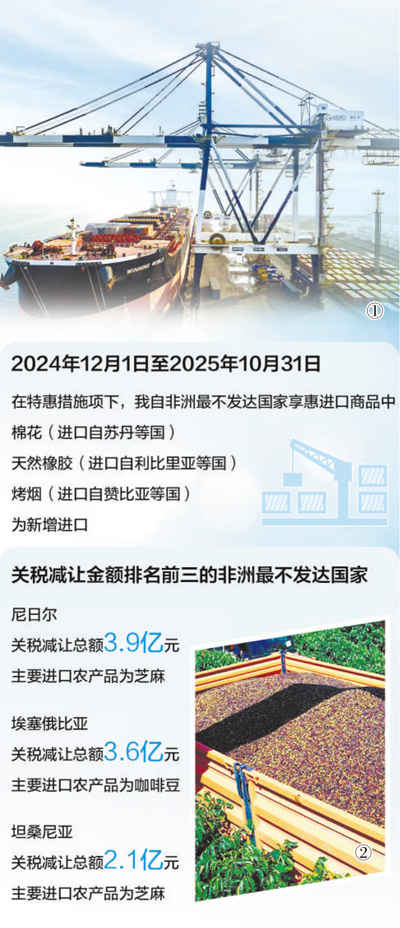
零关税 让更多非洲产品丰富中国市场
Ren Min Ri Bao· 2025-12-03 01:55
Group 1: Trade Policy Impact - China will implement a zero tariff policy on 100% of products from the least developed countries that have diplomatic relations with China starting December 1, 2024, which aims to promote mutual development [1] - The zero tariff policy is expected to enhance the competitiveness of Ethiopian coffee in the Chinese market, with exports to China growing significantly [2][3] Group 2: Coffee Industry Developments - Ethiopian coffee exports to China have been growing at an annual rate of 27%, with over 34,000 tons exported in the 2024/2025 fiscal year, generating over $218 million in revenue [2] - The zero tariff policy has increased the price competitiveness of Ethiopian coffee, benefiting local farmers and related industries [2] - The Ethiopian Coffee and Tea Authority indicates that China has become Ethiopia's fourth-largest coffee export market [2] Group 3: Supply Chain Efficiency - The import of sesame from Mozambique to China has become more efficient, with direct sourcing channels improving the supply chain [4][5] - The company in Chengdu has expanded its direct sourcing network, importing 1,120 tons of white sesame from Niger, enhancing the quality control from the planting stage [4][5] Group 4: Rubber Industry Developments - The implementation of the zero tariff policy has allowed Shandong Triangle Tire Co., Ltd. to import natural rubber from Liberia with a tariff reduction of approximately 300,000 yuan [6][7] - The company has utilized the cost savings from reduced tariffs to invest more in R&D, leading to the development of energy-saving tires suitable for electric vehicles [7] - In the first ten months of the year, Shandong Province's imports from Africa reached 87.645 billion yuan, a year-on-year increase of 50.3% [7]
零关税,让更多非洲产品丰富中国市场(经济聚焦)
Ren Min Ri Bao· 2025-12-02 22:33
Group 1: Trade Policy Impact - From December 1, 2024, China will implement a zero tariff policy on 100% of products from the least developed countries that have diplomatic relations with China, aiming to enhance mutual development [6] - The zero tariff policy is expected to boost trade vitality between China and Africa, particularly benefiting African industries and enriching consumer choices in China [6] Group 2: Coffee Industry Growth - Ethiopia's coffee exports to China have been growing at an annual rate of 27%, with over 34,000 tons exported in the 2024/2025 fiscal year, generating over $218 million in revenue [7] - The zero tariff policy has significantly increased the competitiveness of Ethiopian coffee in the Chinese market, leading to a substantial rise in export volumes [7][8] - Ethiopian coffee producers plan to increase production to meet the growing demand from China, driven by the favorable tariff conditions [7] Group 3: Sesame Supply Chain Efficiency - Sesame, as Africa's largest agricultural export to China, is being imported more efficiently through direct sourcing channels, enhancing the supply chain from Mozambique to China [9] - The company has expanded its direct sourcing network, importing 1,120 tons of white sesame from Niger, with the first batch arriving in May [9][10] - Efficient logistics and a paperless customs process have streamlined the importation of sesame, reducing costs and improving delivery times [10] Group 4: Rubber Import and Production - The implementation of the zero tariff policy has allowed companies like Triangle Tire to import natural rubber from Liberia without tariffs, saving approximately 300,000 yuan [11] - The reduction in tariff costs enables companies to invest more in R&D, leading to the development of new tire products suitable for electric vehicles and extreme conditions [12] - In the first ten months of the year, Shandong province's imports from Africa reached 87.645 billion yuan, a 50.3% increase year-on-year, with natural and synthetic rubber imports also seeing significant growth [12]
埃塞俄比亚咖啡期待深耕中国市场
Xin Hua She· 2025-12-02 01:04
Core Insights - Ethiopia is recognized as the birthplace of Arabica coffee and is the largest producer of Arabica coffee in Africa, with an annual production of approximately 600,000 tons [1] - The coffee industry is crucial to Ethiopia's economy, with over 25 million people involved in coffee production, processing, and sales [1] - In the recently concluded fiscal year 2024-2025, Ethiopia's coffee exports reached about 469,000 tons, an increase of approximately 170,000 tons year-on-year, generating a record export value of $2.65 billion, accounting for one-third of the country's total exports [1] Company Insights - AWO Coffee Company, led by exporter Tesfaye Gabru, has expanded its business from exporting raw coffee beans to include coffee cultivation, processing, and finished product exports, driven by strong demand from the Chinese market [1][2] - The company operates a 14-hectare coffee farm and a roasting facility, exporting around 140 tons of raw coffee beans and 20 tons of finished coffee products to China last year, with an annual growth rate of approximately 10% [2] - Currently, about 90% of AWO Coffee's finished products are sold to China, and the company also sources coffee beans from local farmers to meet increasing export demands [2] Market Trends - The Chinese market has rapidly grown to become Ethiopia's fourth-largest coffee import market, with a notable increase in coffee consumption among young Chinese consumers [2] - Ethiopian coffee producers are leveraging platforms like the China International Import Expo and e-commerce to enhance their market presence in China, benefiting both coffee farmers and Chinese consumers [2] - Companies like Hadro Coffee are also seeing significant demand from China, with the country being their third-largest export market, highlighting the importance of trade fairs for establishing connections with Chinese traders [2]
共话中国经济新机遇丨通讯:埃塞俄比亚咖啡期待深耕中国市场
Xin Hua She· 2025-11-30 01:31
Core Viewpoint - Ethiopia's coffee industry is experiencing significant growth, particularly in the Chinese market, with increasing exports and rising demand from consumers, especially the younger demographic [1][2]. Group 1: Industry Overview - Ethiopia is the largest producer of Arabica coffee in Africa, with an annual production of approximately 600,000 tons [1]. - Over 25 million people in Ethiopia are involved in coffee production, processing, and sales [1]. - In the fiscal year 2024-2025, Ethiopia's coffee exports reached about 469,000 tons, an increase of approximately 170,000 tons year-on-year, generating a record export value of $2.65 billion, accounting for one-third of the country's total exports [1]. Group 2: Company Insights - AWO Coffee Company, led by exporter Tesfaye Gabru, has expanded its business from raw coffee bean exports to include coffee cultivation, processing, and finished product exports, driven by strong demand from the Chinese market [1][2]. - The company exported around 140 tons of raw coffee beans and 20 tons of finished coffee products to China last year, with an annual growth rate of about 10% in export volume [2]. - Currently, approximately 90% of AWO Coffee's finished products are sold to China, highlighting the importance of this market for the company's growth [2]. Group 3: Market Dynamics - The Ethiopian Coffee and Tea Authority indicates that China has rapidly become Ethiopia's fourth-largest coffee importer, with a notable increase in direct imports from Ethiopian producers [2]. - The growing popularity of coffee among Chinese consumers, particularly younger individuals, is contributing to the rising demand for Ethiopian coffee [2]. - Events like the China International Import Expo and the use of e-commerce platforms are facilitating the expansion of Ethiopian coffee in China, benefiting both coffee farmers and consumers [2].