
企业基础研究

Search documents
白春礼:企业基础研究成为产业竞争重点
Xin Hua Cai Jing· 2025-12-20 02:38
Core Insights - The forum highlighted the increasing importance of fundamental research as a key driver of national competitiveness and industrial advantages, emphasizing its role in international competition and technological innovation [1][2]. Group 1: Importance of Fundamental Research - Fundamental research is becoming a "first-mover" in industrial competition and a "source project" for national competitiveness [1]. - The acceleration of international competition is shifting focus towards the frontiers of fundamental research, determining a company's ability to translate "frontier principles" into "industrial paradigms" [1]. - The boundaries between technological innovation and industrial innovation are blurring, leading to a shorter transition from fundamental research to industrial application [1]. Group 2: Trends in Corporate Research - Companies are increasingly viewing fundamental research as a "core competitive asset," leading to a more systematic and internalized approach to research [2]. - There is a growing capability for companies to make original contributions in "new paradigm fundamental research," potentially altering the pace of scientific and industrial advancements [2]. - The willingness to invest in fundamental research is changing, along with the structure of resource allocation [2]. Group 3: Recommendations for Enhancing Fundamental Research - Companies should integrate fundamental research into national strategic tasks to ensure stable guidance and long-term planning [2]. - There is a need for improved incentive and risk-sharing mechanisms to ensure that long-term investments yield long-term returns [2]. - A collaborative platform system between research institutions and companies should be established to facilitate innovation in fundamental research [2]. - Strengthening talent supply and reforming evaluation criteria are essential to create a supportive institutional environment for corporate fundamental research [2].
白春礼:企业基础研究决定产业优势的长久性
Cai Jing Wang· 2025-12-19 12:24
Core Viewpoint - The importance of fundamental research is increasingly recognized as a key driver of national competitiveness and industrial advantages, necessitating a shift in how enterprises approach and invest in this area [4][5][6]. Group 1: Importance of Fundamental Research - Fundamental research is becoming the "first move" in industrial competition and a "source project" for national competitiveness, as international competition shifts focus to foundational theories and key mechanisms [4][8]. - The boundary between technological innovation and industrial innovation is blurring, with shorter cycles for translating fundamental breakthroughs into industrial applications [10][11]. - Enterprises are evolving into primary players in the national innovation system, with increasing capabilities in decision-making, R&D investment, and the commercialization of research outcomes [11][12]. Group 2: Changes in Enterprise Perception and Involvement - Enterprises are beginning to view fundamental research as a "core competitive asset," leading to a more systematic and internalized approach to research [14][15]. - There is a trend towards enterprises making original contributions in fundamental research, as seen in advancements like AlphaFold, which signifies a shift in the role of enterprises from merely applying science to actively shaping scientific inquiry [15][16]. - The resource allocation for fundamental research within enterprises is changing, with significant investments being made in areas like AI and biotechnology, reflecting a commitment to long-term foundational research [16][17]. Group 3: Current Challenges in Fundamental Research - Despite progress, the proportion of funding for fundamental research remains low, with only 6.9% of total R&D expenditure in China allocated to this area, compared to higher percentages in countries like the US and UK [18][19]. - Enterprises are the main executors of R&D but are underinvesting in fundamental research, with only about 1% of their R&D spending directed towards it [18][19]. - There are systemic barriers to enterprise involvement in fundamental research, including unstable expectations, risk-sharing challenges, and insufficient organizational capabilities [19][20]. Group 4: Recommendations for Enhancing Enterprise Involvement - Integrate enterprise fundamental research into national strategic tasks to create stable support and long-term arrangements [21][22]. - Develop effective incentive and risk-sharing mechanisms to encourage long-term investments in fundamental research [22][23]. - Foster collaboration between research institutions and enterprises to build a platform for innovation that addresses key industrial challenges [22][23]. - Reform talent supply and evaluation systems to support enterprises in fundamental research, emphasizing long-term contributions and original breakthroughs [23][24].

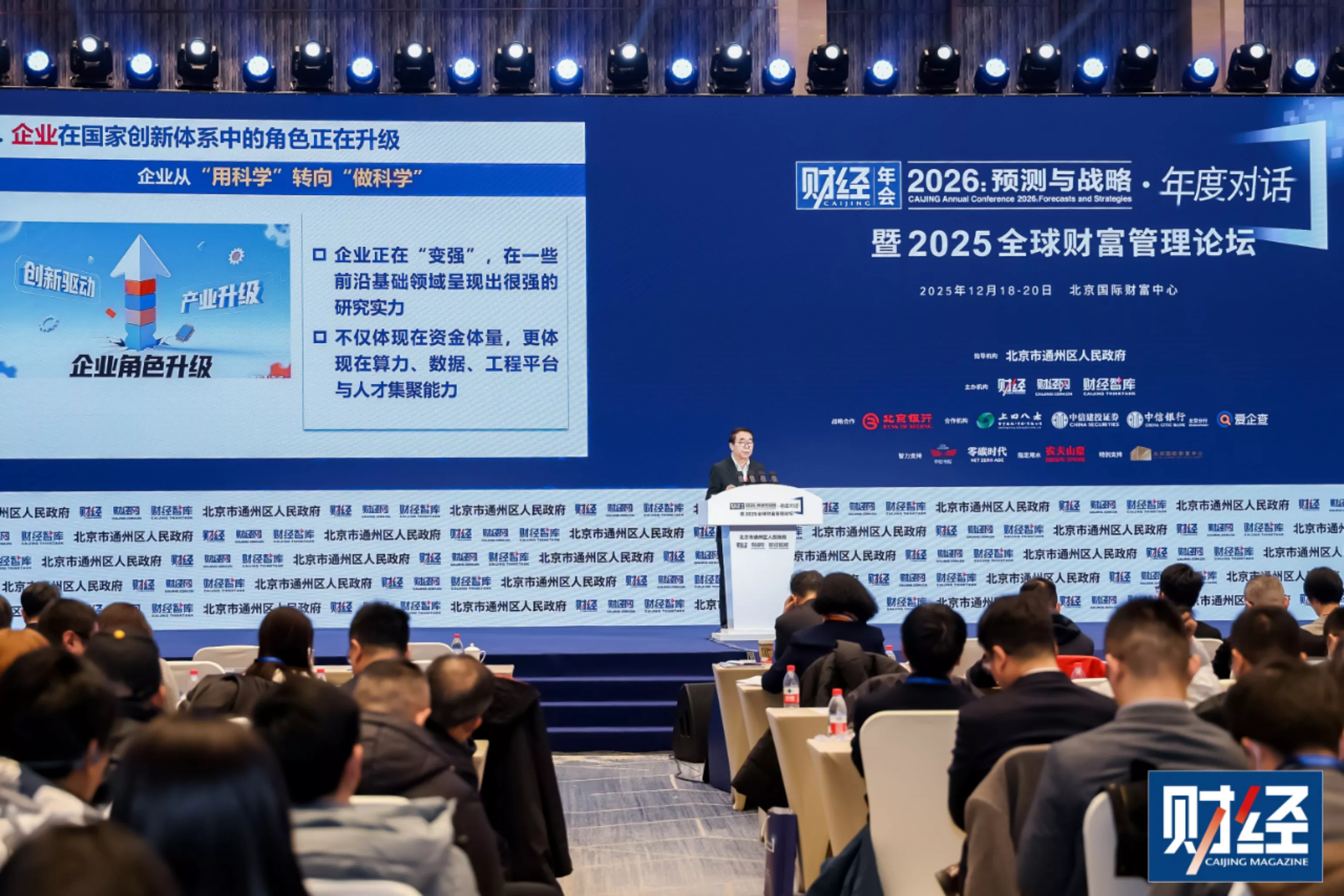
白春礼:国际竞争加速向基础前沿前移,企业创新角色正在升级
2 1 Shi Ji Jing Ji Bao Dao· 2025-12-18 11:56
Core Viewpoint - The integration of basic research into corporate strategy is essential for enhancing national competitiveness and sustaining industrial advantages, as highlighted by the rapid evolution of technology and international competition [1][2]. Group 1: Importance of Basic Research - Basic research is increasingly recognized as the "first move" in industrial competition and a source of national competitiveness [1]. - The boundary between technological innovation and industrial innovation is becoming blurred, with companies transitioning from being mere "applicators" of technology to "creators" of science [1][2]. Group 2: Changes in Corporate Attitudes Towards Basic Research - Companies are shifting their perception of basic research from an "external supply" to a "core competitive asset," leading to systematic management of research [2]. - Leading international firms are making original contributions to "new paradigm basic research," significantly altering the research landscape [2]. Group 3: Challenges Faced by Domestic Companies - Basic research funding in China is relatively low, with only about 6.9% of total R&D expenditure allocated to basic research in 2024, compared to over 12%-20% in leading countries [3]. - Corporate spending on basic research is minimal, constituting only about 1% of total R&D expenditures, indicating a weak role as funders of basic research [3]. - Companies face multiple barriers in conducting basic research, including unstable expectations, financial pressures, and insufficient interdisciplinary capabilities [3]. Group 4: Recommendations for Enhancing Basic Research - Integrate corporate basic research into national strategic tasks to create stable support and long-term arrangements [4]. - Develop effective incentives and risk-sharing mechanisms to ensure long-term investments yield returns [4]. - Establish collaborative platforms between research institutions and companies to facilitate innovation in basic research [4]. - Reform talent supply and evaluation systems to foster an environment conducive to corporate basic research [5].

中国科学院原院长白春礼:优化财税激励政策,提高基础研究投入支持力度
Zheng Quan Shi Bao Wang· 2025-12-18 07:58
Group 1 - The core viewpoint emphasizes that enterprise basic research should become a key pillar of the national innovation system, requiring stronger synergy in investment structure optimization, risk-sharing mechanisms, evaluation orientation adjustments, and platform support systems [1] - It is suggested to improve cashable incentives and risk-sharing mechanisms to ensure long-term investments yield long-term returns [1] - The proposal includes optimizing fiscal and tax incentive policies to enhance support for basic research investments, exploring post-subsidy rewards and continuous incentives for significant breakthroughs [1] Group 2 - The development of patient capital is encouraged, along with the establishment of risk compensation mechanisms to promote the complementary advantages of state-owned and social capital, ensuring risk-sharing and profit-sharing [1] - This approach aims to provide stable funding sources and institutional guarantees for enterprises to conduct long-cycle research [1]
白春礼:企业基础研究投入不足
Xin Lang Cai Jing· 2025-12-18 03:00
Core Viewpoint - The integration of science and technology is accelerating, leading to shorter industry iteration cycles and a shift in international competition, making fundamental research increasingly vital for industrial competitiveness and national strength [2][10]. Group 1: Current Issues in Fundamental Research - National investment in fundamental research is improving but remains low, with only 6.9% of R&D funding allocated to fundamental research, compared to 18% in the US and over 20% in France [2][10]. - Corporate investment in fundamental research is insufficient, with only about 200 billion yuan spent, representing around 1% of total corporate R&D expenditures, indicating a focus on short-term projects rather than long-term foundational research [3][11]. - Companies face three main barriers in conducting fundamental research: unstable expectations leading to reluctance to invest, lack of long-term capital and risk-sharing mechanisms, and insufficient organizational capabilities to sustain systematic research efforts [4][11]. Group 2: Trends and Government Initiatives - The government is working to integrate companies more deeply into the fundamental research system, encouraging them to participate as problem solvers rather than just users, as evidenced by the establishment of a joint fund for private enterprises [4][12]. - Despite these efforts, few large enterprises have the capacity for stable, long-term investment in fundamental research, indicating a need for stronger collaboration and support mechanisms [4][12]. Group 3: Recommendations for Improvement - Companies should be included in the national strategic task system for fundamental research, creating a stable framework for participation and focusing on major national strategic needs [5][13]. - There is a need for improved incentives and risk-sharing mechanisms to encourage long-term investment in fundamental research, including optimizing tax policies and developing patient capital [6][14]. - A collaborative platform between research institutions and enterprises should be established to enhance the integration of fundamental research with industrial innovation, moving from isolated projects to long-term partnerships [7][15]. - Strengthening talent supply and reforming evaluation systems are essential to create an environment that supports corporate fundamental research, emphasizing the importance of talent mobility and long-term evaluation criteria [7][15].
中远海科:将研究跟踪上海市支持企业基础研究政策
Jin Rong Jie· 2025-08-08 00:55
Core Viewpoint - The Shanghai government has issued measures to support enterprises in increasing their investment in basic research, which could positively impact companies that meet the criteria for funding [1] Group 1: Government Support Measures - The Shanghai government will provide a one-time financial subsidy of 10 million yuan to companies that invest 10 million yuan or more annually in basic research [1] - The company reported a total R&D investment of 101,205,612.21 yuan for the year 2024, which qualifies for the subsidy [1] Group 2: Company Response - The company expressed gratitude for the investor's suggestion and indicated that it will study and track the applicability of the new government policies based on actual circumstances [1]

上海:基础研究投入达到或超过1亿元/年的企业,给予一次性财政补助1000万元
Jing Ji Guan Cha Wang· 2025-08-04 06:30
Group 1 - The core viewpoint of the article is that the Shanghai Municipal Government has issued measures to support enterprises in enhancing basic research to boost high-quality development [1] Group 2 - The measures include financial subsidies for enterprises based on their annual investment in basic research: - Enterprises investing 100 million yuan or more per year will receive a one-time financial subsidy of 10 million yuan [1] - Enterprises investing between 50 million yuan (inclusive) and 100 million yuan (exclusive) per year will receive a one-time financial subsidy of 5 million yuan [1] - Enterprises investing between 10 million yuan (inclusive) and 50 million yuan (exclusive) per year will receive a one-time financial subsidy of 2 million yuan [1]