供应链短缺

Search documents
未知机构:有色观点更新220260223钨截至2月13日钨精矿价格报-20260224
未知机构· 2026-02-24 03:10
Summary of Key Points from Conference Call Records Industry Overview Tungsten Industry - As of February 13, tungsten concentrate prices reached 697,000 CNY per standard ton, with a weekly increase of 3.3% and a rise of 237,000 CNY (51%) compared to the end of 2025 [1] - The tungsten price has shown a strong upward trend since 2026, supported by long-term quotes from major tungsten companies, indicating a pattern of initial increase followed by stabilization [1] - International tungsten prices are rising due to supply chain shortages, with China being the source of 80% of global tungsten resources. Export controls and crackdowns on illegal mining in China have made overseas raw material procurement more difficult [1] - The current tungsten market faces significant supply-side challenges, with no clear signs of price peaks, providing solid support for the overall market [1] Lithium Industry - The average price of battery-grade lithium carbonate increased from 135,500 CNY per ton at the beginning of the week to 142,500 CNY per ton by Thursday, a weekly increase of 7,000 CNY per ton [4] - Industrial-grade lithium carbonate prices rose from 132,000 CNY per ton to 139,000 CNY per ton, also up by 7,000 CNY per ton [4] - The futures market showed strong performance, with main contract prices rising from a range of 135,000-141,000 CNY per ton to 146,000-152,400 CNY per ton [4] - Market transactions are primarily driven by sporadic pricing settlements and essential purchases, with overall inquiry and transaction volumes declining [5] - A weak supply-demand balance is expected to persist before and after the Spring Festival, with prices likely to stabilize [6] Antimony Industry - Increased market activity was noted before the Spring Festival, with antimony prices continuing to rise due to speculative demand [10] - A fire at Hunan Zhenqiang Antimony Industry has led to production halts, affecting over 2,000 tons of antimony ingot output [11] - Overall market demand remains relatively weak, but expectations for improved demand post-holiday are rising due to new export policies and improved trade conditions [11][12] - Antimony prices are anticipated to recover due to limited supply and expected export recovery [12] Tin Industry - The tin market is experiencing a weak overall trend, influenced by macroeconomic sentiment and changes in the AI industry narrative [13] - Supply-side constraints are evident as many smelting companies plan maintenance shutdowns, leading to tighter raw material supplies [14] - Demand from downstream solder companies has diminished, with most enterprises halting production and showing low purchasing intent [14] - The market is expected to remain quiet due to the Spring Festival, with tin prices lacking clear direction [15] Cobalt Industry - Cobalt prices showed a slight rebound, but market changes remain limited due to tight upstream raw material supplies [17] - Trade and downstream inquiries have largely ceased, leading to a quiet market atmosphere [18] - As the Spring Festival approaches, many smelting plants are reducing operations, tightening available market supply [19] - Post-holiday, prices may rise again due to supply constraints and cost support from raw materials [22] Nickel Industry - Indonesia's nickel mining quota reduction policy for 2026 has cut the overall quota from 379 million tons in 2025 to 260-270 million tons, a reduction of nearly 30% [22] - Supply disruptions are exacerbated by seasonal weather impacts in the Philippines and Indonesia, leading to a tight supply situation [22] - Downstream companies are optimistic about post-holiday market conditions, with some early stockpiling observed [23] Companies to Watch - Tungsten: Xiamen Tungsten, Zhongtung High-tech, Xianglu Tungsten [2] - Lithium: Shengxin Lithium Energy, Tianhua New Energy, Zhongkuang Resources, Salt Lake Co. [9] - Antimony: Huaxi Nonferrous, Beijiete, Hunan Gold, Huayu Mining [13] - Tin: Huaxi Nonferrous, Xiyang Silver Tin [16] - Cobalt: Huayou Cobalt, Liqin Resources, Tengyuan Cobalt [24]
内存价格翻倍,iPhone变贵?天风郭明錤:苹果的策略是"承担成本抢份额,用服务赚回来"
硬AI· 2026-01-28 08:24
Core Viewpoint - Apple is expected to face a similar increase in memory prices in Q2 2026 as in Q1, and the company plans to leverage its strong bargaining power to secure chip supply while absorbing cost pressures to gain market share, later compensating for losses through its services business [2][3][5]. Group 1: Memory Price Trends - Analysts predict that memory prices for low-power DRAM supplied to Apple have nearly doubled recently, with Samsung and SK Hynix increasing prices by over 80% and approximately 100% respectively [3][5]. - Apple's memory pricing negotiations have shifted from biannual to quarterly, indicating ongoing price increases, with Q2 2026 expected to see similar price hikes as Q1 [5][7]. Group 2: Financial Implications - The rising memory costs are anticipated to be a focal point in Apple's upcoming earnings call, potentially impacting stock prices across the industry more significantly than Apple or its suppliers [7]. - The overall profitability of memory suppliers like Samsung and SK Hynix is expected to improve in Q1 due to the price increases, marking a recovery from previous industry downturns [7]. Group 3: Pricing Strategy for New Products - Despite the cost pressures, Apple aims to maintain the starting price of the new iPhone 18 in the second half of 2026 to support marketing efforts [9]. - Unlike previous years, Apple has only completed memory price negotiations for the first half of the year, reflecting the current memory crisis and indicating potential price increases with the launch of new products [9]. Group 4: Supply Chain Risks - Apple has recognized that supply chain risks are spreading beyond memory and T-glass, with potential shortages in other components due to the booming demand for AI server infrastructure [10]. - The sharp rise in memory prices is attributed to a supply-demand imbalance, driven by significant investments from major tech companies in AI infrastructure, while suppliers are focusing on more profitable HBM products [10].



美财长警告:政府“停摆”或致供应链短缺
Yang Shi Xin Wen· 2025-11-09 17:50
Core Insights - The U.S. Secretary of the Treasury, Scott Bessenet, warned that the speed of cargo transportation in the U.S. is currently slowing down due to the ongoing government shutdown, which has lasted for 40 days, marking the longest federal government shutdown in history [1] - Bessenet indicated that the prolonged shutdown could lead to shortages in both supply chain segments and during the holiday season, exacerbating existing economic issues [1] - The economic situation is deteriorating, with rising inflation being a significant concern during the shutdown period [1]
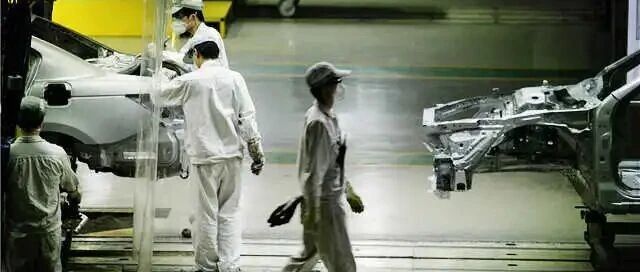
安世半导体供应中断,本田墨西哥工厂已停产
第一财经· 2025-10-31 02:22
Core Viewpoint - The automotive production of several Japanese companies, including Honda and Nissan, is facing challenges due to supply disruptions from Nexperia Semiconductor, leading to temporary factory shutdowns and production adjustments [3][4]. Group 1: Honda's Production Challenges - Honda has adjusted its automotive production plans in North America and Mexico due to the semiconductor supply issues [3]. - The Honda plant in Celaya, Mexico, has halted production, primarily affecting the Honda HR-V model, which has an annual output of approximately 200,000 units [3][4]. - In North America, Honda's assembly plant in Ontario, Canada, has reduced production by half and plans to halt operations for a week due to chip shortages [3][4]. Group 2: Sales Performance and Supply Chain Management - North America is a crucial market for Honda, with sales exceeding 1.6 million units in the 2023 fiscal year, marking a 36.2% year-on-year increase [4]. - Honda is actively working to minimize the impact of chip shortages by reassessing its supply chain and considering alternative components, although technical validation may delay replacements [4]. Group 3: Nissan's Situation and Industry Impact - Nissan's Chief Performance Officer indicated that the company's chip supply inventory could last until the first week of November, highlighting the severity of the chip supply issue [5]. - The Japan Automobile Manufacturers Association warned that the semiconductor supply disruptions could severely impact global automotive production [5]. - The semiconductor dispute has affected the global automotive supply chain, with warnings from European and American automotive organizations regarding potential production interruptions [5].