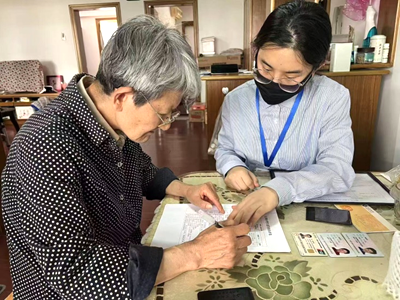
保险+养老

Search documents
险企破圈新方向!银发浪潮下 “保险+养老”成风口
Zhong Guo Zheng Quan Bao· 2026-01-18 05:49
Core Insights - The insurance industry is accelerating the entry of pension communities by the end of 2025, transitioning from early single-point exploration to large-scale, networked operations, with "insurance + pension" integration becoming mainstream [1][3] - The industry is facing challenges such as long capital return cycles and insufficient inclusivity, which need to be addressed for further growth [1][6] Group 1: Industry Developments - By the end of 2025, over 10 pension community projects are expected to be launched by insurance companies, with major players like China Pacific Insurance and Ping An leading the way [3][4] - China Pacific Insurance's "Taibao Home" has already established 14 communities across 12 cities, serving over 3,000 long-term residents and achieving 130,000 short-term stays in a year [3][4] - Ping An's home-based elderly care services have reached 85 cities, with nearly 240,000 clients qualifying for services, and they have launched six high-quality pension community projects across five cities [4] Group 2: Strategic Upgrades - China Pacific Insurance is upgrading its strategy from "big health" to "big pension and health," aiming to create a comprehensive ecosystem covering various aspects of elderly care [3] - The industry is entering a phase of scale explosion, with commercial pension and health insurance reserves reaching 11 trillion yuan during the 14th Five-Year Plan period [4] Group 3: Challenges and Solutions - The long capital return cycle is a significant challenge, with some insurance companies indicating that it takes over 10 years to achieve profitability in heavy-asset pension communities [6] - High occupancy rates are essential for profitability, with a threshold of 60% occupancy needed for stable operations [6] - The industry faces issues with inclusivity, as many pension communities have high entry barriers, making it difficult for middle and low-income groups to access services [6] - A shortage of professional talent is a common pain point, with difficulties in retaining staff due to low wages and challenging working conditions [6] Group 4: Policy Support - Recent policy initiatives from the National Financial Regulatory Administration aim to enhance the integration of long-term care and community pension services, promoting the expansion of insurance companies into home-based care [7] - The application of financial tools like REITs is expected to improve funding exit channels for the pension industry, alleviating capital pressure [7] - The competition in the pension community sector is anticipated to intensify, with ecological, inclusive, and technological advancements being key directions for industry breakthroughs [7]


险企破圈新方向 银发浪潮下,“保险+养老”成风口
Xin Lang Cai Jing· 2026-01-18 04:34
Core Viewpoint - China Pacific Insurance (CPIC) is upgrading its health and elderly care strategy, transitioning from a "big health" to a "big elderly care" approach, aiming to create a comprehensive ecosystem covering various aspects of elderly care, health, and rehabilitation [1] Group 1: Strategic Upgrades - CPIC's President Zhao Yonggang announced the strategic upgrade path, focusing on building a service loop that integrates prevention, diagnosis, treatment, rehabilitation, and care throughout the entire lifecycle [1] - The company plans to launch over 10 elderly care community projects in 2025, marking a significant year for the insurance industry in this sector [1] Group 2: Project Launches and Operations - By the end of 2025, CPIC's elderly care community, Taibao Jiayuan, will operate in 14 communities across 12 cities, with over 3,000 long-term residents and 130,000 short-term stays [1] - Other major players like Ping An are also expanding their elderly care services, with Ping An's home care services covering 85 cities and nearly 240,000 clients by September 2025 [1] - Ping An has established high-quality elderly care community projects in five cities, with the Shanghai project "Jingan No. 8" already in operation and a Shenzhen project expected to trial by the end of 2025 [1]
险企破圈新方向!银发浪潮下,“保险+养老”成风口
Zhong Guo Zheng Quan Bao - Zhong Zheng Wang· 2026-01-18 04:24
Core Insights - The insurance industry is accelerating the entry of pension communities by 2025, transitioning from early single-point exploration to large-scale, networked operations, with a focus on the integration of "insurance + elderly care" as a mainstream model [1] - The industry is experiencing a significant expansion, with over 10 pension community projects launched by insurance companies in 2025, including major projects from leading firms like China Pacific Insurance and Ping An [2] Group 1: Industry Developments - By the end of 2025, China Pacific Insurance's "Tai Bao Home" will operate 14 communities across 12 cities, serving over 3,000 long-term residents and achieving 130,000 short-term stays [2] - Ping An's home-based elderly care services have reached 85 cities, with nearly 240,000 clients qualifying for services, and their high-quality elderly care community projects are underway in five cities [2] - The insurance sector has seen significant growth in the third pillar of pension insurance, accumulating reserves of 11 trillion yuan, with 130 pension community projects developed [2] Group 2: Challenges and Solutions - The long capital return cycle is a major challenge, with large asset-based pension communities taking over 10 years to become profitable, requiring a minimum occupancy rate of 60% for stable operations [3] - The high entry barriers for pension communities, such as a minimum premium of 3 million yuan and monthly fees starting at 11,500 yuan, limit accessibility for middle and low-income groups [3] - A shortage of professional talent in the industry is a common issue, with difficulties in retaining staff due to low salaries and challenging resident behaviors [3] Group 3: Policy and Innovation - The National Financial Regulatory Administration has issued guidelines to enhance the integration of long-term care and community elderly services, promoting the expansion of insurance companies into home-based care [5] - Companies like Fude Life Insurance are exploring new development paths through financial products that connect physical services, aiming to facilitate home-based elderly care with smart home equipment [4] - The application of financial tools like REITs is expected to improve funding exit channels for the pension industry, alleviating financial pressures [5]
2025年度山东省保险业影响力评选结果揭晓
Qi Lu Wan Bao· 2025-12-31 13:40
Core Insights - The insurance industry in Shandong is accelerating its development in high-quality growth, risk protection, and public service, responding to economic transformation and social demand changes [1] - The "Influential Shandong 2025 Annual Insurance Industry Impact Assessment" event recognized 38 insurance companies for their contributions to the industry [1][2] - Digital transformation, smart risk control, and inclusive insurance are key trends driving innovation in the Shandong insurance sector [2] Industry Developments - The insurance sector is becoming a stabilizer, booster, and ballast for high-quality development, extending its services from personal pensions to family health and disaster response [1] - The total votes for the impact assessment exceeded 2.4 million, indicating strong public engagement and interest in the insurance industry [2] - The event highlighted the importance of integrating technology with insurance services, enhancing efficiency and social influence [2] Award Winners - The most influential insurance companies in Shandong for 2025 include major players such as People's Insurance Company of China, China Life, and Ping An Life [3][4] - The best claims service companies recognized include China Life Property Insurance and Sunshine Property Insurance [4] - The leading insurance products awarded include various life and health insurance plans, showcasing innovation in product offerings [5] Media Influence - Qilu Evening News, the organizer of the event, has a significant media presence in Shandong, with over 1.05 billion downloads of its app and a daily active user base exceeding 1.75 million [3] - The media outlet has adapted to new communication trends, focusing on mobile platforms and smart content production to enhance its reach and effectiveness [2]

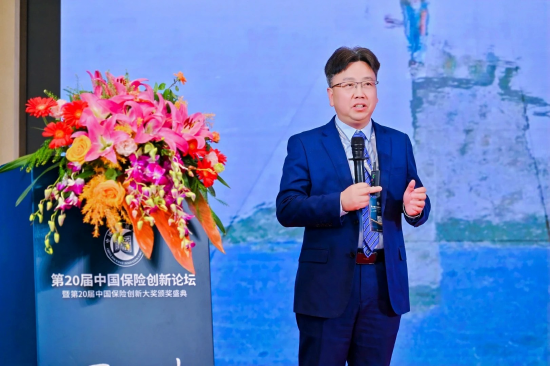
沈东:共同建立“保险+养老”“保险+健康”的生态场景,助力保险公司做好事业
Xin Lang Cai Jing· 2025-12-23 11:17
Core Viewpoint - The 20th China Insurance Innovation Forum emphasizes the integration of insurance with health and elderly care services, aiming to create a comprehensive ecosystem for wellness and insurance [1][13]. Group 1: Company Overview - Jiangsu Jiuzhou Smart Health Technology Co., Ltd. is committed to building a full-age health and wellness service, having established a complete "big health" industry chain [1][13]. - The company has developed six major business segments, including venture capital, real estate investment, asset management, financial trade, industrial manufacturing, and health tourism [4][16][19]. Group 2: Health and Wellness Services - Jiuzhou has created various "new health and wellness" communities, such as the Jin Dongfang Care Center, which has been operational for 14 years, with a total investment of 2.3 billion yuan, covering 265 acres and providing 1,789 housing units for over 3,000 elderly residents [21][23]. - The company promotes a full-age health service model, catering to different age groups from infants to seniors, ensuring comprehensive care across all life stages [5][19]. Group 3: Community Projects - The Shunshan Town project, recognized as a cultural and wellness destination, integrates tourism and health services, featuring a wellness complex and various recreational facilities [22]. - The company has also launched the Shangxing International Health City project, which has received positive feedback from insurance clients, emphasizing personalized room designs for all age groups [21][22]. Group 4: Medical Support - Jiuzhou operates its own hospital, the Changzhou Jiuzhou Jin Dongfang Hospital, which is a second-level private hospital with 500 planned beds, focusing on geriatric medicine and rehabilitation [23][24]. - The Jin Dongfang Nursing Home, adjacent to the hospital, offers comprehensive medical, nursing, and rehabilitation services, recognized as a national model for integrated health and elderly care [24]. Group 5: Collaboration with Insurance Companies - The company has engaged with over 30,000 clients from various insurance firms, indicating a strong interest in collaboration to enhance health and elderly care services [12][24]. - Jiuzhou aims to establish a cooperative ecosystem combining insurance with health and elderly care, addressing the operational challenges faced by many existing institutions [25].

“一份承诺 双份关爱” ——首批泰康幸福溢彩公益保单落地,助力普惠养老高质量发展
Zhong Guo Xin Wen Wang· 2025-10-17 08:33
Core Insights - The article emphasizes the importance of integrating insurance with elderly care services in response to the growing aging population in China, highlighting the innovative approach of the company in this sector [1][5][16] Group 1: Insurance and Elderly Care Integration - The company has pioneered the "Happiness Appointment" product since 2012, which combines life insurance payments with elderly care services, setting a new standard in the industry [1][5] - The "Happiness Appointment" policy includes two main products: "Longevity Appointment" and "Health Appointment," effectively linking insurance payments with real-world elderly care services [7][8] - The company has established a network of high-quality elderly care communities across 37 cities, aiming to provide accessible and quality elderly care services [8] Group 2: Philanthropic Initiatives - The "Happiness Overflow Public Welfare Policy Plan" was launched, where 300 yuan is donated to the charity for every "Happiness Appointment" policy sold, supporting various aspects of elderly care [1][9][12] - The company has trained 138,000 elderly care professionals through the "Overflow Training" initiative, addressing the need for a skilled workforce in the elderly care sector [11] - The company has supported 448 elderly care institutions and donated 35,000 pieces of rehabilitation equipment, enhancing the quality of care provided [12][14] Group 3: Market Position and Future Outlook - The company is positioned as a leader in the integration of insurance and elderly care, responding to the increasing demand for sustainable funding and quality services in the aging population [5][9] - The innovative model of combining insurance with public welfare is seen as a way to enhance the overall development of the elderly care industry [9][14] - The company's commitment to a "commercial benevolence" philosophy reflects its dedication to social responsibility and the well-being of the elderly [16]
五年裁撤超万家网点,险企“瘦身”再加速
Xin Lang Cai Jing· 2025-09-30 06:12
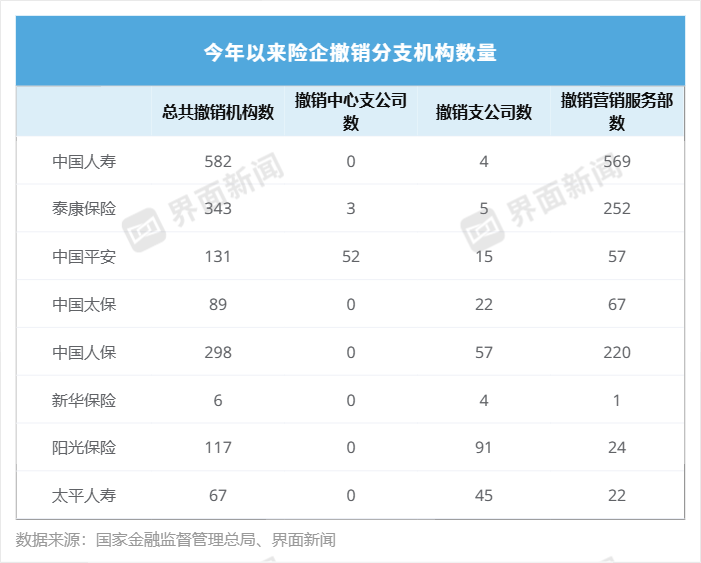
Core Insights - The insurance industry in China is accelerating the closure of branch offices, with 2,436 branches having exited the market in 2023 alone, compared to 2,012 in 2024, indicating a significant trend towards downsizing [1][2][6] Summary by Sections Branch Closures - Major insurance companies are focusing on reducing their branch networks, particularly in lower-tier cities and rural areas, as part of a strategy to enhance efficiency and reduce costs [2][3] - China Life Insurance has closed 582 branches this year, with 569 being marketing service departments, reflecting an increased pace of downsizing compared to previous years [2][4] - China Pacific Insurance and China Property & Casualty Insurance have also made significant cuts, with 89 and 298 branch closures respectively [4][5] New Branch Openings - Despite the closures, insurance companies have opened a total of 268 new branches this year, with China Ping An leading with 32 new branches [5][6] - The new branches primarily consist of marketing service departments, indicating a shift in focus rather than a complete withdrawal from the market [5] Long-term Trends - Since 2021, the insurance sector has seen over 10,000 branch closures, with the peak occurring in 2022, likely influenced by regulatory requirements and the need for operational efficiency [6][7] - The shift towards digitalization has led to an increase in online insurance purchases, with online purchase rates rising from 73% in 2023 to 78% in 2024, further reducing reliance on physical branches [6][7] Strategic Adjustments - Companies are adjusting their branch strategies to focus on core customer groups and optimize their networks, particularly in response to declining consumer spending in lower-tier cities [3][6] - The role of physical branches is evolving, with a potential shift towards providing comprehensive services such as wealth management and elder care, rather than just sales [7][8]


“大城养老 守护记忆”——中国太保助力推动认知症防治“上海经验”
Mei Ri Jing Ji Xin Wen· 2025-09-23 09:25
Core Insights - China Pacific Insurance's high-quality institutional elderly care brand, Taibao Jiayuan, has reached a significant milestone with the opening of two new communities in Shanghai and Zhengzhou, enhancing its operational capabilities in elderly care services [1][9] - The aging population and brain health have become focal points for society, prompting discussions on building a scientific and humane care system for dementia [1][2] - The company has established a comprehensive and professional care system for dementia, integrating various care models and emphasizing personalized interventions [5][6][7] Group 1: Operational Expansion - Taibao Jiayuan has opened 12 operational communities, laying a solid foundation for a comprehensive elderly care ecosystem [1] - The recent openings in Shanghai and Zhengzhou are part of a broader strategy to enhance the company's presence in the elderly care market [9][10] - The company aims to provide a "professional elderly care + cultural elderly care" model in Zhengzhou, contributing to the local elderly care service system [10] Group 2: Dementia Care Focus - The company has introduced dementia-friendly environmental designs in its communities, which help reduce anxiety and enhance the quality of life for residents [3][4] - Taibao Jiayuan's "Le Yi Jia" dementia care sub-brand focuses on person-centered care, offering comprehensive support for different stages of dementia [5][6] - The integration of a multi-disciplinary team in the Shanghai community ensures a holistic approach to health management for the elderly [6] Group 3: Innovative Care Models - The company has adopted a data-driven approach to improve care quality, transitioning from experience-based to data-driven management [7] - The "PDCA cycle" quality management system is implemented to continuously enhance care services based on various performance metrics [7] - The company emphasizes the importance of community involvement and technological integration in dementia care, aiming to contribute to global solutions [2][8] Group 4: Strategic Vision - China Pacific Insurance is advancing its "insurance + elderly care" model, which has shown promising results in addressing the challenges of dementia care [9][10] - The company has received over 770,000 visits from insurance and social clients, indicating strong interest and engagement in its elderly care services [10] - The ongoing development of the "Taibao Jiayuan" model aims to transform financial guarantees into tangible quality of life improvements for the elderly [10]

专访平安人寿深圳分公司胡滨:贯彻金融为民,传递保险温度
Nan Fang Du Shi Bao· 2025-09-22 04:42
Core Viewpoint - The article emphasizes the importance of financial consumer rights protection and the initiatives taken by Ping An Life Insurance Shenzhen Branch during the Shenzhen Financial Education Promotion Week to enhance financial literacy and safeguard consumer interests [2][4][8]. Group 1: Financial Consumer Rights Protection Initiatives - Ping An Life Insurance Shenzhen Branch has established a comprehensive consumer rights protection mechanism, including the formation of a Consumer Rights Protection Committee to coordinate and clarify responsibilities across departments [4]. - The company has implemented a three-pronged approach to financial consumer protection, focusing on system construction, structural optimization, and key content promotion [4][5]. - The company has launched various educational activities, including online and offline campaigns, to raise awareness about financial risks and consumer rights [5][6]. Group 2: Enhancing Financial Literacy - The company has developed a "three-in-one" educational framework that includes education, training, and warning systems to improve consumer risk awareness and the capabilities of frontline staff [5][6]. - During the Financial Education Promotion Week, the company organized innovative financial education activities, such as immersive experiences in metro stations and video lectures by management on compliance knowledge [6][9]. - The company has created a comprehensive promotional system to ensure continuous and widespread financial education [5][6]. Group 3: Combating Financial Malpractices - The company has initiated actions against illegal insurance practices, including a reward mechanism for reporting illegal activities related to insurance claims [6][7]. - The use of technology, such as big data and AI, has been emphasized to enhance the identification and management of financial malpractices [7]. Group 4: Innovations in Pension Finance - Ping An Life Insurance Shenzhen Branch is actively exploring innovations in pension finance, integrating insurance products with elderly care services to provide comprehensive solutions [8][9]. - The company has achieved a high level of online service automation and aims to enhance the quality of services for elderly clients through various initiatives [9]. Group 5: Corporate Social Responsibility - The company is committed to corporate social responsibility, engaging in various community support activities, including blood donation drives and educational initiatives [10][11]. - The company has been involved in environmental protection and rural revitalization projects, demonstrating its commitment to social welfare [11].


“保险+养老”不断深化 上市险企布局特色养老生态
Jin Rong Shi Bao· 2025-09-10 06:16
Core Insights - The "insurance + elderly care" model is transitioning from strategic planning to value realization, driven by the aging population and the transformation of the insurance industry [1] - Leading insurance companies are integrating resources across elderly care, health, technology, and comprehensive finance to explore new growth opportunities [1] Group 1: Company Strategies - China Pacific Insurance reported a 55% year-on-year increase in the number of qualification letters generated for residency, with total premiums up by 44%, indicating a positive impact on high-net-worth client growth [1] - Ping An's CEO highlighted that 60% of their clients now enjoy medical and elderly care services, with new clients increasingly coming from this sector, demonstrating a successful "service drives sales" model [2] - China Life is actively developing three elderly care product lines, including CCRC (Continuing Care Retirement Community), with 19 institutional projects across 15 cities [3] Group 2: Market Trends - The combination of comprehensive finance and medical elderly care is becoming a core growth driver for Ping An, creating a complete service chain that enhances customer engagement [2] - The deep layout of elderly care ecosystems is reshaping traditional value chains, transitioning insurance from a risk transfer tool to a provider of comprehensive solutions [2] - China Pacific Insurance aims to enhance synergy between health insurance and elderly finance, focusing on growth opportunities in medical insurance and elderly care [4] Group 3: Future Directions - China Pacific Insurance plans to improve service quality in institutional elderly care and home care, emphasizing a balance between light and heavy care services [4] - The company is focusing on a customer-centric approach, integrating high-quality services into product innovation to enhance customer engagement throughout the entire lifecycle of care [4]