幸福有约

Search documents
马年开工启新篇,奔赴黄金好赛道|泰康大健康事业合伙人春季人才招募火热进行中
Sou Hu Cai Jing· 2026-02-24 03:57
Core Insights - The article emphasizes the opportunity for individuals to join the TaiKang Health Business Partner program, highlighting the potential for personal and professional growth in the health industry during the new year [1][6] - TaiKang Insurance Group is celebrating its 30th anniversary in 2026, marking a significant milestone and reinforcing its commitment to the "insurance + healthcare" ecosystem [3][6] Group 1: Business Model and Strategy - TaiKang has developed an innovative "payment + service + investment" model, integrating virtual insurance with physical healthcare services to create a comprehensive ecosystem focused on longevity, health, and wealth [4] - The company aims to provide a stable foundation for health and wealth planning through a robust range of financial insurance products, supported by a full-service network covering medical, elderly care, rehabilitation, and palliative care [4] Group 2: Marketing and Support - TaiKang offers a unique "super-body marketing" system that empowers partners with extensive support, facilitating rapid growth and efficient business development [5] - A comprehensive training system is in place to help partners transition from newcomers to industry experts, alongside clear promotion pathways and a fair development mechanism [5] Group 3: Recruitment and Future Vision - The recruitment campaign for TaiKang Health Business Partners is actively seeking individuals who are eager to innovate and grow alongside the company in the health industry [6] - The company positions itself as a platform without ceilings, encouraging potential partners to seize the historical opportunity presented by the longevity era and to define their future careers [6]

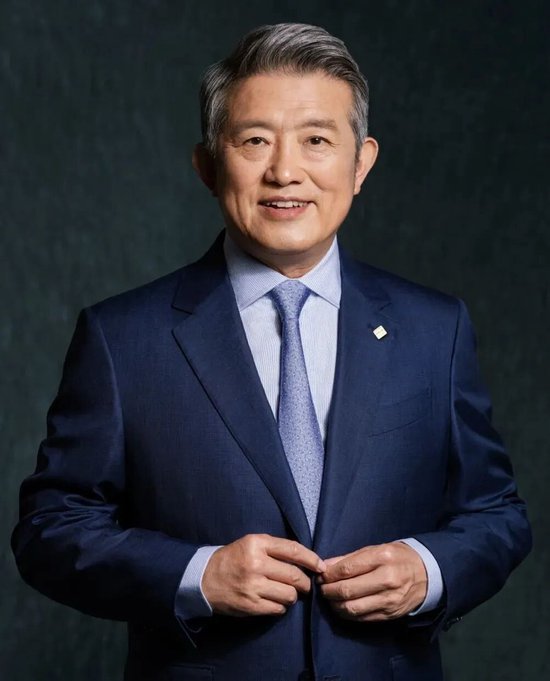
泰康保险集团创始人、董事长兼CEO陈东升发表新春畅想
Xin Lang Cai Jing· 2026-02-11 12:31
Core Viewpoint - The company aims to leverage "new life insurance" to drive high-quality development and contribute to national strategies and the real economy, particularly in the context of an aging population [4][10]. Group 1: Financial Performance - The company achieved positive growth in annual operating revenue, new business value, and net profit, maintaining industry-leading solvency [4][10]. - Cumulative tax contributions exceeded 100 billion yuan [4][10]. Group 2: Pension and Elderly Care Services - The company manages nearly 1.3 trillion yuan in first and second pillar retirement funds, retaining its position as the largest retirement fund manager in the market [5][11]. - The "Happiness Appointment" series of innovative products has assisted over 250,000 clients in pension and health funding, receiving high market recognition [5][11]. - Long-term care insurance trials are progressing well, covering 33 cities, with over 2 million beneficiaries [5][11]. Group 3: Investment in Elderly Economy - The company has invested over 70 billion yuan in building and operating medical and elderly care entities [5][11]. - The company operates five hospitals under its medical division, with ongoing improvements in quality and efficiency [5][11]. - The company has established a presence in 37 cities with 47 projects, totaling nearly 90,000 beds, leading the industry [5][11]. Group 4: Future Outlook - The company will celebrate its 30th anniversary in 2026, reflecting on its evolution from a single life insurance company to a large insurance financial service group [6][12]. - The company plans to continue integrating traditional insurance with medical and elderly care services, aiming for innovation and leadership in the health sector [6][12]. - The company is committed to the values of respecting, caring for, and celebrating life, while pursuing market-oriented, professional, and standardized development [6][12].
向善而新 泰康人寿河南分公司交出高质量发展答卷
Xin Lang Cai Jing· 2026-02-06 04:32
Group 1 - The core event is the 30th anniversary celebration of Taikang Insurance Group, with a focus on the achievements of its Henan branch [1][3] - By the end of 2025, Taikang Life Henan has served over 6.07 million customers and paid out a total of over 6.5 billion yuan in claims [3] - In 2025, the premium income exceeded 11 billion yuan, indicating a robust business structure and strong solvency, with regulatory ratings among the top in the industry [3] Group 2 - Taikang's health and pension service system is guided by the "Longevity Era Taikang Plan," featuring three main initiatives: "Happiness Appointment," "Taikang Home·Yuyuan," and "Health Wealth Planner (HWP)" [3] - "Happiness Appointment" has nearly 9,000 high-net-worth clients in Henan, with a national client base exceeding 250,000 [3] - The "Taikang Home·Yuyuan" project has received over 640,000 visitors and accommodated more than 450 elderly residents, becoming a benchmark for integrated medical and nursing care in Central China [3] Group 3 - The second phase of the "Taikang Home·Yuyuan" project is expected to commence construction in May 2026, aimed at expanding service capacity [3] - The HWP team in Henan has surpassed 1,900 members, providing integrated planning for insurance, pension, and wealth management to high-net-worth clients [3] - Taikang's "Yicai Public Welfare" has implemented 39 projects in Henan, with total donations exceeding 56 million yuan, making it the province with the highest donations nationwide [3] Group 4 - The company aims to continue its commitment to benevolent business practices, providing warmer services and practical innovations to accompany Henan families into a prosperous future in the longevity era [4]
泰康:2025年“幸福有约”客户量超25万,HWP超3.6万人
Bei Jing Shang Bao· 2026-02-05 09:45
Group 1 - In 2025, Taikang Insurance achieved positive growth in annual operating income, new policy value, and net profit [1] - The professional team of Taikang Life continues to grow, with over 36,000 Health Wealth Planners (HWP) [1] - The "Happiness Appointment" series of innovative products has assisted over 250,000 clients in retirement and health funding [1] - Taikang Pension focuses on pension financial management, with entrusted management assets exceeding 700 billion yuan [1] - Taikang Online is building a "new insurance ecosystem" through the business model of "insurance + technology" and "insurance + service" [1] - Taikang Home has established 47 projects in 37 cities, operating 27 projects in 24 cities, serving over 20,000 residents with nearly 90,000 total bed capacity [1] - Taikang Asset's pension investment management scale exceeds 1.3 trillion yuan, while Taikang Fund's management scale exceeds 160 billion yuan, serving over 22 million clients [1] - Taikang Asset (Hong Kong) has an asset management scale exceeding 150 billion HKD [1] Group 2 - In 2026, Taikang Insurance Group will celebrate its 30th anniversary [2] - The founder and CEO, Chen Dongsheng, emphasizes that the industrial revolution extends physical capabilities, the intelligent revolution extends intellectual capabilities, and the longevity era extends life [2] - Taikang has recognized and strategically positioned itself for the trends of the longevity era, expanding from life insurance to the broader health sector [2]
泰康保险集团累计纳税超千亿元
Zheng Quan Ri Bao Wang· 2026-02-05 04:13
Core Insights - The company, Taikang Insurance Group, has accumulated tax payments exceeding 102.13 billion yuan and has created 345,000 jobs as of January 2026, while contributing over 2.4 billion yuan to public welfare [1] Group 1: Financial Performance - Taikang has strengthened its pension funding and payment capabilities, with a professional team of over 36,000 health wealth planners (HWP) [1] - The second pillar annuity entrusted management asset scale has surpassed 700 billion yuan [1] Group 2: Service Development - Taikang is focusing on the silver economy, with 47 projects in 37 cities and over 20,000 residents served, totaling nearly 90,000 beds in its layout [1] Group 3: Investment Strategy - As a significant institutional investor in the capital market, Taikang plays a stabilizing role with a pension investment management scale exceeding 1.3 trillion yuan, ranking among the largest pension managers in the domestic market [1] - The company has a fund management scale exceeding 160 billion yuan, serving over 22 million clients [1] - Taikang established Taikang Stable (Wuhan) Private Fund Management Co., Ltd. in 2025 to respond to the expansion of long-term investment reforms [1]
新春幸福有约,要“爱你老己”,也要为全家铸就终身幸福铠甲
Sou Hu Wang· 2026-01-27 10:08
Core Viewpoint - The article emphasizes the importance of family and self-care during the Spring Festival, highlighting the concept of "Love Yourself" as a guiding principle for long-term planning and care for loved ones, with TaiKang's new life insurance strategy serving as a foundation for this approach [1] Group 1: New Life Insurance Strategy - TaiKang is committed to deepening its "New Life Insurance" strategy, focusing on a triad of "payment + service + investment" to drive high-quality development and align with national financial goals [2] - The "Happiness Agreement" product series embodies this strategy, integrating financial services with everyday needs to create a comprehensive ecosystem for family protection [2][3] - The strategy aims to provide a holistic solution for families throughout their life cycle, incorporating professional medical support and quality elderly care services [2] Group 2: Product Offerings - The "Happiness Agreement" includes various versions tailored to different family needs, ensuring comprehensive coverage and support [3][4] - The Family Version Confirmation Letter serves as a "family protection shield," extending benefits to the insured's family members, ensuring peace of mind for all [3] - The Standard Version focuses on providing lifelong community residency rights, integrating various elderly care services to enhance quality of life [3][4] Group 3: Specialized Versions - The Urban Version offers flexible premium options and guarantees local community residency, allowing individuals to stay close to their roots while accessing quality care [4] - The Care Version addresses the needs of elderly individuals requiring assistance, providing a structured care plan and support for families [4] - The Youth Version aims to secure future residency rights for children, promoting long-term planning for education and wealth accumulation [4][5] Group 4: Family-Centric Approach - The Family Version allows multiple family members to benefit from the same policy, facilitating intergenerational care and support [5][6] - The six versions of the "Happiness Agreement" exemplify TaiKang's customer-centric approach, transforming insurance products into a long-term family care contract [6] - This strategy not only celebrates the joy of family reunions during the Spring Festival but also ensures ongoing support and safety for families throughout their lives [6]
锚定目标深耕作 多点发力惠民生
Xin Lang Cai Jing· 2026-01-25 20:19
Core Viewpoint - The "14th Five-Year Plan" period is crucial for the reform and return to the essence of China's life insurance industry, with Taikang Life focusing on a new life insurance model that integrates payment, service, and investment to achieve dual growth in operational scale and development quality [1] Group 1: Medical and Elderly Care Integration - Taikang has initiated a comprehensive layout in the medical and elderly care sectors to address the national strategy of population aging, integrating virtual insurance with physical "medical and elderly care" services to create a full lifecycle service system [2] - The Taikang Home elderly community has established 47 projects across 37 cities, housing over 20,000 residents with a planned total of more than 57,000 beds, focusing on a holistic approach to elder care [2] - Five major medical centers, including Xianlin Gulou Hospital and Tongji (Wuhan) Hospital, are operational, providing over 5,000 medical beds and enhancing the integration of health management and rehabilitation services for the elderly [3] Group 2: Product System Innovation - Taikang has developed a product system centered around "Happiness Agreement," covering four major areas: longevity, health, wealth, and benevolence, with a cumulative sales target of over 300,000 policies by the end of 2025 [4] - The "Double Agreement" solution addresses both pension and health needs, linking annuity insurance with elderly community confirmations to enhance service delivery [4] - Taikang actively participates in the third pillar of pension construction, with 20 products included in the individual pension insurance directory, serving over 51,000 personal pension clients by the end of 2024 [4] Group 3: Service Ecosystem and Professional Team Development - Taikang has introduced the Health Wealth Planner (HWP) role to create a professional service team, aiming to exceed 1,000 high-educated talents by 2025 [5] - The HWP team provides comprehensive services covering medical health, quality elderly care, and financial planning, ensuring a one-stop solution for clients [5] - The company emphasizes integrity in operations and has implemented standardized management of sales behaviors to protect consumer rights [5] Group 4: Inclusive Finance and Social Responsibility - During the "14th Five-Year Plan," Taikang has made significant strides in inclusive finance and social security, covering 9.04 million people with comprehensive insurance plans and paying out over 1.5 billion yuan [7] - The company has participated in long-term care insurance pilot programs, serving over 78.2 million people and providing claims exceeding 1.55 billion yuan [7] - Taikang's total assets exceeded 1.9 trillion yuan by August 2025, with a compound annual growth rate of 16.9% in assets and 26.9% in net assets, demonstrating strong operational resilience [7] Group 5: Future Outlook - Taikang will continue to implement the central financial work conference spirit, deepen the medical and health ecosystem layout, and contribute to the construction of a financial power and modernization in China [8]
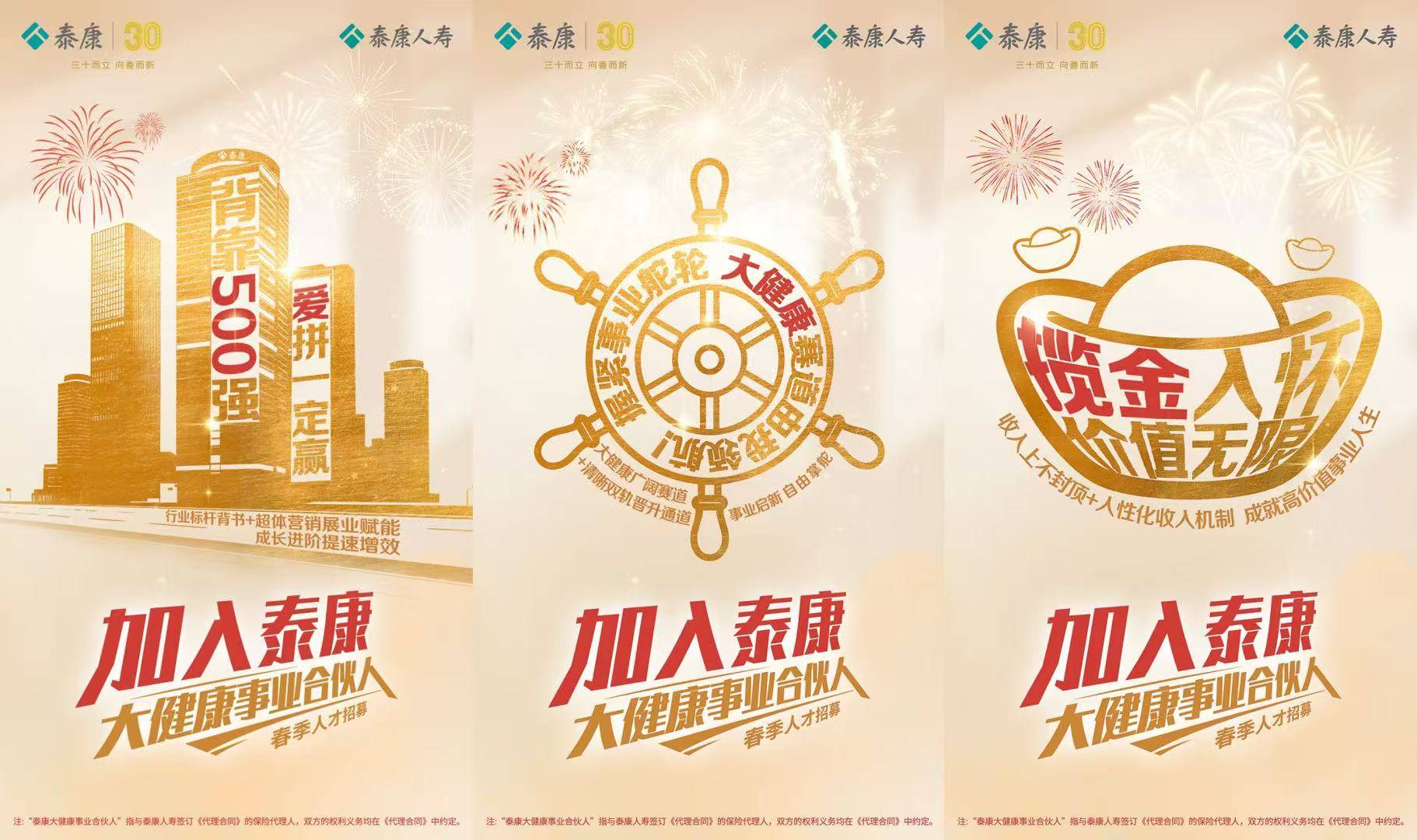
新春入局正当时:与泰康共创大健康事业,成就更好的自己
Sou Hu Wang· 2026-01-13 03:10
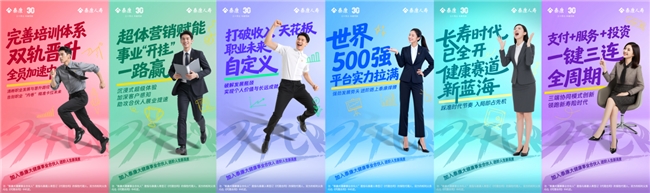
Core Insights - The article emphasizes the importance of self-acknowledgment and personal growth, particularly in the context of the booming health industry driven by the "Healthy China" strategy, with the market expected to exceed 10 trillion yuan by 2025 [1] - The company, Taikang Insurance Group, is launching a recruitment plan for its "Health Business Partners" in 2026, marking its 30th anniversary and aiming to capitalize on the "longevity era" [1] Group 1: Business Model Innovation - Taikang proposes an innovative "payment + service + investment" model for the new life insurance era, integrating virtual insurance with physical healthcare services to create three major closed loops: longevity, health, and wealth [2] - The new model focuses on a holistic approach to client service, expanding beyond traditional insurance sales to include health management, retirement planning, wealth management, investment portfolios, legal and tax advice, and family inheritance [2][3] Group 2: Marketing and Support Strategies - The company employs a unique "super body marketing" system that transforms insurance from a "cold product" into a "warm service," enhancing the relationship between agents and clients through immersive experiences [4] - Taikang provides a comprehensive training system and clear promotion pathways, enabling agents to grow from novices to experts, supported by the strength of a Fortune 500 company [5] Group 3: Future Vision and Opportunities - Taikang's 30-year journey is characterized by innovation and commitment, and the company seeks partners who are willing to grow alongside it in a career that offers both social value and personal achievement [6] - The "Health Business Partner" program invites individuals to join Taikang in defining their future in the health wealth management sector, emphasizing the potential for personal value maximization in a limitless environment [6]
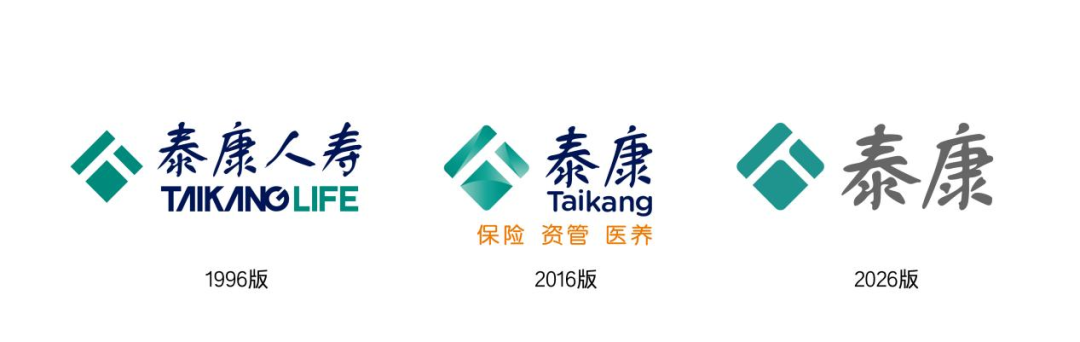
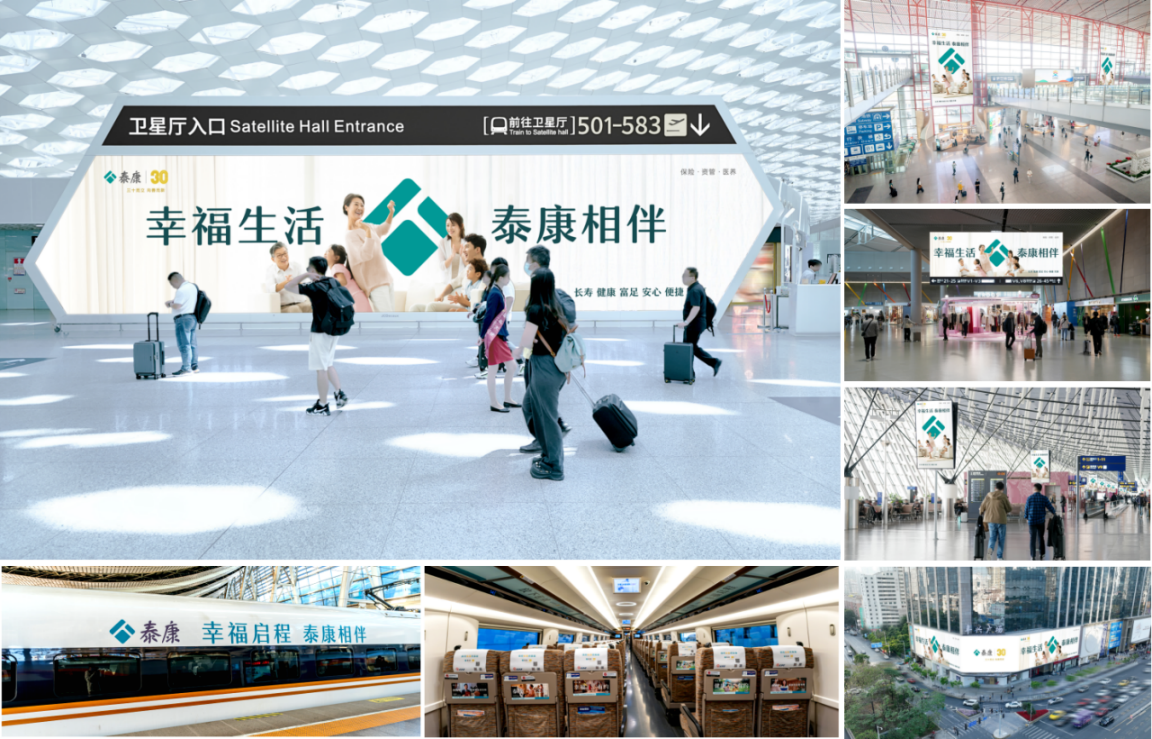
三十而立的泰康发布全新品牌视觉,诠释生命价值观的三十年实践
Huan Qiu Wang· 2026-01-04 03:36
Core Viewpoint - The article highlights the 30th anniversary of Taikang Insurance Group, emphasizing its commitment to the values of "respect for life and people-oriented" and the promise of "happy life accompanied by Taikang" through a new brand visual identity [1][18]. Brand Evolution - Taikang has evolved from a startup life insurance company in 1996 to a globally recognized insurance group, ranking among the Fortune Global 500 for eight consecutive years, leading the high-quality development of China's life insurance industry [3]. - The brand's visual identity has undergone several iterations, consistently focusing on the core element of "people," reflecting the essence of life insurance [3][5]. New Brand Visual Identity - The new visual identity emphasizes simplification and warmth, removing English and business descriptions to enhance recognition efficiency, reflecting Taikang's confidence in its "new life insurance" model [6][8]. - The classic diamond logo has been refined for a smoother appearance, symbolizing a more complete life and comprehensive care, while the central "人" character reinforces the people-oriented value [8][12]. Core Values - Taikang's core values of "respect for life, care for life, and celebrate life" have been cultivated over 30 years, rooted in real experiences and challenges faced by the company [12]. - Three significant stories illustrate the development of these values: the response to the SARS outbreak in 2003, the lessons learned from the Wenchuan earthquake in 2008, and the inspiration drawn from observing vibrant elderly communities in the U.S. [10][12]. New Life Insurance Model - The company has developed a "new life insurance" model that integrates insurance payment with health and wellness services, addressing the comprehensive needs of individuals in the context of an aging population [13][14]. - Taikang's asset management has exceeded 4.5 trillion yuan, with over 1.1 trillion yuan in pension management, and it has established a nationwide network of elder care communities [14][17]. Future Outlook - As Taikang enters its 30s, it aims to continue its commitment to social responsibility and innovation in the insurance industry, focusing on enhancing the quality of life for individuals in the longevity era [18][19].
泰康发布30周年全新品牌视觉:聚焦“以人为本”,以亲和形象践行长寿时代使命
Jin Rong Shi Bao· 2026-01-04 00:51
Core Viewpoint - Taikang Insurance Group celebrates its 30th anniversary in 2026, marking its evolution from a startup to a leading insurance group, emphasizing its commitment to the values of "respect for life" and "people-oriented" principles through a new brand visual identity [1][11]. Brand Evolution - The evolution of Taikang's brand visual identity reflects changes in corporate values and societal context, consistently centering around the core concept of "people" and the essence of life insurance [2][8]. - The new visual identity simplifies and enhances recognition by removing English and business descriptions, focusing on core elements that embody Taikang's confidence in its "new life insurance" model [4][5]. Visual Identity Changes - The updated logo features a refined diamond shape and emphasizes the "person" element, aligning with the golden ratio to harmonize humanistic and aesthetic values [7][11]. - The color scheme has shifted from metallic to flat, pure colors, with an enhanced brightness of the classic "Taikang green," conveying warmth and stability [4][5]. Core Values - Taikang's core value of "respect for life" has been cultivated over 30 years, evolving into a commitment to "caring for life" and "celebrating life," which is deeply embedded in the company's culture [8][10]. - Real-life stories illustrate the development of Taikang's values, highlighting the importance of responsibility, respect, and a positive attitude towards life [9][10]. Strategic Direction - In response to the challenges of the longevity era, Taikang has developed a "new life insurance" model that integrates insurance payment with health and wellness services, focusing on comprehensive life cycle management [11][12]. - The company has established a nationwide network for health and wellness services, supporting its insurance products and creating a sustainable ecosystem [12][13]. Business Performance - As of now, Taikang manages assets exceeding 4.5 trillion yuan, with over 1.1 trillion yuan in pension management, and operates 47 projects across 37 cities in its elder care community [13][16]. - The "insurance + health care" model extends services throughout the life cycle, offering comprehensive solutions for health, wealth, and retirement planning [13][16]. Future Outlook - Taikang aims to continue its commitment to societal service and innovation in elder care, ensuring that individuals can age gracefully and live fulfilling lives in the longevity era [16].