光伏行业整合

Search documents
电力设备及新能源周报20260301:光伏行业整合有望加速,内蒙古深入推进电网建设
Guolian Minsheng Securities· 2026-03-01 10:35
Investment Rating - The report maintains a "Recommended" rating for several key companies in the electric equipment and new energy sectors, including CATL, Keda, and Mingyang Smart Energy [5][6]. Core Insights - The photovoltaic industry is witnessing accelerated consolidation, with Tongwei planning to acquire 100% of Lihua Qingneng, marking a significant market-oriented integration in the polysilicon sector [3][32]. - In the electric power equipment sector, Inner Mongolia is advancing its grid construction, with a planned investment growth of 7.1% by 2025, focusing on new energy systems and high-voltage flexible direct current transmission lines [4][46]. - The European automotive market shows a shift towards hybrid vehicles, with Chinese brands like BYD and SAIC gaining market share, indicating increased competitiveness against traditional giants like Volkswagen [2][13]. Summary by Sections 1. New Energy Vehicles - In January 2026, the European car market saw a total of 961,000 new car registrations, a decline of 3.5%. Hybrid electric vehicles (HEVs) accounted for 38.5% of the market, while battery electric vehicles (BEVs) made up 19.7% [2][15]. - Chinese automakers are rapidly increasing their market presence in Europe, with BYD's sales growing by 165% year-on-year, while Volkswagen's market share decreased by 3.8% [2][18]. 2. New Energy Generation - Tongwei's acquisition of Lihua Qingneng is a pivotal move in the photovoltaic industry, signaling a shift from policy-driven consolidation to market-driven mergers, which may help alleviate price competition and optimize resource allocation [3][32][33]. - The industry is currently facing overcapacity and intense price competition, prompting a need for market-oriented restructuring [32][34]. 3. Electric Equipment and Automation - Inner Mongolia's government has outlined plans for significant investments in grid infrastructure, including the construction of 20 new 500 kV substations, aiming for a 7.1% increase in grid investment by 2025 [4][46]. - The focus is on building a modern energy system that balances traditional and renewable energy sources [4][46]. 4. Commercial Aerospace - The recovery test plan for the Zhuque-3 rocket is set for the second quarter of 2026, aiming to achieve reusable technology for commercial spaceflight [5]. 5. Weekly Sector Performance - The electric equipment and new energy sector saw a weekly increase of 1.89%, with wind power indices rising by 5.73% and lithium battery indices declining by 4.74% [1].

通威拟收购丽豪清能,光伏硅料行业整合加速,“反垄断”审查存不确定性
Jin Rong Jie· 2026-02-27 10:27
Core Viewpoint - The photovoltaic industry is witnessing a significant event as Tongwei Co., Ltd. announces its intention to acquire 100% equity of Qinghai Lihua Qingneng Co., Ltd., marking a potential major merger in the sector for 2026, which could reshape the competitive landscape of the silicon material segment and signal a market-driven capacity exit wave under the "anti-involution" policy direction [1][7]. Group 1: Acquisition Details - Tongwei has signed a share acquisition intention agreement with Lihua Qingneng's chairman Duan Yong and two other parties, indicating a strategic move to consolidate its position in the silicon material market [2]. - Lihua Qingneng, established in April 2021, specializes in the research, production, and sales of photovoltaic-grade high-purity crystalline silicon and electronic-grade polysilicon, and ranks sixth in industry capacity [2]. - The acquisition is seen as a return of an industry veteran, as Duan Yong previously played a crucial role in Tongwei's rise to the top of the global silicon material market [1][2]. Group 2: Strategic Implications - This acquisition is part of Tongwei's strategy to strengthen its leading position in the silicon material sector and optimize its production capacity structure, potentially increasing its capacity from 900,000 tons to over 1.1 million tons and market share from 30% to 36% [3]. - Tongwei has established a full industry chain layout, with capacities exceeding 300,000 tons for industrial silicon, 15 GW for silicon wafers, and 90 GW for modules, providing strong support for its risk resistance [3]. Group 3: Market Context - The acquisition occurs during a critical period of capacity excess and price decline in the photovoltaic industry, with polysilicon prices dropping below cost levels, prompting government policies to encourage orderly exit of backward capacity [7]. - The industry currently has a total polysilicon capacity of 3.354 million tons, with a monthly operating rate of less than 30%, leading to significant overcapacity and profitability erosion [7]. - Tongwei's acquisition is expected to facilitate a market-driven approach to address the current chaotic competition and align with the industry's high-quality development goals [7]. Group 4: Financial Considerations - Despite the strategic advantages, the acquisition faces uncertainties, including market skepticism due to Tongwei's previous failed acquisition attempt and potential regulatory scrutiny regarding market concentration [9]. - Tongwei's financial health is under pressure, with projected losses of 900 million to 10 billion yuan for 2025 and a debt ratio of 71.95%, raising concerns about its capacity to manage the financial implications of the acquisition [9].

光伏行业现重磅整合,通威股份拟收购丽豪清能100%股权
Cai Jing Wang· 2026-02-26 04:40
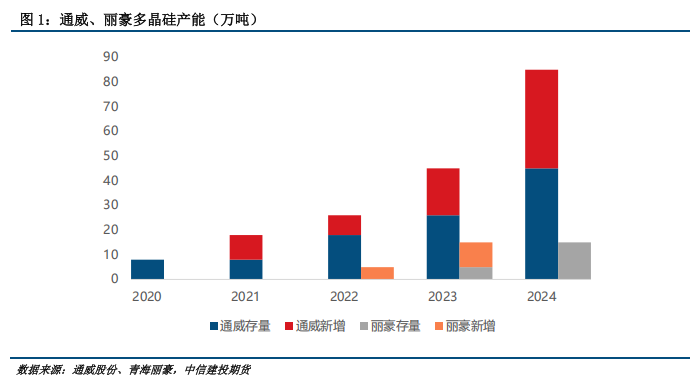
Company Overview - Tongwei Co., Ltd. is planning to acquire 100% equity of Qinghai Lihua Qingneng Co., Ltd. through a combination of share issuance and cash payment, along with raising matching funds [1] - The acquisition is currently in the planning stage, and the company has signed a letter of intent with the transaction parties [1] - Tongwei is a leading player in the global silicon material and solar cell market, with a production capacity of over 900,000 tons of high-purity silicon and over 150 GW of solar cells by June 2025 [1] Lihua Qingneng Overview - Lihua Qingneng, established in April 2021, focuses on the research, production, and sales of photovoltaic-grade high-purity silicon and electronic-grade polysilicon [2] - The company is a key investment project in Qinghai Province, with a total planned investment of 20 billion yuan to build a production capacity of 200,000 tons of photovoltaic-grade high-purity silicon [2] - The chairman of Lihua Qingneng, Duan Yong, has a history with Tongwei, having served as a director and chairman of Tongwei's core silicon material platform [2] Industry Context - The acquisition is seen as a significant event in the photovoltaic industry, indicating an acceleration in resource optimization and consolidation [3] - The industry has been encouraged by associations and policies to pursue mergers and acquisitions, with several notable deals in the pipeline [3] - If the acquisition proceeds as planned, it could serve as a model for capacity consolidation in the photovoltaic sector, contributing to the recovery of industry prosperity [3]
光伏行业或现整合潮,通威股份拟收购丽豪清能100%股权
Huan Qiu Lao Hu Cai Jing· 2026-02-25 06:44
Group 1 - The core point of the news is that Tongwei Co., Ltd. plans to acquire 100% equity of Qinghai Lihua Qingneng Co., Ltd. through a combination of issuing shares and cash payment, while also raising matching funds [1] - The acquisition is expected to enhance the synergy with Tongwei's main business, as Lihua Qingneng specializes in the research, production, and sales of photovoltaic-grade high-purity silicon and electronic-grade polysilicon [1] - Tongwei's stock will be suspended from trading starting February 25, with an expected suspension period of no more than 10 trading days [1] Group 2 - Tongwei is a leading enterprise in the "agriculture + new energy" sector and has established a complete photovoltaic industry chain since entering the solar industry in 2007 [2] - In 2022, Tongwei achieved a record revenue of 142.42 billion yuan and a net profit of 25.73 billion yuan, marking a peak in performance [2] - In 2023, the company's revenue decreased to 139.10 billion yuan, a year-on-year decline of 2.33%, and net profit fell to 13.57 billion yuan, down 47.24% year-on-year [2] - Starting in 2024, the photovoltaic industry is expected to face significant price declines across various product segments, leading to operational pressures for Tongwei [2] - By 2025, the industry is projected to experience a slowdown in new installations, exacerbating supply surplus issues and increasing operational challenges for Tongwei [2]
晶澳科技:聚焦主业稳健发展 上半年实现营收239.05亿元
Zhong Zheng Wang· 2025-08-25 15:29
Core Viewpoint - The company, JA Solar Technology, reported a significant reduction in losses in Q2 2025, with a net profit of -2.58 billion yuan for the first half of the year, indicating improved operational efficiency and cost control [1][2]. Financial Performance - In the first half of 2025, the company's revenue reached 23.905 billion yuan, while the net profit attributable to shareholders was -2.58 billion yuan [1]. - The company achieved a more than 40% reduction in losses from Q1 to Q2 2025, with a notable improvement in gross margin [1]. - Operating cash flow showed significant improvement, with a net inflow of 3.7 billion yuan in Q2 2025, totaling over 4.5 billion yuan by the end of the first half of 2025 [2]. - The company has maintained positive operating cash flow for 15 consecutive years, showcasing its strong financial management capabilities [2]. Cost Management - The company demonstrated effective cost control, with sales expense ratio at 6.59% and 7.84% for Q1 2024 and Q1 2025 respectively, and a further reduction in management expenses by 16.82% year-on-year in H1 2025 [1]. - Key expense indicators showed a dual decline in H1 2025, with sales expenses down by 6.32% and management expenses down by 16.82% [1]. Market Outlook - The market is witnessing a shift towards value-driven growth, with expectations of price recovery and industry consolidation benefiting companies like JA Solar with strong cash reserves and financing channels [3]. - The industry is expected to favor leading companies with financial and technological advantages, positioning JA Solar favorably for resource acquisition during the consolidation phase [3].

调研速递|TCL中环接受南方基金等24家机构调研 聚焦业绩与行业发展要点
Xin Lang Zheng Quan· 2025-08-25 12:31
Core Viewpoint - TCL Zhonghuan's performance in the first half of 2025 was under pressure due to market fluctuations, but cash flow showed a significant increase despite losses [2][3]. Financial Performance - In the first half of 2025, the company achieved operating revenue of 13.4 billion yuan, a year-on-year decrease of 17% [2]. - The net profit was -4.8 billion yuan, down 52% year-on-year, while the net profit attributable to shareholders was -4.2 billion yuan, a decline of 38% [2]. - Despite the losses, the operating net cash flow, including bills, reached 1.1 billion yuan, an increase of 177% year-on-year [2]. Industry Trends and Company Strategies - The photovoltaic industry is experiencing supply-demand fluctuations and uncertainties, with a supply-side reshuffle underway [3]. - The company plans to optimize its business model and ensure financial health for sustainable operations [3]. - Prices for photovoltaic products are gradually recovering, with an increase noted in July and August [3]. - The company has three production bases for battery components with a capacity of approximately 24 GW, focusing on efficiency and technological upgrades [3]. - The company aims to expand overseas production capacity and strengthen domestic ecological cooperation [3]. - The company is prepared to participate in mergers and acquisitions due to its cash flow and financial reserves [3]. Cost Reduction Initiatives - Cost reductions in silicon materials are attributed to improvements in internal raw material consumption rates and cleaning processing technology [4]. - Non-silicon cost reductions stem from increased single-furnace output and the promotion of finer wire technology [4]. - The company is actively cooperating with stable partners in non-barrier markets and is exploring overseas production opportunities due to growing demand in regions like Southeast Asia, India, and Europe [4].

亏损中的援手:弘元绿能托管无锡尚德的危与机
Xin Hua Cai Jing· 2025-07-15 09:48
Core Viewpoint - Wuxi Suntech, once a leading player in the photovoltaic industry, is facing a second bankruptcy restructuring due to poor management and inability to repay debts, with a pre-restructuring application filed on May 26, 2023 [2] Company Overview - Wuxi Suntech was founded by Shi Zhengrong and went public on the New York Stock Exchange in 2005, making him the "richest man in China" at that time [2] - The company previously went bankrupt in 2013 and was acquired by Jiangsu Shunfeng Photovoltaic, and is now being taken over by Hongyuan Green Energy, another local company [2][3] Financial Performance - Hongyuan Green Energy announced a projected net loss of 290 million to 350 million yuan for the first half of 2023, although this is a significant reduction from a loss of 1.157 billion yuan in the same period last year [3] - The company faced a severe decline in global demand and prices for photovoltaic components, with N-type M10 silicon wafer prices dropping by 31% from April to June 2023 [3] - In 2024, Hongyuan Green Energy reported a massive loss of 2.7 billion yuan, with a gross margin of -15.29% in the silicon material segment [3] Strategic Moves - Hongyuan Green Energy aims to increase component production capacity from 4 GW in 2024 to 10 GW by taking over Wuxi Suntech without additional capital expenditure, leveraging Suntech's brand and overseas channels [4] - The collaboration is seen as a "local rescue" amid the challenges faced by the photovoltaic industry, which is experiencing significant consolidation [2][4] Industry Context - Wuxi Suntech's struggles reflect the broader issues within the photovoltaic industry, where many companies have failed to adapt to rapid technological changes and price wars, leading to a significant reduction in the market space for second-tier brands [3] - The top four global component manufacturers accounted for 63% of the market share in 2024, indicating a highly competitive environment that pressures smaller players like Wuxi Suntech [3] Future Outlook - The success of the restructuring and collaboration between Hongyuan Green Energy and Wuxi Suntech could lead to the emergence of a vertically integrated leader in the photovoltaic sector, while failure could intensify the industry's competitive landscape [5]

2025光伏SNEC:即使入不敷出,也要装得“很棒”
阿尔法工场研究院· 2025-06-15 11:39
Core Viewpoint - The photovoltaic industry is experiencing significant losses, with major companies like Longi, JA Solar, and Jinko facing drastic profit declines and negative cash flows, as component prices have fallen below production costs, leading to widespread financial distress [1][3][5]. Group 1: Industry Overview - The 2025 SNEC photovoltaic exhibition reflects a stark contrast to previous years, with a noticeable decline in attendance and empty exhibition spaces, indicating a downturn in the industry [2][3][5]. - Major industry leaders were absent from the event, highlighting the current struggles within the sector, as many companies are grappling with substantial losses and negative cash flows [5][6]. - The average gross margin in the photovoltaic industry has turned negative, with cash outflows exceeding 10 billion yuan, and over 50% of companies are reducing capital expenditures and workforce to mitigate losses [10][11]. Group 2: Financial Performance - In Q1 2025, several key companies reported significant revenue declines and losses, with TCL Zhonghuan facing a nearly 10 billion yuan loss, while Longi, JA Solar, and Jinko also reported steep profit drops [6][10]. - The average revenue for 18 photovoltaic companies showed a mixed performance, with some companies like Sunshine Power and Jiejia Weichuang reporting growth, while others like Tongwei and Jinko faced severe losses [6]. Group 3: Industry Challenges and Strategies - The industry is facing a "cold winter," with prices for components, silicon materials, and battery cells all declining, leading to a competitive environment characterized by price wars and reduced demand [10][11]. - Industry leaders are recognizing the need for self-reliance and have proposed strategies such as limiting production, prices, and investments to stabilize the market [13][14]. - There is a call for higher technical and environmental standards to phase out outdated capacities and promote industry consolidation rather than bankruptcy [15][16]. Group 4: Future Outlook - The current financial strain and cash flow issues have led to discussions about redirecting funds towards more effective investments, such as technology breakthroughs and integrated solutions for green electricity [20][21]. - The 2025 SNEC is seen as a turning point for the industry, marking the end of an old cycle and potentially signaling the beginning of a new one, where companies must focus on internal capabilities rather than external appearances [22][23][24].



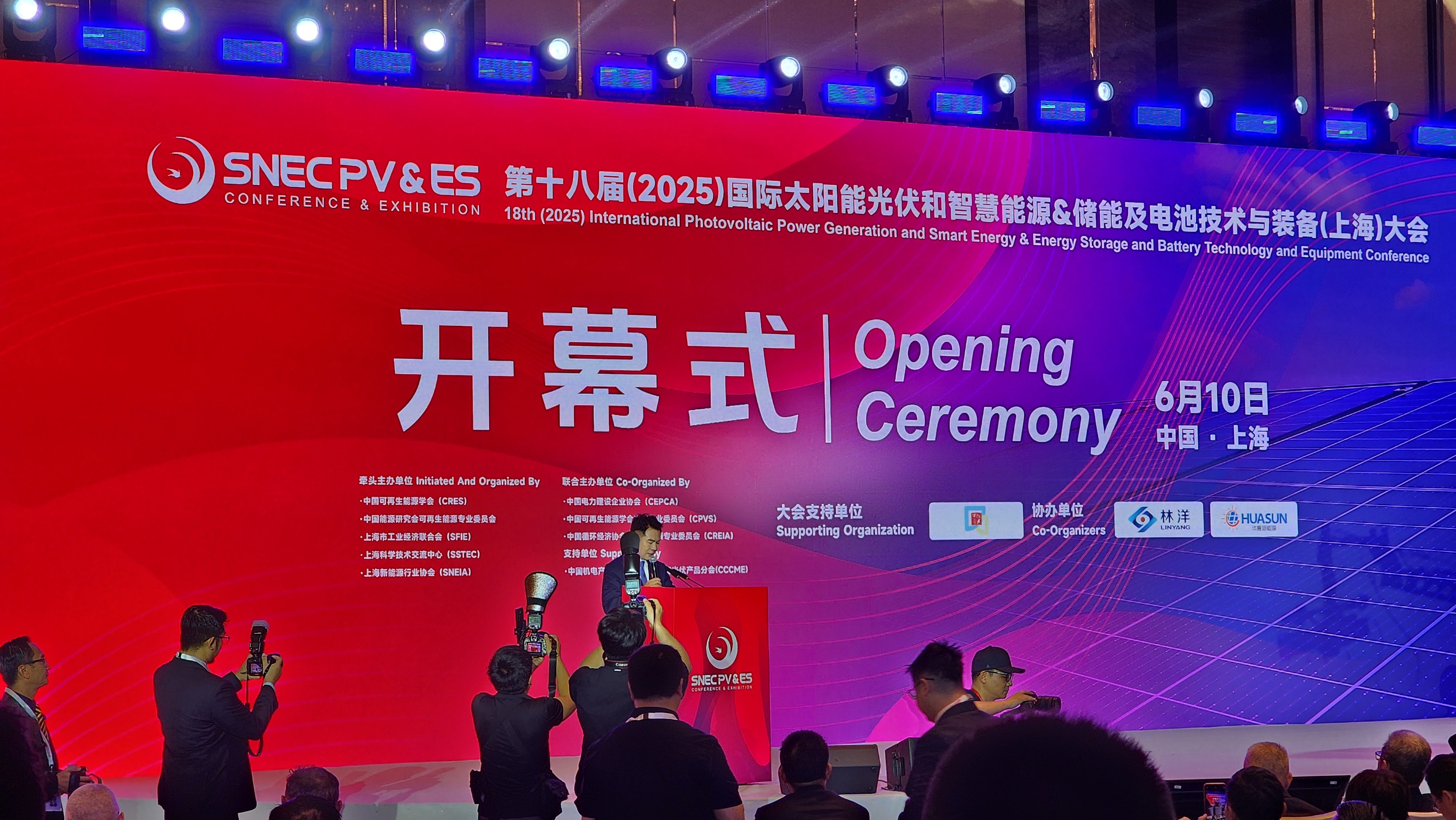
SNEC光伏展前瞻:上下游大整合落地在即,应用扩容支撑产业线性增长
Zheng Quan Shi Bao Wang· 2025-06-10 11:54
Core Viewpoint - The photovoltaic industry is currently experiencing a significant transformation characterized by systemic restructuring, with both major changes and market consolidation occurring simultaneously [4][5][8]. Industry Overview - The SNEC International Photovoltaic and Energy Storage Conference in June 2023 saw reduced attendance compared to previous years, reflecting the industry's current challenges [4][8]. - Industry leaders are advocating for a market-driven approach to address overcapacity and inefficiencies, emphasizing the need for mergers, technology elimination, and strict regulatory measures [9][10]. Market Dynamics - The photovoltaic sector is shifting from linear growth patterns to a more unpredictable spiral growth model, driven by market forces rather than policy support [8][11]. - The global photovoltaic installed capacity is projected to exceed 600 GW in 2024, with China's new installations expected to reach 278 GW, solidifying its position as the second-largest power source [10][12]. Future Projections - The photovoltaic industry is expected to maintain a linear growth trajectory over the next five years, driven by global energy transition demands and the need for electricity in underserved populations [11][12]. - By 2030, the total global photovoltaic installed capacity could reach between 5200 GW and 5800 GW, with significant contributions from traditional and emerging markets [12][13]. Policy and Regulatory Environment - The ongoing electricity market reforms are seen as both a challenge and an opportunity for the photovoltaic sector, necessitating innovation and adaptation to new market conditions [13][16]. - Recommendations for enhancing the photovoltaic industry's development include improving regional cooperation, integrating advanced technologies, and promoting international standards and products [16][17].
时隔四年重启,帝科股份7亿洽购原杜邦集团旗下光伏银浆业务
2 1 Shi Ji Jing Ji Bao Dao· 2025-05-26 12:40
Core Viewpoint - The photovoltaic silver paste industry consolidation plan has resurfaced after four years, with Dike Co., Ltd. announcing a cash acquisition of 60% of Zhejiang Sote Materials Technology Co., Ltd. for 696 million yuan [1][2]. Group 1: Acquisition Details - Dike Co., Ltd. plans to acquire 60% of Zhejiang Sote for 696 million yuan, which is lower than the previous offer of 1.247 billion yuan for 100% ownership [5]. - The acquisition will be conducted entirely in cash, contrasting with the previous plan that involved issuing shares, thereby reducing uncertainties related to the acquisition process [6]. - The actual controller of Dike Co., Ltd. has made a profit commitment, ensuring that the target company achieves a cumulative audited net profit of no less than 287 million yuan over the next three years [6]. Group 2: Industry Context - The conductive silver paste is widely used in semiconductor manufacturing, particularly in photovoltaic and automotive sectors [2]. - Prior to 2017, the global conductive silver paste market was dominated by international chemical giants like DuPont and Heraeus, but domestic companies, including Dike Co., have gradually gained market share since then [2]. - The demand for silver paste has increased significantly due to the rising penetration of N-type batteries in the photovoltaic sector, creating a larger market opportunity for silver paste manufacturers [2]. Group 3: Solamet's Role - Solamet, a pioneer in the electronic paste industry, has been instrumental in the industrialization and technological upgrades of various high-efficiency battery technologies since its inception in 1983 [3]. - The company has maintained its R&D capabilities post-DuPont, achieving significant innovations such as the LECO solution for laser carrier injection metallization and developing low-solid content high-efficiency TOPCon back silver products [3]. - Solamet is currently focused on the R&D and mass production of conductive pastes for next-generation photovoltaic cells, including BC, HJT, and perovskite tandem cells, establishing a technological lead in these areas [3]. Group 4: Client Relationships - Solamet's major clients include well-known manufacturers such as JinkoSolar, LONGi Green Energy, JA Solar, and Hanwha Q CELLS, indicating its strong position in the market [4].