
全场景智能

Search documents
中国制造的价值升维战,海信已经抢跑了下一个十年
凤凰网财经· 2026-03-15 15:36
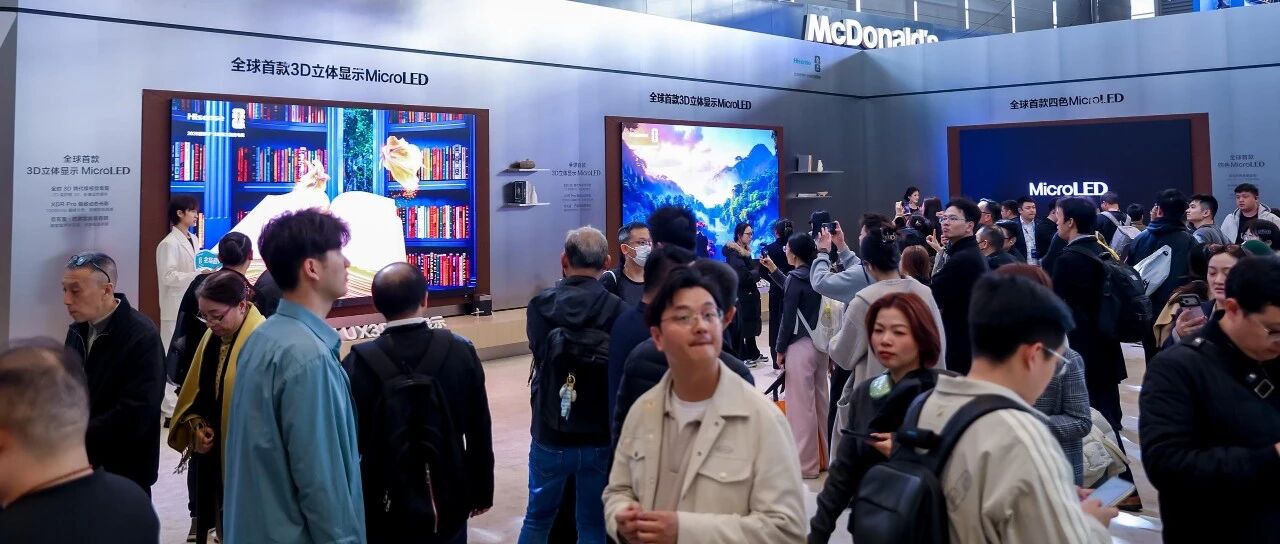
Core Viewpoint - The article highlights Hisense's significant advancements in display technology, particularly the RGB-Mini LED technology, showcasing its journey from reliance on imported technology to becoming a global leader in the display industry, emphasizing the importance of long-term investment in core technology and innovation [4][16][24]. Group 1: Historical Context and Technological Breakthroughs - The article reflects on the historical context of China's display industry, where domestic brands struggled against Japanese and Korean competitors, relying entirely on imported technology [4][5]. - Hisense made a pivotal decision to invest in research and development, leading to the creation of China's first digital video processing chip, "Xinxin," in 2005, marking the end of the "no chip" era in the Chinese television industry [5][6]. - The development of the AI picture quality chip and the RGB-Mini LED chip has allowed Hisense to dominate the market, with 90% of RGB-Mini LED TVs sold globally being Hisense products [8][10]. Group 2: Innovations in RGB-Mini LED Technology - Hisense introduced a groundbreaking four-color architecture with the RGB-Mini LED technology, achieving a color gamut peak of 110% BT.2020, surpassing competitors like QD-Mini LED and QD-OLED [13][15]. - The new AI picture quality chip, H7, enhances color control precision to 134 bits, enabling the display of a trillion color differences, addressing common issues in OLED and QD-Mini LED technologies [15][16]. - Hisense's RGB-Mini LED technology significantly reduces harmful blue light and energy consumption, positioning it as a leader in both visual quality and environmental sustainability [15][16]. Group 3: Comprehensive Ecosystem and User-Centric Solutions - Hisense aims to create a holistic viewing experience for consumers, integrating display technology with a full ecosystem of products, including smart air conditioners and refrigerators, tailored for events like the World Cup [17][18]. - The company emphasizes a user-centric approach, moving beyond individual smart devices to a fully integrated smart home system, enhancing the overall consumer experience [19][20]. - The introduction of various robots for household tasks showcases Hisense's commitment to making technology more accessible and beneficial in everyday life [20]. Group 4: Long-Term Vision and Industry Impact - Hisense's journey reflects the broader narrative of Chinese manufacturing evolving from following to leading in technology, emphasizing the importance of sustained investment in core technologies [22][24]. - The company's achievements at the AWE exhibition symbolize a significant milestone in China's display industry, showcasing the potential of Chinese brands to innovate and set global standards [23][24]. - Hisense's story illustrates the ultimate goal of technology: to enhance everyday life and provide comfort and convenience to consumers, rather than merely focusing on high-end specifications [22][25].


75万人涌入华强北抢科技年货
21世纪经济报道· 2026-01-26 00:45
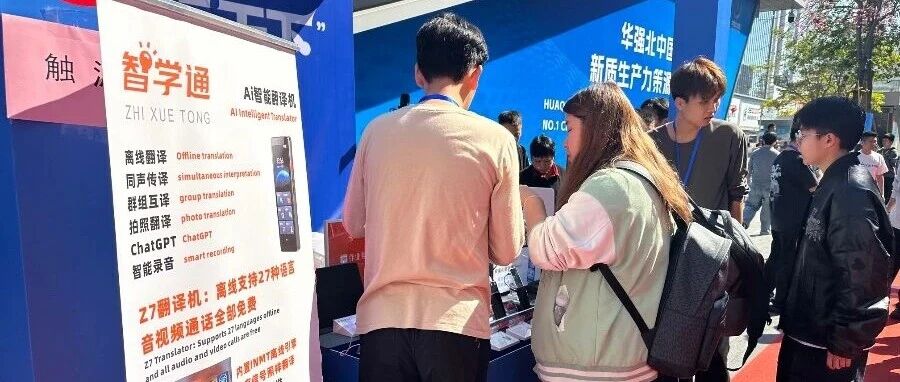
Core Viewpoint - The article highlights the vibrant consumer electronics market in Shenzhen's Huaqiangbei, showcasing the integration of AI technology in various products and the area's role as a global hub for electronic commerce [1][6][10]. Group 1: Event Overview - The "Guanghuo Hang Tianxia" event in Huaqiangbei featured over 50 leading consumer electronics companies, displaying more than 400 products, with over 80% incorporating AI technology [1][5]. - The event attracted a daily foot traffic of 750,000, with an increase of approximately 10,000 visitors compared to regular days, marking a 15% year-on-year growth [3][6]. Group 2: Product Highlights - Huawei showcased its HUAWEI Mate Pad Edge, a versatile device with a detachable screen and Harmony OS 5.1, designed for seamless transition between tablet and computer modes [3]. - AI products dominated the exhibition, with a focus on practical applications for various demographics, including health monitoring devices for the elderly and AI-powered toys for children [5][6]. Group 3: Market Position and International Appeal - Huaqiangbei serves as a critical destination for international buyers, with an average of 7,000 foreign merchants visiting daily and over 10 billion packages shipped annually to 183 countries [8][10]. - The area is enhancing its infrastructure to support international commerce, including multi-currency exchange points and multilingual services to facilitate foreign customers [10]. Group 4: Future Development - Huaqiangbei aims to evolve from "China's Electronic First Street" to a "Global Digital Consumption Destination," promoting a blend of online and offline sales, wholesale and retail, and domestic and international markets [10].
豆包手机之后 字节AI硬件再上新
Zhong Guo Jing Ying Bao· 2026-01-23 19:56
Core Insights - ByteDance's Feishu has launched a new AI hardware product, the "AI Recording Bean," in collaboration with Anker Innovation, aiming to enhance offline corporate office scenarios with a compact device weighing only 10 grams [1] - This product represents Feishu's first deep integration of AI capabilities into hardware, marking a significant step in the transition from software ecosystems to "full-scenario intelligence" in collaborative office platforms [1][3] - The competition among the three major office software platforms—DingTalk, WeChat Work, and Feishu—has expanded from cloud services to physical devices, with DingTalk having previously introduced a similar AI recording hardware [1][6] Product Features - The "Anker AI Recording Bean" features dual omnidirectional microphones, a 5-meter effective pickup radius, and an 8-hour battery life, extendable to 32 hours with a charging dock [2] - Its differentiation lies not in hardware specifications but in its deep integration with Feishu's AI capabilities, supporting real-time voiceprint recognition, multilingual transcription, and AI-generated visual summaries [3][4] - This integration addresses key pain points in the AI recording industry, enhancing meeting focus and accuracy in transcription while streamlining the workflow from recording to documentation [3][5] Market Dynamics - The current market for AI recording products is characterized by high homogeneity in basic functionalities, shifting the competitive focus to the integration of specialized hardware with proprietary AI [4] - Feishu emphasizes its advantage in knowledge accumulation and collaborative creation, aiming to transform meetings into reusable knowledge units, contrasting with DingTalk's focus on organizational management [4][6] - The introduction of AI recording hardware is seen as a strategic move to fill gaps in offline meeting scenarios and to create a complete work loop by integrating online collaboration with offline communication [6][7] Future Outlook - The competition in the AI recording hardware space is expected to intensify, with WeChat Work likely to follow suit but with a focus on customer communication and external scenarios [8] - The future competition will revolve around AI processing capabilities, product forms, and portability rather than just hardware specifications [9] - The "Anker AI Recording Bean" is priced at 899 yuan, targeting the enterprise and professional user market, with its success dependent on its integration into daily business operations [9]
华福证券:中国科技家电引领全场景智能与AI本地化新趋势
Zhi Tong Cai Jing· 2026-01-19 02:39
Core Insights - Chinese brands are leading technological iterations in the fields of robotic vacuum cleaners, garden robots, and NAS private cloud storage, as highlighted at CES 2026 [1] - The focus of new product trends includes breaking scene limitations, technology integration, and localized AI applications [1] Group 1: Robotic Vacuum Cleaners - The introduction of new structures like wheeled legs and robotic arms is enhancing cleaning capabilities, evolving from single surface cleaning to full-scene intelligent cleaning [2] - Upgrades in roller and active water technology are continuously improving cleaning efficiency [2] Group 2: Lawn Mowers - The integration of multiple technologies such as LiDAR, RTK, and visual technology has improved positioning accuracy to centimeter-level [3] - Lawn mowers are transitioning from single mowing functions to integrated mowing and edge trimming, significantly reducing the need for manual intervention [3] Group 3: Pool Cleaning Robots - The focus is on breakthroughs in full-process automation and upgrades in cleaning precision [4] - Intelligent navigation and multi-sensor collaboration are enabling a transition from basic cleaning to smart maintenance [4] Group 4: NAS Private Cloud Storage - Ugreen launched the AINAS series, featuring two NAS products with built-in local AI models that support natural language search, allowing users to locate specific images and documents efficiently while ensuring privacy [5] - The NAS products also enter the home security market with the SynCare series, supporting AI multi-modal recognition and enabling encrypted storage of surveillance footage [5]
TCL电子SQD-Mini LED显示技术定义"视"界新高度,全场景AI科技"智"领未来
Ge Long Hui· 2026-01-08 08:06
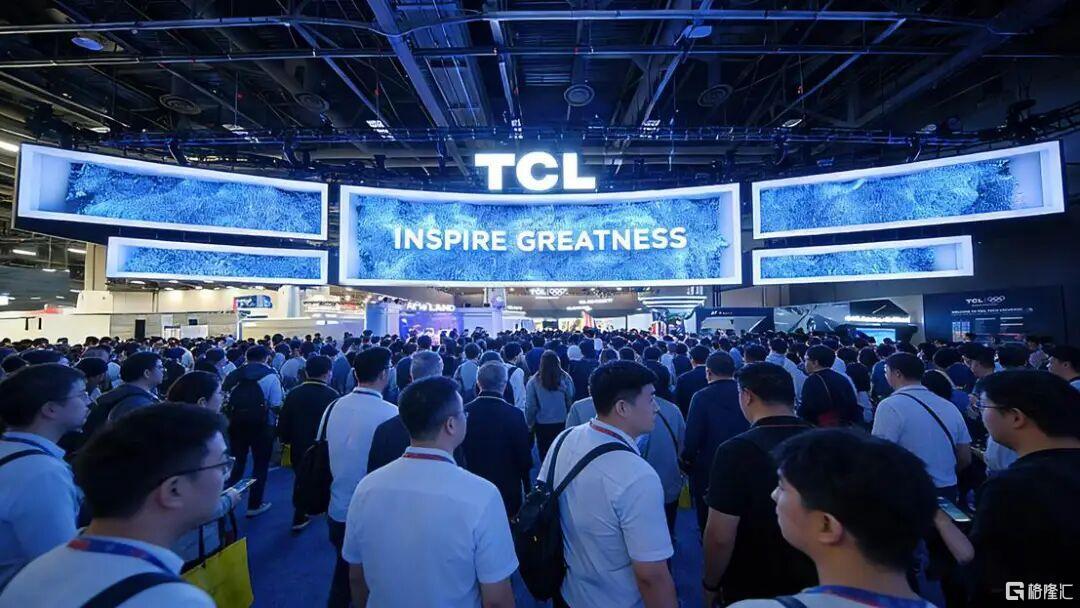
Core Viewpoint - TCL showcased its innovative technologies and products at CES 2026, emphasizing its leadership in display technology and smart home solutions, aiming to redefine user experiences across various applications [1][25]. Group 1: Display Technology - TCL introduced the world's first SQD-Mini LED display technology, which offers significant advantages such as 100% BT2020 color gamut, ultra-high brightness, and superior contrast ratios, positioning it as a leader in the Mini LED market [3][5]. - The flagship TCL X11L television, featuring SQD-Mini LED technology, achieved a revolutionary viewing experience with over 20,000 local dimming zones and peak brightness of 10,000 nits, setting new standards for color accuracy and contrast [5][25]. - TCL's QD-Mini LED technology was also highlighted in its 57-inch gaming monitor, providing an immersive 32:9 aspect ratio and dual 4K resolution at 120Hz, enhancing the gaming experience [7]. Group 2: Mobile and Small Screen Innovations - The TCL NXTPAPER 70 Pro smartphone, equipped with NXTPAPER 4.0 eye-care display technology, received international certifications for eye protection and offers multiple display modes for different usage scenarios [8][10]. - The TCL Note A1 NXTPAPER electronic notepad features a paper-like display and AI tools for real-time text conversion and translation, enhancing productivity for users [10]. Group 3: Smart Home Solutions - TCL's C7 AI Health Air Conditioner introduces an innovative sleep temperature curve and AI algorithms to improve sleep quality by 25%, along with a noise reduction system for a quieter environment [15]. - The GeniusFresh refrigerator series incorporates advanced Wi-Fi technology and air purification systems to maintain food freshness, while the AI washing machine offers a large capacity and smart washing features [17]. Group 4: AI and Robotics - TCL unveiled the AiMe, a split AI companion robot designed to enhance daily life with interactive capabilities and smart home integration, showcasing the company's commitment to AI technology [21]. - The introduction of the Thunder X3 Pro Project eSIM smart glasses marks a significant advancement in AR technology, enabling independent communication and interaction without reliance on smartphones [12]. Group 5: Sustainability and Customization - TCL presented its sustainable materials initiative with the ECORA project, utilizing recycled materials for personalized consumer products, reflecting its commitment to environmental responsibility [24][22]. - The company also showcased its smart home energy solutions, integrating solar technology with smart management systems to promote sustainable living [22]. Group 6: Market Position and Future Outlook - TCL's global TV shipment volume ranked second worldwide in the first three quarters of 2025, with a 29.4% market share in Mini LED TVs, indicating strong market performance [25]. - As a global partner of the Olympics, TCL aims to enhance the viewing experience at major sporting events, reinforcing its brand presence and commitment to innovation in the sports sector [25].
全场景智能守护城市生命线 新智聚安助力江苏打造“泰兴模式”样本
Zheng Quan Shi Bao Wang· 2025-10-16 01:35
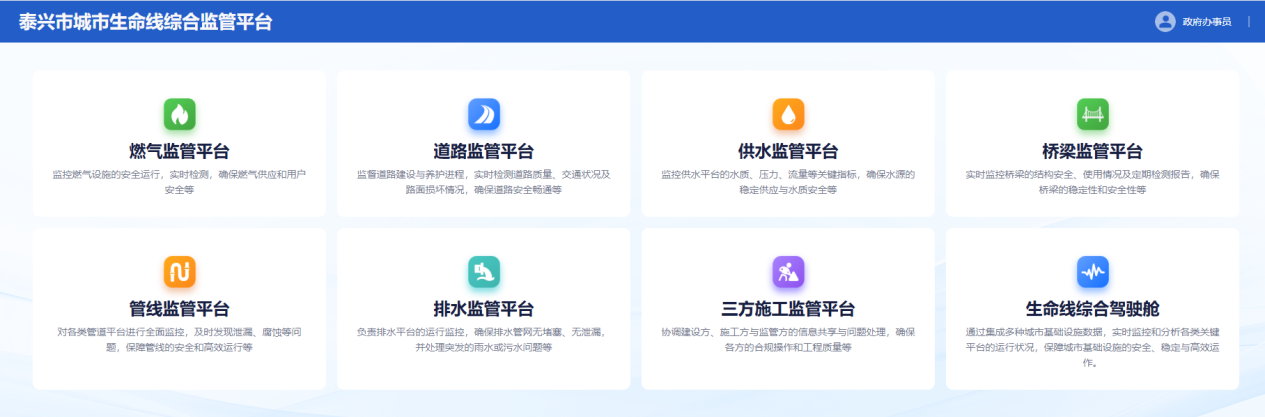
Core Insights - The article highlights the successful implementation of a city safety governance model in Taixing, Jiangsu, through the collaboration between Taixing and New Smart Cognition, a subsidiary of the New Energy Group, resulting in a comprehensive urban safety management platform [1][2][6] Group 1: Urban Safety Challenges - Rapid urbanization has led to increasingly complex safety risks, particularly in gas supply, where outdated pipelines and lack of data create significant hazards [2][6] - Traditional inspection methods are inadequate for identifying indoor gas leaks and managing fragmented data on underground pipelines, leading to regulatory blind spots [2][4] - Emergency responses during flooding are often delayed due to poor inter-departmental communication and data sharing [2][6] Group 2: Technological Solutions - New Smart Cognition has developed a comprehensive safety management system that integrates IoT sensing, intelligent analysis, and collaborative response mechanisms, creating a "smart brain" for urban safety [2][4] - The platform utilizes a structure of "1 comprehensive dashboard + 7 specialized platforms" to facilitate real-time monitoring and risk assessment across various urban infrastructure sectors [4][5] - Advanced predictive models for gas leaks and urban flooding allow for proactive risk management, transforming previously invisible threats into manageable risks [4][5] Group 3: Governance and Collaboration - The platform has established a complete feedback loop for safety management, encompassing sensing, warning, response, and evaluation, which enhances proactive oversight [5][6] - Taixing's urban safety governance has seen significant improvements, covering extensive infrastructure and processing over 170,000 safety detection data points, shifting from reactive to proactive management [6][7] - The successful "Taixing model" emphasizes the importance of a collaborative ecosystem between government and enterprises, enhancing safety management efficiency and creating synergistic benefits [7]
江苏泰兴x新智聚安:全场景智能破局 筑牢“城市生命线”安全屏障
Zheng Quan Ri Bao Wang· 2025-10-15 08:50
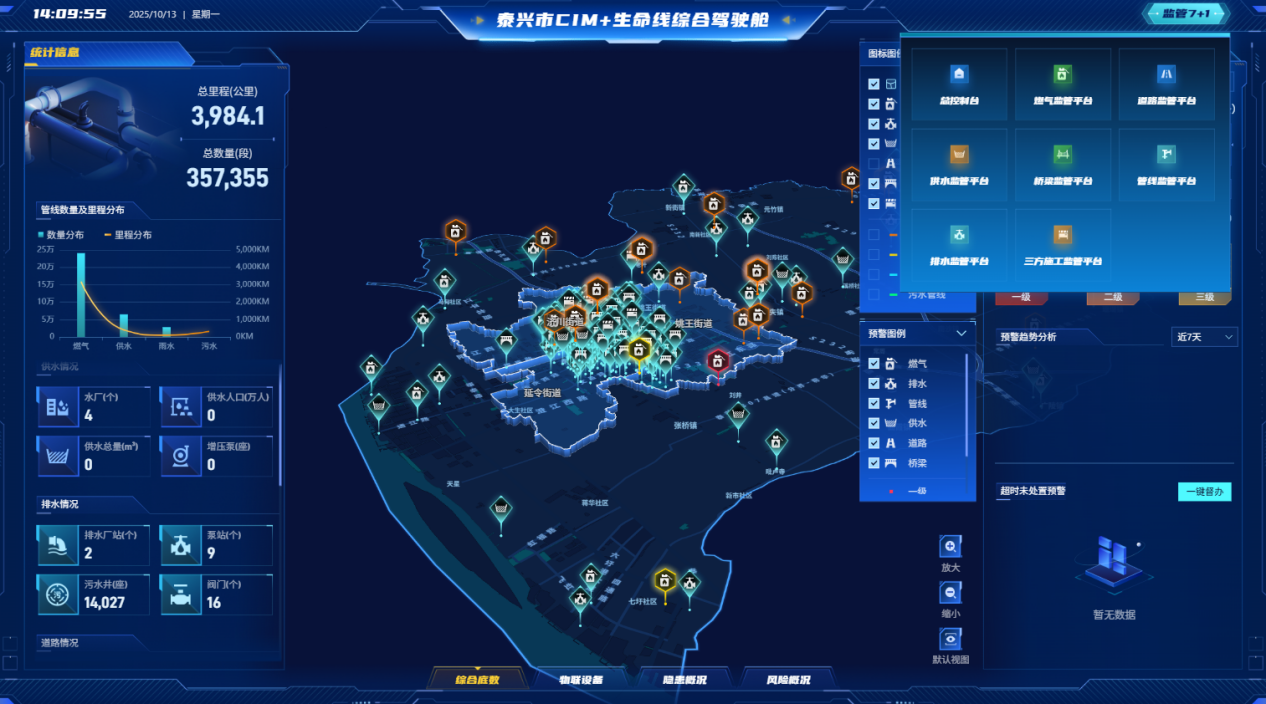
Core Insights - The article discusses the implementation of a comprehensive urban safety management platform in Taixing, Jiangsu, which marks a significant shift from fragmented control to collaborative governance in urban safety management [1][9][10] Group 1: Urban Safety Challenges - Rapid urbanization has led to increasingly complex safety risks, particularly in gas supply, where outdated pipelines and lack of data create significant hazards [2][5] - Traditional manual inspections are insufficient to cover indoor gas leak risks, and fragmented data on underground pipelines leads to regulatory blind spots [2][5] - During flood seasons, inter-departmental data sharing and coordination are often inadequate, resulting in delayed emergency responses [2][5] Group 2: Technological Solutions - The platform developed by New Intelligence and Taixing integrates a "perception-intelligence-disposal" model, utilizing a safety model as a technical foundation to enhance collaborative governance among government, enterprises, and citizens [5][10] - The system features a comprehensive dashboard and seven specialized platforms to manage various risk scenarios, enabling real-time alerts, information sharing, and coordinated responses [7][8] Group 3: Implementation and Impact - The platform has successfully covered 3,984 kilometers of pipelines, 194 kilometers of roads, and 134 bridges, processing over 170,000 safety monitoring data points and addressing more than 500 risk notifications [9] - The transition from reactive to proactive safety management has been achieved, with real-time monitoring and data-driven decision-making improving the efficiency of emergency responses [9][10] - The collaboration between government and enterprises has created a sustainable ecosystem that enhances safety management efficiency and fosters a sense of security among citizens [10]

江苏泰兴x新智聚安:全场景智能破局,筑牢“城市生命线”安全屏障
Xin Lang Zheng Quan· 2025-10-15 03:09
Core Insights - The article highlights the successful implementation of a comprehensive urban safety management platform in Taixing, Jiangsu, which marks a significant shift from fragmented control to collaborative governance in urban safety management [1][2][6]. Group 1: Urban Safety Challenges - Rapid urbanization has led to increasingly complex safety risks, particularly in gas supply, where outdated pipelines and lack of data create significant hazards [2][8]. - Traditional inspection methods are inadequate for identifying risks, especially in indoor gas leaks and fragmented underground pipeline data [2][6]. - The need for a robust response to urban flooding and third-party construction risks is emphasized, as these factors pose serious challenges to urban living [2][6]. Group 2: Technological Solutions - New Zhi Ju An, in collaboration with Xin'ao Group, has developed a "full-scene intelligent safety management system" that integrates IoT sensing, intelligent analysis, and collaborative response [2][6]. - The platform utilizes a "1 comprehensive cockpit + 7 specialized platforms" structure to create a comprehensive urban safety network [4][6]. - Real-time monitoring and predictive models for gas leaks and urban flooding enhance the ability to manage risks proactively [6][7]. Group 3: Governance and Collaboration - The platform has significantly improved urban safety governance in Taixing, covering 3,984 kilometers of pipelines, 194 kilometers of roads, and 134 bridges, while processing over 170,000 safety detection data points [8][9]. - The shift from reactive to proactive governance allows for better resource allocation and risk management, with departments now sharing data and coordinating responses [8][9]. - The successful "Taixing model" demonstrates the effectiveness of a collaborative ecosystem between government and enterprises, enhancing safety management efficiency [9]. Group 4: Future Implications - The experience gained in Taixing is intended to be replicated in other cities, promoting the integration of intelligent safety solutions as a fundamental aspect of urban development [9]. - The collaboration between technology and government is seen as a pathway to systematically address complex safety challenges, contributing to high-quality urbanization [9].
国补+技术迭代,扫地机器人正在占领全球
Guan Cha Zhe Wang· 2025-08-15 14:01
Core Insights - The sweeping robot industry experienced significant sales growth in the first half of 2025, driven by government subsidies and technological advancements [1][2] - Leading companies, Ecovacs and Roborock, reported substantial revenue increases, indicating a competitive market landscape [1][2] Company Performance - Ecovacs achieved a revenue of 8.676 billion yuan, a year-on-year increase of 24.37%, with a net profit of 979 million yuan, up 60.84%, despite a 137 million yuan asset impairment provision [1] - Roborock reported a revenue of 7.903 billion yuan, a remarkable growth of 78.96%, but its net profit fell by 39.55% to 678 million yuan, primarily due to a 144.51% increase in sales expenses [1] Market Trends - The global smart sweeping robot market saw a shipment of 5.096 million units in Q1 2025, a year-on-year growth of 11.9%, with the domestic market benefiting from a "trade-in" policy, resulting in a 21.4% increase in shipments [2] - Both companies are transitioning from "ground cleaning" to "whole-home smart" solutions, enhancing their competitive edge [4] Product Development - Ecovacs shipped 1.876 million smart sweeping robots globally, a 55.5% increase, with the X9 series targeting the high-end market [3] - Roborock's flagship G30 Space model utilizes advanced technology for enhanced cleaning capabilities, maintaining its position as a market leader [3] Research and Global Expansion - Ecovacs reported overseas revenue of 3.54 billion yuan, accounting for 40.8% of total revenue, with significant growth in European and American markets [5] - Roborock has expanded its marketing efforts internationally, covering over 170 countries, and plans to launch a manufacturing base in Vietnam to mitigate risks [6] - Both companies are leading in R&D investments, with Ecovacs spending 507 million yuan and Roborock increasing its R&D expenditure by 67.28% to 685 million yuan [6] Industry Challenges - The sweeping robot industry has not yet reached a mature competitive stage and faces challenges such as raw material price fluctuations and international trade policy changes [7]


