全球供应链格局重塑

Search documents
国内棉价窄幅震荡 外棉价格连续下跌
Xin Lang Cai Jing· 2026-02-08 16:24
Core Viewpoint - The domestic cotton market shows resilience supported by macro policies, while international cotton prices are declining due to various negative factors, leading to an increasing price gap between domestic and international markets, reaching a ten-year high [1] Price Review - Domestic cotton supply is sufficient as new cotton processing nears completion, with prices showing strong resistance to declines, resulting in a narrow fluctuation trend. The main contract settlement price for Zhengzhou cotton futures is 14,643 yuan/ton, down 83 yuan/ton or 0.6% from the previous week. The average price of the national cotton price B index is 15,929 yuan/ton, down 18 yuan/ton or 0.1% [2] - Internationally, the market is influenced by macroeconomic turmoil, with the main contract settlement price for New York cotton futures at 62.01 cents/pound, down 1.43 cents/pound or 2.3%. The average price of the international cotton index (M) is 71.31 cents/pound, equivalent to an import cost of 12,117 yuan/ton, down 277 yuan/ton or 2.2% from the previous week. The domestic cotton price is 3,812 yuan/ton higher than the international price, with the price gap expanding by 259 yuan/ton [2] Textile Market - The domestic C32S cotton yarn price averages 21,440 yuan/ton, up 64 yuan/ton or 0.3%, while the average price for imported C32S cotton yarn is 20,917 yuan/ton, down 63 yuan/ton or 0.3%. Conventional foreign yarn is 523 yuan/ton lower than domestic yarn. Polyester staple fiber prices decreased by 137 yuan/ton to 6,559 yuan/ton [3] Market Outlook - The ambiguity in U.S. policy continues to disrupt the market, with a new trade agreement between the U.S. and India potentially reshaping future trade dynamics. The nomination of Kevin Walsh as the next Federal Reserve Chair has raised concerns about policy tightening, although his recent support for rate cuts has shifted market expectations. The risk of a federal government shutdown remains due to ongoing partisan divisions [4] - The international cotton supply is in a loose structure, with Brazilian cotton exports decreasing by 23.8% year-on-year to 317,000 tons in January. This has led to an increase in U.S. cotton export contracts, with a 23% week-on-week rise to 56,700 tons, primarily from Vietnam, Pakistan, and China [5] - Domestic cotton supply is ample, with a sales rate of 65.7% as of February 5, up 22.5 percentage points year-on-year. However, as the Spring Festival approaches, market activity is expected to slow down, with textile companies focusing on inventory digestion and completing existing orders [6]
谁最受益于美印贸易协议?杰富瑞点名多家零售龙头
智通财经网· 2026-02-03 13:23
Group 1 - The recent trade agreement between the US and India is expected to reshape global supply chains and significantly boost profits in the retail sector [1] - The core of the agreement involves reducing US import tariffs on most Indian goods from a punitive level of up to 50% to 18%, while India commits to lowering trade barriers on specific US products and increasing purchases of US energy, agricultural products, and manufactured goods [1] - India has also pledged to gradually eliminate oil purchases from Russia, shifting energy procurement towards the US and allied suppliers [1] Group 2 - Jefferies analysts highlight Signet Jewelers (SIG.US) as one of the biggest beneficiaries of the policy changes, as approximately half of its natural and synthetic diamond inventory is sourced from India, leading to an expansion in gross margins due to reduced tariffs [2] - The weighted average tariff impact on Signet Jewelers has decreased from 29.6% to approximately 15.1% [2] - Other core beneficiaries include low-cost retailer Five Below (FIVE.US), fashion e-commerce company Revolve Group (RVLV.US), and sportswear leader Nike (NKE.US), which will benefit from lower procurement costs and stronger competitive advantages in market pricing and profit certainty [2] Group 3 - Indian strategic industries are entering an unprecedented export boom period, with textile leader Welspun Living and automotive parts manufacturers like Sona Comstar and Bharat Forge leveraging tariff advantages to penetrate the US market [2] - Beyond traditional manufacturing, sectors such as solar manufacturing, chemicals, and electronic manufacturing services (EMS) are expected to experience strong growth potential due to improved trade transparency and optimized cost structures [2]




海南封关,再造一个50倍的“新加坡”?改革开放后,新的机遇出现
Sou Hu Cai Jing· 2025-12-24 07:40
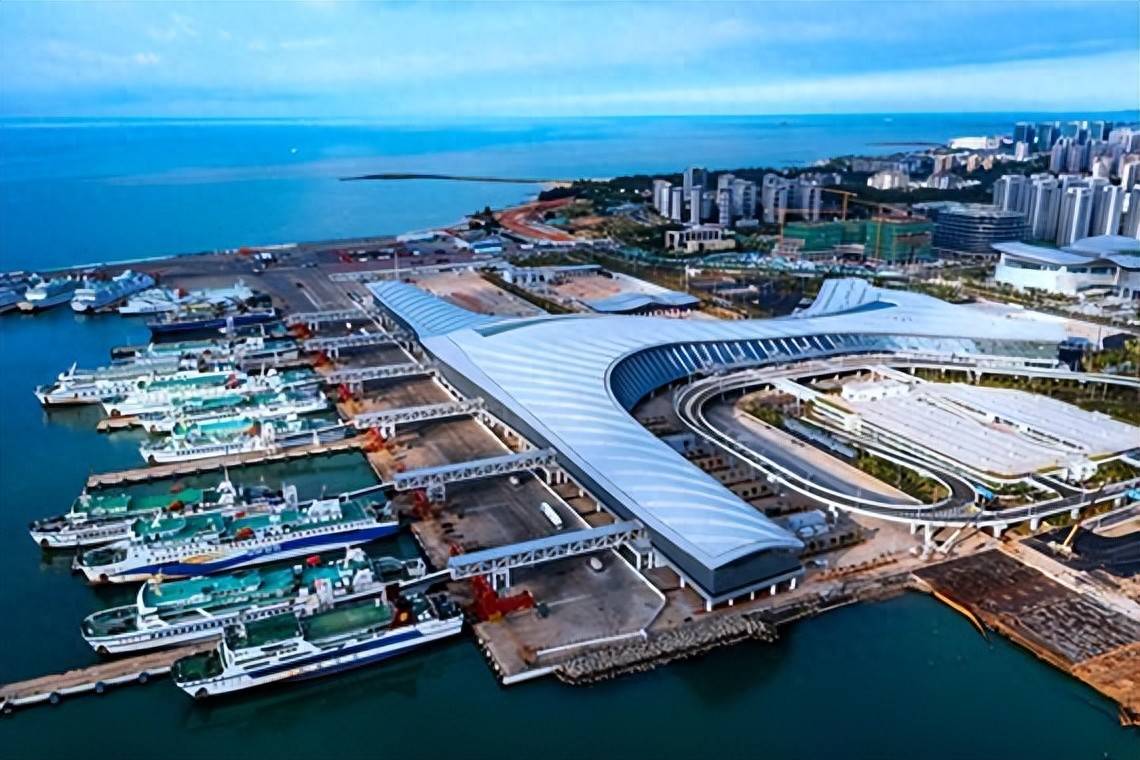
Core Viewpoint - The closure of Hainan's customs marks a significant shift in global trade dynamics, positioning Hainan as a new offshore center and potential replacement for Singapore in maritime trade routes [2][4][10]. Group 1: Hainan's Strategic Importance - Hainan's customs closure on December 18 transforms it into an offshore center, enhancing its role in global trade [2]. - The closure allows for direct shipping routes to Hainan, reducing travel distances by thousands of kilometers and saving 3 to 4 days in transit time [10]. - Hainan's geographical size is 50 times larger than Singapore, providing a substantial advantage in logistics and trade operations [12]. Group 2: Economic Opportunities - The new policies in Hainan include 74% of goods being subject to zero tariffs, with corporate and personal tax rates capped at 15%, making it an attractive destination for businesses [13][15]. - Products with over 30% value-added processing will enjoy tax exemptions, incentivizing foreign manufacturers to establish operations in Hainan [15]. - Hainan is expected to facilitate the deep processing of Southeast Asian commodities, enhancing the flow of Chinese products like electric vehicles and solar components into ASEAN markets [17]. Group 3: Impact on Global Trade - The shift in trade routes from Singapore to Hainan could lead to a decrease in Singapore's pricing power as logistics become more efficient and less reliant on Singaporean ports [15][17]. - Hainan's development is not merely about becoming a shopping destination but aims to create a more autonomous and efficient trade corridor, reshaping the economic landscape [17].

俄罗斯主权基金主管@马斯克:建一条“白令海峡隧道”,打通俄美
Hua Er Jie Jian Wen· 2025-10-19 07:26
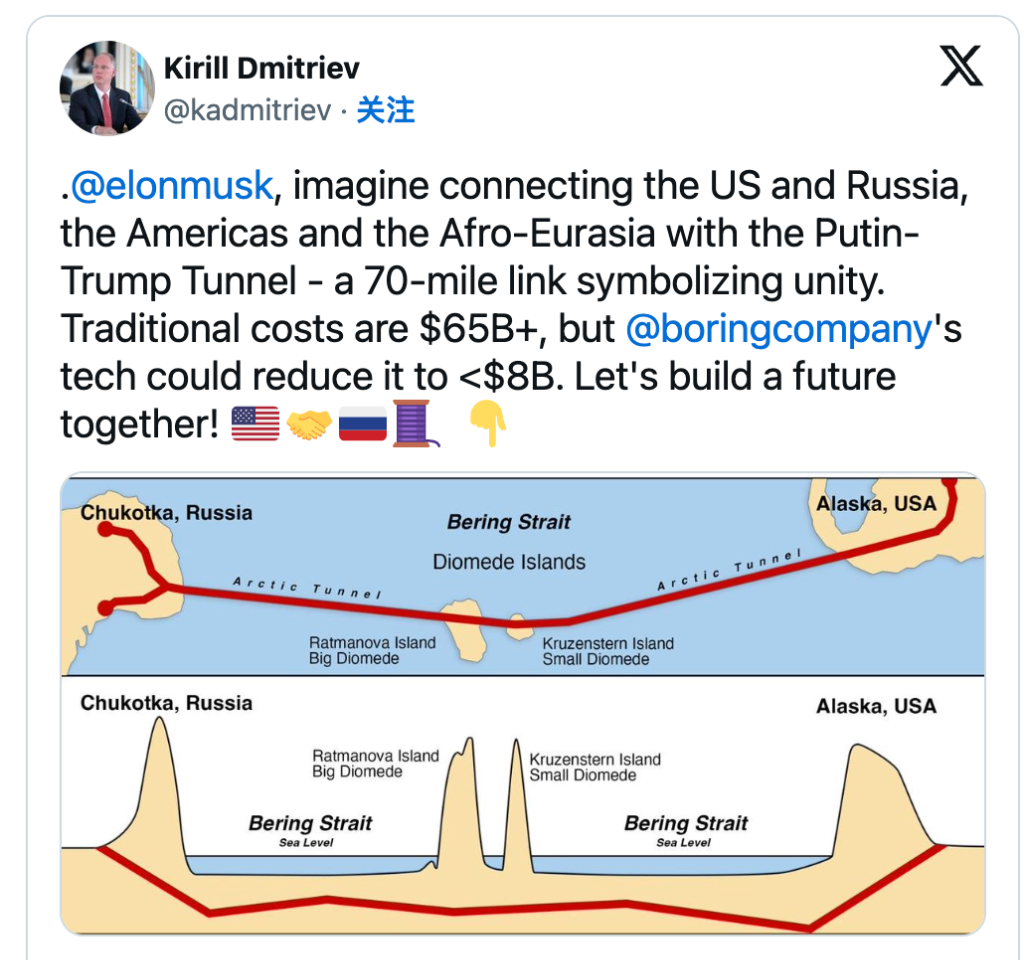
Core Points - Kirill Dmitriev, head of the Russian sovereign wealth fund, proposed a Boring Company project to build a 70-mile underwater tunnel connecting Russia and Alaska, named the "Putin-Trump Tunnel" [1] - The project is framed as a potential sign of easing US-Russia relations, coinciding with an upcoming meeting between the two leaders in Budapest [1] - Traditional construction methods are estimated to cost $65 billion, while Dmitriev claims Boring Company's technology could complete it in eight years for $8 billion, potentially reshaping global supply chains [1] - Dmitriev referenced declassified documents from the Kennedy era that discussed a "World Peace Bridge" concept between Alaska and Russia, advocating for immediate construction [1] Political and Social Context - The proposed infrastructure project may attract interest from Trump but is expected to face strong domestic opposition in the US, particularly from neoconservatives and Democrats [4] - The project also touches on sensitive issues related to energy geopolitics [4]