国际贸易关系

Search documents
国内棉价窄幅震荡 外棉价格连续下跌
Xin Lang Cai Jing· 2026-02-08 16:24
Core Viewpoint - The domestic cotton market shows resilience supported by macro policies, while international cotton prices are declining due to various negative factors, leading to an increasing price gap between domestic and international markets, reaching a ten-year high [1] Price Review - Domestic cotton supply is sufficient as new cotton processing nears completion, with prices showing strong resistance to declines, resulting in a narrow fluctuation trend. The main contract settlement price for Zhengzhou cotton futures is 14,643 yuan/ton, down 83 yuan/ton or 0.6% from the previous week. The average price of the national cotton price B index is 15,929 yuan/ton, down 18 yuan/ton or 0.1% [2] - Internationally, the market is influenced by macroeconomic turmoil, with the main contract settlement price for New York cotton futures at 62.01 cents/pound, down 1.43 cents/pound or 2.3%. The average price of the international cotton index (M) is 71.31 cents/pound, equivalent to an import cost of 12,117 yuan/ton, down 277 yuan/ton or 2.2% from the previous week. The domestic cotton price is 3,812 yuan/ton higher than the international price, with the price gap expanding by 259 yuan/ton [2] Textile Market - The domestic C32S cotton yarn price averages 21,440 yuan/ton, up 64 yuan/ton or 0.3%, while the average price for imported C32S cotton yarn is 20,917 yuan/ton, down 63 yuan/ton or 0.3%. Conventional foreign yarn is 523 yuan/ton lower than domestic yarn. Polyester staple fiber prices decreased by 137 yuan/ton to 6,559 yuan/ton [3] Market Outlook - The ambiguity in U.S. policy continues to disrupt the market, with a new trade agreement between the U.S. and India potentially reshaping future trade dynamics. The nomination of Kevin Walsh as the next Federal Reserve Chair has raised concerns about policy tightening, although his recent support for rate cuts has shifted market expectations. The risk of a federal government shutdown remains due to ongoing partisan divisions [4] - The international cotton supply is in a loose structure, with Brazilian cotton exports decreasing by 23.8% year-on-year to 317,000 tons in January. This has led to an increase in U.S. cotton export contracts, with a 23% week-on-week rise to 56,700 tons, primarily from Vietnam, Pakistan, and China [5] - Domestic cotton supply is ample, with a sales rate of 65.7% as of February 5, up 22.5 percentage points year-on-year. However, as the Spring Festival approaches, market activity is expected to slow down, with textile companies focusing on inventory digestion and completing existing orders [6]
菜籽油2026年报:中加关系修复or进口来源重构 决定未来定价的锚
Xin Lang Cai Jing· 2026-02-02 07:39
Group 1 - Global canola production is experiencing a mild recovery, but major producing countries face export challenges. Canada and the EU account for over 65% of global canola production, with both regions expected to see reduced output in the 2024/25 season, particularly the EU, which is projected to decline by over 13% year-on-year due to extreme weather conditions [2][19][20] - For the 2025/26 season, global canola production is estimated at 92.27 million tons, a 7.3% increase from the previous year, primarily driven by a recovery in EU production, which is expected to rise nearly 20% [20][19] - Canada remains the primary exporter of canola, with a projected production of 20.028 million tons for the 2025/26 season, a 12% increase despite a 2% decrease in planting area [22][19] Group 2 - The anti-dumping investigation initiated by China against Canadian canola has significantly impacted export volumes, with a sharp decline in exports observed since May, leading to a substantial increase in Canadian canola inventory [22][5] - The future price dynamics of canola oil will depend on the outcome of the anti-dumping case, with two potential scenarios: continued tension in China-Canada relations leading to sustained supply issues, or a thawing of relations resulting in increased exports from Canada [22][24] - The final ruling on the anti-dumping case is expected to influence the pricing and valuation system for canola oil, with market sentiment likely to fluctuate based on the outcome [24][25] Group 3 - China imported 6.39 million tons of canola in 2024, with 95.8% sourced from Canada. However, due to ongoing trade tensions, Australia and Russia are emerging as alternative suppliers [11][27] - The domestic inventory of canola is under pressure, with a significant reduction in imports from Canada leading to a tight supply situation. As of November 21, coastal oil mills had only 24,500 tons of canola in stock, a drop of over 50% from the peak in May [28][12] - Despite weak demand for canola oil, stable withdrawal volumes are expected to continue until trade channels with Canada are reopened, maintaining a tight supply situation and providing price support [30][14] Group 4 - The oilseed sector is anticipated to remain in a tight supply-demand balance, influenced by international trade relations and biofuel policies. The outcome of the anti-dumping case will be a critical factor in determining future price trends [31][16] - If relations between China and Canada improve, a potential price drop may occur, while continued tensions could lead to price increases, despite the introduction of Australian and Russian canola into the market [31][16]


美国财长谈政府停摆风险:目前形势尚不明朗
Jin Rong Jie· 2026-01-28 15:39
Core Viewpoint - The U.S. government faces potential shutdown risks, but Treasury Secretary Mnuchin emphasizes that President Trump is urging Democrats to avoid this situation, while maintaining a strong outlook for the U.S. economy this year [1] Group 1: Economic Outlook - Treasury Secretary Mnuchin expects the U.S. economy to remain very strong this year [1] Group 2: International Trade Relations - Negotiations for the USMCA (United States-Mexico-Canada Agreement) are set to resume, with Mnuchin indicating that the U.S. will avoid proactively escalating disputes during the negotiation process [1] - Mnuchin expresses optimism regarding trade talks with Canada, encouraging the Canadian Prime Minister to make decisions based on national interests [1]
棕榈油--现实压力下暗藏潜力与新机
Xin Lang Cai Jing· 2026-01-12 06:13
Group 1 - Indonesia, as the world's largest palm oil producer, is facing supply bottlenecks due to government actions and management issues, which may limit production growth [4][5][24] - The cumulative palm oil production in Indonesia for January to August 2025 is approximately 39.04 million tons, an increase of 4.52 million tons compared to the same period last year [4][23] - The Indonesian government has confiscated about 3.7 million hectares of illegal palm oil plantations, with concerns about the management capabilities of the newly established state-owned enterprise Agrinas Palma Nusantara [5][24] Group 2 - Malaysia's palm oil production for January to October 2025 is reported at 16.51 million tons, a slight increase of 1.7% from the previous year [7][26] - The unexpected production performance in Malaysia has led to inventory accumulation, which is a key factor in the decline of market prices in the fourth quarter [7][26] - The seasonal reduction logic in Malaysia remains unchanged, and the expected production growth for 2026 may not be optimistic due to aging trees and adverse weather impacts [8][27] Group 3 - India's palm oil imports have decreased to the lowest level in five years due to price competition with soybean oil, but a rebound in demand is expected when price advantages return [9][28] - The low inventory levels in India, combined with a steady increase in consumption demand, are crucial for maintaining resilience in palm oil exports [9][28] - The Indian government's biodiesel policy is a significant demand driver, with plans to increase the blending ratio to 50% (B50) by mid-2026, which could significantly impact palm oil demand [10][12][30] Group 4 - China's palm oil imports have decreased by 16.29% year-on-year, with total imports for January to October 2025 at 2.5269 million tons [15][33] - The import profit margins have shown significant recovery, which has boosted procurement enthusiasm among enterprises [15][33] - As of November 21, 2025, commercial palm oil inventories in key regions of China have increased by 31.34% compared to the previous year, indicating supply pressure and limited downstream demand [17][35] Group 5 - The palm oil market in 2026 is expected to be influenced by supply constraints from Indonesia's nationalization of plantations and Malaysia's structural issues, alongside seasonal reductions [18][37] - The core debate in the market will revolve around the implementation of Indonesia's B50 policy and its potential to drive demand growth for palm oil [18][37] - The overall dynamics of the oilseed sector will continue to reflect a balance between supply direction and policy impact, with interdependencies among different oil types being crucial for market analysis [18][37]
潮退的寂静,于暮色中等待风起
Dong Zheng Qi Huo· 2025-12-30 03:45
1. Report Industry Investment Rating - Rapeseed oil: Oscillation; Soybean oil: Bullish; Palm oil: Bullish [1] 2. Core Viewpoints of the Report - In 2026, the core drivers of the global oil and fat market are the biofuel policies of the United States and Indonesia. The market is expected to see an upward shift in the overall price center, with palm oil being the strongest, rapeseed oil the weakest, and soybean oil in the middle [2]. - The international market focuses on the biofuel policies of the US and Indonesia, while the domestic market focuses on raw material supply and export potential [173][175]. 3. Summary by Relevant Catalogs 3.1 2025 Oil and Fat Market Review - The 2025 oil and fat market was mainly driven by policies, with significant divergence in trends. Palm oil prices fluctuated due to policy delays, weather, and production recovery. Soybean oil followed palm oil, and rapeseed oil had a relatively independent trend, affected by policies related to Canada [14]. 3.2 2026 Market Outlook 3.2.1 Soybean Oil - **International Market**: The core variable in the global soybean oil market in 2026 is the US biofuel policy. The uncertainty of the policy has led to a lack of market confidence and weak long - position funds. Different scenarios of the policy will have a significant impact on US soybean oil demand, and the global soybean oil supply is expected to be tight if the policy is not the most pessimistic [19][35]. - **Domestic Market**: The domestic market will continue the pattern of strong supply and demand. The supply of raw materials is expected to be sufficient, and the export of soybean oil may continue to play an important role in influencing domestic prices and the spread between soybean oil and palm oil [41]. 3.2.2 Palm Oil - **International Market**: In Malaysia, production is unlikely to reach a new record in 2026, and attention should be paid to the export rhythm. In Indonesia, production may face a slight decline, and the focus is on the biodiesel policy. India's import demand is expected to increase, and the import structure may change [60][61][101][124]. - **Domestic Market**: The domestic palm oil market will continue the pattern of weak supply and demand, with prices mainly following international market trends [133]. 3.2.3 Rapeseed Oil - **International Market**: The global rapeseed market in the 2025/26 season is in a pattern of abundant production and loose supply - demand. Canada's rapeseed export may decline, the EU's import demand will decrease, and Australia may increase its supply to China [139][144][156]. - **Domestic Market**: The focus is on whether China will resume the purchase of Canadian rapeseed or rapeseed oil and whether the import of Australian rapeseed can be commercialized. The price of domestic rapeseed oil will be significantly affected by policies [159]. 3.3 Market Judgment and Strategy Suggestions - **International Market**: The focus in 2026 is on the biofuel policies of the US and Indonesia. The supply of palm oil is stronger than that of soybean oil, which is stronger than that of rapeseed oil. The demand is mainly determined by the biofuel policies of the US and Indonesia. It is expected that US soybean oil will be stronger than palm oil, which is stronger than Canadian rapeseed oil [173]. - **Domestic Market**: In terms of supply, the strength order is palm oil > rapeseed oil > soybean oil; in terms of demand, it is soybean oil > rapeseed oil > palm oil. Based on the benchmark scenario, the strength order of the oil and fat market in 2026 is expected to be palm oil > soybean oil > rapeseed oil [175].
中国11月大豆进口创四年新高,全年进口量或将破纪录
Huan Qiu Wang Zi Xun· 2025-12-08 10:12
Core Insights - China's soybean imports reached 8.11 million tons in November, marking a 13.4% increase from 7.15 million tons in the same month last year, and the highest level for the same period in four years [1] - Despite a 14.5% month-on-month decline from October's 9.48 million tons, the cumulative import total for the first 11 months of the year increased by 6.9% year-on-year, reaching 13.79 million tons, setting a solid foundation for a potential record annual import volume [1] - Analysts predict that total soybean imports for the year could reach a record 110 million tons, driven by significant purchases of Brazilian and U.S. soybeans [1][4] Import Dynamics - The import landscape has been influenced by changes in international trade relations, particularly the U.S.-China trade tensions that previously halted U.S. soybean purchases for several months [4] - Following a trade truce agreement between the U.S. and China at the end of October, China has gradually resumed purchasing U.S. soybeans, with COFCO leading the way by pre-purchasing approximately 2.7 million tons [4] - This volume is still below the U.S. government's target of 12 million tons by the end of the year, although there are indications that the deadline may be extended to February next year [4] Demand Drivers - The continuous growth in China's soybean imports is driven by multiple factors, including the strong demand from the domestic pig farming industry for soybean meal and other feed proteins [4] - The stabilization of domestic pig production capacity has maintained high demand for quality feed ingredients [4] - The relative price advantage of international soybeans, particularly from Brazil, has also stimulated purchasing interest among importers [4] Future Outlook - Industry analysts generally expect China's soybean import levels to remain high, supported by ongoing consumption upgrades and the modernization of the livestock industry [5] - Adjustments in the global soybean supply chain and China's diversified import strategies to ensure food security will also contribute to stable growth in soybean import volumes [5]
中方严厉反制后,墨西哥态度骤变,不敢再讨好美国,喊停加税进程
Sou Hu Cai Jing· 2025-10-16 04:23
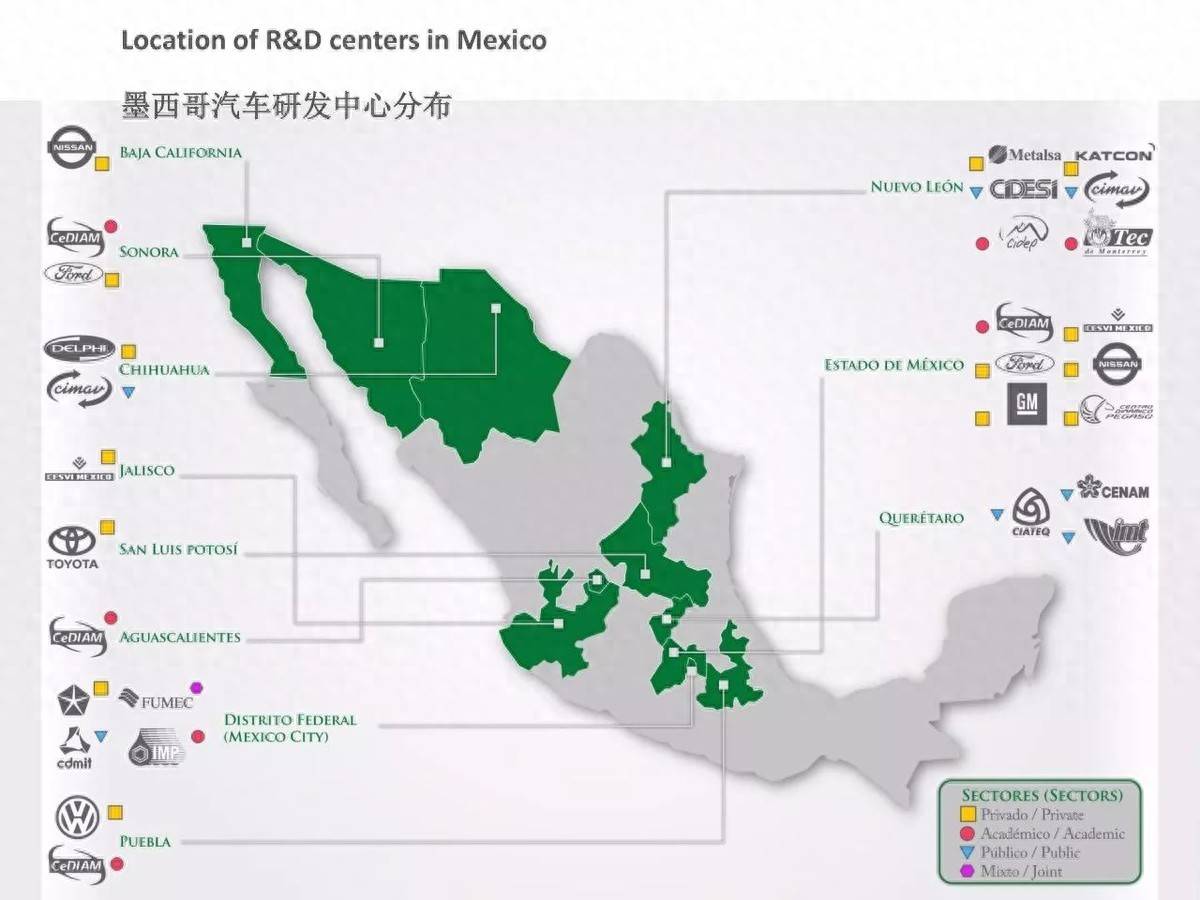
Core Viewpoint - Mexico is shifting its stance towards China, moving from a hardline approach to seeking a more conciliatory dialogue, influenced by political pressures from the U.S. and recent Chinese countermeasures [2][3][6]. Group 1: Mexico's Policy Changes - Mexico's proposed tariffs on Chinese steel and auto parts have been suspended, with President Sinbaum indicating that further discussions with China will precede any legislative action [3]. - The rapid change in Mexico's approach is surprising, given its geographical and economic ties to the U.S., which has imposed high tariffs on Mexico [7]. Group 2: Trade Relations and Economic Implications - Mexico is a crucial trade partner for China, serving as a significant manufacturing hub for Chinese companies aiming to access the U.S. market [8]. - The potential deterioration of relations with China could lead to severe economic consequences for Mexico, impacting its role as a low-cost labor source for U.S. companies [8][9]. Group 3: Political Influences - The Mexican government has faced substantial political pressure from the Trump administration to limit imports from China, which has influenced its trade policies [6]. - The complexities of Mexico-China trade relations highlight the challenges of balancing domestic political pressures with economic interests [8].
饲用需求季节性提升 预计菜籽粕短期或宽幅震荡
Jin Tou Wang· 2025-09-15 07:09
Group 1 - The domestic oilseed market is experiencing a downward trend, with the main contract for rapeseed meal futures opening at 2533.00 CNY/ton and showing a decline of approximately 2.23% [1] - Institutions have differing views on the future of rapeseed meal prices, with Donghai Futures noting high inventory pressures but potential for upward movement due to low rapeseed stocks and unchanged policy expectations [1] - Ruida Futures highlights reduced supply pressure from lower rapeseed arrivals and increased seasonal demand for rapeseed meal in aquaculture, while also noting the impact of trade negotiations between China and Canada on rapeseed imports [1] Group 2 - The upcoming round of talks between China and the US is crucial, with the USDA report indicating a slight reduction in US soybean yield but an increase in harvested area, leading to a neutral to slightly bearish outlook [2] - Domestic soybean meal remains in a "weak reality, strong expectation" scenario, with short-term supply limiting price increases, suggesting a wide fluctuation in soybean and rapeseed meal prices [2] - Recommendations for soybean meal trading include a support level reference between 2900-3000 CNY [2]
瑞达期货菜籽系产业日报-20250910
Rui Da Qi Huo· 2025-09-10 09:12
1. Report Industry Investment Rating - No relevant content provided 2. Core Viewpoints of the Report - The international rapeseed futures market is affected by factors such as the decline of Chicago soybean oil futures and the weather in the US soybean - producing areas. The domestic rapeseed - related market is influenced by supply, demand, and trade policies. For rapeseed meal, the reduction in near - month rapeseed arrivals and the seasonal increase in aquaculture demand support the market, but the substitution advantage of soybean meal weakens the demand expectation. For rapeseed oil, the low - level oil mill operating rate and limited near - month rapeseed purchases reduce supply pressure, while weak terminal consumption restricts short - term prices. The market is also affected by Sino - Canadian and Sino - US trade negotiations [2] 3. Summary by Relevant Catalogs 3.1 Futures Market - Futures closing prices: The closing price of the active contract of rapeseed oil is 9770 yuan/ton, down 81 yuan; that of rapeseed meal is 2533 yuan/ton, down 17 yuan; ICE rapeseed is 618.4 Canadian dollars/ton, down 8.1 Canadian dollars; and rapeseed is 5177 yuan/ton, down 10 yuan [2] - Month - to - month spreads: The 1 - 5 spread of rapeseed oil is 289 yuan/ton, down 35 yuan; that of rapeseed meal is 128 yuan/ton, down 14 yuan [2] - Main contract positions: The main contract position of rapeseed oil is 255147 lots, and that of rapeseed meal is 386706 lots, with a decrease of 7640 lots [2] - Net long positions of the top 20 futures holders: The net long position of rapeseed oil is 5394 lots, down 4377 lots; that of rapeseed meal is - 5229 lots, down 7582 lots [2] - Warehouse receipt quantities: The warehouse receipt quantity of rapeseed oil is 6857 sheets, an increase of 387 sheets; that of rapeseed meal is 10383 sheets, a decrease of 960 sheets [2] 3.2 Spot Market - Spot prices: The spot price of rapeseed oil in Jiangsu is 9930 yuan/ton, an increase of 70 yuan; that of rapeseed meal in Nantong is 2630 yuan/ton, an increase of 10 yuan; the spot price of rapeseed in Yancheng, Jiangsu is 5700 yuan/ton, unchanged [2] - Average prices: The average price of rapeseed oil is 9995 yuan/ton, an increase of 70 yuan; the import cost of imported rapeseed is 7734.17 yuan/ton, down 102.53 yuan [2] - Basis: The basis of the rapeseed oil main contract is 79 yuan/ton, an increase of 54 yuan; that of the rapeseed meal main contract is 97 yuan/ton, an increase of 27 yuan [2] - Substitute prices: The spot price of grade - four soybean oil in Nanjing is 8560 yuan/ton, down 100 yuan; the spot price of 24 - degree palm oil in Guangdong is 9270 yuan/ton, down 150 yuan; the spot price of soybean meal in Zhangjiagang is 3030 yuan/ton, unchanged [2] - Price differences: The spot price difference between rapeseed oil and soybean oil is 1270 yuan/ton, an increase of 50 yuan; that between rapeseed oil and palm oil is 510 yuan/ton, unchanged; that between soybean meal and rapeseed meal is 400 yuan/ton, down 10 yuan [2] 3.3 Upstream Situation - Global production: The predicted annual production of rapeseed is 89.77 million tons, an increase of 0.21 million tons; the annual predicted production of rapeseed is 12378 thousand tons, unchanged [2] - Import quantities: The total monthly import quantity of rapeseed is 17.6 tons, a decrease of 0.85 tons; the monthly import quantity of rapeseed oil and mustard oil is 15 tons, an increase of 4 tons; the monthly import quantity of rapeseed meal is 27.03 tons, an increase of 7.56 tons [2] - Inventory and operating rate: The total inventory of rapeseed in oil mills is 10 tons, unchanged; the weekly operating rate of imported rapeseed is 13.06%, an increase of 1.07 percentage points [2] - Pressing profit: The imported rapeseed disk pressing profit is 839 yuan/ton, down 62 yuan [2] 3.4 Industry Situation - Inventory: The coastal rapeseed oil inventory is 9.7 tons, a decrease of 0.7 tons; the coastal rapeseed meal inventory is 1.8 tons, a decrease of 0.7 tons; the rapeseed oil inventory in East China is 53.2 tons, a decrease of 2.2 tons; the rapeseed meal inventory in East China is 31.51 tons, an increase of 0.65 tons; the rapeseed oil inventory in Guangxi is 4.55 tons, a decrease of 0.3 tons; the rapeseed meal inventory in South China is 21.3 tons, an increase of 1.3 tons [2] -提货量: The weekly rapeseed oil delivery volume is 3.03 tons, an increase of 0.77 tons; the weekly rapeseed meal delivery volume is 2.74 tons, a decrease of 0.15 tons [2] 3.5 Downstream Situation - Production: The monthly production of feed is 2827.3 tons, a decrease of 110.4 tons; the monthly production of edible vegetable oil is 476.9 tons, an increase of 41.8 tons [2] - Consumption: The monthly retail sales of social consumer goods in the catering industry is 4504.1 billion yuan, a decrease of 203.5 billion yuan [2] 3.6 Option Market - Implied volatility: The implied volatility of at - the - money call options for rapeseed meal is 19.34%, down 0.89 percentage points; that of at - the - money put options for rapeseed meal is 19.35%, down 0.88 percentage points; the implied volatility of at - the - money call options for rapeseed oil is 13.75%, an increase of 1.32 percentage points; that of at - the - money put options for rapeseed oil is 13.73%, an increase of 1.32 percentage points [2] - Historical volatility: The 20 - day historical volatility of rapeseed meal is 27.1%, down 3.99 percentage points; the 60 - day historical volatility of rapeseed meal is 21.98%, down 0.04 percentage points; the 20 - day historical volatility of rapeseed oil is 15.35%, down 1.64 percentage points; the 60 - day historical volatility of rapeseed oil is 13.12%, unchanged [2] 3.7 Industry News - On September 9th, ICE rapeseed futures closed lower, following the decline of Chicago soybean oil futures, as the rapeseed oil inventory report did not change the supply - demand expectation. The most actively traded November rapeseed futures contract closed 7.60 Canadian dollars lower, and the January contract closed 6.60 Canadian dollars lower [2] - The weather in the US soybean - producing areas is good, and the excellent - good rate is relatively high, resulting in a good crop yield outlook and supply - side pressure. However, the unexpected reduction in planting area supports the market [2] 3.8 Rapeseed Meal Viewpoint Summary - In the international market, the reduction in planting area supports the US soybean price, but the market is uncertain due to the divergence in private institutions' predictions of the USDA report [2] - In the domestic market, the shortage of near - month rapeseed arrivals reduces supply pressure, and the seasonal increase in aquaculture demand boosts rapeseed meal demand. However, the substitution advantage of soybean meal weakens the demand expectation [2] 3.9 Rapeseed Oil Viewpoint Summary - The harvest of Canadian rapeseed is approaching, and the temporary anti - dumping measures on Canadian rapeseed by China may affect its exports. The Canadian government is considering relaxing tariffs on Chinese electric vehicles to avoid additional tariffs on Canadian rapeseed [2] - In the US, senators are trying to prevent the Trump administration from adjusting renewable fuel obligation policies, which has led to a sharp decline in US soybean oil futures and affected the domestic vegetable oil market [2] - In the domestic market, the terminal consumption boost from the start of school is limited, and the supply - demand of vegetable oil is relatively loose. However, the low operating rate of oil mills and the shortage of near - month rapeseed purchases reduce supply pressure [2]
瑞达期货菜籽系产业日报-20250901
Rui Da Qi Huo· 2025-09-01 09:24
Report Summary 1. Report Industry Investment Rating No relevant information provided. 2. Core Viewpoints - **Overall Market**: The rapeseed and related product markets are influenced by international trade relations, with recent market fluctuations increasing. Short - term trading is recommended. The market is also affected by factors such as supply and demand, harvest conditions, and trade policies [2]. - **Rapeseed Meal**: In the international market, the expected high yield of US soybeans brings supply - side pressure, but the reduction in planting area provides support. Domestically, the decrease in near - month rapeseed arrivals reduces supply pressure, and the peak season of aquaculture boosts demand. However, the good substitution advantage of soybean meal weakens the demand for rapeseed meal [2]. - **Rapeseed Oil**: Internationally, there are supply - side risks in Indonesia and strong export data for Malaysian palm oil. Domestically, it is the off - season for oil consumption, and the supply of vegetable oil is relatively loose. But the low oil mill operating rate and fewer rapeseed purchases in the third quarter reduce supply pressure [2]. 3. Summary by Directory 3.1 Futures Market - **Prices**: The closing price of rapeseed oil futures (active contract) is 9801 yuan/ton, up 12 yuan; the closing price of rapeseed meal futures (active contract) is 2513 yuan/ton, unchanged. The closing price of ICE rapeseed futures (active) is 627.5 Canadian dollars/ton, down 7.8 Canadian dollars; the closing price of rapeseed futures (active contract) is 6041 yuan/ton, down 369 yuan [2]. - **Spreads**: The 1 - 5 month spread of rapeseed oil is 166 yuan/ton, up 2 yuan; the 1 - 5 month spread of rapeseed meal is 107 yuan/ton, up 18 yuan [2]. - **Positions**: The position of the main rapeseed oil contract is 263,549 lots, down 52 lots; the position of the main rapeseed meal contract is 404,322 lots, down 9,848 lots. The net long position of the top 20 futures holding for rapeseed oil is 5,797 lots, down 1,541 lots; the net long position of the top 20 futures holding for rapeseed meal is - 22,321 lots, down 8,632 lots [2]. - **Warehouse Receipts**: The number of rapeseed oil warehouse receipts is 3,887 sheets, unchanged; the number of rapeseed meal warehouse receipts is 4,750 sheets, up 104 sheets [2]. 3.2 Spot Market - **Prices**: The spot price of rapeseed oil in Jiangsu is 9880 yuan/ton, down 20 yuan; the spot price of rapeseed meal in Nantong is 2600 yuan/ton, up 10 yuan. The average price of rapeseed oil is 9945 yuan/ton, down 20 yuan; the import cost of rapeseed is 7858.15 yuan/ton, down 95.37 yuan [2]. - **Basis**: The basis of the main rapeseed oil contract is 79 yuan/ton, down 32 yuan; the basis of the main rapeseed meal contract is 87 yuan/ton, up 10 yuan [2]. - **Substitute Prices**: The spot price of grade - four soybean oil in Nanjing is 8560 yuan/ton, down 30 yuan; the spot price of 24 - degree palm oil in Guangdong is 9280 yuan/ton, down 40 yuan; the spot price of soybean meal in Zhangjiagang is 3050 yuan/ton, up 10 yuan [2]. - **Price Differences**: The spot price difference between rapeseed oil and soybean oil is 1320 yuan/ton, up 10 yuan; the spot price difference between rapeseed oil and palm oil is 600 yuan/ton, up 20 yuan; the spot price difference between soybean meal and rapeseed meal is 450 yuan/ton, unchanged [2]. 3.3 Upstream Situation - **Production**: The global rapeseed production forecast is 89.77 million tons, up 0.21 million tons; the annual rapeseed production forecast in China is 12,378 thousand tons, unchanged [2]. - **Imports**: The total monthly import volume of rapeseed is 17.6 million tons, down 0.85 million tons; the monthly import volume of rapeseed oil and mustard oil is 15 million tons, up 4 million tons; the monthly import volume of rapeseed meal is 27.03 million tons, up 7.56 million tons [2]. - **Inventory and Operating Rate**: The total inventory of rapeseed in oil mills is 15 million tons, unchanged; the weekly operating rate of imported rapeseed is 11.99%, down 0.8% [2]. 3.4 Industry Situation - **Inventory**: The coastal rapeseed oil inventory is 10.5 million tons, up 0.05 million tons; the coastal rapeseed meal inventory is 2.5 million tons, up 0.4 million tons. The rapeseed oil inventory in East China is 53.6 million tons, down 0.6 million tons; the rapeseed meal inventory in East China is 32.86 million tons, down 0.73 million tons. The rapeseed oil inventory in Guangxi is 4.9 million tons, down 0.1 million tons; the rapeseed meal inventory in South China is 21.4 million tons, down 0.4 million tons [2]. - **Delivery Volume**: The weekly delivery volume of rapeseed oil is 2.81 million tons, down 0.95 million tons; the weekly delivery volume of rapeseed meal is 2.79 million tons, down 0.45 million tons [2]. 3.5 Downstream Situation - **Production**: The monthly production of feed is 2827.3 million tons, down 110.4 million tons; the monthly production of edible vegetable oil is 476.9 million tons, up 41.8 million tons [2]. - **Consumption**: The monthly retail sales of social consumer goods in the catering industry is 4504.1 billion yuan, down 203.5 billion yuan [2]. 3.6 Option Market - **Implied Volatility**: The implied volatility of at - the - money call options for rapeseed meal is 19.64%, up 0.19%; the implied volatility of at - the - money put options for rapeseed meal is 19.65%, up 0.21%. The implied volatility of at - the - money call options for rapeseed oil is 11.83%, up 0.23%; the implied volatility of at - the - money put options for rapeseed oil is 11.83%, up 0.23% [2]. - **Historical Volatility**: The 20 - day historical volatility of rapeseed meal is 32.15%, down 0.11%; the 60 - day historical volatility of rapeseed meal is 21.84%, unchanged. The 20 - day historical volatility of rapeseed oil is 18.44%, up 0.57%; the 60 - day historical volatility of rapeseed oil is 14.37%, up 0.11% [2]. 3.7 Industry News - On August 29, ICE rapeseed futures fell to a nearly five - month low due to fund long - position liquidation and the start of the Canadian rapeseed harvest. The most actively traded November rapeseed futures contract closed down 9.30 Canadian dollars at 626.40 Canadian dollars per ton, hitting a low of 621.70 Canadian dollars since April 7 [2]. - The Pro Farmer report predicts that the average yield of US soybeans will reach a record high of 53.0 bushels per acre, with a total production of 4.246 billion bushels. The deviation from the USDA forecast is small, indicating stable crop potential and supply - side pressure [2]. 3.8 Rapeseed Meal Viewpoint Summary - International supply pressure exists, but the reduction in planting area supports the price. Domestically, the decrease in near - month rapeseed arrivals reduces supply pressure, and the peak season of aquaculture boosts demand. However, the substitution advantage of soybean meal weakens the demand for rapeseed meal [2]. 3.9 Rapeseed Oil Viewpoint Summary - Internationally, there are supply - side risks in Indonesia and strong export data for Malaysian palm oil. Domestically, it is the off - season for oil consumption, and the supply of vegetable oil is relatively loose. But the low oil mill operating rate and fewer rapeseed purchases in the third quarter reduce supply pressure. The implementation of anti - dumping measures on Canadian rapeseed weakens long - term supply [2]. 3.10 Key Points to Watch - The rapeseed operating rate and rapeseed oil and meal inventories in various regions from Myagric on Monday, as well as the development of China - Canada and Canada - US trade relations [2].