具身智能汽车

Search documents
耐世特(1316.HK):綫控转向量产将至
Ge Long Hui· 2026-02-14 13:25
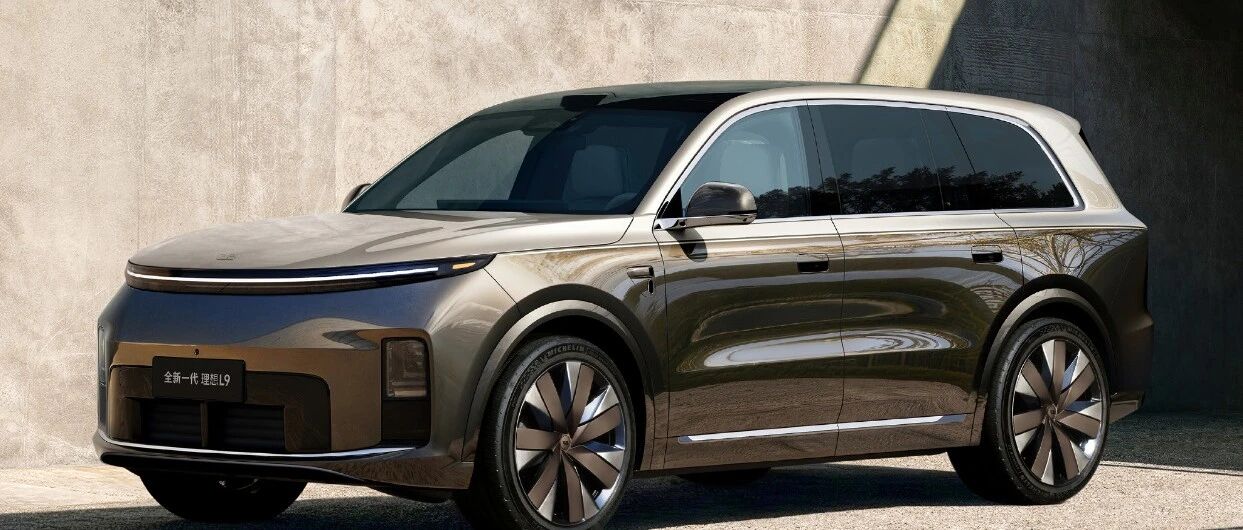
Core Viewpoint - 2026 is projected to be the year of mass production for steer-by-wire (SBW) technology, aligning with the trend of autonomous driving, leading to an industry upgrade. The target price is set at HKD 10.2 based on an 18x PE valuation for 2026, with a buy rating [1]. Group 1: Industry Trends - The steering system in automobiles is transitioning from electric power steering (EPS) to steer-by-wire (SBW), with average selling prices (ASP) increasing from C-EPS at 1,000 yuan to R-EPS at 2,000 yuan, and further to SBW at 4,000 yuan [1]. - Currently, EPS remains the mainstream technology in the industry, with a domestic penetration rate reaching 99% [1]. Group 2: Company Developments - The company has seen a growing number of clients and orders for its steer-by-wire technology, being the exclusive supplier for Tesla's robotaxi and the supplier for the Li Auto L9 Livis, both set for mass production in the first half of the year [1]. - Tesla's Cybercab is a key vehicle for achieving Level 4 autonomous driving, aiming to eliminate human intervention through a combination of pure vision FSD solutions and steer-by-wire chassis [1]. Group 3: Regulatory Environment - The legal status of steer-by-wire technology has been clarified with the release of the national certification standard "Basic Requirements for Automotive Steering Systems," effective from July 1, 2026. This standard emphasizes safety requirements and introduces functional safety terminology and verification methods [3]. - The new regulations remove the mandatory mechanical connection between the steering wheel and the steering system, establishing the legal status of SBW and setting strict safety redundancy and failure response standards [3].
大雨解读理想L9搞全线控底盘底层逻辑
理想TOP2· 2026-02-08 04:51
Core Viewpoint - The article emphasizes the transition from 2D Vision Transformers (ViT) to 3D ViT, highlighting the advantages of processing continuous video streams for better understanding of the physical world and improved response times in autonomous vehicles [1][2]. Group 1: Transition to 3D ViT - The traditional 2D ViT processes images in a sliced manner, limiting the information captured from each frame, while 3D ViT processes video clips, integrating spatial and temporal data for enhanced feature extraction [1][2]. - The shift to 3D ViT is not merely a conversion from 2D to 3D in terms of perspective but involves a fundamental change in feature extraction dimensions, focusing on height, width, and time [2]. Group 2: Technical Advancements - The new chip architecture, referred to as a data flow architecture, allows for direct connections between layers on the silicon chip, minimizing the need for external memory reads and writes, thus optimizing latency [2]. - The self-developed chip by the company is designed to be data-driven rather than instruction-driven, achieving higher parallelism and integrating hardware and software design from the outset [4]. Group 3: Implications for Autonomous Vehicles - The advancements in chip technology necessitate corresponding improvements in vehicle control systems, leading to the development of a fully controlled chassis for the L9 model to match the enhanced processing capabilities [3].


转型闯关,武汉不失速
Chang Jiang Ri Bao· 2025-07-23 00:46
Core Viewpoint - Wuhan is undergoing a significant transformation, achieving a GDP of 2 trillion yuan in 2023, making it the first city in Central China to reach this milestone, with a projected GDP growth rate of 5.2% in 2024 and 5.4% in the first quarter of 2025 [2][3][10] Economic Stability and Growth - Wuhan's industrial investment growth rate was 12.1% from January to May 2023, marking 18 consecutive months of double-digit growth [6] - The city has seen a 22.3% year-on-year increase in imports and exports, surpassing 210 billion yuan in the first half of the year [6] - The consumer market is thriving, with a continuous rise in core CPI over three months [7] New Industries and Innovations - In the first half of 2023, Wuhan's production of new energy vehicles exceeded 168,000 units, a 152% year-on-year increase [8] - The optical electronics industry achieved a production value of 205.3 billion yuan, growing by 31.2% [8] - The city is advancing in high-tech sectors, with significant breakthroughs in semiconductor and laser technologies [9][10] Dual-Track Development Strategy - Wuhan is pursuing a "two-legged" approach to development, balancing innovation with traditional industries [15][20] - The city is enhancing its manufacturing base while fostering new technologies, such as domestically produced chips and advanced robotics [19][21] Quality and Efficiency in Development - The focus is on high-quality growth, with initiatives like the "robot valley" promoting local production of key components [21][24] - The city is implementing strategies to optimize land use and increase economic value, such as the "upstairs economy" and eco-friendly projects [22][23]