养殖周期拐点

Search documents
把握养殖周期拐点的投资机遇
量化藏经阁· 2026-03-17 00:08
Group 1 - The swine breeding industry is at a critical bottom window, with pig prices experiencing continuous bottom fluctuations since the second half of 2025, and capacity reduction accelerating [1][42] - The National Development and Reform Commission and the Ministry of Agriculture have lowered the breeding sow stock target to 36.5 million heads, indicating stricter policy controls and a clear path for capacity contraction, which lays the foundation for pig prices to return to reasonable profit levels in 2026-2027 [1][12] - The China Securities Livestock Breeding Industry Index (931946.CSI) was launched on July 28, 2023, to reflect the overall performance of listed companies in the livestock breeding industry [2][24] Group 2 - The index is highly concentrated, with the top ten stocks accounting for 66.47% of the total weight, and leading companies in pig breeding, such as Muyuan Foods and WH Group, making up nearly 30% [2][43] - The average market capitalization of the index constituents is 23.97 billion yuan, indicating a small-cap style that provides high elasticity during the cycle reversal phase [2][31] - As of March 11, 2026, the index's price-to-earnings ratio is 20.48, which is at a historical low level, providing a certain degree of allocation value [2][34] Group 3 - The unique defensive property of the swine breeding sector is highlighted by its low correlation with macroeconomic cycles, as domestic supply is primarily sourced, resulting in minimal impact from international geopolitical conflicts [3][22] - The annual pork consumption in China is approximately 57-58 million tons, with per capita consumption stable at 25-30 kg/year, providing a solid demand base for the industry [3][14] - The index is currently positioned at a policy bottom, valuation bottom, and sentiment bottom, indicating a left-side layout window as capacity reduction continues and the price turning point approaches [3][44] Group 4 - The ongoing low-price losses are driving the reduction of breeding sows, which will gradually transmit upstream to the commodity pig market, leading to a substantial contraction in supply [6][9] - The policy level is becoming a key driving force for the reduction of swine production capacity, with major companies being urged to control capacity and implement reduction tasks [12][12] - The swine breeding industry is expected to experience a cyclical reversal, transitioning from oversupply to undersupply, which will push prices out of the current bottom fluctuation range [9][12]

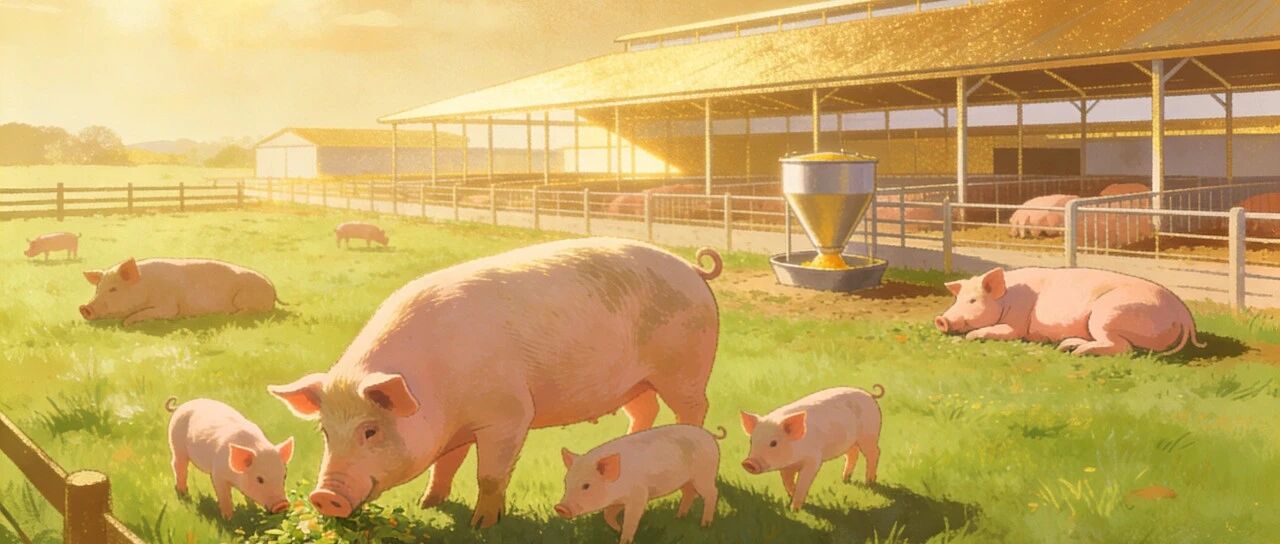
中证畜牧养殖产业指数投资价值分析:一键布局养殖周期拐点
Guoxin Securities· 2026-03-14 08:30
- The CSI Livestock Breeding Industry Index (931946.CSI) was launched on July 28, 2023, selecting securities from industries such as livestock products, animal health and breeding, feed, meat products, and dairy products to reflect the overall performance of listed companies in the livestock breeding industry[31][50] - The index is highly concentrated, with the top 10 weighted stocks accounting for 66.47% as of February 28, 2026. Major contributors include leading companies in pig farming such as Muyuan Foods and Wen's Foodstuff, which together account for nearly 30% of the index weight. Livestock farming represents over 54% of the index weight, while feed processing accounts for 15.41%, showcasing the index's pure representation of the industry chain[32][33][50] - The index exhibits small-cap characteristics, with an average market capitalization of 239.67 billion yuan across its 50 constituent stocks. Compared to broader indices like CSI 300 and CSI 800, the CSI Livestock Breeding Industry Index has a significantly lower average market cap, positioning it between CSI 500 and CSI 1000[39][41][50] - The index is valued at historical lows, with a price-to-earnings (P/E) ratio of 20.48 and a price-to-book (P/B) ratio of 2.75 as of March 11, 2026. The P/E ratio is at the 36.55% percentile, while the P/B ratio is at the 76.90% percentile, indicating a relatively low valuation and offering a safety margin for investors[42][43][50] - Performance-wise, the index has demonstrated stronger resilience compared to similar indices during the livestock industry's cyclical downturn. Since 2022, the CSI Livestock Breeding Industry Index has achieved an annualized return of -5.64%, outperforming the CSI Livestock Index, which recorded an annualized return of -7.61%[45][47][50]


农林牧渔展望 2026 行业报告:周期破晓见曦,成长擎画新篇
Haitong Securities International· 2026-01-05 06:40
Investment Rating - The report recommends focusing on the cyclical turning points in the pig and beef farming sectors, highlighting companies like Muyuan Foods and WH Group as potential investments. The pet industry shows clear growth potential, with companies that integrate production, sales, and research expected to succeed, such as Zhongchong Co., Guibao Pet, and Petty Co. The planting sector also has significant growth potential, with recommendations for companies like Morning Light Bio and Noposion [11]. Core Insights - The pig farming sector is expected to face continued low prices in the first half of 2026, driven by both policy and cyclical factors, with a focus on cost improvement and growth potential in pig farming enterprises [2][15]. - The poultry sector is experiencing a recovery phase, with white chicken prices remaining low and yellow chicken demand potentially increasing due to promotional activities [3][37]. - The beef farming sector is characterized by a long production cycle, with supply-side contractions likely to drive prices upward, particularly from 2025 onwards [4][46]. - The feed and animal health sectors are expected to see growth in sales, with a focus on the competitive landscape and the impact of low profits on animal health demand [5][63]. - The planting sector is projected to see stable grain prices, driven by domestic control and innovation, with a focus on specialty crops and plant extracts [6][69]. Summary by Sections Pig Farming - Prices are expected to remain low in the first half of 2026, with a gradual increase in supply due to rising breeding sow inventories [15]. - Capacity policies and cyclical adjustments are leading to a continued reduction in production capacity, with a focus on cost reduction and debt management among pig farming companies [23][27]. - Companies like Muyuan Foods are highlighted for their cost improvements, with expectations of further reductions in production costs [29]. Poultry Farming - The white chicken industry is in a deep price slump, with recovery expected to take time, while yellow chicken prices may see slight recovery due to promotional efforts [32][37]. - Leading companies are improving their operational efficiencies to cope with low prices, which may enhance their performance when prices recover [33]. Beef Farming - The long production cycle and fragmented market structure of beef farming in China are significant factors, with supply reductions expected to lead to price increases starting in 2025 [41][46]. - The beef supply is projected to decrease in the latter half of 2025, with expectations of continued price increases through 2027 [47]. Feed and Animal Health - The feed sector is expected to see a recovery in sales, with high inventory levels in the livestock sector supporting growth [52]. - The animal health sector may face pressure due to low profits in the livestock sector, but there are opportunities for breakthroughs in key products [63][65]. Planting - Grain prices are expected to stabilize and rise, with a focus on domestic production and innovation in seed varieties [69][75]. - The planting sector is seeing a shift towards high-quality, innovative seed varieties, with companies like Kangnong Seed showing strong growth potential [87].


农林牧渔展望2026行业报告:周期破晓见曦,成长擎画新篇
GUOTAI HAITONG SECURITIES· 2026-01-03 14:20
Investment Rating - The report assigns an "Accumulate" rating for the agricultural industry [9] Core Insights - In 2026, the pig and beef cattle farming sectors are expected to reach a cyclical turning point, with clear growth potential in the pet sector and significant opportunities in specialty planting [2][13] - Companies with complete production, sales, and research capabilities in the pet industry are likely to succeed amid competitive pressures [8] Summary by Sections Pig Farming - Price: The pig price is expected to remain low in the first half of 2026, leading to continued low profits in the industry [3] - Capacity: Policy and cyclical adjustments are driving capacity reduction, with a focus on cost improvement and growth potential in pig farming enterprises [3][27] - Debt Reduction: The average debt-to-asset ratio for listed pig farming companies has decreased to 56.27%, indicating improved financial health [27] Poultry Farming - White Chicken: The industry is experiencing deep price declines, with a return to supply-demand balance expected to take time [4][30] - Yellow Chicken: Prices may see slight recovery, supported by promotional activities for native chicken varieties [35] Beef Farming - Long Cycle: The beef farming cycle is lengthy, with a fragmented supply structure impacting pricing dynamics [39] - Price Outlook: A supply contraction is expected to support continued price increases for beef from 2025 onwards [46] Feed and Animal Health - Feed: The feed sector is anticipated to see growth in sales, with a positive outlook for 2026 as livestock numbers remain high [49] - Animal Health: Demand for animal health products may face pressure due to low profits in farming, but breakthroughs in key products are worth monitoring [58][59] Planting - Grain Prices: Grain prices are expected to trend upwards, driven by increased focus on food security and innovation in seed varieties [7][64] - Specialty Planting: Opportunities in specialty crops like blueberries and mushrooms are highlighted, with a focus on innovation and market demand [7][70] Pet Industry - Growth Potential: The pet market is thriving, with strong consumer willingness to spend, indicating clear growth prospects [8][13] - Competitive Landscape: Companies with integrated production, sales, and research capabilities are rare and likely to outperform in the competitive environment [8][13]