准财政措施

Search documents
宏观纵览 | 前10月广义财政支出增速放缓至5.2%,待年末发力
Sou Hu Cai Jing· 2025-11-21 10:03
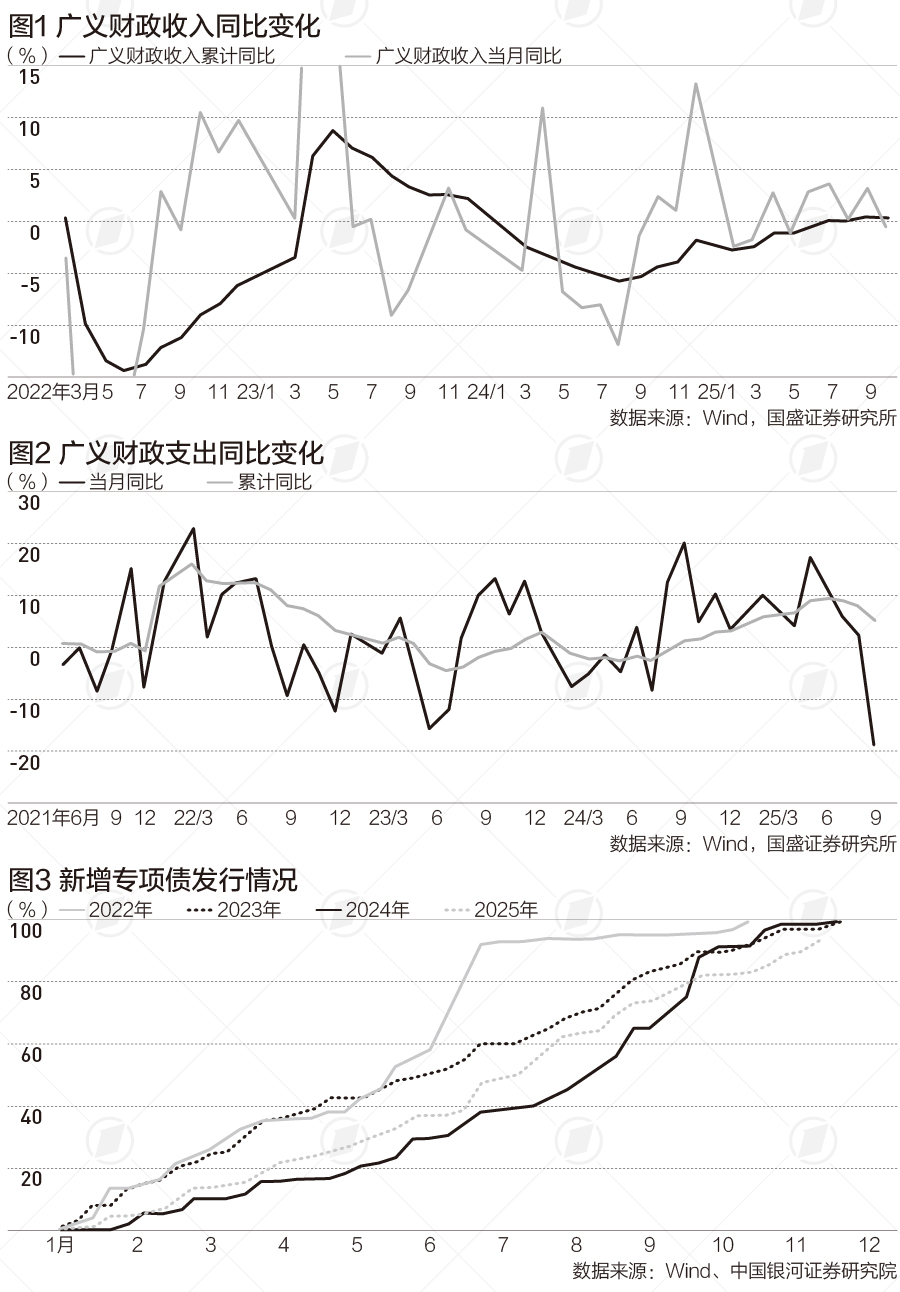
Group 1 - The core viewpoint of the articles highlights the proactive fiscal policies implemented in China, with significant increases in fiscal spending aimed at supporting economic recovery and enhancing social welfare [1][5][6] - In the first ten months of this year, the broad fiscal revenue was approximately 22.1 trillion yuan, showing a year-on-year growth of about 0.2%, while broad fiscal expenditure reached around 30.7 trillion yuan, with a year-on-year increase of approximately 5.2% [1][2] - The broad fiscal expenditure exceeded revenue by about 8.6 trillion yuan, marking a year-on-year increase of 21%, indicating a strong commitment to maintaining fiscal support for the economy [1][3] Group 2 - The national general public budget expenditure for the first ten months was approximately 22.6 trillion yuan, with a year-on-year growth of 2%, particularly in social security and employment, education, and health care, which all saw growth rates exceeding the average of 2% [2][3] - Notably, social security and employment expenditure surged by 9.3%, reflecting the government's focus on enhancing the welfare of families [2] - Infrastructure spending within the national general public budget has declined, with agricultural, forestry, and water expenditures down by 11.7%, and urban and rural community expenditures down by 7.3% [3][4] Group 3 - To maintain fiscal spending levels, new incremental policies have been introduced, including the allowance for local governments to issue an additional 500 billion yuan in special bonds [5][6] - These special bonds are expected to be rapidly issued starting in November, with over 10 billion yuan already issued in the first 19 days of November [6] - The new policy financial tools have been fully deployed, supporting over 2,300 projects with a total investment of approximately 7 trillion yuan, focusing on sectors such as digital economy, artificial intelligence, and urban infrastructure [6]
前10个月广义财政支出增速放缓至5.2%
Di Yi Cai Jing Zi Xun· 2025-11-21 03:02
Core Viewpoint - China's fiscal policy has become more proactive this year, with fiscal spending maintaining a certain level of intensity, driving a continuous recovery in the economy [2] Fiscal Revenue and Expenditure - In the first ten months of this year, the broad fiscal revenue reached approximately 22.1 trillion yuan, a year-on-year increase of about 0.2%, while broad fiscal expenditure was about 30.7 trillion yuan, up by approximately 5.2% [2] - The broad fiscal expenditure exceeded revenue by about 8.6 trillion yuan, marking a year-on-year increase of 21% [2] - The growth rate of broad fiscal expenditure aligns with the economic growth rate of 5.2% in the first three quarters, supporting stable economic operation [2] Focus on Livelihood Spending - The national general public budget expenditure in the first ten months was approximately 22.6 trillion yuan, with a year-on-year growth of 2% [3] - Key livelihood-related expenditures such as social security and employment (3.8 trillion yuan), education (3.4 trillion yuan), and health (1.7 trillion yuan) all saw growth rates exceeding the average of 2%, with social security and employment expenditure growing by 9.3% [3] - The government has allocated around 100 billion yuan in childcare subsidies for children under three years old, benefiting many families [3] Infrastructure and Project Funding - Expenditures on agriculture, forestry, water, and urban community projects saw declines of 11.7% and 7.3% respectively, while transportation spending remained stable compared to the previous year [5] - Government fund expenditures reached approximately 8.1 trillion yuan, a year-on-year increase of 15.4%, primarily due to accelerated use of bond funds [6] Policy Measures and Future Outlook - To maintain fiscal spending, new policies have been introduced, including allowing local governments to issue an additional 500 billion yuan in special bonds [7] - The issuance of new policy financial tools has been completed, supporting over 2,300 projects with a total investment of about 7 trillion yuan, focusing on digital economy, AI, and urban infrastructure [7] - Analysts suggest that to meet the initial budget goals, general public budget expenditure needs to grow by 12.9% year-on-year in November and December, while government fund expenditure must increase by 40.3% [6]


前10个月广义财政支出增速放缓至5.2%,年末两月待发力|财税益侃
Di Yi Cai Jing· 2025-11-20 12:28
Core Insights - China's fiscal policy has become more proactive this year, with fiscal spending maintaining a certain level of intensity to support economic recovery [2] - The broad fiscal expenditure has outpaced revenue growth, indicating a strong push for active fiscal policies [2][6] - Increased fiscal spending is notably directed towards social welfare, aligning with government goals to invest more in human resources [3][4] Fiscal Performance - In the first ten months of this year, broad fiscal revenue was approximately 22.1 trillion yuan, a year-on-year increase of about 0.2%, while broad fiscal expenditure reached about 30.7 trillion yuan, growing by approximately 5.2% [2] - The gap between fiscal expenditure and revenue was about 8.6 trillion yuan, marking a year-on-year increase of 21% [2] - The growth rate of broad fiscal expenditure aligns with the economic growth rate of 5.2% for the first three quarters, supporting stable economic performance [2] Social Welfare Spending - National general public budget expenditure for the first ten months was about 22.6 trillion yuan, with a year-on-year growth of 2% [3] - Key areas of social welfare spending, including social security and employment, education, and health, saw growth rates exceeding the average of 2%, with social security and employment spending increasing by 9.3% [3] - The government has allocated around 100 billion yuan in childcare subsidies for children under three years old, benefiting numerous families [3] Infrastructure Spending - Due to increased focus on social welfare, infrastructure spending within the national general public budget has generally declined [4] - Government fund expenditures, supported by local government special bonds and long-term special treasury bonds, have maintained rapid growth, facilitating the commencement of major projects [6] Debt and Future Projections - In the first ten months, government fund budget expenditure was approximately 8.1 trillion yuan, reflecting a year-on-year increase of 15.4% [6] - To meet the initial budget goals, a significant increase in expenditure is required in the last two months of the year, with projections indicating a need for a 12.9% year-on-year growth in general public budget expenditure [6][8] - New policies have been introduced to maintain fiscal spending, including allowing local governments to issue an additional 500 billion yuan in special bonds [8]