分布式智能

Search documents
五分钟掌握AGI Next峰会干货:中国AI大佬们的2026共识与交锋
3 6 Ke· 2026-01-11 23:41
Core Insights - The AGI Next Summit, held on January 10, 2026, focused on academic discussions and technical insights, featuring prominent figures from academia and industry, setting a clear direction for AI development in 2026 [1] - The summit is seen as a "wake-up call" for the industry, moving away from hype and towards concrete challenges and pathways for AGI implementation [1] Group 1: Academic Perspectives - Zhang Bo, a pioneer in AI research, highlighted five fundamental deficiencies in current large models, emphasizing that AGI should have executable and verifiable definitions, including key capabilities like multimodal understanding and online learning [2] - Yang Qiang used the metaphor of "coffee addiction" to stress the need for long-term commitment in AGI research, aligning with the belief that true breakthroughs require sustained effort rather than quick wins [2] - The summit underscored the importance of focusing on core technical issues such as causal reasoning and autonomous learning, marking a shift from mere parameter scaling to deeper technological understanding [13] Group 2: Industry Insights - Tang Jie, CEO of Zhipu AI, argued that the competition has shifted from model scaling to enabling machines to think like humans, proposing "autonomous scaling" as a key future direction [3] - Lin Junyang from Alibaba emphasized the need for "general intelligent agents" and cautioned against homogeneous competition, suggesting that true innovation is essential for global competitiveness [5] - Yao Shunyu from Tencent discussed the clear division in the AI industry, advocating for a layered approach where different models serve distinct roles, aligning with the distributed AI ecosystem [7] Group 3: AI Ecosystem and Future Directions - The roundtable discussion revealed a consensus on the future of AI models, moving towards a structure where top models meet core needs while lightweight models address broader applications [9] - The panel agreed that the next generation of AI should focus on reducing dependency on human data, aiming for autonomous learning and decision-making capabilities [10] - The challenges of commercializing AI agents were acknowledged, with a focus on adapting to specific scenarios to enhance reliability and effectiveness [12] Group 4: Market Positioning and Opportunities - The summit highlighted the importance of recognizing the differences in AI development paths between China and the U.S., with China excelling in application innovation and rapid iteration [17] - Companies are encouraged to focus on niche markets and specific applications rather than competing directly with large models, fostering unique advantages in specialized areas [14] - The development of distributed intelligence is seen as a pathway for China to leverage its vast user base and application scenarios to drive AI innovation [17] Group 5: Conclusion and Future Outlook - The AGI Next Summit did not provide a definitive answer to AGI but clarified the industry's direction towards core technology competition and application depth [18] - The emphasis on distributed intelligence is expected to facilitate the transition of AGI from research to practical applications, enhancing everyday life and work efficiency [16] - The summit reinforced the notion that long-term commitment to AGI development is essential for success, with a focus on foundational innovations [18]

对谈刘知远、肖朝军:密度法则、RL 的 Scaling Law 与智能的分布式未来丨晚点播客
晚点LatePost· 2025-12-12 03:09
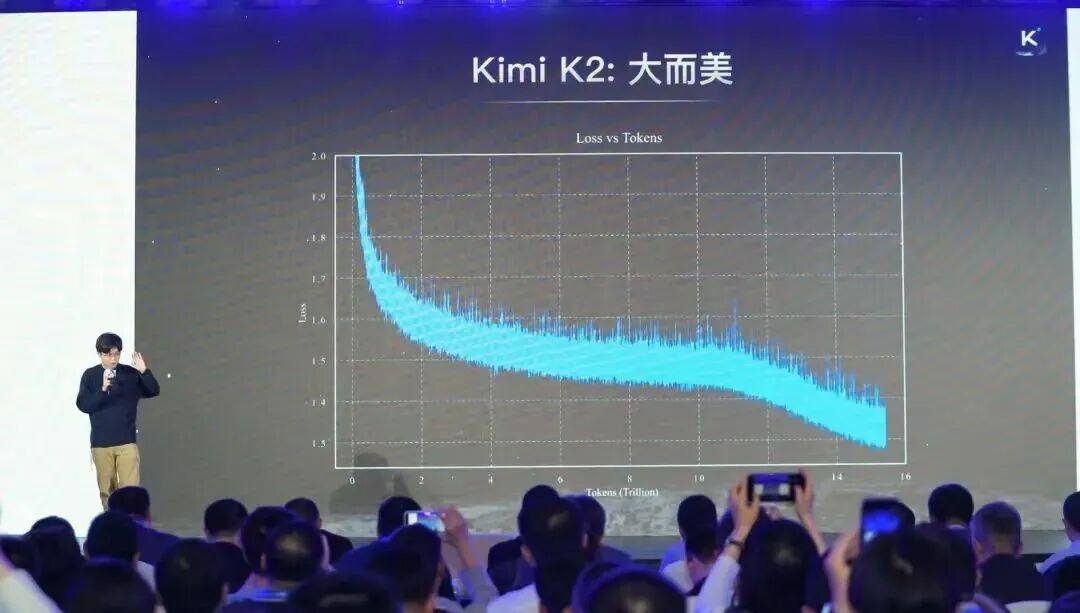
Core Insights - The article discusses the emergence of the "Density Law" in large models, which states that the capability density of models doubles every 3.5 months, emphasizing efficiency in achieving intelligence with fewer computational resources [4][11][19]. Group 1: Evolution of Large Models - The evolution of large models has been driven by the "Scaling Law," leading to significant leaps in capabilities, surpassing human levels in various tasks [8][12]. - The introduction of ChatGPT marked a steep increase in capability density, indicating a shift in the model performance landscape [7][10]. - The industry is witnessing a trend towards distributed intelligence, where individuals will have personal models that learn from their data, contrasting with the notion that only a few large models will dominate [10][36]. Group 2: Density Law and Efficiency - The Density Law aims to maximize intelligence per unit of computation, advocating for a focus on efficiency rather than merely scaling model size [19][35]. - Key methods to enhance model capability density include optimizing model architecture, improving data quality, and refining learning algorithms [19][23]. - The industry is exploring various architectural improvements, such as sparse attention mechanisms and mixed expert systems, to enhance efficiency [20][24]. Group 3: Future of AI and AGI - The future of AI is expected to involve self-learning models that can adapt and grow based on user interactions, leading to the development of personal AI assistants [10][35]. - The concept of "AI creating AI" is highlighted as a potential future direction, where models will be capable of self-improvement and collaboration [35][36]. - The timeline for achieving significant advancements in personal AI capabilities is projected around 2027, with expectations for models to operate efficiently on mobile devices [33][32].


英伟达官宣新合作成就:Mistral开源模型提速,任意规模均提高效率和精度
Hua Er Jie Jian Wen· 2025-12-02 20:03
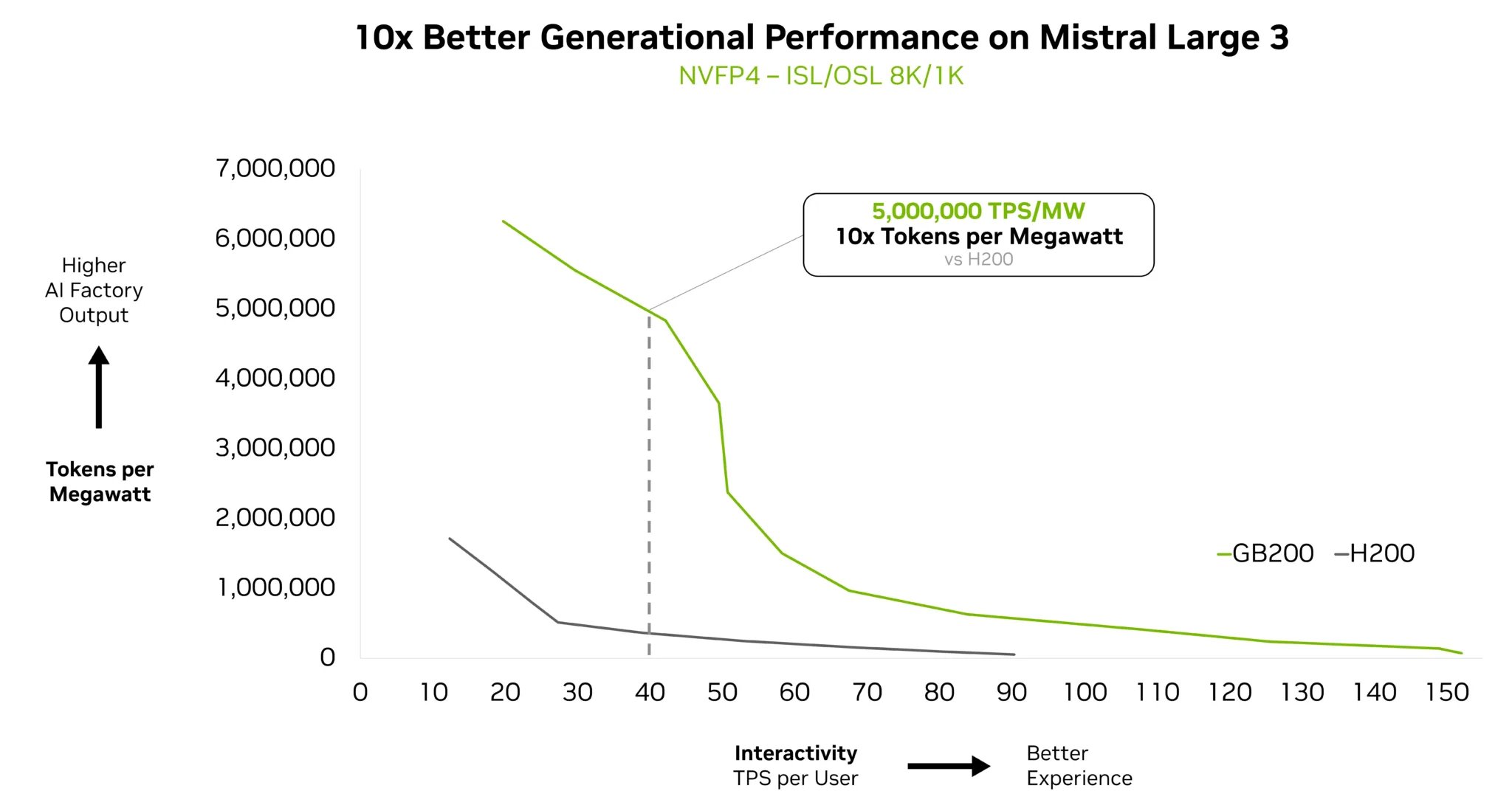
Core Insights - Nvidia has announced a significant breakthrough in collaboration with French AI startup Mistral AI, achieving substantial improvements in performance, efficiency, and deployment flexibility through the use of Nvidia's latest chip technology [1] - The Mistral Large 3 model has achieved a tenfold performance increase compared to the previous H200 chip, translating to better user experience, lower response costs, and higher energy efficiency [1][2] - Mistral AI's new model family includes a large frontier model and nine smaller models, marking a new phase in open-source AI and bridging the gap between research breakthroughs and practical applications [1][6] Performance Breakthrough - Mistral Large 3 is a mixture of experts (MoE) model with 67.5 billion total parameters and 41 billion active parameters, featuring a context window of 256,000 tokens [2] - The model utilizes Wide Expert Parallelism, NVFP4 low-precision inference, and the Dynamo distributed inference framework to achieve best-in-class performance on Nvidia's GB200 NVL72 system [4] Model Compatibility and Deployment - The Mistral Large 3 model is compatible with major inference frameworks such as TensorRT-LLM, SGLang, and vLLM, allowing developers to deploy the model flexibly across various Nvidia GPUs [5] - The Ministral 3 series includes nine high-performance models optimized for edge devices, supporting visual functions and multi-language capabilities [6] Commercialization Efforts - Mistral AI is accelerating its commercialization efforts, having secured agreements with major companies, including HSBC, for model access in various applications [7] - The company has signed contracts worth hundreds of millions of dollars and is collaborating on projects in robotics and AI with organizations like the Singapore Ministry of Home Affairs and Stellantis [7] Accessibility of Models - Mistral Large 3 and Ministral-14B-Instruct are now available to developers through Nvidia's API directory and preview API, with all models accessible for download from Hugging Face [8]

分布式智能微机器人可在水中交流协作;我国科学家研发出全球首款可智能实现全频段高速通信芯片丨智能制造日报
创业邦· 2025-08-29 03:23
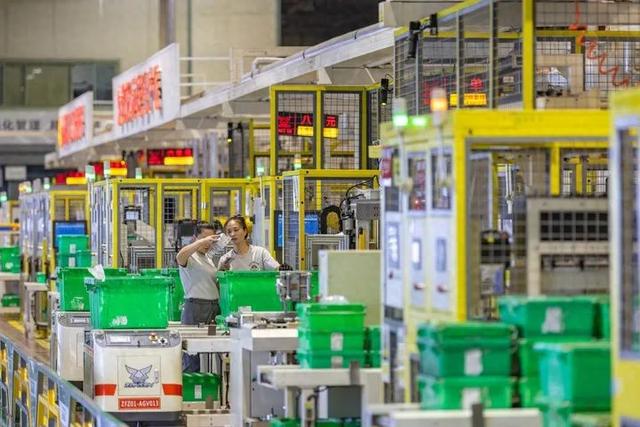
Group 1 - A distributed intelligent micro-robot called "smartlets" has been developed by scientists at Chemnitz University of Technology, capable of communication and collaboration in water, marking a significant advancement in intelligent robotic systems [2] - Chinese scientists have created the world's first adaptive, full-band, high-speed wireless communication chip based on optoelectronic integration technology, achieving over 120 Gbps transmission rates, which meets the peak rate requirements for 6G communication [2] - Samsung Electronics plans to manufacture Tesla's AI6 processor using its second-generation 2nm process technology, SF2P, with initial trials in South Korea and mass production in Texas [2]

电动摩托车会成为“成年人的智能玩具”吗?
Bei Jing Ri Bao Ke Hu Duan· 2025-05-14 06:19
Core Viewpoint - The motorcycle industry is undergoing a transformation driven by technological innovation, with electric motorcycles gaining popularity due to their zero emissions and low operating costs. The global market for electric motorcycles is expected to exceed $100 billion by 2030, reshaping urban transportation and revitalizing the traditional motorcycle industry [1][2]. Group 1: Market Trends - Electric motorcycles are becoming an integral part of urban transportation, with traditional fuel motorcycles likely to be replaced by electric models in short-distance commuting scenarios [1][2]. - The electric motorcycle market is projected to surpass $100 billion by 2030, indicating significant growth potential [1][2]. Group 2: Technological Advancements - New electric motorcycle models are addressing range anxiety with advanced battery technologies, such as high-voltage lithium iron phosphate batteries, enabling rapid charging and long-range capabilities [2][4]. - The introduction of hydrogen fuel cell motorcycles is expanding the energy options within the industry, with companies like Chongqing Longxin General developing all-terrain vehicles powered by hydrogen fuel cells [2][4]. Group 3: Product Evolution - The shift from traditional manual motorcycles to automatic models is simplifying the riding experience, as seen with the introduction of CVT (Continuously Variable Transmission) systems [4]. - Modern electric motorcycles are being redefined as "smart toys" for adults, featuring advanced technology such as touch screens, music playback, and customizable settings [4][5]. Group 4: Safety and Connectivity - The integration of smart technologies is enhancing safety features in motorcycles, including collision warning systems and automatic braking capabilities [5][7]. - Companies are developing mobile applications and smart systems that allow for vehicle monitoring, navigation, and social connectivity among riders [8][9]. Group 5: Industry Challenges - The electric motorcycle sector faces challenges such as reduced battery performance in low temperatures and high battery costs, which hinder widespread adoption [9][11]. - The lack of standardized battery specifications across brands is a significant barrier to the growth of the electric motorcycle market, necessitating the establishment of industry standards [11]. Group 6: Future Directions - The promotion of battery swapping stations is seen as a key strategy to alleviate charging time issues and enhance the practicality of electric motorcycles for long-distance travel [11]. - The motorcycle industry is expected to continue its push towards electric and smart technologies, aiming to provide consumers with improved riding experiences and enhanced safety [11].