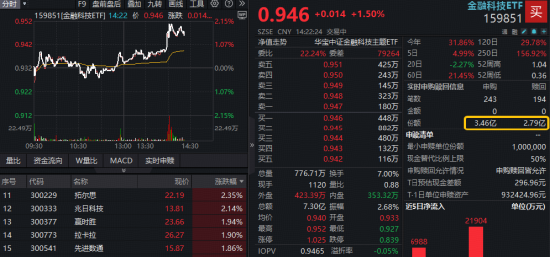
券商数字化转型

Search documents
券商分支机构调整频现
Bei Jing Ri Bao Ke Hu Duan· 2026-02-03 16:49
Core Viewpoint - The securities industry is undergoing a significant restructuring, with multiple firms announcing the closure of branch offices to optimize their operations and enhance online service capabilities [2][3][4]. Group 1: Branch Office Closures - On February 2, Changcheng Securities announced the closure of its Zhengzhou Longhai Road branch, following similar announcements from other firms like Zhongyou Securities and Xibu Securities [3]. - The trend of closing branch offices is not isolated; in 2025, some firms closed over 10 branches, indicating a broader strategy to optimize the national network of offices [3][4]. - The reasons for these closures are consistent across firms, focusing on "optimizing branch layouts" and "improving operational efficiency" [4]. Group 2: Online Business Development - Despite the reduction in physical branches, firms are not scaling back their service capabilities; instead, they are enhancing their online business structures [5]. - The establishment of internet securities subsidiaries, such as China Galaxy Securities' Beijing Internet Securities subsidiary, marks a shift towards digital transformation in the industry [5]. - These internet and digital subsidiaries are designed to support online customer service, trading, and digital operations, distinguishing them from traditional branch offices [5][6]. Group 3: Impact on Customer Services - The closure of branch offices is stated to have no adverse effects on customer transactions or asset security, with services continuing through mobile apps and online platforms [6]. - The integration of online and offline resources is expected to enhance overall competitiveness in the securities industry, allowing firms to allocate resources more effectively [6].



券商分支机构调整频现:营业部“做减法”,强化线上布局
Bei Jing Shang Bao· 2026-02-03 13:25
Core Viewpoint - The securities industry is undergoing a significant adjustment in branch operations, with multiple firms announcing the closure of physical offices to optimize their network and enhance operational efficiency [2][3][4]. Group 1: Branch Closures - On February 2, Changcheng Securities announced the closure of its Zhengzhou Longhai Road Securities Office, following similar announcements from other firms like Zhongyou Securities and Xibu Securities [2][3]. - The trend of closing branches is not isolated; in 2025, some firms closed over 10 branches, indicating a strategic optimization of their national network [3]. - The reasons for these closures are consistent across firms, focusing on "optimizing branch layout" and "improving operational efficiency" [4]. Group 2: Online Business Development - Despite the reduction in physical branches, firms are not scaling back their service capabilities; instead, they are enhancing their online business structures [5]. - The establishment of internet securities subsidiaries, such as China Galaxy Securities' Beijing Internet Securities subsidiary, marks a shift towards digital transformation in the industry [5]. - These internet and digital subsidiaries are positioned as key components for the digital transformation of securities firms, focusing on online customer service, trading support, and digital operations [5][6]. Group 3: Customer Impact - Firms have assured that the closure of branches will not affect clients' trading activities or the safety of their funds, as services can be accessed through mobile apps and online platforms [6]. - The continuity of customer relationships and service systems is maintained despite the physical branch closures [6].

证券行业2025年年报前瞻及展望:权益市场表现亮眼,我们预计2025年净利润同比+50%,2026年高基数下同比+16%
Soochow Securities· 2026-02-03 08:52
Investment Rating - The report maintains an "Overweight" rating for the non-bank financial industry [1] Core Insights - The equity market is expected to perform well, with a projected net profit growth of 50% year-on-year for 2025, and a 16% growth in 2026 from a high base [1][30] - The average daily trading volume of stock funds is anticipated to reach 19.814 trillion yuan in 2025, representing a 67% year-on-year increase [1][9] - The report highlights a significant recovery in IPO and refinancing activities, with IPO fundraising expected to grow by 96% in 2025 [1][14] - The bond issuance scale is expected to increase steadily, with a 13% year-on-year growth in 2025 [1][19] - The report emphasizes the low valuation of brokerage stocks and the potential for valuation recovery, particularly for large brokerages [1][24] Summary by Sections 1. Equity Market Performance - The average daily trading volume of stock funds is projected at 19.814 trillion yuan, a 67% increase year-on-year [1][9] - The number of new accounts opened in the Shanghai market is expected to average 2.5 million per month, an 8% increase from 2024 [1][9] - The financing balance is projected to reach 2.5242 trillion yuan, a 36% increase year-on-year [1][12] - The IPO market is expected to see 116 IPOs raising 131.8 billion yuan, a 96% increase year-on-year [1][14] - The refinancing market is expected to recover significantly, with a total of 950.9 billion yuan raised, a 326% increase [1][18] 2. Profit Forecast for 2025 - The report forecasts a 50% year-on-year increase in net profit for listed brokerages in 2025, with a 16% increase in Q4 [1][30] - The total revenue for the industry is expected to grow by 21% year-on-year [1][30] 3. 2026 Outlook - The report anticipates a 16% year-on-year increase in net profit for the industry in 2026, based on high baseline assumptions [1][37] - The growth in brokerage income from various segments is expected, including a 25% increase in brokerage business revenue [1][37] 4. Valuation and Recommendations - The report notes that the current valuation of brokerages is relatively low, with the CITIC Securities II index at 1.43x PB, indicating potential for valuation recovery [1][24] - Key recommendations include major brokerages such as CITIC Securities, Huatai Securities, and Guotai Junan [1][24]




券商首位首席科学家辞职,年薪超200万,3年涨薪近80万
2 1 Shi Ji Jing Ji Bao Dao· 2026-01-15 06:16
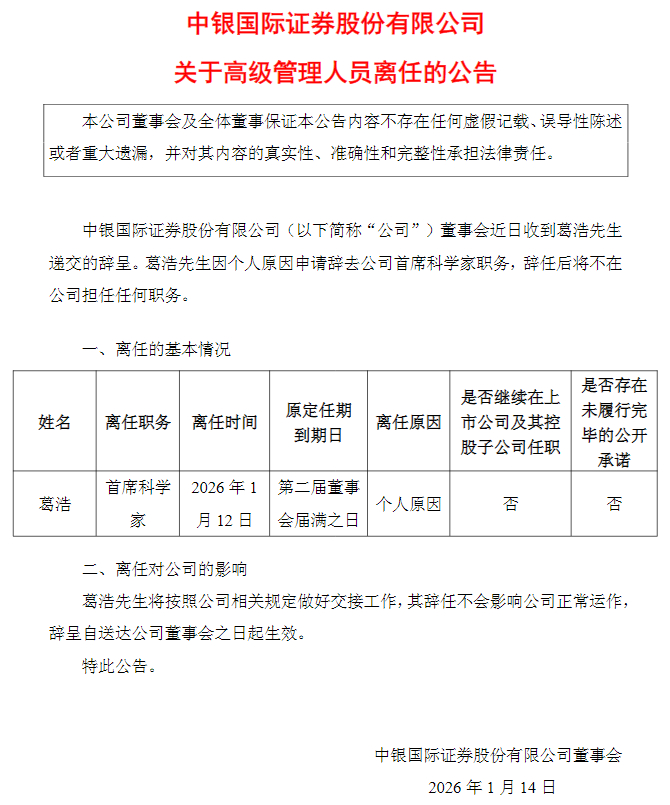
Core Viewpoint - The resignation of Ge Hao, the former Chief Scientist of Zhongyin Securities, raises questions about the company's digital transformation effectiveness and future financial technology strategy following the departure of a key technical leader [2][17]. Group 1: Resignation Details - Ge Hao submitted his resignation for personal reasons, effective January 12, 2026, which is earlier than his originally scheduled term [1]. - Zhongyin Securities confirmed that Ge Hao's departure will not affect the company's normal operations and that he will complete the handover according to company regulations [1]. Group 2: Background of Ge Hao - Ge Hao, born in October 1976, holds a master's degree in software engineering from Peking University and has extensive experience in technology roles at Baidu before joining Zhongyin Securities [5]. - He was appointed as Chief Scientist in March 2020, a position that was the first of its kind in the securities industry, aimed at driving technological innovation and creating new business opportunities [5][6]. Group 3: Compensation and Performance - Ge Hao's annual salary increased significantly during his tenure, reaching 2.0182 million yuan in 2024, making him the highest-paid executive at Zhongyin Securities [7]. - His salary growth from 1.2315 million yuan in 2022 to 2.0182 million yuan in 2024 reflects the company's commitment to investing in technology leadership [7]. Group 4: Digital Transformation Strategy - Zhongyin Securities has emphasized its digital transformation strategy, which includes a focus on wealth management, comprehensive risk management, and digital office reforms [11]. - The company has consistently invested over 6% of its annual revenue in information technology from 2019 to 2024, with a total IT investment of 2.13 billion yuan in 2024 [12][14]. Group 5: Industry Context and Challenges - The resignation of Ge Hao highlights the challenges faced by Zhongyin Securities in maintaining its digital transformation momentum and filling the technical talent gap [17]. - The company is under pressure to balance its technology investments with effective outcomes, especially as it seeks to differentiate itself in the competitive financial technology landscape [15][17].

从“辅助”到“引擎”:互联网分公司成券商转型胜负手
Zheng Quan Ri Bao Zhi Sheng· 2026-01-12 17:08
Core Viewpoint - The securities industry is undergoing a significant transformation, marked by the closure of over 180 offline branches and the rapid rise of internet subsidiaries, indicating a trend towards digitalization and smart transformation in the sector [1][2]. Group 1: Industry Trends - The establishment of internet subsidiaries is becoming a new strategy for securities firms to capture online market share and expand customer bases, driven by favorable market conditions and increased trading activity [2][6]. - By 2025, the total number of new investor accounts in the capital market is expected to reach 30.0571 million, providing ample opportunities for securities firms to enhance their internet business [2]. - Major firms like China Galaxy Securities and Dongwu Securities are actively setting up internet subsidiaries, reflecting a broader trend of digital transformation in the industry [2][3]. Group 2: Differences Between Internet Subsidiaries and Traditional Branches - Internet subsidiaries differ from traditional branches in strategic focus, targeting a broader customer base through standardized and centralized operations, while traditional branches primarily serve high-net-worth and corporate clients [3]. - The operational logic of internet subsidiaries is data and algorithm-driven, contrasting with the reliance on personal experience and social networks in traditional branches [3][4]. - Internet subsidiaries operate as independent units with unified rights, responsibilities, and benefits, allowing for quicker decision-making and a full-cycle approach to customer acquisition and revenue generation [3][4]. Group 3: Functional Roles of Internet Subsidiaries - The core functions of internet subsidiaries include conducting targeted marketing and lead generation on external platforms, managing daily operations of various online platforms, providing refined customer service, and acting as a "smart brain" for data monitoring and AI application across all business processes [4][5]. - Internet subsidiaries aim to address traditional pain points in the securities industry, such as inadequate service for long-tail customers and low operational efficiency due to dispersed operations [5][6]. Group 4: Performance and Effectiveness - The effectiveness of internet subsidiaries is being validated through various practices, with firms like Guotai Junan and Dongwu Securities reporting significant growth in customer acquisition and asset management [6][7]. - Guotai Junan's internet subsidiary has doubled its customer acquisition on new media platforms in 2025 compared to 2024, while Dongwu Securities has successfully attracted nearly 3 million followers and accumulated 150 million yuan in assets [6][7]. Group 5: Challenges and Future Outlook - Despite the progress, internet subsidiaries face challenges such as internal collaboration barriers and the need for alignment with headquarters on operational strategies [8][9]. - Not all securities firms are suited to establish internet subsidiaries, as some leading firms have already integrated internet capabilities into their operations, while smaller firms may prefer to focus resources on key business areas [8][9]. - The future of internet business in the securities industry will depend on advancements in technology, business models, and organizational structures, with a focus on creating long-term customer engagement and breaking down traditional departmental barriers [9][10].


收官之年,券商IT“成色”几何?
Zhong Guo Ji Jin Bao· 2025-12-28 06:05
Core Viewpoint - The securities industry is undergoing a digital transformation driven by technology and AI, with increasing regulatory scrutiny on compliance in IT operations [1][4]. Group 1: Digital Transformation and Investment - The securities industry has significantly increased its investment in information technology, with 44 firms disclosing a total expenditure of 28.11 billion yuan in 2023, where 14 firms invested over 1 billion yuan, accounting for 70.46% of total investments [2]. - The focus of IT investment is shifting from quantity to quality, emphasizing optimization and application rather than mere expansion, with efficiency and output becoming key metrics [2]. - The introduction of domestic AI models like DeepSeek has accelerated the localization of AI deployment in the financial sector, with firms exploring AI applications across various business scenarios [2]. Group 2: Role of Chief Information Officers (CIOs) - The role of Chief Information Officers (CIOs) has become increasingly critical in securities firms, with many firms appointing new CIOs who possess strong backgrounds in both IT and securities management [3]. - CIOs are seen as key figures in driving digital transformation, responsible for coordinating IT strategy, governance, and risk management within the firm [3]. Group 3: Regulatory Environment and Compliance - Regulatory scrutiny in the IT sector has intensified, with several firms receiving penalties for inadequate risk management and compliance failures, highlighting the importance of system security and data compliance [4][5]. - The regulatory focus includes zero tolerance for system failures that affect investor rights, strict penalties for IT-related misconduct, and accountability measures extending to individual CIOs [5]. - The need for enhanced compliance management is emphasized, with firms required to adapt their IT departments from a purely operational role to one that integrates business management and compliance [6][7]. Group 4: Upgrading Compliance Management - The rapid development of financial technology necessitates a stronger emphasis on data permissions and compliance, with regulatory bodies stressing the importance of information isolation and monitoring [6]. - Firms are encouraged to improve their IT governance capabilities, enhance service continuity, and strengthen defenses against information security risks [7].
证券行业 2025 年三季报综述:业绩高景气,转型蓄力时
Guoxin Securities· 2025-11-15 09:46
Investment Rating - The report maintains an "Outperform the Market" rating for the securities industry [4][6]. Core Insights - The securities industry has shown high performance in the first three quarters of 2025, with total revenue reaching 421.42 billion yuan, a year-on-year increase of 42.57%, and net profit attributable to shareholders reaching 169.29 billion yuan, up 62.48% year-on-year [1][13]. - The growth in revenue and profit is attributed to a steady rise in the equity market, increased trading volumes, and a recovery in wealth management services [1][29]. - Financial investment assets have become the main expansion direction for securities companies, totaling 6,991.8 billion yuan by the end of Q3 2025, accounting for 47% of total assets [2][32]. Summary by Sections Revenue Structure - Investment income has increased its share, with brokerage income at 111.78 billion yuan, up 74.64%, and investment income at 187.04 billion yuan, up 43.86% [13][30]. - Total assets and net assets of listed securities firms reached 14.92 trillion yuan and 2.85 trillion yuan, respectively, reflecting a year-on-year increase of 21.74% and 13.16% [19][20]. High Growth in Capital-Intensive Business - Self-operated business revenue reached 186.86 billion yuan, a year-on-year increase of 43.8%, with major contributors being CITIC Securities, Guotai Junan, and China Galaxy [30][31]. - The report highlights a significant increase in equity investment scale, with self-operated equity securities and derivatives reaching 8.475 trillion yuan, up 32.6% from the end of 2024 [34][35]. Brokerage Business - The brokerage business has benefited from active market trading, with all listed securities firms reporting positive growth in brokerage income [13][14]. - The average trading commission rate remains low, indicating potential for further revenue growth [16][30]. Investment Banking Business - The domestic equity financing scale has shown recovery, with IPOs continuing to rebound and underwriting activities improving [29][30]. - The report notes a 61.49% year-on-year increase in the total amount raised through initial public offerings [29]. Asset Management Growth - The asset management scale continues to grow, with a steady transition towards public fund management [22][23]. - The report indicates that the new asset management regulations are promoting the public fund transformation of securities firms [24][25].


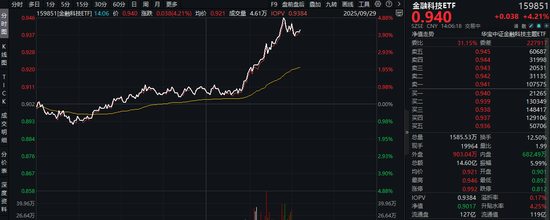
金融科技直线拉升!东方财富登顶A股吸金榜!百亿金融科技ETF狂飙4.8%,获资金实时净申购2.57亿份!
Xin Lang Ji Jin· 2025-09-29 06:16
Group 1 - The core viewpoint is that the A-share market is experiencing a "liquidity bull market," with significant inflows from foreign and long-term institutional investors, and a notable shift of savings funds within the mainland market [3] - The non-bank financial sector saw a substantial inflow of over 21.3 billion yuan, with financial technology stocks like Dongfang Caifu and Zhinanjian showing strong performance [1][3] - The financial technology ETF (159851) has become a focal point, with its price surging by 4.8% during trading, and a real-time net subscription of 2.57 million units, indicating strong investor interest [1][4] Group 2 - Analysts from Ping An Securities and other firms are optimistic about the financial information service sector, expecting a significant increase in net profits for internet brokerages in the third quarter [3] - The financial technology market is entering an upward trajectory due to policy support and the ongoing digital transformation of brokerages, with a focus on the sustained activity in the capital markets [3] - The financial technology ETF (159851) has a current scale exceeding 11.4 billion yuan, with an average daily trading volume of over 1.2 billion yuan, highlighting its leading position in liquidity among similar ETFs [4]
持续“瘦身”!19家券商裁撤43个营业网点
券商中国· 2025-09-21 10:40
Core Viewpoint - The trend of brokerage firms downsizing their branch networks continues, with a shift from expansion to efficiency improvement and refined management practices [2][5]. Summary by Sections Downsizing of Branches - Recently, multiple listed brokerages announced plans to close branches, with 19 firms collectively shutting down 43 outlets since August [2][4]. - Notable closures include Guotai Junan Securities, which closed 13 branches, and other major firms like Shenwan Hongyuan and CITIC Securities, each closing one branch [4]. Reasons for Downsizing - The closures primarily target long-term unprofitable branches or those failing to meet performance targets [5]. - The ongoing digital transformation has led to increased online functionality, reducing the marginal value of physical branches [5]. New Branch Openings - Despite the trend of downsizing, some brokerages, such as First Capital Securities, plan to open new branches, with a goal of establishing up to 10 new outlets by the end of 2028 [6]. - First Capital currently has 32 branches, primarily located in Guangdong, which accounts for about 40% of its total [6]. Dynamic Adjustments in Branch Strategy - Brokerages are cautiously adjusting their branch strategies, with some like Shenwan Hongyuan and Dongfang Securities both opening and closing branches in the same period [8]. - The overall attitude towards new branch openings remains cautious, indicating the end of the aggressive expansion era [8]. Enhancing Branch Efficiency - Many brokerages are implementing measures to optimize branch layouts and improve operational efficiency [10]. - Initiatives include talent development, restructuring management, and enhancing customer service mechanisms to boost revenue and competitiveness [10].

高交投催化,互联网金融异动拉升!百亿金融科技ETF(159851)午后涨超2%,资金大举净申购
Xin Lang Ji Jin· 2025-09-16 06:32
Group 1 - The internet finance sector experienced a significant surge, with the CSI Financial Technology Index rising over 2%, and many constituent stocks seeing gains, including Yinzhijie up over 6% and Zhinan Zhen up over 5% [1] - The Financial Technology ETF (159851) saw its market price increase by 2%, with a real-time transaction amount exceeding 700 million yuan, indicating a clear net inflow of funds [1] - The trading volume in the Shanghai and Shenzhen markets has exceeded 1.5 trillion yuan for 44 consecutive trading days, suggesting a robust trading environment [1] Group 2 - Dongwu Securities noted that the financial technology sector is currently at a low in terms of fundamentals and valuations, presenting significant investment value [2] - The demand for digital transformation among brokerages is accelerating, and the financial technology market is gradually entering an upward trajectory [2] - The Financial Technology ETF (159851) has a scale exceeding 10 billion yuan, with an average daily transaction amount of over 1.3 billion yuan in the past month, indicating strong liquidity [2]