
加盟商管理

Search documents
古茗20260120
2026-01-21 02:57
Summary of Gu Ming's Conference Call Company Overview - Gu Ming is a rapidly growing tea beverage company established in 2010, located in Wenling, Zhejiang. The company has focused on supply chain as a core driver of its growth, deploying an automated distribution system since 2013 and initiating cold chain delivery in 2017. As of 2023, Gu Ming has over 60,000 cubic meters of cold storage capacity and more than 300 cold chain transport vehicles, establishing an industry-leading warehousing and distribution network [4][4]. Financial Performance - In 2024, Gu Ming achieved a revenue of 8.791 billion yuan, representing a year-on-year growth of 14.54%. The adjusted net profit reached 1.493 billion yuan, with a year-on-year increase of 5.69%, demonstrating resilience amid a slowing industry growth backdrop. The mid-year report for 2025 indicates a profit growth rate exceeding 40%, leading the industry [2][4]. Industry Insights - The ready-to-drink tea market has become a trillion-yuan new consumption sector, evolving from a novelty to a stable consumer base with high repurchase rates, supporting continuous market expansion [5][6]. - Tea beverages have transcended basic product functionality, becoming an integral part of young people's daily lives, allowing them to express lifestyle choices and seek emotional value [6]. Market Position - Gu Ming holds a leading position in the mass price segment, with an 18% market share in 2023. Despite intensified competition from brands like Heytea adjusting their positioning, Gu Ming has shown stronger resilience, achieving superior operational results in both single-store performance and store openings [2][7]. Unique Business Strategies - Gu Ming's effective business strategies include: 1. **Supply Chain Advantage**: Significant investment in cold chain logistics, making it an industry leader [8]. 2. **Regional Store Opening Strategy**: Implementing a dense network of stores to enhance logistics efficiency and reduce costs while increasing brand recognition [8]. 3. **High-Frequency New Product Launch Strategy**: A research team comprising food enthusiasts and engineers releases approximately 100 new products each quarter to attract repeat purchases [10]. 4. **Strict Franchise Management**: Empowering front-end franchisees and enhancing back-end supply chain management to ensure uniform standards across all stores [10]. Future Outlook - Gu Ming plans to enhance same-store performance through scenario innovation and category expansion (e.g., coffee) while entering over a dozen untapped provinces. The company anticipates adding 3,000 new stores by 2026, representing a 24% growth. The scale effect is expected to further improve profit margins. Currently, the company's valuation is close to 20 times earnings, indicating strong growth potential in the medium to long term [3][9].
开源证券:首次覆盖古茗(01364)予“买入”评级 看好其在性价比赛道及全国空白区域的增长潜力
智通财经网· 2025-12-15 09:39
Group 1 - The core viewpoint of the report is that Gu Ming (01364) has become a leading brand in the industry with over 10,000 stores, leveraging regional cultivation and efficient supply chain collaboration [1][2] - The company focuses on lower-tier markets, with delivery costs below the industry average, enabling a robust expansion of its franchise system [1][2] - The report anticipates that Gu Ming has the potential to open over 40,000 stores nationwide, with a "buy" rating assigned for the first coverage [1][2] Group 2 - Gu Ming's first store was opened in 2010, and by the first half of 2025, the number of stores is expected to exceed 10,000 [2] - The company is projected to achieve revenues of 120.4 billion, 143.2 billion, and 167.5 billion yuan for 2025-2027, with year-on-year growth rates of 37.0%, 18.9%, and 17.0% respectively [2] - The net profit attributable to the parent company is expected to be 25.8 billion, 28.1 billion, and 30.8 billion yuan for the same period, with growth rates of 77.9%, 9.0%, and 9.8% respectively [2] Group 3 - The current market for ready-to-drink beverages in China is projected to exceed 600 billion yuan in 2024 and reach over 1 trillion yuan by 2027, with ready-to-drink tea expected to grow significantly [3] - The mid-range and budget segments of the ready-to-drink tea market are anticipated to have greater growth potential, with compound annual growth rates (CAGR) of 20.8% and 20.1% from 2023 to 2028 [3] - The penetration rate of ready-to-drink beverages in lower-tier cities has shown substantial growth, with GMV compound growth rates of 28.0% and 33.2% for third-tier and fourth-tier cities from 2018 to 2023 [3] Group 4 - Gu Ming's competitive advantages include excellent supply chain management and a mature franchise management system, with nearly 80% of its stores located in second-tier and lower cities [4] - The company implements a supply chain-first approach, achieving cold chain delivery to 97% of its stores at a cost below 1% of GMV, compared to the industry average of about 2% [4] - The report suggests that the company can replicate its current store density in Zhejiang across the country, projecting a long-term store ceiling of over 40,000 [4]
塔斯汀关店,加盟商为疯狂扩张买单
Xin Lang Cai Jing· 2025-12-04 03:06
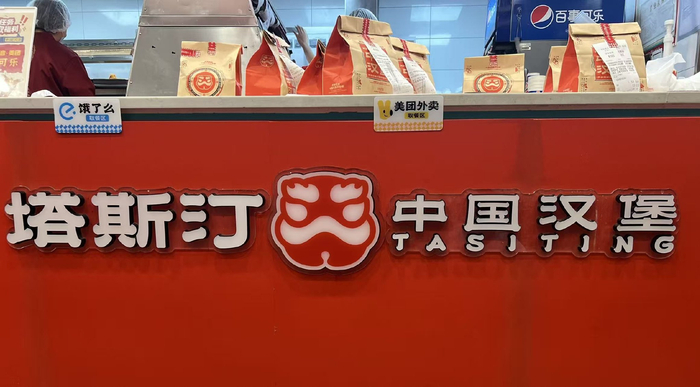
Core Insights - Tasting, a rapidly expanding Chinese hamburger brand, is facing challenges with a high rate of store closures despite reaching over 10,000 locations [1][4][10] Group 1: Store Expansion and Closure Dynamics - Tasting opened 968 new stores and closed 907 in the past 90 days, resulting in approximately 10,296 operating stores [1] - Compared to established brands like Wallace and KFC, Tasting has a significantly higher closure rate, indicating potential instability in its expansion strategy [1][10] - The rapid expansion of Tasting, which reached 10,000 stores in just 13 years, was faster than Wallace and KFC, which took 18 and 36 years respectively [7][9] Group 2: Franchise and Market Challenges - The high closure rate may be attributed to over-saturation in certain areas, leading to poor performance and unsustainable operations for many franchisees [3][5] - Tasting's aggressive entry into first-tier cities has resulted in fierce competition with established brands, which may have better consumer acceptance and promotional strategies [5][10] - The average payback period for franchisees has extended to around two years, indicating a decline in profitability opportunities [12] Group 3: Strategic Implications and Future Outlook - Despite closures, Tasting continues to seek new franchisees, particularly in key regions like Beijing and Shanghai, suggesting ongoing expansion plans [10] - The brand's management may be strategically closing underperforming stores to optimize franchise quality and improve overall brand performance [14] - Tasting's future growth will depend on its ability to attract quality franchisees and effectively communicate its value proposition to potential investors [10][14]

晚点对话古茗王云安:得三四线者得天下
晚点LatePost· 2025-02-24 09:30
古茗创始人 王云安 县域奶茶之王古茗的成长之路。 文丨宋玮 管艺雯 2014 年,一位知名连锁业学者办了个培训班,为期两天,吸引了全国各地的茶饮创业者,包括王云安、张红甫、王霄 锟、彭心、王斌、单卫钧,他们分别创立了古茗、蜜雪冰城、茶百道、奈雪的茶、书亦烧仙草和沪上阿姨。 六个挤在连锁经营课堂里的无名小老板,缔造了中国茶饮史上最传奇的同学会。 十年后,这里走出了 4 家上市公司,包括 2 月 12 日在港交所挂牌的古茗和即将上市的蜜雪冰城,他们也是中国茶饮行 业的第二名和第一名。 虽然上的是同一个培训班,但古茗创始人王云安和其他创始人的经营思路,似乎是反着来。 茶饮行业动辄全国扩张,古茗固守在三四线,很长一段时间不踏入黄河以北,开到万店,也坚决不去临近的大市场—— 上海、南京;茶饮创始人较量谁的产品更创新,古茗却花大力气投入到研发和冷链物流,向乡镇门店两日一配鲜果和鲜 奶;行业偏爱有资源的大加盟商,但古茗只要那些 "迫切想改变命运的人",其加盟商的通过率大约只有 1%。 这家公司实在太过低调偏安。古茗上市前仅有的一轮投资,投资人是听蜜雪冰城提起古茗才第一次知道它,意外发现这 公司一年能赚 4 亿元——当时赶上 ...