
勒索软件攻击

Search documents
一国家石油管道运营商遭勒索攻击:IT设施瘫痪多天 1TB数据疑泄露
Xin Lang Cai Jing· 2026-02-12 12:12
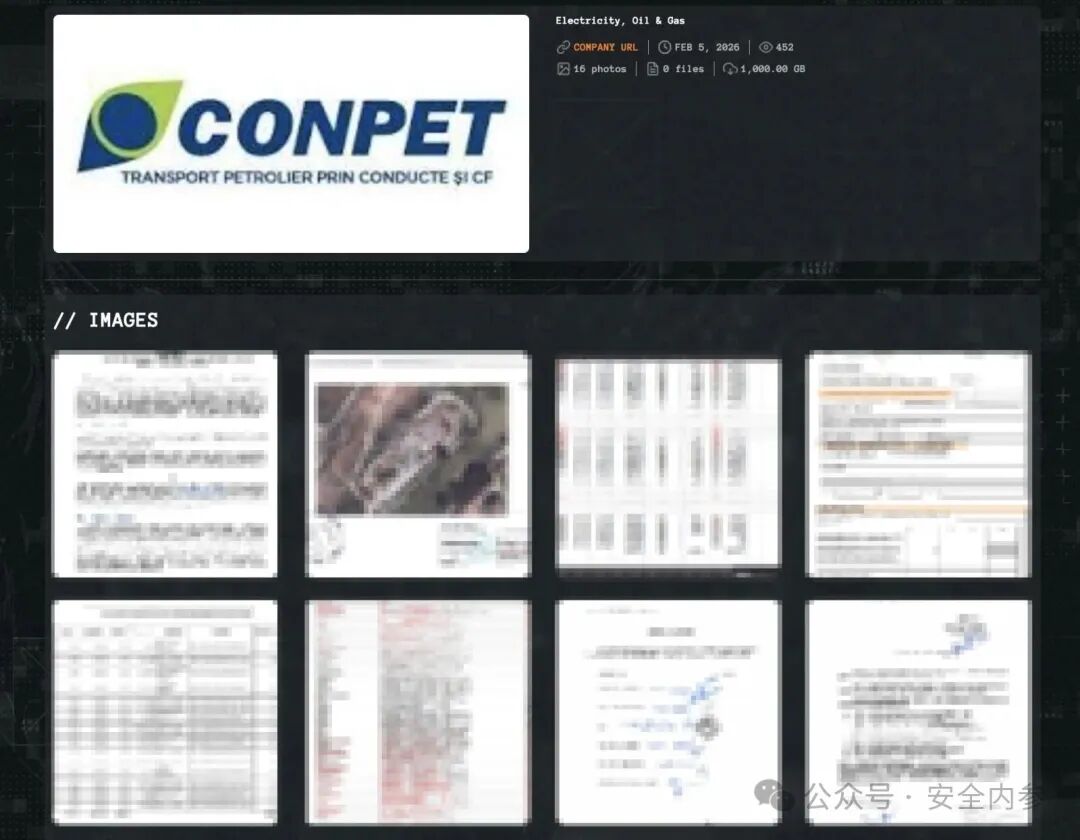
Core Viewpoint - Romanian national oil pipeline operator Conpet has disclosed a cyber attack that has disrupted its IT infrastructure and taken its website offline for over a week, with recovery still ongoing. The ransomware group Qilin claims to have stolen nearly 1TB of internal data, but Conpet has not responded to this claim [1][2][6]. Company Summary - Conpet operates a pipeline network of nearly 4,000 kilometers, transporting domestic and imported crude oil and derivatives, including gasoline and liquid ethane, to refineries across Romania [1][6]. - The company reported that while its IT infrastructure was affected, its operational technology (SCADA systems and communication systems) remained unaffected, allowing core business operations to continue without interruption [6][8]. - Conpet is currently collaborating with national cybersecurity authorities to investigate the incident and restore affected systems [7][8]. Cybersecurity Incident Details - The cyber attack has led to the company’s website being temporarily inaccessible, and Conpet has filed a criminal complaint with the Directorate for Investigating Organized Crime and Terrorism (DIICOT) [8]. - Qilin, the ransomware group responsible for the attack, has claimed to have stolen nearly 1TB of files, including financial information and passport scans, as evidence of the breach [2][9]. - Qilin has been active since August 2022 and has claimed responsibility for attacks on nearly 400 victims over the past four years, including notable companies and institutions [2][9]. Industry Context - Prior to this incident, Romania has faced a series of ransomware attacks, including incidents involving the national water authority and the largest coal energy producer in the country [5][11]. - The cybersecurity landscape in Romania appears to be increasingly severe, with multiple sectors, including healthcare and energy, experiencing significant breaches [5][11].

西班牙 Sanxenxo 市政府遭勒索软件攻击,拒绝支付 5000 美元比特币赎金
Xin Lang Cai Jing· 2026-01-27 13:43
Core Viewpoint - The Sanxenxo city government in the Pontevedra province of Galicia, Spain, experienced a ransomware attack on January 26, where hackers encrypted thousands of administrative files and caused server outages, demanding a ransom of $5,000 in Bitcoin [1] Group 1 - The city government refused to pay the ransom and reported the incident to the Spanish National Police [1] - The city plans to restore its systems through daily backups [1]
报告:2025年勒索软件攻击趋向针对性 政企数据库成主要目标
Zhong Guo Xin Wen Wang· 2026-01-16 13:46
Core Insights - The report indicates that ransomware attacks are becoming more targeted, with government and enterprise databases as primary targets by 2025 [1][2] - The focus of ransomware attacks is shifting towards medium and large enterprises, particularly in manufacturing, internet and software, and service industries, with healthcare and education also facing ongoing threats [1] - The geographical distribution shows that regions with developed digital economies, such as Guangdong, Beijing, and Zhejiang, are most affected [1] Attack Patterns - Ransomware attacks are characterized by increased specialization and precision, with double or multiple extortion becoming mainstream [1] - The number of active ransomware families has increased by nearly 30% to 122 compared to 2024, with attackers not only encrypting data but also threatening to leak sensitive information [1] - Databases have become the primary target for encryption, surpassing office documents, indicating a focus on core data assets of government and enterprises [1] Attack Vectors - Remote desktop intrusion and vulnerability exploitation remain the main methods of attack, accounting for nearly 80% of incidents [1] - Vulnerability exploitation has seen significant growth, nearing the proportion of remote desktop attacks, particularly targeting security weaknesses in web applications and various management systems [1] - There is a trend towards collaboration within the ransomware ecosystem, with blurred lines between ransomware groups and the roles of developers and implementers [1] Defensive Strategies - The report suggests that enterprises should build a unified security operation system centered around AI, covering endpoints, networks, applications, and cloud environments [2] - This approach aims to transition from passive protection to proactive and layered defense [2] - Small and medium enterprises, due to their relatively weak defenses, are becoming frequent targets for professional attack groups, leading to a significant increase in demand for security managed services and SaaS-based protection solutions [2]
火电龙头企业遭勒索软件攻击,IT基础设施全部瘫痪
Xin Lang Cai Jing· 2026-01-05 11:45
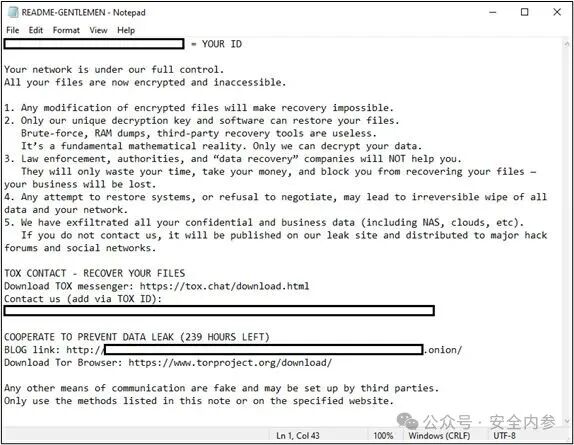
Core Viewpoint - Romania's largest coal energy producer, Oltenia Energy Complex, suffered a ransomware attack that paralyzed its IT infrastructure, affecting critical systems such as ERP, document management, email services, and the official website [1][5]. Company Impact - The attack led to the encryption of certain documents and files, rendering multiple computer applications temporarily unusable, including ERP systems and email services [2][6]. - The company reported that while business activities were impacted, the national energy system's operation was not jeopardized [7]. - Oltenia Energy Complex is working with relevant authorities to restore its IT systems and is assessing the impact of the incident, including potential data theft by the attackers [7]. Industry Context - Romania has experienced a rise in ransomware attacks, with the Gentlemen ransomware group gaining notoriety for exploiting compromised credentials and targeting exposed services [3][8]. - Prior to the Oltenia incident, the Romanian National Water Management Authority was attacked, affecting around 1,000 computer systems [8]. - Other significant ransomware incidents in Romania include attacks on Electrica Group and a healthcare system affecting over 100 hospitals [9].
两名美国男子因使用勒索软件攻击多名受害者认罪,涉案比特币赎金约 120 万美元
Xin Lang Cai Jing· 2025-12-31 15:54
Core Viewpoint - Two American men have pleaded guilty in a federal court in the Southern District of Florida for using ALPHV (BlackCat) ransomware to attack multiple victims in the U.S. from April to December 2023, impacting interstate commerce through extortion [1] Group 1: Legal Proceedings - The court documents indicate that the defendants and an accomplice paid 20% of the ransom to the ALPHV BlackCat operators in exchange for using the ransomware platform [1] - The defendants successfully extorted approximately 1.2 million dollars in Bitcoin from one victim [1] - Both defendants, who are involved in the cybersecurity industry, face a maximum sentence of 20 years in prison, with sentencing scheduled for March 12, 2026 [1]
10.20犀牛财经晚报:期货市场资金总量突破2万亿元 宇树科技发布H2仿生人形机器人
Xi Niu Cai Jing· 2025-10-20 10:41
Group 1: Futures Market - The total capital in China's futures market has surpassed 2 trillion yuan, reaching approximately 2.02 trillion yuan, marking a 24% increase from the end of 2024 [1] - As of October 9, 2025, the total client equity of futures companies is about 1.91 trillion yuan, also reflecting a 24% growth from the end of 2024 [1] - New monthly average futures for linear low-density polyethylene, polyvinyl chloride, and polypropylene will be launched for trading on October 28, 2025 [1] Group 2: Smart Glasses Market - IDC forecasts that global shipments of smart glasses will exceed 40 million units by 2029, with China's market share expected to steadily increase [1] - The compound annual growth rate (CAGR) for the Chinese smart glasses market from 2024 to 2029 is projected to be 55.6%, the highest globally [1] Group 3: Silicon Market - The price of N-type polysilicon is reported between 50.6 to 55 yuan per kilogram, with a price index of 52.69 yuan per kilogram, indicating a stable market with limited transactions [1] - October's polysilicon production is expected to be around 133,500 tons, showing an increase compared to September, exceeding previous market expectations [1] Group 4: Corporate Developments - Apple is reportedly investigating issues related to Apple Music and Apple TV+ [2] - JD has updated vehicle data, revealing a high-strength cage design for its new car model, enhancing impact resistance by 18% [2] - Yushutech announced the release of the H2 bionic humanoid robot, which stands 180 cm tall and weighs 70 kg [2] Group 5: Financial Reports - Jiahuan Technology reported a 15.1% decline in net profit for the first three quarters of 2025, with revenue down 10.57% [7] - Dayang Bio achieved a 56.12% increase in net profit year-on-year for the first three quarters, with revenue up 11.24% [8] - Weili Medical's net profit grew by 14.94% year-on-year in the first three quarters, with revenue increasing by 12.33% [9] - Yonghe Co. reported a significant 220.39% increase in net profit for the first three quarters, with revenue up 12.04% [10] - Jinli Permanent Magnet's net profit surged by 161.81% year-on-year in the first three quarters, with revenue growth of 7.16% [11] - Shanhua Pharmaceutical Auxiliary's net profit increased by 8.28% year-on-year in the first three quarters, with revenue growth of 8.09% [12] - Alloy Investment reported a 124.87% increase in net profit for the first three quarters, with revenue up 54.61% [13] - Chuanjinno's net profit grew by 175.61% year-on-year in the first three quarters, with revenue increasing by 27.57% [14] Group 6: Market Overview - The market experienced a pullback after an initial rise, with the ChiNext Index closing up 1.98% [15] - The total trading volume in the Shanghai and Shenzhen markets was 1.74 trillion yuan, a decrease of 200.5 billion yuan from the previous trading day [15] - Various sectors showed activity, with coal and gas stocks performing well, while precious metals faced declines [15]

核心 IT 外包印度惹祸,捷豹路虎全线停摆:上亿英镑蒸发,3.3万员工“被迫”休假
猿大侠· 2025-09-21 04:11
Core Viewpoint - Jaguar Land Rover (JLR) is facing significant operational disruptions due to a severe cyberattack, leading to production halts and substantial financial losses. The incident has raised concerns about the company's cybersecurity measures and the broader implications for its supply chain and workforce [2][3][15]. Group 1: Impact on Production and Financial Losses - JLR has informed suppliers that production may not resume until at least September 24, with industry insiders warning that disruptions could last until November. Approximately 33,000 employees have been put on leave during this period [2][3]. - The estimated financial impact includes around £1.7 billion worth of cars that cannot be produced, leading to an initial profit loss of approximately £120 million. JLR is losing about £5 million daily due to the production halt [2][3]. Group 2: Supply Chain and Employment Concerns - The disruption affects not only JLR but also its supply chain, which supports over 100,000 jobs in the UK. Many employees are relying on universal credit to sustain themselves during the downtime [3]. - The UK Trades Union Congress has called for government intervention to stabilize employment through a furlough scheme, as some suppliers may face bankruptcy without timely external support [3]. Group 3: Cybersecurity Issues and Criticism - Experts have criticized JLR for inadequate disaster recovery plans, suggesting that the company should have had better isolation and failover strategies in place to prevent such extensive losses [3]. - The cyberattack has been linked to a group claiming responsibility for previous attacks on retailers, indicating a pattern of vulnerabilities in JLR's cybersecurity framework [6][12]. Group 4: Outsourcing and Cybersecurity Risks - The recent cyber incidents affecting JLR, Co-op Group, and Marks & Spencer share a commonality: all three companies have outsourced critical IT and cybersecurity functions to Tata Consultancy Services (TCS) [15][18]. - This outsourcing strategy has raised questions about the effectiveness of their cybersecurity measures, as the reliance on low-cost service providers may have weakened their defenses against cyber threats [20][24]. Group 5: Broader Industry Implications - The cumulative losses from the recent cyber incidents involving JLR and other companies could approach £1 billion, highlighting the financial risks associated with inadequate cybersecurity practices [17]. - The trend of outsourcing critical IT functions to reduce costs is seen as a contributing factor to the increasing vulnerability of large organizations to cyberattacks [20][24].

保险筑牢网络安全护盾
Jing Ji Ri Bao· 2025-06-15 22:05
Core Insights - The first batch of cybersecurity insurance pilot programs in China has been successfully completed, with over 1,500 policies issued for enterprises, totaling more than 150 million yuan in premiums and nearly 11.5 billion yuan in coverage. For residents, over 2 million anti-fraud insurance policies were issued, with premiums exceeding 2.4 million yuan and coverage surpassing 100 billion yuan [1][4] Group 1: Market Overview - The global cybersecurity insurance market is projected to reach $15.3 billion by 2024, which is less than 1% of the total global property and casualty insurance premiums for that year. However, it is expected to more than double by 2030, with an average annual growth rate exceeding 10% [1] - Cybersecurity incidents are increasingly frequent due to interconnected global supply chains, geopolitical conflicts, and complex cyberattack methods, leading to a shift from traditional risk transfer tools to comprehensive risk management solutions [2] Group 2: Claims and Challenges - Claims for cybersecurity insurance are more complex compared to traditional property and liability insurance, as cyberattacks can lead to business interruption losses, legal disputes, data recovery, and privacy infringement liabilities, resulting in potentially exponential increases in payout amounts [3] - The rapid development of generative AI has heightened the risks associated with cyberattacks, with ransomware attacks forming a complete black market chain that includes subscription-based malware and AI-driven automated attack packages [3] Group 3: Regulatory Support and Product Development - The Chinese government has increased support for cybersecurity insurance, with initiatives launched in July 2023 to promote the healthy development of the market. By the end of 2024, 53 insurance companies had registered 341 cybersecurity insurance products, with 56 new products introduced in 2024 [4] - Innovative products have emerged, such as coverage for software supply chain liabilities and system defects, indicating a growing diversity in the types of cybersecurity insurance available [4] Group 4: Market Challenges - The cybersecurity insurance market in China is still in its early stages, facing challenges such as a lack of awareness among enterprises regarding the benefits of cybersecurity insurance, which affects their willingness to purchase and renew policies [5] - The industry also faces challenges on the supply side, including data scarcity, difficulties in risk quantification, limited product offerings, unclear policy terms, and the need for better collaboration within the industry [5]