区港联动

Search documents
雄安综保区全域完成国家验收
Xin Lang Cai Jing· 2026-02-24 10:47
Core Insights - The General Administration of Customs approved the acceptance of the Xiong'an Comprehensive Bonded Zone (Phase II) on February 24, marking a significant milestone in the development of this high-level open platform [1] Group 1: Development and Features - The Xiong'an Comprehensive Bonded Zone (Phase II) focuses on emerging industries such as high-end manufacturing, smart logistics, research and design, and testing and maintenance [1] - The area covers 0.21 square kilometers and has completed national acceptance across its entire region [1] - The zone enhances the "zone-port linkage" customs model, allowing for "non-sensory customs clearance" for vehicles and real-time visibility of business data [1] Group 2: Economic Impact - The Xiong'an Comprehensive Bonded Zone is expected to become a crucial window for linking global resources and factors in the Beijing-Tianjin-Hebei region [1] - By 2025, the total import and export value of the Xiong'an Comprehensive Bonded Zone is projected to reach 60.008 billion yuan [1]
马鞍山郑蒲港新区:多式联运“快车道” 区港融合“加速跑”
Ren Min Wang· 2025-12-12 11:02
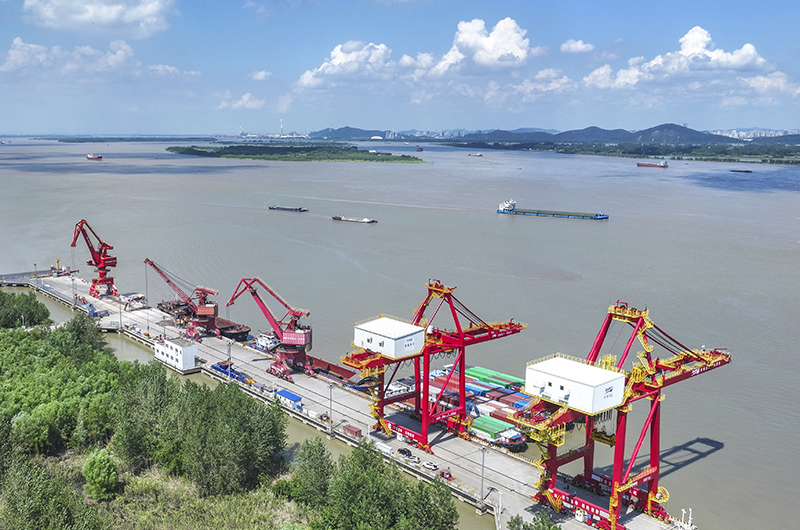
Core Viewpoint - Zhengpu Port in Ma'anshan, Anhui, is a key deep-water port that is experiencing significant growth in cargo throughput and cross-border e-commerce activities, driven by strategic initiatives and operational efficiencies. Group 1: Port Operations and Performance - Zhengpu Port is the only deep-water port on the north bank of the Yangtze River in Anhui, with busy operations including cargo ships and container trucks [1][4] - As of October 2025, the port's throughput reached 2.1971 million tons, a year-on-year increase of 3.5%, with container throughput at 65,400 TEUs, up 4%, and foreign trade container throughput at 60,300 TEUs, up 9% [4] Group 2: Cross-Border E-commerce Development - The company "Gongzheng Supply Chain" operates in the Ma'anshan Comprehensive Bonded Zone, focusing on cross-border e-commerce with a core model of bonded inventory [4] - The daily shipping volume on the Taobao platform exceeds 2,000 orders, with a peak during the "Double Eleven" shopping festival [4] - The company reported an import trade volume exceeding $19 million this year, with expectations to surpass $22 million by year-end [5] Group 3: Strategic Initiatives and Future Outlook - Zhengpu Port is advancing a strategy of "large ports, large logistics, and large foreign trade" to enhance logistics efficiency [6] - Ongoing construction of multi-modal transport bases aims to improve connectivity and logistics capabilities, with full completion expected by 2026 [6][7] - The port is set to become a hub linking the Yangtze River Delta with central and western regions, enhancing regional trade and logistics integration [7]

外贸企业从被动候检到主动控链 松江从“世界工厂流水线”放眼“全球资源
Jie Fang Ri Bao· 2025-12-02 01:55
Core Insights - The article discusses the significant transformation in cross-border logistics in Shanghai, particularly through the establishment of the Songjiang Air Pre-Station, which enhances efficiency and redefines air transport processes [1][4][6]. Group 1: Infrastructure and Policy Changes - The Songjiang Air Pre-Station, launched in July and officially opened in November, represents a pioneering model in cross-border logistics, integrating "district-port linkage" to optimize air transport processes [1][4]. - The transition from a traditional export processing zone to a comprehensive bonded zone has positioned Songjiang as an "innovation engine" for foreign trade, leveraging policy advantages and manufacturing strengths [2][3]. Group 2: Efficiency Improvements - The Air Pre-Station allows for efficient sorting, booking, and customs pre-declaration, significantly reducing the time and costs associated with traditional airport logistics, with customs efficiency improved by 30% and logistics costs decreased by 15% [4][6]. - The new logistics model enables enterprises to proactively manage their supply chains, transforming the logistics process from a passive waiting game to a streamlined operation [5][6]. Group 3: Economic Impact and Market Dynamics - The article highlights the diversification of Songjiang's foreign trade, with private enterprises showing a 40.3% year-on-year increase in import and export volume, now accounting for 40.2% of total trade [8]. - The shift from a reliance on a few dominant players to a more varied market landscape is evident, with new technology products driving growth and non-U.S. markets seeing significant increases, particularly in Belt and Road countries [8][9]. Group 4: Strategic Initiatives and Future Outlook - Songjiang is exploring the expansion of the Air Pre-Station's capabilities and considering future railway hub developments to enhance its integration into global supply chains [6][8]. - The region's approach combines institutional innovation and ecosystem development, aiming to transition from a manufacturing hub to a global resource allocation center [7][9].
自贸区川南临港片区:剑指“满园满产”,打造泸州开放发展核心引擎
Si Chuan Ri Bao· 2025-10-01 07:48
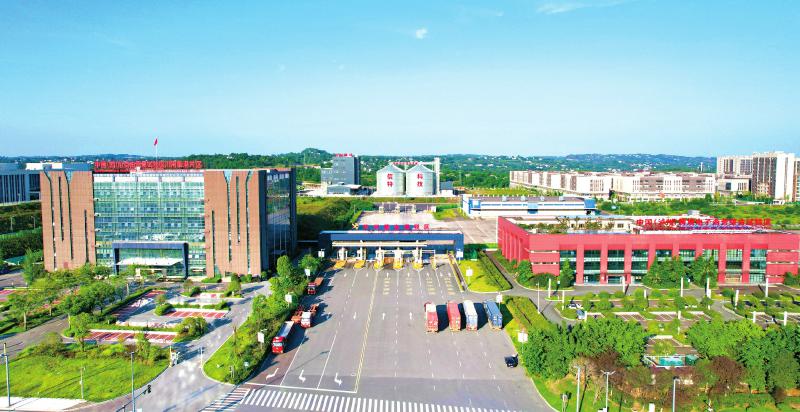
Core Viewpoint - The China (Sichuan) Free Trade Zone (FTZ) Nanchuan Port Area is actively promoting high-quality economic development through institutional innovation and project signings, aiming to enhance its role as a core engine for the city's open economy [3][4]. Institutional Innovation - The Nanchuan Port Area has developed 540 institutional innovation achievements, including 21 new models since 2025, focusing on customs clearance, administrative approval, and tax management [4][5]. - Nine of these innovations have been promoted nationwide, while 36 have been adopted across Sichuan Province, demonstrating the area's commitment to reform and market vitality [4][5]. Project Signings and Economic Impact - On September 29, 12 projects were signed with various companies, covering areas such as bonded processing, bonded logistics, and cross-border e-commerce, marking a significant step towards achieving the "full garden, full production" goal [3][4]. - The Nanchuan Port Area aims to achieve an annual import and export value of 1 billion yuan from the newly signed projects, particularly in the international trade of imported meat [8]. Logistics and Transportation - The Nanchuan Port Area is enhancing its logistics capabilities by integrating water, rail, and road transport, with a focus on establishing a resource allocation hub for bulk commodities in the Sichuan-Chongqing region [7][8]. - The port has seen a 10.02% year-on-year increase in container throughput, reaching 186,700 TEUs from January to September [7]. Industry Development - The area is transitioning from a logistics channel to an "import + processing" ecosystem, focusing on developing outward-oriented industries, particularly in food and advanced materials [9][10]. - The cross-border e-commerce industry park is projected to achieve a transaction volume of 980 million yuan from January to September, reflecting a 27.77% year-on-year growth [10]. Future Goals - The Nanchuan Port Area aims to complete a foreign trade import and export volume of 14 billion yuan by the end of the year and achieve "full garden, full production" within three years [10][11].
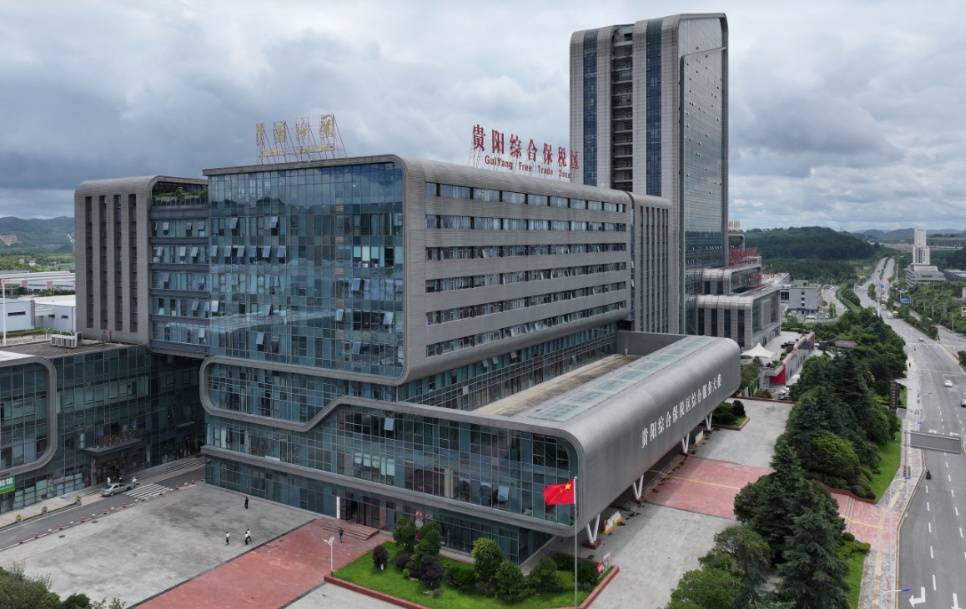
“内陆”跃升“前沿” 贵阳综保区以通道矩阵连世界
Sou Hu Cai Jing· 2025-07-15 07:18
Core Insights - The Guizhou Comprehensive Bonded Zone is leveraging a "zone-port linkage" model to enhance its logistics capabilities and integrate into the Western Land-Sea New Corridor, aiming to become a national logistics hub and a new highland for inland open economy [1][3] Group 1: Logistics and Operations - The Guizhou Comprehensive Bonded Zone has established the first comprehensive bonded international land port in China, integrating customs, railways, and business operations [1][2] - The "zone-port linkage" model combines multi-modal logistics channels and a fully functional port operation area, enhancing international distribution, bonded warehousing, and processing services [3] - The zone is developing a multi-dimensional transportation network that connects with ASEAN countries, increasing Guizhou's participation in the global economy [3][4] Group 2: Cross-Border Transportation - In April, the first "China-Laos" cross-border truck service was launched, providing a full-chain service from domestic customs clearance to international delivery, catering to the logistics needs of Guizhou enterprises [4] - The customs policy allowing for tax refunds upon entry into the zone significantly shortens the tax refund cycle and improves cash flow for businesses [4] Group 3: Digital Economy and Data Services - A new "data cross-border circulation comprehensive service platform" is set to launch, marking a significant advancement in the cross-border flow of data elements [5] - The Guizhou Comprehensive Bonded Zone is enhancing its digital trade infrastructure, focusing on ASEAN and EU markets, and facilitating the integration of innovation, industry, supply, and value chains [6] Group 4: Performance Metrics - As of now, the Guizhou Comprehensive Bonded Zone has handled 566,300 tons of goods and a container throughput of 13,075 TEUs, with 26 trains operating on the Western Land-Sea New Corridor [6] - Various local products, including tires, tea, and clothing, are being exported through international logistics channels, highlighting the zone's role in expanding Guizhou's international trade footprint [6]