
铁水联运

Search documents
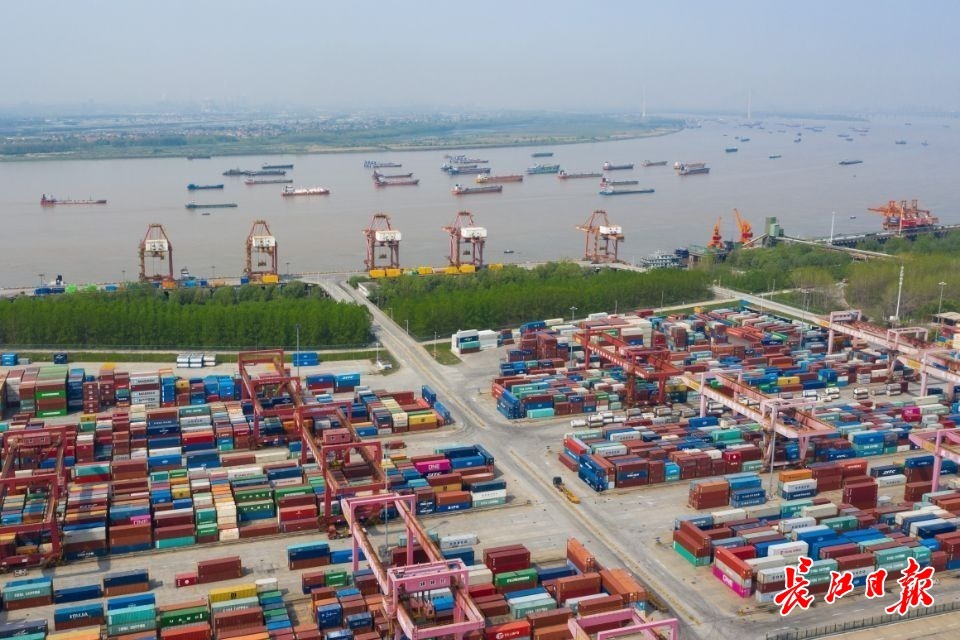
武汉港集装箱吞吐量去年突破200万标箱,再度夯实长江中游龙头地位
Chang Jiang Ri Bao· 2026-02-26 13:21
Core Insights - The article highlights the continuous growth of Wuhan Port's container throughput, projecting a total of 2.015 million TEUs by 2025, representing a year-on-year increase of 7.4% from 2024's 1.8763 million TEUs [1] - The total cargo throughput is expected to reach 14.73 million tons in 2025, with a year-on-year growth of 3.9%, indicating Wuhan Port's leading position among inland ports in the middle reaches of the Yangtze River [1] Container and Cargo Throughput - Wuhan Port's container throughput is a key indicator of the logistics economy in Wuhan, with the port's various terminals, including Yangluo Port, contributing to the overall statistics [4] - In 2025, the Yangluo Port area is projected to handle 1.8952 million TEUs, with Yangluo Port's first three phases accounting for 1.5798 million TEUs and the China COSCO Shipping terminal contributing 315,400 TEUs [10] Operational Efficiency and Innovations - Yangluo Port has introduced innovative logistics solutions, such as the "one box system" for energy storage cabinets, enhancing its operational capabilities and expanding its market share [6] - The integration of rail and water transport at the China COSCO Shipping terminal has improved logistics efficiency, reducing costs by an average of 14.4% [6] Trade and Economic Impact - The port has established direct international shipping routes, significantly impacting trade, with imports including beef, rice, and soybeans, and exports featuring non-woven fabrics and chemical products [11] - The "Hanrong Line" has become a key route for transporting bulk materials, serving manufacturing enterprises in the Yangtze River Delta and the middle reaches of the Yangtze River [10] Future Development Plans - To further enhance its capabilities, Wuhan City has launched a three-year action plan (2025-2027) centered around Yangluo Port, aiming to develop it into a modern international shipping hub with strong regional influence [11]

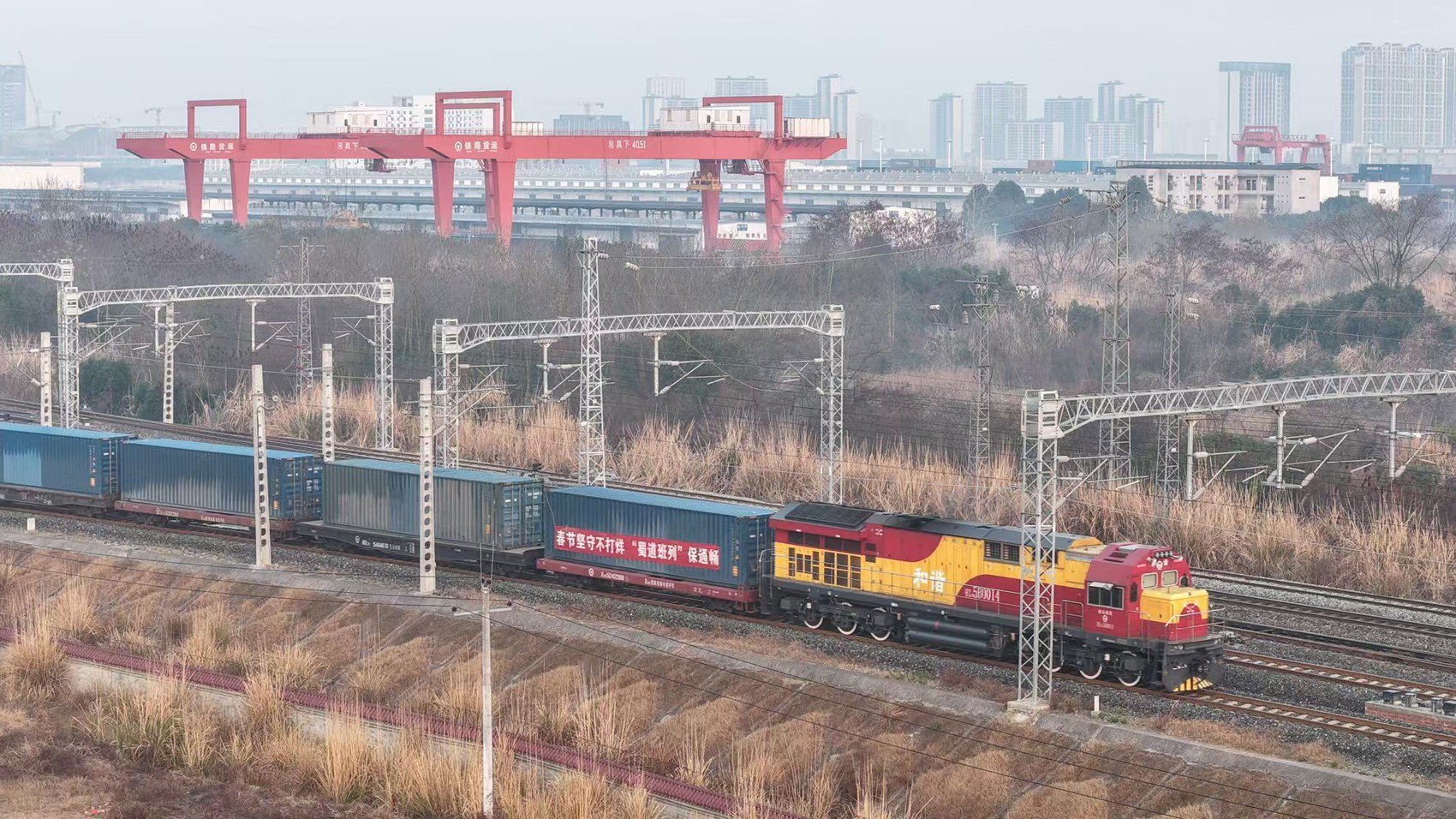
四川多趟货运班列春节不打烊
Xin Lang Cai Jing· 2026-02-24 15:14
Core Insights - The article highlights the continuous operation of freight trains during the Spring Festival, specifically the "Yangtze River Express," "Northbound Express," and "Greater Bay Area Express," which collectively operated 39 trains and transported approximately 54,395 tons of goods, ensuring uninterrupted supply during the holiday season [1][2]. Group 1: Freight Train Operations - The "Yangtze River Express" was established to enhance the transportation capacity of the Yangtze River Golden Waterway, utilizing a rail-water intermodal system that significantly reduces transportation time by half compared to traditional water transport [1][2]. - During the Spring Festival, a train loaded with 1,100 tons of coke traveled from Dazhou to Wuhan, demonstrating the efficiency of the "Yangtze River Express" in transporting raw materials for steel production [3]. - The "Northbound Express" transported 20 standard containers of flour from Meishan to Yinan, Shandong, showcasing its role in regional supply chains [3]. Group 2: Regional Supply Chain Impact - The "Greater Bay Area Express" facilitated the rapid delivery of Sichuan specialties such as hot pot base and doubanjiang to the Guangdong-Hong Kong-Macau Greater Bay Area within 36 hours, enhancing the festive market offerings [2][3]. - The return trips of the "Greater Bay Area Express" included transporting fashion items, beverages, and home appliances from the Greater Bay Area to Sichuan, further enriching the local holiday market [3].
2025年发送旅客量创历史同期新高
Xin Lang Cai Jing· 2026-01-03 19:19
Group 1 - The core viewpoint of the articles highlights the significant growth in passenger and freight transportation by the Qinghai-Tibet Railway Group in 2025, with passenger numbers reaching a historical high of 18.78 million, a year-on-year increase of 4.2% [1] - The company optimized its transportation structure by operating 104.5 pairs of scheduled passenger trains, enhancing connectivity between the Qinghai-Tibet Plateau and regions such as Inner Mongolia and Shanxi [1] - During the 2025 Spring Festival, the company transported 2.0211 million passengers, and during the summer transportation period, 4.684 million passengers, both figures marking historical highs [1] Group 2 - In 2025, the company transported 30.7 million tons of goods, reflecting a year-on-year growth of 5.6% [2] - The introduction of fixed schedules for passenger car operations on the Lhasa to Lanzhou route significantly improved transportation efficiency, facilitating the movement of local products to national markets [2] - The company launched an integrated transportation service combining rail, water, and road transport, breaking traditional point-to-point limitations and providing a new service experience for businesses [2]
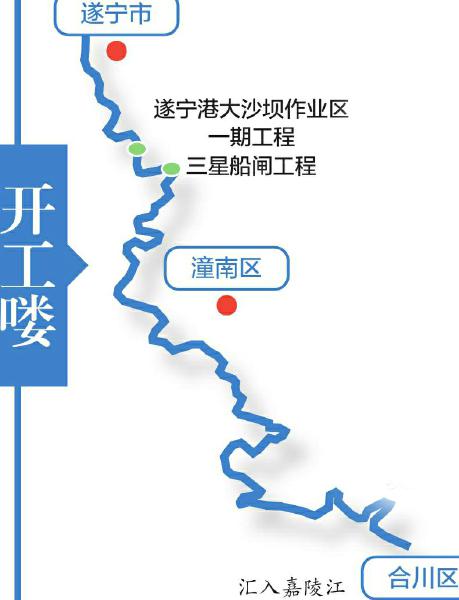
一闸一港重启涪江“黄金水道”,预计年降物流成本超30%
Si Chuan Ri Bao· 2025-12-30 10:08
Core Viewpoint - The construction of the Sanxing Ship Lock and the Dasha Dam operation area in Suining marks a significant step in revitalizing the Fuxi River as a key waterway, which is expected to reduce logistics costs by over 30% annually for the region [3][4]. Group 1: Project Overview - The Sanxing Ship Lock project has officially commenced, alongside the first phase of the Dasha Dam operation area, facilitating the revival of the Fuxi River for navigation [3]. - The Sanxing Ship Lock will include the construction of a new three-level lock and the improvement of approximately 10 kilometers of downstream waterways, designed for 1,000-ton dry bulk carriers with an annual throughput capacity of 14.67 million tons [3][4]. Group 2: Economic Impact - Suining, a significant industrial city in Sichuan, relies heavily on traditional road transport for its substantial cargo volumes, including lithium concentrate, metal salts, and fertilizers [4]. - The revival of the Fuxi River is projected to lower logistics costs by over 30% annually, enhancing the efficiency of cargo transport compared to the current reliance on road transport to Chongqing's Guoyuan Port [4]. Group 3: Future Developments - The Fuxi River will integrate with the Jialing River to form an efficient "Y"-shaped waterway network, significantly improving the overall transportation capacity of the region [5]. - The Dasha Dam operation area will feature three new 1,000-ton berths with an annual throughput capacity of 2.1 million tons, and it will be designed to accommodate future rail connections, enhancing the intermodal transport capabilities [5].
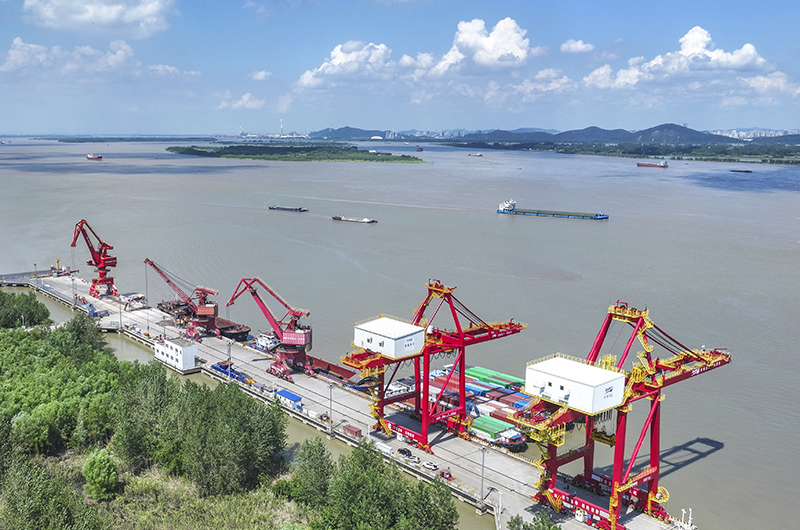
从武汉阳逻港香炉山站鸣笛启程,“湖北造”搭上中欧班列驶向全球新赛道
Chang Jiang Ri Bao· 2025-12-30 00:52
Core Insights - A dedicated freight train carrying 55 containers of automotive parts and other "Made in Hubei" goods has successfully departed from Wuhan Yangluo Port, marking the first direct train service to Europe [1] - This initiative is a significant achievement for Hubei Railway Group, supported by various enterprises, aimed at strengthening international rail intermodal transport channels and providing stable, economical, and convenient cross-border logistics for foreign trade enterprises in Hubei and the Yangtze River Economic Belt [1][4] Group 1 - Hubei Railway Group has effectively utilized its advantages to integrate quality resources, actively participating in strengthening domestic and international dual circulation, and continuously improving the multi-modal transport system and external opening channel construction [4] - The establishment of a "regular + temporary" train product combination has led to a substantial increase in the number of trains operated, covering five Central Asian countries and 34 cities across nine countries along the Belt and Road [4][7] - The first Central Asia train departed from Yangluo Port on August 6, carrying automotive parts to Kazakhstan, while the first China-Europe train left on December 24, transporting Dongfeng automotive components to Europe [4] Group 2 - The group has formed a specialized service team to conduct demand research in Hubei and surrounding provinces, actively expanding the "water-to-rail" train cargo sources and breaking traditional transport barriers [5] - By optimizing processes, the group has significantly reduced document processing time and improved the organization of transport, achieving seamless connections between various transport links and drastically shortening overall logistics time [5] - The successful launch of the direct freight train to Europe is a practical implementation of the national "Belt and Road" initiative and the development strategy of the Yangtze River Economic Belt, facilitating the efficient export of "Made in Hubei" products [7]

马鞍山郑蒲港新区:多式联运“快车道” 区港融合“加速跑”
Ren Min Wang· 2025-12-12 11:02
Core Viewpoint - Zhengpu Port in Ma'anshan, Anhui, is a key deep-water port that is experiencing significant growth in cargo throughput and cross-border e-commerce activities, driven by strategic initiatives and operational efficiencies. Group 1: Port Operations and Performance - Zhengpu Port is the only deep-water port on the north bank of the Yangtze River in Anhui, with busy operations including cargo ships and container trucks [1][4] - As of October 2025, the port's throughput reached 2.1971 million tons, a year-on-year increase of 3.5%, with container throughput at 65,400 TEUs, up 4%, and foreign trade container throughput at 60,300 TEUs, up 9% [4] Group 2: Cross-Border E-commerce Development - The company "Gongzheng Supply Chain" operates in the Ma'anshan Comprehensive Bonded Zone, focusing on cross-border e-commerce with a core model of bonded inventory [4] - The daily shipping volume on the Taobao platform exceeds 2,000 orders, with a peak during the "Double Eleven" shopping festival [4] - The company reported an import trade volume exceeding $19 million this year, with expectations to surpass $22 million by year-end [5] Group 3: Strategic Initiatives and Future Outlook - Zhengpu Port is advancing a strategy of "large ports, large logistics, and large foreign trade" to enhance logistics efficiency [6] - Ongoing construction of multi-modal transport bases aims to improve connectivity and logistics capabilities, with full completion expected by 2026 [6][7] - The port is set to become a hub linking the Yangtze River Delta with central and western regions, enhancing regional trade and logistics integration [7]
张家港北站货场开通运营
Xin Hua Ri Bao· 2025-12-02 06:01
Core Viewpoint - The opening of the Zhangjiagang North Station freight yard marks a significant shift in logistics for the region, enhancing connectivity and reducing transportation costs for local businesses [1] Group 1: Infrastructure and Operations - The Zhangjiagang North Station freight yard covers an area of approximately 123,000 square meters and is equipped with two freight arrival and departure lines exceeding 1,000 meters in length, along with supporting loading and unloading equipment [1] - The freight yard is designed to handle an annual cargo capacity of about 3 million tons, integrating loading, warehousing, and transshipment functions [1] Group 2: Economic Impact - The operation of the freight yard is expected to reduce logistics costs for regional enterprises by over 100 million yuan annually, facilitating better integration of surrounding industrial clusters into the Yangtze River Delta logistics system [1] - The "railway + port" intermodal transport system established through seamless connection with Suzhou Port Zhangjiagang Port Area is anticipated to provide a foundation for future "one order" products in intermodal transport [1] Group 3: Cost and Efficiency Benefits - Compared to full road transport, the future "railway + water transport" solution is projected to lower comprehensive logistics costs by 18% and improve efficiency by over 20%, potentially saving nearly 1 million yuan in logistics transportation costs annually for companies [1]

苏州港航集团构建商品汽车“铁路+海运”无缝衔接铁水联运新模式
Su Zhou Ri Bao· 2025-11-25 00:43
Core Insights - The introduction of the JSQ cage train service has created a new logistics channel for automobile exports, reducing costs and promoting low-carbon transportation [1] - The Taicang Port has seen a significant increase in automobile exports, with nearly 600,000 units exported in the first three quarters of the year, representing a year-on-year growth of approximately 70% [1] - The new rail-water intermodal transport model has been successfully implemented, showcasing the effectiveness of innovative logistics solutions [2] Group 1: Logistics Innovation - The JSQ cage train service allows for high-density loading, with a full train capable of transporting 406 vehicles, significantly improving transportation efficiency [2] - The rail transport method has a carbon emission intensity that is one-fifth of that of road transport, leading to a reduction of approximately 21,500 tons of carbon emissions this year alone [2] - The traditional road transport method has a much higher energy consumption compared to rail transport, with energy consumption per 100 tons being 1,846 kg of standard coal for road versus 478 kg for rail [3] Group 2: Operational Efficiency - The construction of a top-end unloading platform has increased the daily handling capacity of vehicles from 200 to between 800 and 1,000, achieving a fourfold increase in efficiency [4] - A rapid transfer system has been established, allowing for direct access from the rail to the port, completing key transfers in just 10 minutes [4] - The innovative "four in, four out" operational model has significantly enhanced unloading efficiency, achieving a 200% increase in daily handling capacity compared to the basic model [5] Group 3: Market Expansion - The logistics network established by Suzhou Port and its partners covers 22 railway stations and connects to Europe and Asia, facilitating market access for multiple automobile brands in 15 countries [5] - The new intermodal transport channel has streamlined the logistics process for exporting cars to Europe, reducing transportation time and costs, thereby enhancing competitiveness in international markets [5] - The Taicang Port has expanded its freight train services to include various goods, further optimizing logistics operations [6]
前10月国家铁路发送货物33.78亿吨 创历史同期新高
Ren Min Ri Bao· 2025-11-23 21:57
Core Insights - The National Railway Group of China reported a record high in freight volume for the first ten months of the year, with a total of 3.378 billion tons shipped, representing a year-on-year increase of 3% [1] - Daily loading averages reached 186,000 cars, up 4% year-on-year, contributing significantly to reducing logistics costs and supporting stable economic operations [1] Freight Transportation Performance - The cumulative shipment of intermodal container cargo reached 14.258 million TEUs, marking a 16.2% increase year-on-year [1] - The "one order" logistics product for intermodal transport saw a total booking of 30,000 TEUs [1] Cross-Border Transportation - The China-Europe (Asia) freight trains operated a total of 28,000 trips, reflecting a year-on-year growth of 7.8% [1] - The China-Laos Railway facilitated the shipment of 4.52 million tons of goods, which is a 14% increase year-on-year [1] - The Western Land-Sea New Corridor saw a significant increase in container shipments, totaling 1.2 million TEUs, a growth of 64% year-on-year [1] Key Material Transportation - The National Railway completed coal transport of 1.732 billion tons, with electricity coal accounting for 1.178 billion tons [1] - Shipments of metallurgical materials and grain increased by 9.1% and 13.8% year-on-year, respectively [1]
乘交通之便,“阜”摇直上九万里!
Ren Min Wang· 2025-11-12 03:24
Core Insights - The article highlights the transformation of Fuyang, Anhui Province, into a logistics hub due to the establishment of modern transportation infrastructure, including the Anhui (Fuyang) Railway International Logistics Port and the upcoming Nanzhao Port, enhancing its connectivity and economic potential [2][3][5][6]. Group 1: Railway Logistics Development - The Anhui (Fuyang) Railway International Logistics Port has achieved a cargo throughput of 3.14 million tons since its operation began at the start of the year, significantly improving logistics efficiency [3]. - The port, with an investment of 3.75 billion yuan, has transformed Fuyang from a mere transit point into a logistics node, reducing cargo handling time to two to three hours and cutting transportation costs for bulk goods by 15% [3][4]. - The integration of rail and water transport has reduced transit time by 40% and costs by over 65%, showcasing the effectiveness of the "iron-water" intermodal transport system [3]. Group 2: Economic Impact on Local Community - The reduction in transportation costs has directly benefited local farmers, with fertilizer costs decreasing by nearly 100 yuan per ton, making agricultural supplies more affordable [4]. - Local businesses, such as those producing willow furniture, have also seen reduced shipping costs, enhancing their competitiveness in the market [4]. Group 3: Waterway Infrastructure Development - The Nanzhao Port, covering 86 hectares and designed for an annual throughput of 4.1 million tons, is set to enhance Fuyang's access to major waterways, connecting it to key ports like Lianyungang and Shanghai [5]. - The development of the port is expected to shorten water transport routes to the Yangtze River by 400 kilometers, further optimizing logistics in the region [5]. Group 4: Future Prospects and Strategic Vision - Fuyang is positioning itself as a national logistics hub, with plans to enhance rail and waterway connections, including the regular operation of China-Europe freight trains [5][6]. - The ongoing construction of supporting logistics parks aims to create a comprehensive logistics ecosystem that integrates warehousing, distribution, processing, and trading [4][5]. - The improvements in transportation infrastructure are expected to facilitate Fuyang's integration into the Belt and Road Initiative, enhancing its role in global trade [6][7].