原创性研究

Search documents
求索空间科学 逐光无垠星海(弘扬科学家精神)
Ren Min Wang· 2026-02-02 22:28
Core Viewpoint - The establishment of the Interstellar Navigation Institute by the Chinese Academy of Sciences aims to cultivate interdisciplinary talents in frontier fields such as interstellar propulsion and deep space communication, reflecting the country's commitment to advancing space science and technology [2]. Group 1: Contributions to Space Science - Wang Chi has been a significant contributor to space science for over 30 years, focusing on space physics and space weather research, and has played key roles in major projects like the lunar exploration program and the Meridian Project [2][3]. - The development of a new model explaining the deceleration of solar wind in the outer heliosphere has provided critical insights for space exploration, showcasing the importance of original research in the field [3][4]. Group 2: Technological Advancements - The Meridian Project, a major national scientific infrastructure, consists of a network of 31 stations and nearly 300 monitoring devices, providing real-time data for space environment monitoring, which supports spacecraft operations and enhances space weather modeling capabilities [6]. - The team led by Wang Chi has developed a high-precision three-dimensional global model for solar wind and magnetosphere interactions, achieving a level of accuracy that positions China among the few countries capable of self-consistent numerical simulations in this area [5]. Group 3: International Collaboration and Recognition - The establishment of the China-Brazil Space Weather Laboratory represents a significant step in international collaboration, enhancing scientific exchange and cooperation between China and Brazil in space weather research [8]. - Wang Chi's leadership in various major space science projects has contributed to China's growing presence on the international stage in space science, with several successful satellite launches and projects in recent years [7].

将宝贵的科技资源投向最具创新活力的一线科研人员——访国家自然科学基金委员会党组书记、主任窦贤康
Ke Ji Ri Bao· 2026-01-12 07:43
Core Viewpoint - The article discusses the strategic deployment of the "15th Five-Year Plan" focusing on enhancing original innovation and key core technology breakthroughs, as reviewed and approved by the 20th Central Committee of the Communist Party of China [1] Group 1: Achievements and Reforms - The National Natural Science Foundation of China (NSFC) has made significant reforms during the "14th Five-Year Plan" period, emphasizing the importance of basic research and achieving notable results that promote new productive forces [2] - The NSFC maintains a commitment to the leadership of the Party in basic research, ensuring that 60-70% of funding supports curiosity-driven research, including general projects and youth science fund projects [2][3] - A systematic funding mechanism for original basic research has been established, with a focus on identifying and recommending non-consensus projects [3] Group 2: Talent Development - The NSFC has constructed a comprehensive talent funding system, emphasizing support for young researchers and creating dedicated pathways for young teams to excel [3] - A long-term stable support mechanism has been implemented for various talent projects, ensuring that outstanding talents can focus on research without distractions [3] Group 3: Collaboration and Funding - Significant progress has been made in guiding local governments, enterprises, and social forces to invest in basic research, with 34 local governments and 36 central enterprises joining the joint fund [3] - By 2025, external funding is expected to exceed 4.6 billion yuan, accounting for nearly 12% of central government funding [3] Group 4: International Cooperation - The establishment of an International Research Funding Department aims to enhance global scientific research funding and expand high-level openness in basic research [4] Group 5: Future Directions - The "15th Five-Year Plan" emphasizes the need for high-quality development in basic research to support technological self-reliance and the construction of a strong scientific nation [5] - Six key areas for strengthening basic research have been outlined, including strategic layout, increased investment, and fostering an environment conducive to original innovation [6][7] - The NSFC aims to create a modern management system for scientific funding that encourages free exploration and original innovation, while also focusing on talent cultivation and addressing national needs [8][9]
50名科学家获第七届科学探索奖
Ren Min Ri Bao· 2025-09-23 21:59
Core Points - The seventh Science Exploration Award ceremony was held in Shenzhen, Guangdong, recognizing 50 scientists including Tsinghua University associate professor Wu Jiamin [1] - The research areas of the awarded scientists include artificial retinal light sensitivity restoration, the generation and manipulation of non-Abelian anyons, photoelectric-enabled artificial enzymes, searching for life markers in Martian rock paint, precise regulation of plant growth hormones, drug development for neurogenic hearing loss, trustworthy visual computing, CO2 conversion applications in manned closed spaces, and planetary mobile detection robots [1] - The Science Exploration Award is funded by Tencent and operated by the New Cornerstone Science Foundation, aimed at supporting top young scientists in China, with each awardee receiving a total of 3 million yuan over five years [1] - Over the past seven years, the Science Exploration Award has funded 347 scientists, with 11 of them having their research recognized in the annual "Top Ten Scientific Advances in China" [1]
人均300万的青年科学家大奖“男女条件不平等”?颜宁解释了
量子位· 2025-08-25 05:54
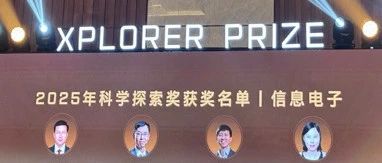
Core Points - The seventh Science Exploration Award has been announced, with 50 young scientists receiving a total of 300 million yuan in funding over five years [2] - The award covers ten fields, including mathematics and physics, chemistry and new materials, astronomy and earth sciences, life sciences, medical sciences, information electronics, energy and environment, advanced manufacturing, transportation and construction, and frontier intersections [2][39] - The award aims to encourage original research and has optimized its evaluation mechanism to focus on the originality of future research work [40][41] Group 1: Award Overview - The Science Exploration Award was established in 2018 by prominent scientists and Tencent's founder, Ma Huateng, and has become one of the most recognized awards for basic research and cutting-edge technology in China [2][39] - Each of the 50 awardees will receive 6 million yuan annually for five years, totaling 30 million yuan per recipient [2] - This year, there were 1,238 applicants, with 13 young scientists among the winners, the youngest being 32 years old at the time of application [44] Group 2: Information Electronics Field - The information electronics field had six awardees, three of whom are young scientists [15] - Notable winners include Chang Yi from Jilin University, who is a leading expert in information retrieval and data mining, and has published over 100 papers and holds more than 30 patents [19][21] - Other awardees include Du Bo from Wuhan University, who focuses on artificial intelligence and computer vision, and Jiang Yugang from Fudan University, who leads significant projects in the field of artificial intelligence [25][27] Group 3: Gender Representation - This year's award saw a record number of female winners, with nine women making up 18% of the total awardees [45] - The award has introduced a "new star" category to attract younger researchers, with specific age limits set for male and female candidates to promote gender diversity [44]