
反外国制裁法

Search documents
港府当面斥责:巴拿马自毁国家信用,后果自负
Xin Lang Cai Jing· 2026-02-07 14:37
Group 1 - The Hong Kong government expressed strong dissatisfaction and opposition to the Panama Supreme Court's ruling that deemed the contract renewal for the Panama Port Company unconstitutional, emphasizing the potential damage to Panama's business environment and international trade rules [1] - The Hong Kong government urged the Panama government to respect contractual agreements and ensure a fair business environment for local enterprises [1] - The Hong Kong company, Cheung Kong Infrastructure, announced it has initiated arbitration against the Panama Supreme Court's ruling, claiming significant and imminent losses and seeking extensive compensation [2] Group 2 - The Chinese government has indicated it may take various countermeasures against Panama, including suspending negotiations on new projects and evaluating further responses in trade and shipping sectors, potentially affecting investments worth billions [6][7] - Chinese state-owned enterprises have been instructed to consider rerouting shipments through other ports without significantly increasing costs, and customs inspections on imports from Panama have been intensified [7] - Legal experts suggest that if Cheung Kong wins arbitration, it could seek enforcement of the ruling in 172 countries under the New York Convention, although Panama may claim sovereign immunity to protect its assets [3]
香港特区政府召见巴拿马总领事,港专家:仲裁胜诉可查封巴政府境外资产
Xin Lang Cai Jing· 2026-02-07 11:29
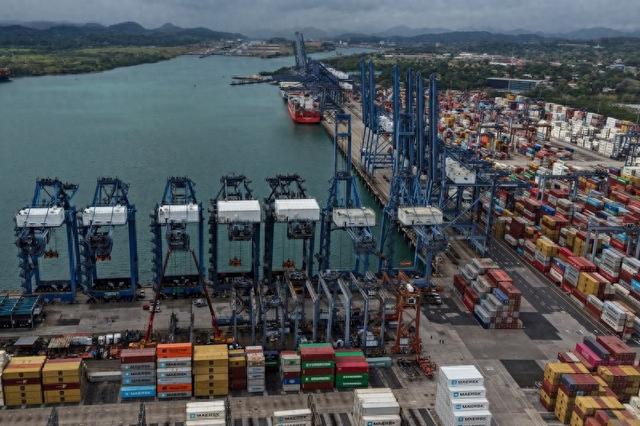
Core Viewpoint - The Hong Kong government expresses strong dissatisfaction with the Panama Supreme Court's ruling that declared the renewal of contracts for two ports operated by Hong Kong's Cheung Kong Holdings in Panama as unconstitutional, emphasizing the potential negative impact on Panama's business environment and international trade rules [1][3]. Group 1: Government Response - The Secretary for Commerce and Economic Development of Hong Kong, Edward Yau, reiterated the government's position, criticizing Panama's actions as damaging to the country's credibility and economic development [1]. - The Hong Kong government urges Panama to respect contractual agreements and ensure a fair business environment for companies operating legally in the country [1][3]. Group 2: Legal Actions and Implications - Cheung Kong Holdings has initiated arbitration against the Panama Supreme Court's ruling, claiming it has suffered "serious and imminent losses" and is seeking "broad compensation" [3]. - Legal experts suggest that if Cheung Kong wins the arbitration, it could seek enforcement of the ruling in 172 countries under the New York Convention, although Panama may claim "sovereign immunity" to protect its assets [4]. Group 3: Potential Economic Impact - The situation may hinder potential investments worth billions, as Chinese state-owned enterprises have significant ongoing infrastructure projects in Panama, including a $1.4 billion bridge project and a cruise terminal [7]. - Chinese shipping companies are being advised to consider rerouting cargo through other ports without significantly increasing costs, and customs inspections on imports from Panama have been intensified [7]. Group 4: Broader Geopolitical Context - Analysts suggest that China could coordinate with neighboring countries to isolate Panama diplomatically and may consider targeted sanctions against specific individuals or entities in Panama [6]. - The Chinese government is expected to provide comprehensive legal and political support for Cheung Kong's arbitration efforts, indicating a strong stance against perceived U.S. influence in the region [6][5].


文艺复兴古城秋日法治絮语
Xin Lang Cai Jing· 2025-12-23 20:11
Group 1 - The core of the article revolves around the academic exchange between Chinese and Italian legal cultures, highlighting the importance of international dialogue in law [2][8] - The visit to the University of Ferrara, a public university established in 1391, emphasizes its integration with the city and its historical significance as a UNESCO World Heritage site [3][4] - The first lecture focused on sanctions and international law, discussing the legitimacy of unilateral sanctions and China's legal framework in response to foreign sanctions [5][6] Group 2 - The second lecture addressed commercial crimes in China, detailing the unique judicial interpretation system and the governance logic behind it [6][7] - The academic atmosphere at the University of Ferrara is characterized by open discussions and a blend of traditional and innovative approaches in legal scholarship [7] - The article underscores the necessity of face-to-face dialogue in the international dissemination of legal discourse, advocating for a deeper understanding of Chinese legal culture [8][9]

将法治之锚稳稳扎进向海图强的深蓝
Xin Hua Ri Bao· 2025-12-20 21:15
Core Viewpoint - The article highlights the establishment and functioning of the Nanjing Maritime Court, which plays a crucial role in handling maritime disputes, particularly in the context of the rapidly growing offshore wind power industry in Jiangsu, China. The court's establishment is seen as a significant step in enhancing maritime legal services and ensuring the stability of international supply chains. Group 1: Establishment and Functioning of the Nanjing Maritime Court - The Nanjing Maritime Court was officially established in December 2019, becoming the only newly established maritime court in the country since the 18th National Congress of the Communist Party and the only specialized court in Jiangsu Province [1] - The court started with a small team of four, including two judges and two assistants, who had diverse professional backgrounds and faced challenges in forming a cohesive judicial body [1] - The court has been instrumental in addressing maritime disputes arising from the booming offshore wind power sector in Jiangsu during the 14th Five-Year Plan period [2] Group 2: Handling of Maritime Disputes - A significant case involved a private technology group that paid 80 million RMB for a vessel rental contract but faced delays in receiving the ship, leading to a complex investigation into a network of related companies [3] - The court ruled in favor of the plaintiff, holding the defendant and its related parties accountable for breach of contract, which resulted in a settlement being reached [3] - The court's role extends to international legal matters, with cases impacting national sovereignty and maritime rights, emphasizing the need for a global perspective in judicial proceedings [3] Group 3: Recent Developments and Achievements - In a notable case, a marine engineering company sought to recover over 11.86 million USD in construction payments after a Swiss company halted payments due to sanctions, leading to a pre-litigation ship seizure request [4] - The Nanjing Maritime Court allowed the ship to remain for modifications while facilitating a settlement that resulted in the recovery of over 8.4 million RMB for the marine engineering company, thus stabilizing the supply chain [5] - In 2023, the court adjudicated 344 cases involving foreign and Hong Kong-Macau-Taiwan matters, covering 57 countries and regions, showcasing its growing influence in international maritime law [5]
禁止入境中国,冻结在华财产,中方制裁日本恶劣分子
Huan Qiu Shi Bao· 2025-12-15 22:55
Group 1 - The Chinese Ministry of Foreign Affairs announced countermeasures against former Japanese Self-Defense Forces Chief of Staff Iwasaki Shigeru for his role as an advisor to Taiwan's government, emphasizing that Taiwan is a core interest of China and a red line that cannot be crossed [1][2][3] - The countermeasures include freezing Iwasaki's assets in China, prohibiting transactions with him, and denying him entry into China, effective from December 15, 2025 [2][3] - Iwasaki has a history of negative remarks regarding China and has encouraged Japan to enhance its military posture in response to perceived threats from China, particularly concerning Taiwan [4][5] Group 2 - The relationship between China and Japan has deteriorated significantly, with 66% of Japanese respondents expressing unease about future relations with China, following controversial statements made by Japanese Prime Minister Kishi Sanae regarding Taiwan [6][7] - Observers believe that repairing Sino-Japanese relations may take over a year, with upcoming events such as the APEC leadership meeting in November potentially serving as a diplomatic opportunity, depending on China's willingness to engage [6] - The return of giant pandas from Japan to China has been interpreted as a symbolic marker of the worsening relationship, with Japan set to enter a "no giant panda" era for the first time in 50 years [6][7]
外交部回应对日本自卫队前统合幕僚长岩崎茂反制:惩戒其同“台独”分裂势力勾连挑衅
Ge Long Hui· 2025-12-15 08:19
Group 1 - The core issue is China's strong opposition to the appointment of former Japanese Self-Defense Forces Chief of Staff, Iwasaki Shigeru, as an advisor to Taiwan, which is viewed as a serious violation of China's sovereignty and territorial integrity [1] - China has taken countermeasures against Iwasaki, citing his collusion with pro-independence forces in Taiwan and his repeated provocations that undermine the One China principle [1] - The Chinese Foreign Ministry has emphasized that the Taiwan issue is a core interest of China and a red line that cannot be crossed, indicating the seriousness of the situation [1]
中方决定:对日本参议员石平采取反制措施
财联社· 2025-09-08 02:25
Group 1 - The article discusses the actions taken by China against Japanese Senator Ishihara, citing his long-standing dissemination of falsehoods regarding Taiwan, the Diaoyu Islands, and other sensitive issues, as well as his visits to the Yasukuni Shrine, which violate the spirit of the four political documents between China and Japan and the One China principle [1] - China has decided to implement countermeasures against Ishihara, which include freezing his assets within China, prohibiting transactions and cooperation with him by organizations and individuals in China, and denying visa issuance and entry for him and his immediate family [1] - These measures are set to take effect on September 8, 2025, as per the provisions of the Anti-Foreign Sanctions Law of the People's Republic of China [1]
外交部对日本参议员石平采取反制措施
Di Yi Cai Jing· 2025-09-08 02:24
Group 1 - The Ministry of Foreign Affairs has announced countermeasures against Shi Ping, including freezing his assets within China and prohibiting domestic organizations and individuals from engaging in transactions or cooperation with him [1] - The measures are based on the Anti-Foreign Sanctions Law of the People's Republic of China, specifically citing articles that allow for such actions [1] - Shi Ping and his immediate family members will be denied visa issuance and entry into China, including Hong Kong and Macau [1]
反外国制裁法在“芯片战争”中的首次出手
是说芯语· 2025-05-22 01:21
Core Viewpoint - The article discusses China's response to the U.S. guidance aimed at restricting Chinese advanced computing chips, particularly Huawei's Ascend chips, highlighting the legal implications and potential conflicts arising from such measures [3][4][5]. Group 1: China's Legal Response - The Chinese government firmly opposes the U.S. measures, labeling them as unilateral bullying that infringes on China's legitimate development rights [4]. - The Ministry of Commerce emphasizes that compliance with U.S. guidance could lead to violations of China's Anti-Foreign Sanctions Law, exposing organizations and individuals to legal liabilities [5][6]. Group 2: Implications of the Anti-Foreign Sanctions Law - Article 12 of the Anti-Foreign Sanctions Law prohibits any organization or individual from executing or assisting in the execution of discriminatory restrictions imposed by foreign countries on Chinese citizens or organizations [6][7]. - Violations could result in administrative penalties, including corrective orders from the government, or civil lawsuits from affected parties seeking damages [7][8]. Group 3: Operational Challenges - The lack of clear standards for what constitutes "execution or assistance" under the Anti-Foreign Sanctions Law creates operational uncertainties for companies [8][9]. - Companies may face dilemmas in determining whether actions taken are due to business considerations or fear of U.S. sanctions, complicating compliance efforts [9][10]. Group 4: Legal Conflicts and International Comity - The article highlights the direct conflict between U.S. export control regulations and China's Anti-Foreign Sanctions Law, with no waiver mechanism available for affected enterprises [10]. - The potential for "foreign sovereign compulsion" defenses in U.S. courts is discussed, where companies may argue that compliance with U.S. law is necessitated by their home country's legal requirements [11][12]. Group 5: Challenges in Legal Defense - Despite the possibility of raising defenses based on international comity, the success rate for such arguments in U.S. courts has been declining, particularly in cases involving Chinese companies [15]. - The U.S. government's emphasis on national security in these matters complicates the legal landscape, often prioritizing government interests over international legal cooperation [15].

中方严厉抨击美打压中国芯片:典型单边霸凌和保护主义做法,将采取措施维护权益
Huan Qiu Shi Bao· 2025-05-21 23:10
Group 1 - The Chinese government criticizes the recent U.S. guidelines aimed at restricting the use of advanced computing chips, claiming it is a unilateral and protectionist approach that harms the global semiconductor supply chain and the rights of other countries to develop high-tech industries [1][2] - The Chinese Ministry of Commerce warns that any organization or individual assisting in the enforcement of U.S. measures may violate Chinese laws, including the Anti-Foreign Sanctions Law, and will bear legal responsibilities [2][3] - Experts suggest that the U.S. strategy to restrict China's AI development has backfired, leading to rapid advancements in China's self-developed chips and AI technologies [3][4] Group 2 - NVIDIA's CEO reports that the company's market share in China has dropped from 95% to 50% since the Biden administration took office, indicating that U.S. restrictions may be counterproductive [4][5] - The restrictions have inadvertently encouraged Chinese companies to accelerate their development in AI, with many AI researchers now relying on domestic technologies due to U.S. export controls [5][6] - Analysts express concerns that the U.S. reliance solely on its domestic market is insufficient for maintaining global competitiveness in high-tech sectors, and that exclusion from the Chinese market could harm U.S. economic interests [5][6] Group 3 - The ongoing U.S.-China trade tensions highlight the challenges in resolving economic conflicts, particularly in the technology sector, which remains a core battleground [7] - Despite the overall trade tensions easing, experts predict continued friction in high-tech areas, suggesting that the competition between the two nations will persist [7][8] - Some analysts argue that the U.S. should consider a more cooperative approach to AI development and regulation with China, recognizing the need for collaboration on shared security standards [6][7]
