向西开放

Search documents
中国—亚欧投资贸易促进中心线上平台正式上线
Xin Hua She· 2026-02-13 03:30
Group 1 - The China-Eurasia Investment and Trade Promotion Center launched an online platform on February 10, aimed at serving the "going west" strategy and enhancing the overseas comprehensive service system for Chinese enterprises [1] - The platform features sections such as "going out," "bringing in," "digital trade," and "smart ports," addressing the full process needs of enterprises engaged in cross-border operations [1] - The platform offers "one-stop" and "full-chain" services, integrating qualification processing, resource matching, customs logistics, and risk warning, significantly lowering the barriers for enterprises to enter the Eurasian market [1] Group 2 - The center plans to continuously optimize the platform's services, focusing on expanding international cooperation networks and deepening country-specific market research [2] - A risk prevention system will be established to provide precise market guidance and compliance support, enhancing the integration of online and offline services [2] - The platform's operation is expected to improve the service efficiency of Xinjiang as a core area of the Silk Road Economic Belt, supporting high-quality development of the Belt and Road Initiative [2]
在四川轻松把全球好货带回家
Xin Lang Cai Jing· 2026-02-04 22:38
Core Viewpoint - Sichuan is set to enhance its global trade capabilities, making it easier and more affordable for consumers to access a wider range of international goods over the next five years [1] Group 1: High Ground - Sichuan is tasked with establishing itself as a strategic high ground for western openness, enhancing its hub functions and transforming from a "logistics channel" to a "trade platform" [1] - The province aims to develop a global supply chain organization center in the Asia-Rong-Europe region, converting "through economy" into "landing economy" [1] Group 2: Innovation - Sichuan is committed to continuous innovation in transportation methods, including the first nationwide railway transport of lithium batteries and exploring "China-Europe Railway Express + low-altitude logistics" [1] - The focus will be on breaking through rules, models, and business formats to enhance institutional openness and create new advantages in international cooperation [1] Group 3: Integration - The integration involves not only Sichuan's connection with global markets but also the deep integration of the Chengdu-Chongqing economic circle, the Belt and Road Initiative, and the Yangtze River Economic Belt [1] - The collaboration between local products and international goods symbolizes Sichuan's embrace of the global market, showcasing a more open and accessible province [1]
AI数说新疆丨千亿元级台阶,连跨四个
Ren Min Wang· 2026-01-29 08:06
Core Viewpoint - During the "14th Five-Year Plan" period, Xinjiang's foreign trade has rapidly expanded, surpassing significant milestones and achieving a total foreign trade value of 1.71 trillion yuan, marking a 144.3% increase compared to the "13th Five-Year Plan" period [2] Group 1: Foreign Trade Growth - Xinjiang's foreign trade has crossed the thresholds of 200 billion, 300 billion, 400 billion, and 500 billion yuan, achieving a "four consecutive jumps" [2] - The total foreign trade value reached 1.71 trillion yuan, reflecting a substantial growth rate [2] Group 2: Innovation and Reform - Xinjiang is driven by reform and innovation, implementing multiple "national first" and "Xinjiang first" open measures at various ports [2] - The region has achieved the highest foreign trade growth rate three times within five years [2] Group 3: Infrastructure and Connectivity - Xinjiang has the highest number of transit China-Europe (Central Asia) freight trains and has established the largest land port for automobile exports [2] - The region is positioning itself as a key hub for the Asia-Europe Golden Passage and a bridgehead for westward opening [2]

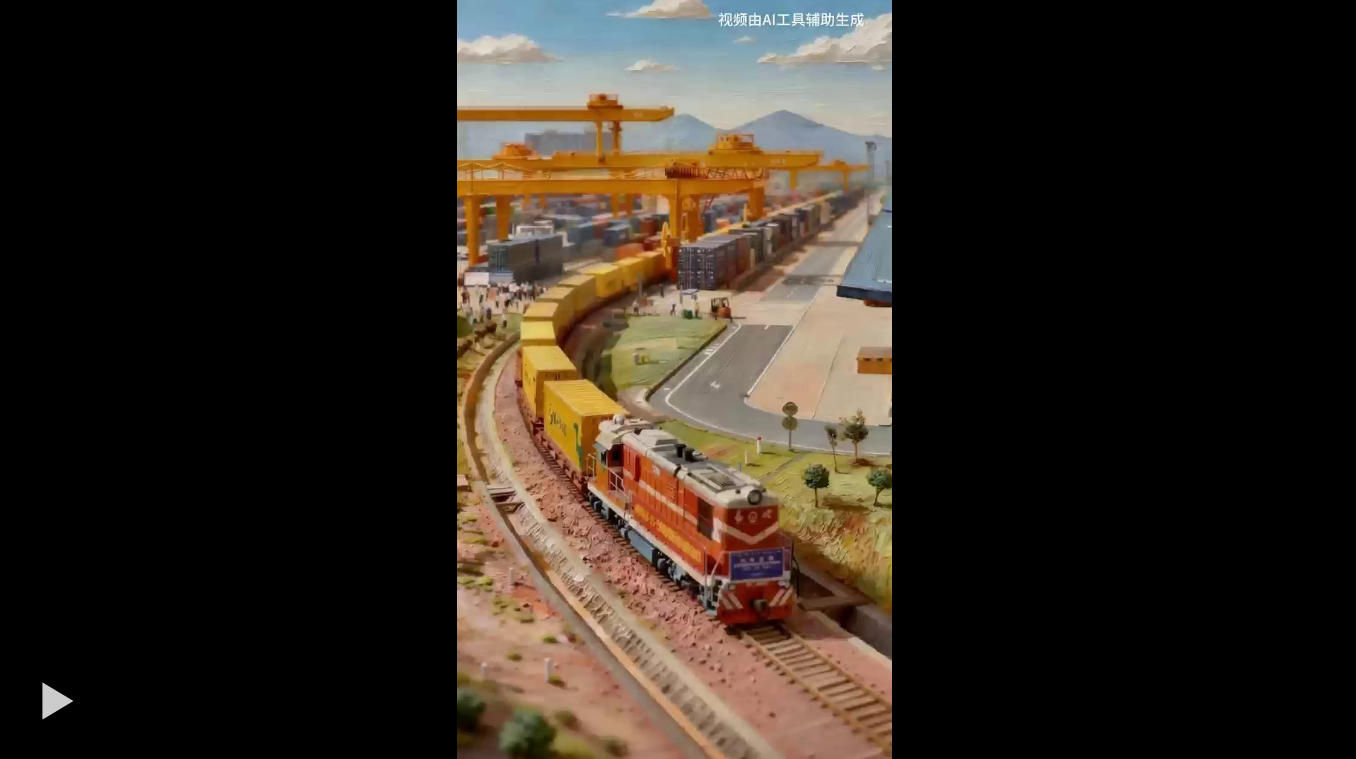
中欧班列(西安)“年货专列”折射向西开放“新图景”
Zhong Guo Xin Wen Wang· 2026-01-22 09:33
Group 1 - The core viewpoint of the articles highlights the significance of the China-Europe Railway Express in promoting trade and cooperation between China and Central Asia, showcasing a new pattern of openness towards the West [1][2][3] - The China-Europe Railway Express (Xi'an) has expanded from a single route to a network of 18 international trunk lines, covering major cargo sources in Eurasia, thus enhancing the openness of inland cities like Xi'an [1] - The "New Year Goods Special Train" reflects the growing cooperation and win-win practices, facilitating the entry of high-quality agricultural products from Central Asia into the Chinese market, while providing stable export channels for these countries [2] Group 2 - The unique advantages of the China-Europe Railway Express, being faster than sea transport and more economical than air transport, have made it a crucial player in stabilizing global industrial and supply chains [2] - The range of goods transported has expanded significantly, now including over 200 types across nine categories, such as new energy vehicles and photovoltaic products, indicating a diversification of trade [2] - The operation of the China-Europe Railway Express exemplifies China's high-quality development, with companies like Xi'an Aijiu Grain and Oil Industrial Group establishing cross-border industrial chains that benefit both domestic supply and foreign agricultural development [2]
又一轮自贸区“申建潮”,这个西北大省能否圆梦?
Mei Ri Jing Ji Xin Wen· 2026-01-12 13:13
Core Viewpoint - The recent surge in applications for Free Trade Zones (FTZs) in China, particularly in Gansu, highlights the strategic importance of these zones for regional development and economic growth, especially in the less developed northwest region [1][2]. Group 1: Gansu's FTZ Application - Gansu has proposed the establishment of the China (Gansu) Free Trade Experimental Zone, aiming to activate the Mazong Mountain Port [1]. - Currently, 22 provinces in China have approved FTZs, with Gansu being one of the nine provinces still seeking approval [1]. - Gansu's application for an FTZ dates back to 2015, coinciding with the second batch of FTZs being established [2]. Group 2: Challenges and Conditions - Gansu's delay in obtaining FTZ status is attributed to its relatively weak economic indicators, such as low foreign trade and investment figures compared to other provinces [3][4]. - The overall environment for FTZ approvals has tightened, with only Xinjiang receiving approval during the 14th Five-Year Plan period, indicating a cautious national strategy [5]. Group 3: Potential for Development - The recent Central Economic Work Conference signaled a potential easing of restrictions on FTZ expansions, which could benefit regions like Gansu [6]. - The strategic significance of the northwest region is emphasized, as it is rich in resources and could play a crucial role in national infrastructure and industrial development [7]. Group 4: Industrial Growth and Opportunities - Gansu has shown promising growth in its semiconductor industry, with production reaching 43.11 billion chips in the first half of 2025, marking an 18.53% increase year-on-year [10]. - The establishment of an FTZ could provide Gansu with policy advantages and innovative mechanisms to address its industrial development challenges [10]. - Other provinces like Inner Mongolia are also exploring industrial innovations, indicating a broader trend of potential growth in the region [10].
又一轮“申建潮”,这个西北大省能否圆梦?
Mei Ri Jing Ji Xin Wen· 2026-01-11 04:30
Core Viewpoint - The recent surge in applications for Free Trade Zones (FTZs) across various provinces in China, particularly in the northwest region, highlights the strategic importance of these zones for local economic development and integration into national and international trade networks [3][4]. Group 1: Free Trade Zone Applications - Gansu has announced plans to actively apply for the establishment of the China (Gansu) Free Trade Experimental Zone, aiming to open the Mazongshan Port [3]. - Currently, 22 provinces in China have approved FTZs, with Gansu being one of the nine provinces yet to receive approval, alongside Inner Mongolia, Shanxi, and Guizhou, which have also proposed FTZ applications [3][4]. - The development environment for FTZs has changed significantly over the past decade, raising questions about the potential benefits for provinces like Gansu that are now seeking FTZ status [3][4]. Group 2: Historical Context and Current Developments - Gansu's pursuit of an FTZ can be traced back to 2015, coinciding with the second batch of FTZs being established in China [4]. - Despite a long wait since the initial proposal, Gansu has remained persistent in its efforts, with recent developments indicating a renewed focus on establishing the FTZ [4][5]. - The overall environment for FTZ approvals has tightened, with only one new FTZ (Xinjiang) approved during the 14th Five-Year Plan period, indicating a cautious approach from the national government [5][6]. Group 3: Economic and Strategic Importance - The northwest region, particularly Gansu, is seen as having significant potential for FTZ development due to its strategic resources and geographical position [8][10]. - The establishment of new FTZs is expected to enhance the region's role in China's broader strategy for western development and international trade [8][10]. - The recent approval of the Xinjiang FTZ is viewed as a critical step in promoting western openness and integrating the region into global trade networks [8][9]. Group 4: Industry Development and Challenges - Gansu has shown remarkable growth in its semiconductor industry, with production reaching 43.11 billion chips in the first half of 2025, marking an 18.53% increase year-on-year [12]. - The semiconductor sector's growth is attributed to historical military investments and favorable environmental conditions, but challenges remain in terms of funding and technological advancement [12]. - The FTZ's establishment could provide essential policy support and innovative mechanisms to address these challenges and enhance industrial development in Gansu and other candidate provinces [12].
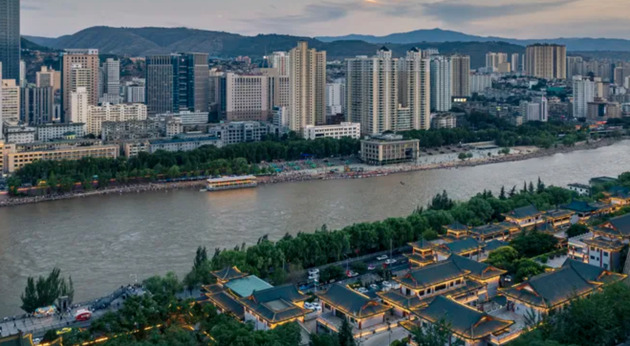
甘肃全力构建向西开放立体新通道
Xin Lang Cai Jing· 2026-01-05 19:46
Core Insights - Gansu's international logistics business has seen a strong start in 2026, with the first international freight train carrying 1,300 tons of high-quality coke departing for Central Asia [1] - Gansu (Wuwei) International Land Port is a key hub for the Belt and Road Initiative, having expanded its international logistics channels significantly since 2020 [1] Group 1: Gansu (Wuwei) International Land Port - The first international freight train of the year departed from Wuwei South Station, carrying 47 cars of coke to Uzbekistan, expected to arrive in 9 days [1] - The port has established a B-type bonded logistics center and opened six major international logistics channels, expanding from 4 to 11 direct international transport routes by 2025 [1] - Since the 14th Five-Year Plan, the port has dispatched over 100 international freight trains, with a total cargo volume of 110,000 tons and a total cargo value of 1.187 billion yuan, both achieving over 10% growth [1] Group 2: Gansu (Lanzhou) International Land Port - Gansu (Lanzhou) International Land Port is positioned as a national logistics hub and demonstration logistics park, with ongoing construction of modern logistics facilities [2] - The logistics park aims to handle 4 million tons of coal by 2025, generating 800 million yuan in revenue, focusing on the "Xinjiang coal export" strategy [2] Group 3: Cold Chain Logistics Development - The Lanzhou West Land-Sea New Corridor Cold Chain Logistics Park is under construction with a total investment of 1.198 billion yuan, expected to be operational by the end of the year [3] - The cold chain logistics will facilitate the rapid distribution of Southeast Asian fruits and coastal seafood to Northwest China, while also exporting local beef, lamb, and specialty agricultural products [3] Group 4: Trade Growth and Statistics - Gansu's foreign trade import and export volume is projected to exceed 700 billion yuan by 2025, having surpassed 500 billion yuan in 2023 and 600 billion yuan in 2024, with a consistent double-digit growth rate for 16 months [4] - The number of enterprises with import and export records in Gansu reached 994 by November 2025, an increase of 162 compared to the same period in 2024, indicating a growing presence of Gansu's agricultural and industrial products in international markets [3][4]
甘肃省委书记胡昌升:“十五五”时期跑出高质量发展“加速度”
Bei Jing Ri Bao Ke Hu Duan· 2025-12-14 23:36
Core Viewpoint - The 20th Central Committee's Fourth Plenary Session is a significant meeting that aims to plan for the "15th Five-Year Plan" while concluding the "14th Five-Year Plan," emphasizing high-quality development and modernization in Gansu [7][8][9]. Group 1: Strategic Planning and Goals - The session provides a strategic blueprint for China's economic and social development over the next five years, aligning with the goals set in the 20th National Congress [9][10]. - Gansu aims to achieve a GDP growth rate that exceeds the national average for 16 consecutive quarters, with a projected cumulative increase in per capita GDP of 36.1% [10]. - The "15th Five-Year Plan" outlines seven key areas for economic and social development, serving as a guiding framework for Gansu's future initiatives [12]. Group 2: Industrial and Technological Development - Gansu is focusing on building a modern industrial system, emphasizing advanced manufacturing and the optimization of traditional industries while fostering new strategic industries [15]. - The province aims to increase the proportion of industrial added value in GDP from 24.2% in 2020 to 27.1% by 2025, highlighting the importance of industrial growth [15]. - The contribution rate of technological progress in Gansu is expected to rise from 55.1% in 2020 to 62% by 2025, indicating a strong emphasis on innovation [16]. Group 3: Agricultural and Rural Development - The session stresses the importance of addressing agricultural issues and promoting rural development as a foundation for high-quality growth, with an expected annual increase in rural residents' disposable income of 7.7% [17][20]. - Gansu is developing a comprehensive agricultural system that integrates various sectors to enhance productivity and income for farmers [17]. Group 4: Environmental and Ecological Initiatives - Gansu is tasked with strengthening ecological security and promoting green development, with ongoing efforts to combat desertification and improve water quality in the Yellow River [21]. - The province aims to implement a series of ecological protection measures, including the establishment of natural reserves and pollution control initiatives [21]. Group 5: Social Welfare and Stability - The session emphasizes enhancing social welfare and addressing public concerns, with a commitment to maintaining a high level of public service investment [19][20]. - Gansu's initiatives include a focus on improving living standards and ensuring social stability through comprehensive safety and governance measures [22].
新时代 新征程 新图景(砥砺奋进七十载 天山南北谱华章)
Ren Min Ri Bao· 2025-09-23 00:38
Core Viewpoint - Xinjiang is emerging as a crucial hub for trade and development, showcasing significant economic growth and potential in various sectors, including agriculture, energy, and infrastructure [1][3][9]. Economic Development - Xinjiang's GDP is projected to reach 20,534.08 billion yuan in 2024, marking a significant increase from 7,499.47 billion yuan in 2012, with an average annual growth rate of 7.0% [3]. - The region's per capita GDP is expected to rise from 33,495 yuan in 2012 to 78,660 yuan in 2024, reflecting a growth of 1.3 times [3]. - The export of automobiles through the Horgos port reached 237,000 units from January to August this year, showing a year-on-year increase of 5.3% [2]. Infrastructure and Energy - The Dashi Gorge Water Conservancy Project, with a maximum dam height of 247 meters, is set to alleviate water shortages for over 8 million acres of farmland, providing 3.42 billion cubic meters of ecological water annually [4]. - The Xinjiang oilfield company is expected to achieve a historical milestone with a total oil and gas equivalent of 20 million tons this year, alongside the establishment of a national-level shale oil demonstration zone [3]. Agricultural Advancements - Xinjiang's irrigation area has expanded from 16.81 million acres at the founding of New China to 99.17 million acres in 2024, with grain yield per acre increasing to 524.8 kilograms, the highest in the country [5]. - The introduction of drip irrigation has reduced water usage by approximately 20%, significantly benefiting local farmers [5]. Social and Cultural Integration - Initiatives promoting ethnic unity and cultural exchange are being implemented, enhancing community ties among diverse ethnic groups in Xinjiang [7][8]. - The "One Family Like Pomegranate Seeds" campaign aims to strengthen the sense of community and shared identity among various ethnic groups [9].
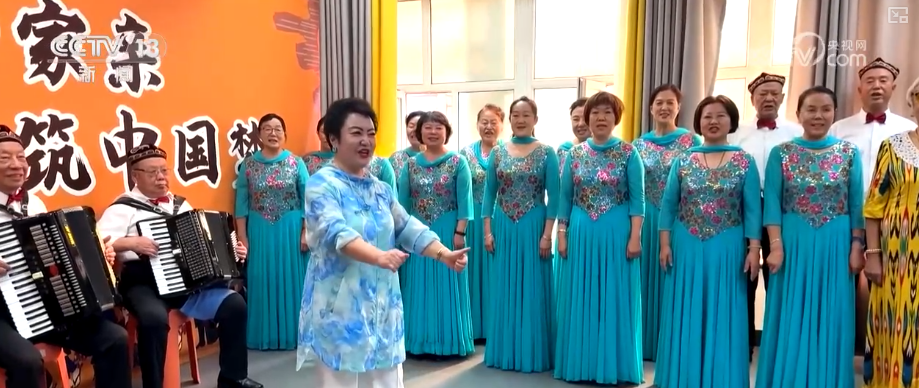
政策、区位、发展优势持续释放!五口通八国、一路连欧亚是新疆真实写照
Yang Shi Wang· 2025-09-20 03:49
Core Viewpoint - The white paper titled "Successful Practices of the Party's Governance Strategy in the New Era" emphasizes the importance of national unity and cultural integration in Xinjiang, highlighting its role as a significant gateway for China's westward opening and economic development [2][11]. Group 1: National Unity and Cultural Integration - Xinjiang has focused on strengthening the awareness of the Chinese national community, widely promoting the creation of national unity and progress [2]. - A total of 471 patriotic education bases, 101 national unity demonstration units, and 14 national unity education bases have been established in Xinjiang [3]. - The region is committed to deepening cultural integration, guided by socialist core values, and promoting a correct historical perspective among various ethnic groups [5]. Group 2: Ethnic Interaction and Community Development - Xinjiang has initiated various special actions to enhance the breadth and depth of interactions among different ethnic groups, including youth exchanges and integrated living arrangements [7]. - In communities like the Haerdun community in Tashkent City, over 30% of families are multi-ethnic, showcasing the region's commitment to ethnic unity [11]. Group 3: Economic Development and Trade - Xinjiang has become an important gateway for China's westward opening, benefiting from national policies and the development of the Silk Road Economic Belt [11]. - The region has implemented a series of preferential policies to stabilize foreign trade and has launched 129 reform pilot tasks in its free trade zone, with over 80 already in effect [12]. - In 2024, it is projected that 16,400 China-Europe (Asia) freight trains will pass through Xinjiang, maintaining a consistent volume of over 10,000 trains for five consecutive years [14].