
商业可持续

Search documents
对话中国农业大学教授何广文:普惠金融迈入提档升级新阶段,重视有效供给与商业可持续是关键
Xin Lang Cai Jing· 2025-12-18 02:31
Core Insights - The financial system plays a crucial role in stabilizing expectations, growth, and structure amid economic transformation and cyclical fluctuations. The focus is on how to navigate complex environments effectively [1][22]. Group 1: Development of Inclusive Finance - Inclusive finance has made significant progress in recent years, characterized by a multi-layered and widely covered supply system involving national and regional banks, non-bank institutions, and technology companies [3][25]. - The balance of loans for inclusive small and micro enterprises has increased from approximately 10 trillion yuan in 2016 to 36.5 trillion yuan by the third quarter of 2025, reflecting a tripling in ten years with an average annual growth rate of around 25% [4][26]. - Digital inclusive finance has achieved breakthroughs, with digital technologies reshaping service models and improving credit evaluation through digital footprints, enhancing service efficiency [5][27]. Group 2: Policy and Regulatory Framework - The policy framework for inclusive finance is becoming increasingly refined, with strategic guidance from various government initiatives and local innovations in practice [7][28]. - The shift from a quantity-oriented regulatory approach to a quality-oriented one is necessary to optimize the regulatory system and incentive mechanisms [1][38]. Group 3: Market Dynamics and Competition - Large commercial banks are gaining market share in the inclusive finance sector, leading to a decline in the market share of small and local banks, resulting in a reshaping of the traditional supply structure [8][29]. - The competitive pressure from large banks is prompting local financial institutions to innovate and deepen their inclusive finance services [30]. Group 4: Challenges and Opportunities - Despite the achievements, credit suppression remains a common issue, with many enterprises relying on informal lending to meet unmet credit needs [1][38]. - The need for a clear legal framework to regulate informal finance is emphasized, recognizing its role in the financial ecosystem while ensuring compliance and sustainability [40][41].
孙磊:理性普惠三大核心支柱 -《消费金融小札》连载
Sou Hu Cai Jing· 2025-12-11 06:50
Group 1: Core Concepts of Rational Inclusive Finance - Financial accessibility, commercial sustainability, and socially acceptable risk pricing are the three core pillars of rational inclusive finance, and their dynamic balance is key to the high-quality development of consumer finance [1][2] - Financial accessibility is the premise of rational inclusivity, focusing on enabling financial resources to reach groups with genuine needs, particularly small and micro enterprises and low-income populations, through digital technology [1] - Commercial sustainability is essential for rational inclusivity, as profitability is necessary for the continuity of inclusive finance; financial institutions must leverage technological innovation to reduce costs and improve efficiency while meeting public needs [1] Group 2: Risk Pricing and Balance - Socially acceptable risk pricing is the critical link in rational inclusivity, needing to cover risk costs while aligning with public expectations and regulatory requirements; a scientific pricing mechanism should be based on precise risk assessment [2] - The balance among accessibility, sustainability, and pricing is fundamentally about the collaboration of multiple interests, ensuring that financial services are both broad and stable while fulfilling social responsibilities [2] - To resolve the pricing dilemma, financial institutions must innovate to reduce operational costs, while policy frameworks should create a collaborative mechanism that combines fiscal support with market operations [2]

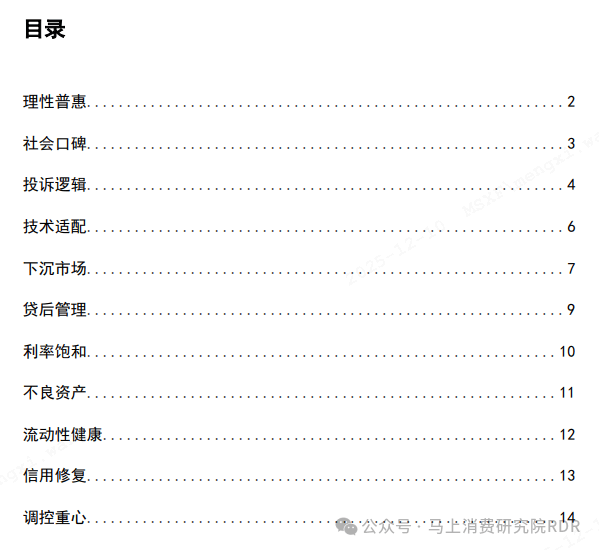
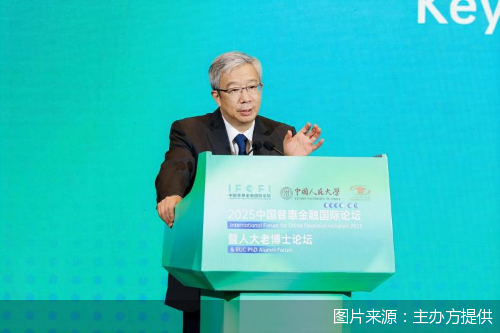
易纲:发展普惠金融应坚持商业可持续原则|宏观经济
清华金融评论· 2025-10-04 05:57
Core Viewpoint - The essence of inclusive finance is to adhere to commercial sustainability, which is crucial for mobilizing financial institutions and social capital to serve inclusive finance, particularly in supporting agriculture and small enterprises [2][6]. Group 1: Definition and Importance of Inclusive Finance - Inclusive finance refers to providing appropriate and effective financial services at affordable costs to all social strata and groups, focusing on daily financial services for the general public and supporting agriculture, small enterprises, and individual businesses in China [4]. - The practice of inclusive finance in China dates back to the 1930s, with significant developments in rural credit cooperatives and small loan experiments in the 1990s, culminating in the establishment of inclusive finance as a national strategy in 2013 [5]. Group 2: Commercial Sustainability - Commercial sustainability is essential for the continuous provision of quality financial services to inclusive clients, enabling financial institutions to innovate and develop better financial products [6]. - Financial institutions must adopt a "cost-covering, low-margin, high-volume" model to serve clients with limited financial capacity, ensuring that the business remains commercially sustainable [6]. Group 3: Government Support and Policy Mechanisms - Government support is vital for the development of inclusive finance, with policies such as fiscal subsidies and structural monetary policies designed to incentivize financial institutions to expand services to vulnerable groups [8]. - The People's Bank of China introduced tools during the COVID-19 pandemic to support small enterprises, providing incentives for banks to extend loan repayment periods and offering preferential interest rates for new loans [9]. Group 4: Market Mechanisms and Risk Management - The structural monetary policy aims to create effective incentive mechanisms that guide financial institutions to allocate resources to specific areas while maintaining market mechanisms to prevent moral hazards [10].

发展普惠金融应坚持商业可持续原则
Bei Jing Shang Bao· 2025-09-25 16:53
Core Viewpoint - The development of inclusive finance should adhere to the principle of commercial sustainability, providing affordable financial services to various social groups in China [1][2]. Group 1: Definition and Importance of Inclusive Finance - Inclusive finance aims to provide appropriate and effective financial services to all social strata based on equal opportunity and commercial sustainability [1]. - Key areas of focus include daily financial services for the general public, support for agriculture, small and micro enterprises, and individual businesses [1]. Group 2: Role of Financial Institutions - Financial institutions must play a fundamental role in resource allocation, emphasizing the importance of commercial sustainability to mobilize social capital for inclusive finance [2]. - A "cost-covering, low-profit, high-volume" model is necessary for financial institutions to serve clients with limited financial capacity [2]. Group 3: Government Support and Policy Mechanisms - Government policies should create incentive-compatible mechanisms to encourage market participation and support inclusive finance [3]. - Fiscal policies, such as interest subsidies and loan loss sharing mechanisms, are crucial for expanding financial services to vulnerable groups [3]. Group 4: Case Study of Policy Implementation - During the pandemic, the People's Bank of China introduced tools to support small and micro enterprises, providing incentives to local banks for extending loan repayments [4]. - From June 2020 to the end of 2021, these tools mobilized significant financial resources, with 217 billion yuan in incentives leading to 2.2 trillion yuan in extended loans [4]. Group 5: Overall Impact of Structural Monetary Policy - Structural monetary policy effectively guides financial institutions to allocate resources to specific areas while maintaining market mechanisms and preventing moral hazards [5].
易纲:商业可持续是发展普惠金融应坚持的基本原则
Bei Jing Shang Bao· 2025-09-25 08:00
Core Viewpoint - The development of inclusive finance should adhere to the principle of commercial sustainability, as emphasized by Yi Gang, the former governor of the People's Bank of China [1] Group 1: Definition and Importance of Inclusive Finance - Inclusive finance refers to providing appropriate and effective financial services to all social strata and groups at an affordable cost, based on the principles of equal opportunity and commercial sustainability [3] - Key areas of focus for inclusive finance in China include daily financial services for the general public, support for agriculture, rural areas, and small and micro enterprises [3] Group 2: Commercial Sustainability in Inclusive Finance - Financial institutions must adopt a "cost-covering, low-profit, high-volume" model to effectively manage credit distribution while ensuring commercial sustainability [4] - Government support policies should establish incentive-compatible mechanisms to encourage market participation and effectively allocate resources to the most needy areas [4] Group 3: Policy Support and Implementation - During the COVID-19 pandemic, the People's Bank of China introduced tools to support small and micro enterprises, providing incentives for local banks to extend loan repayments and offering preferential interest rates for credit loans [5][6] - From June 2020 to the end of 2021, the inclusive small and micro enterprise loan support tools provided 21.7 billion yuan in incentives, leading to a total of 22 trillion yuan in extended loans and over 10 trillion yuan in new credit loans [6]
定位之辨: 什么是农信的DNA?
Jin Rong Shi Bao· 2025-07-03 03:10
Core Viewpoint - The article emphasizes the unique positioning and mission of rural credit cooperatives (农信社) in China, highlighting their role in serving the "three rural issues" and small enterprises, distinct from traditional commercial banks [1][5]. Group 1: Historical Context and Current Positioning - Rural credit cooperatives have been operating for over 70 years, making them the only uninterrupted financial institution in New China, contributing significantly to the "three rural issues" [1]. - The central financial work conference in October 2023 stressed the importance of understanding the political and people-oriented nature of financial work, necessitating a deeper analysis of the positioning of rural credit cooperatives [1][6]. Group 2: Operational Resilience and Financial Health - A survey conducted by the National Financial Supervision Administration revealed that 189 quality institutions, including 162 rural cooperative institutions and 27 village banks, showed good operational conditions and resilience despite various pressures [2]. - As of September 2024, the surveyed institutions had total assets of 17 trillion yuan and loans amounting to 9.3 trillion yuan, with an average non-performing loan rate of 1.2% and a capital adequacy ratio of 15.2% [2]. Group 3: Mission and Sustainable Development - The article discusses the need for rural credit cooperatives to maintain their mission of serving the "three rural issues" and small enterprises, emphasizing the importance of resisting the urge to prioritize profit maximization [3][4]. - It is highlighted that commercial sustainability does not equate to profit maximization, and cooperative finance has proven to be more stable and sustainable compared to purely commercial financial entities [4]. Group 4: Governance and Future Direction - The article stresses that rural credit cooperatives should not be viewed as ordinary commercial banks and must adhere to their foundational principles, aligning with the central government's requirements for financial work [5][6]. - The focus should be on deepening local engagement, enhancing service quality, and solidifying their role as a primary force in supporting agriculture and small enterprises [6].