啤酒饮料化

Search documents
去年第四季度营收大增贡献“神助攻”,昔日“西北啤酒王”能否成功保壳?
Mei Ri Jing Ji Xin Wen· 2026-01-28 09:35
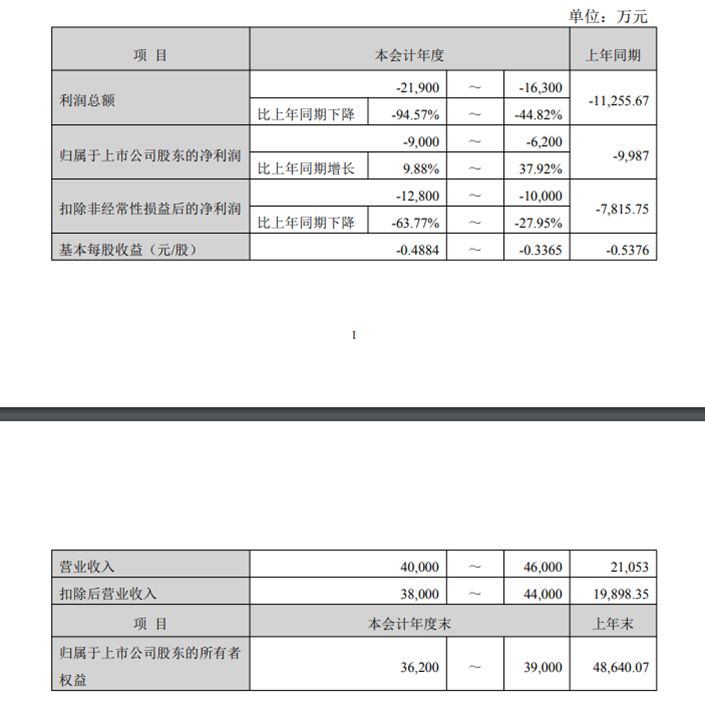
Core Viewpoint - *ST Lanhuang is at a critical juncture for "shell protection" as it faces the risk of being delisted if it fails to meet financial performance criteria in 2025, following three consecutive years of losses from 2022 to 2024 [1][5]. Financial Performance Summary - The company forecasts a revenue of 400 million to 460 million yuan for 2025, with a net profit attributable to shareholders expected to be between -62 million and -90 million yuan, indicating a year-on-year increase of 9.88% to 37.92% in losses [2][5]. - The expected revenue for 2025 represents a significant increase, with a projected doubling of revenue compared to previous years, driven by a strong performance in the fourth quarter [2][4]. - In the first three quarters of 2025, the company achieved approximately 219 million yuan in revenue, suggesting that the fourth quarter could see revenue between 181 million and 241 million yuan, reflecting a year-on-year increase of over 455% [3][4]. Industry Context - The fourth quarter is typically a low season for the beer industry, making the projected revenue growth for *ST Lanhuang particularly noteworthy [4]. - The company has been actively expanding its beer and beverage business beyond the Northwest region, increasing brand promotion and online sales, which has contributed to revenue growth despite rising sales expenses [4][7]. - The beverage sector has become increasingly competitive, with major players like Qingdao Beer and Yanjing Beer also entering the beverage market, making it a challenging environment for *ST Lanhuang's strategy of "beverage transformation" [7]. Historical Performance - From 2022 to 2024, the company's revenues were approximately 266 million, 241 million, and 211 million yuan, all below the 300 million yuan threshold, with cumulative losses of about 176 million yuan [5][6]. - The beverage business accounted for a relatively low percentage of total revenue during this period, with fluctuations in its contribution [7]. Strategic Moves - To counteract declining performance, *ST Lanhuang has made strategic investments in beverage companies, including the establishment of Lanzhou Yellow River (Chongqing) Beverage Co., Ltd. and acquiring a stake in Wuzhong Yiwang Juice Co., Ltd. [6][7].


果啤火了,他们都想成为年轻人的微醺首选
3 6 Ke· 2025-11-05 10:40
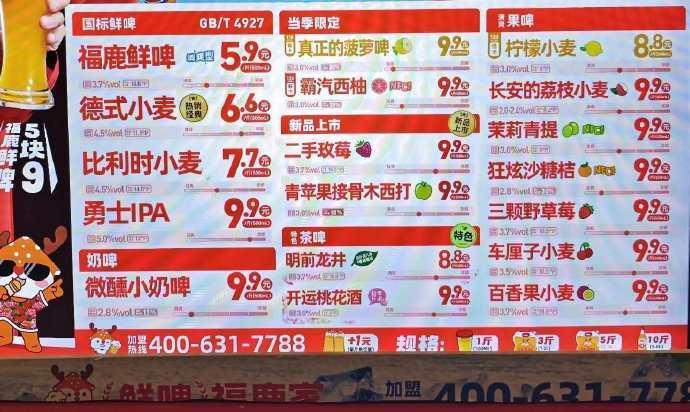
Core Insights - The investment by Xuewang in Fulu Family signifies a renewed interest in the craft beer and fruit-flavored beer market, which is gaining traction among younger consumers [1][2][20] - The acquisition involves Xuewang obtaining a 53% stake in Fulu Family for approximately RMB 297 million, expanding its portfolio into the fresh beer sector [2][3] - The trend of "light drinking" is becoming mainstream, with over 80% of young people preferring lighter alcoholic beverages, indicating a shift in consumer preferences [20][22] Market Dynamics - Fulu Family has become the leading brand in China for fresh beer chain stores by store count, highlighting the competitive landscape in this segment [3] - The entry of various brands into the fruit beer market, such as Guozi Shule and Xinling, reflects a broader trend of diversification and innovation in alcoholic beverages [5][15] - The fruit beer market is projected to grow significantly, with global market size expected to reach USD 318.6 billion by 2024 and approximately USD 435.7 billion by 2030, indicating a robust growth trajectory [18] Consumer Behavior - Young consumers are redefining their relationship with alcohol, focusing more on emotional experiences and taste rather than alcohol content [23][26] - The appeal of fruit beer lies in its ability to be consumed in various social settings, including daytime events, making it more accessible and relatable to younger audiences [24][25] - The pricing strategy for fruit beer, typically ranging from RMB 5 to 10 per can, positions it competitively against other non-alcoholic beverages, facilitating broader market penetration [25] Cultural Shift - The cultural narrative around drinking is shifting from "drinking to socialize" to "drinking for personal enjoyment," with fruit beer symbolizing a more relaxed and enjoyable drinking experience [26][27] - Fruit beer is becoming a symbol of a lifestyle that emphasizes relaxation and social media sharing, appealing to the younger demographic's desire for visually appealing and enjoyable products [27] Future Considerations - While fruit beer is positioned as an evolution of the previous "sweet liquor" trend, it benefits from a more stable production and supply chain, reducing the risk of rapid decline seen in past trends [28][29] - The increasing number of brands entering the fruit beer market may lead to potential homogenization, necessitating continuous innovation to maintain distinctiveness [28][29]

啤酒厂商忙活一年却“增利难增收”,饮料化能否成为“第二增长曲线”?
Mei Ri Jing Ji Xin Wen· 2025-05-06 10:00
Core Insights - The beer market is experiencing intensified competition as it enters a phase of stock competition, with contrasting performance driven by events like the European Cup and the Paris Olympics, alongside adverse weather and weak recovery in dining demand [1][3] - The overall beer industry remains highly fragmented, with major players like Budweiser APAC, China Resources Beer, Tsingtao Brewery, and Yanjing Beer generating over 150 billion yuan in total revenue, while smaller companies struggle with revenues below 1.3 billion yuan [1][3] Industry Performance - In 2024, the beer industry in China saw a 0.6% decline in production among large-scale enterprises, with industry revenue decreasing by 5.7%, marking it as the only category in the food and beverage sector to experience a revenue drop [3][8] - Major companies such as Budweiser APAC, Tsingtao Brewery, and China Resources Beer reported revenue declines of 8.8%, 5.3%, and 2.45% respectively, while Yanjing Beer and Zhujiang Beer managed to achieve revenue growth [3][10] Financial Results - Among the six major beer companies, Budweiser APAC, China Resources Beer, and Chongqing Beer all faced declines in both revenue and net profit, while Tsingtao Brewery saw a slight increase in net profit despite a revenue drop [5][6] - Yanjing Beer and Zhujiang Beer reported significant growth in both revenue and net profit, with Yanjing's net profit increasing by 63% [5][6] Q1 2025 Performance - In Q1 2025, major beer companies showed resilience with revenue and net profit growth, particularly Yanjing Beer, which achieved a net profit increase of over 60% [13][14] - Qingdao Beer led in revenue with approximately 10.446 billion yuan, while Zhujiang Beer had the highest revenue growth rate at 10.69% [14][16] Market Trends - The beer market is shifting towards high-end products, with companies focusing on premium offerings to attract consumers [15][17] - Yanjing Beer has launched new beverage products, indicating a strategic move towards diversification and tapping into the beverage market [17][18] - Qingdao Beer is also exploring beverage integration through its strategic merger with Qingdao Beverage Group, enhancing its product offerings and market reach [19]