
国家级零碳园区

Search documents
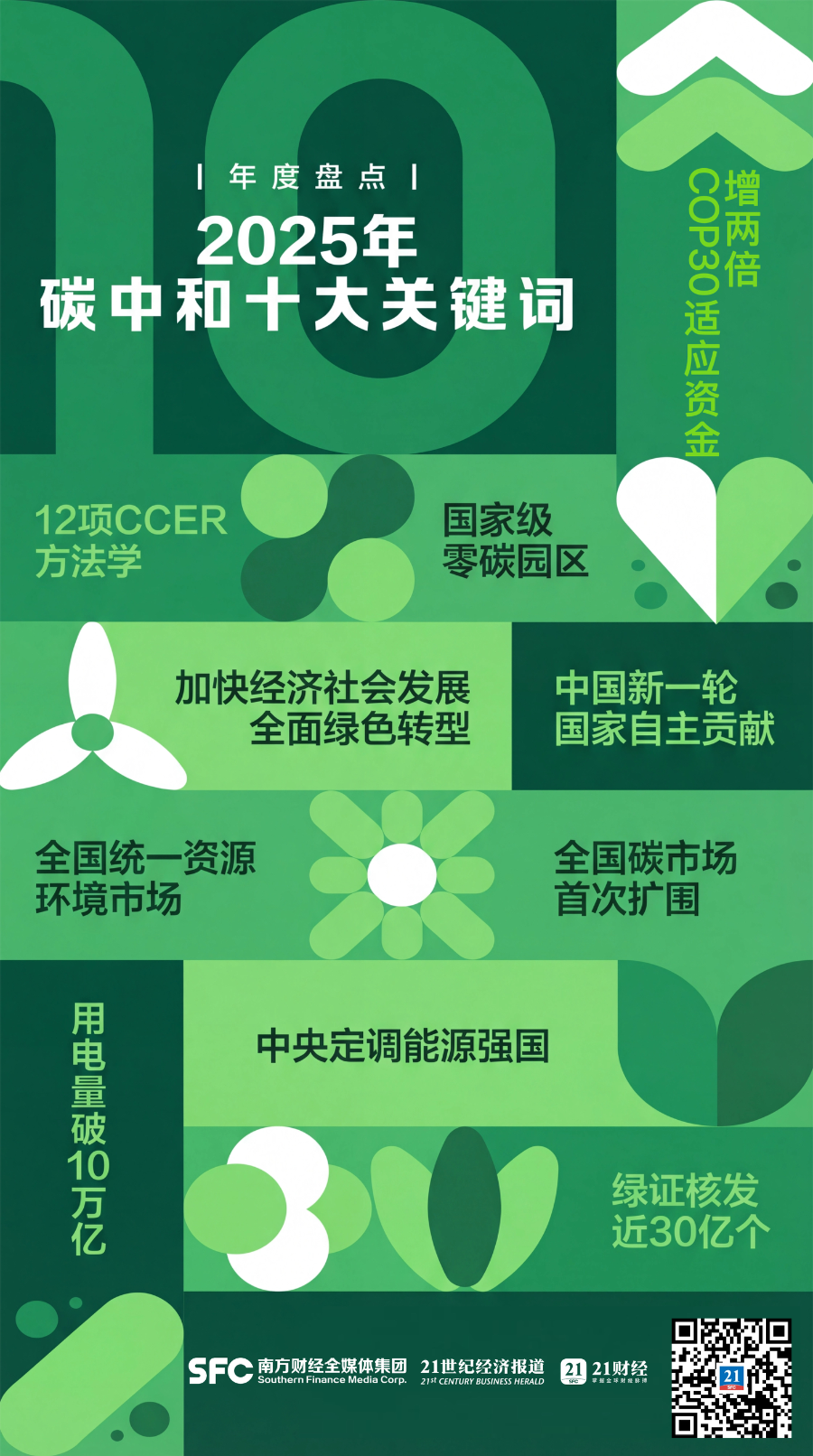
能源强国、新NDC……速览2025年碳中和十大关键词
2 1 Shi Ji Jing Ji Bao Dao· 2026-01-28 09:49
Group 1 - The core viewpoint of the articles emphasizes China's commitment to accelerating a comprehensive green transformation in its economy and society, with a focus on achieving carbon neutrality by 2035 [1][4][5] - The 20th Central Committee of the Communist Party of China has set "accelerating comprehensive green transformation" as a core task for the 14th Five-Year Plan, highlighting the importance of ecological security and green development [4][5] - Key mechanisms for carbon neutrality have made significant progress, including the expansion of the national carbon market to cover steel, cement, and aluminum industries, and the establishment of national zero-carbon parks [1][6][11][13] Group 2 - China's new round of Nationally Determined Contributions (NDC) aims for a 7%-10% reduction in greenhouse gas emissions by 2035, with non-fossil energy consumption reaching over 30% of total energy consumption [6][10] - The national unified resource and environmental market is being developed to enhance market efficiency and promote the marketization of resource and environmental factors [7][8] - The total electricity consumption in China surpassed 10 trillion kilowatt-hours in 2025, marking a significant milestone and reflecting the resilience and vitality of the economy [9][10] Group 3 - The energy power strategy emphasizes energy security, green transformation, and technological self-reliance, with a focus on seven key tasks for energy work in 2026 [10][11] - The first batch of national zero-carbon parks has been established, with 52 parks across various regions, focusing on low-energy, low-pollution, and high-value-added industries [11][12] - The national carbon market has expanded to include three major high-energy-consuming industries, significantly increasing the coverage of carbon emissions [13][15] Group 4 - The issuance of green certificates reached nearly 3 billion in 2025, with international recognition from the RE100 initiative, enhancing the credibility and market demand for Chinese green certificates [16][17] - Twelve new CCER methodologies were implemented in 2025, focusing on key areas for voluntary emission reductions, which is expected to activate the voluntary carbon market [18][19] - The COP30 conference resulted in a commitment from wealthy nations to double funding for climate change adaptation by 2035, although the omission of fossil fuel references in the final text raised concerns [20][21]

公用事业行业跟踪周报:重视商业航天特燃特气价值长期提升,国家级零碳园区建设名单公布-20260105
Soochow Securities· 2026-01-05 10:20
Investment Rating - The report maintains an "Accumulate" rating for the public utility sector [1] Core Insights - The report emphasizes the long-term value enhancement of special fuels and gases in commercial aerospace, recommending Jiufeng Energy as a key investment opportunity. The company has made significant progress in supplying special fuels and gases for the Hainan commercial aerospace launch site, with production starting in 2025 and multiple successful launches already supported [4] - The first batch of national-level zero-carbon park construction lists has been published, involving 52 parks, with guidelines for energy supply optimization and infrastructure planning to meet zero-carbon goals [4] Industry Data Tracking - **Electricity Price**: The average national grid purchase price in November 2025 decreased by 2% year-on-year but increased by 2.8% month-on-month [4][38] - **Coal Price**: As of December 31, 2025, the price of thermal coal at Qinhuangdao port was 678 RMB/ton, down 11.37% year-on-year and 0.44% week-on-week [4][46] - **Water Conditions**: The water level at the Three Gorges Reservoir was 170.59 meters as of December 31, 2025, with inflow and outflow rates showing a year-on-year decrease of 27% and 5.3%, respectively [4][53] - **Electricity Consumption**: Total electricity consumption from January to November 2025 was 9.46 trillion kWh, reflecting a year-on-year increase of 5.2% [4][13] - **Power Generation**: Cumulative power generation from January to November 2025 was 8.86 trillion kWh, with a year-on-year increase of 2.4% [4][23] - **Installed Capacity**: As of November 30, 2025, the cumulative installed capacity of thermal power reached 1.52 billion kW, with a year-on-year increase of 5.9% [4][48] Investment Recommendations - **Green Power**: Focus on companies like Longyuan Power, Zhongmin Energy, and Sanxia Energy, with a strong recommendation for Longjing Environmental Protection [4] - **Thermal Power**: Explore the reliability and flexibility value of thermal power, with attention to Huaneng International and Huadian International [4] - **Hydropower**: Recommend Changjiang Power due to low costs and strong cash flow [4] - **Nuclear Power**: Highlight China Nuclear Power and China General Nuclear Power as key growth opportunities [4] - **Solar Assets and Charging Stations**: Suggest companies like Southern Power Grid Energy and Longxin Group for potential value reassessment [4]
从入选到建成有多远?刘翠玲:国家级零碳园区技术、资金仍待解
2 1 Shi Ji Jing Ji Bao Dao· 2025-12-29 10:22
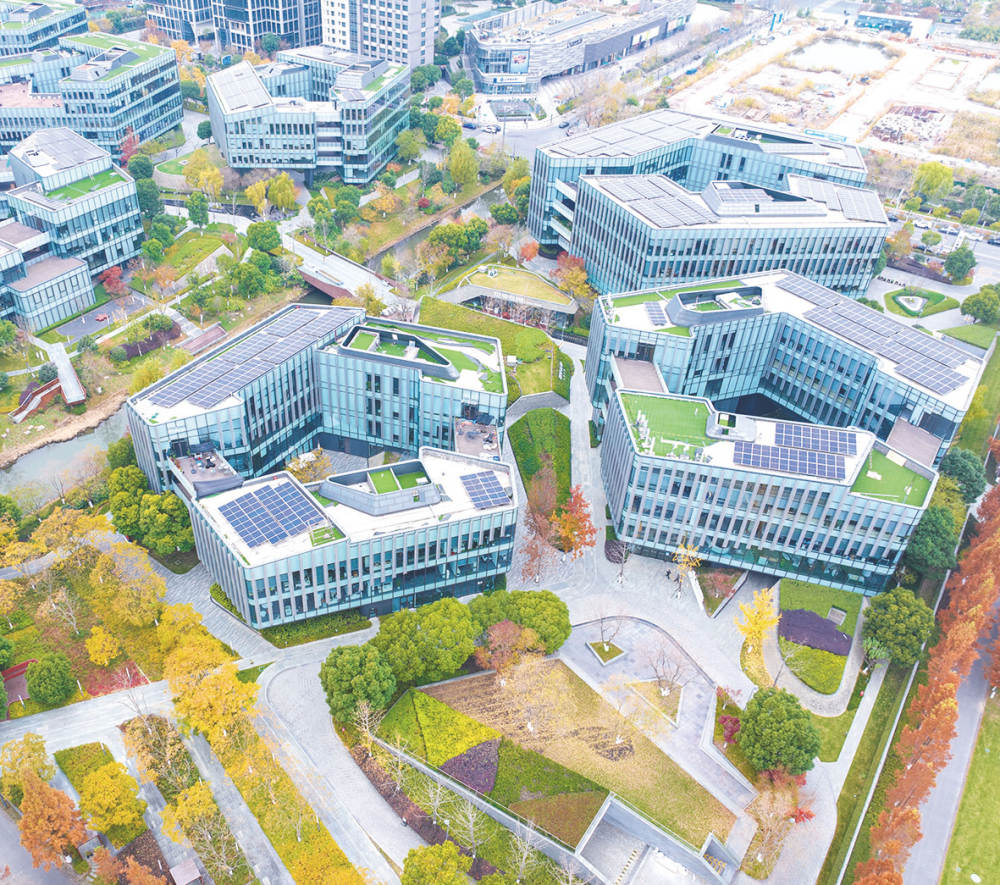
Core Insights - The first batch of national-level zero-carbon parks has been announced, including 52 parks across all 31 provinces, autonomous regions, and municipalities, with construction periods set between 2025 and 2030 [1][2] - The parks focus on low-energy, low-pollution, and high-value-added industries, primarily in new energy equipment manufacturing, advanced equipment manufacturing, and green computing [1][2] Industry Characteristics - The selected parks emphasize a "green production" approach, aligning industrial development with clean energy consumption capabilities, creating a virtuous cycle of "green drives production, production promotes green" [2] - Energy utilization models will rely on local renewable resources, with a target of at least 50% of the parks' electricity coming from green power [2] Technological and Financial Challenges - The construction of zero-carbon parks faces challenges in technology integration, funding balance, policy coordination, and stable operation [8][10] - A significant upfront investment is required, with costs varying widely based on park type, location, and industry focus, potentially ranging from tens of billions to hundreds of billions [12] Positive Effects on Industry - Zero-carbon parks can lead to cost reductions of 20-30% in electricity costs, enhancing profitability and market competitiveness [5] - Support from national and local governments through funding, special bonds, and credit will alleviate financial pressures on companies transitioning to green operations [5] - The initiative encourages innovation in green technologies, improving core technological competitiveness and creating green technology barriers [5][6] Key Performance Indicators - The parks will operate under a "1 core indicator + 5 guiding indicators" framework, focusing on reducing carbon emissions per unit of energy consumption to one-tenth of the current average [7] - The guiding indicators will support the core goal by addressing energy supply, industrial consumption, and resource recycling [7]
首批52个国家级零碳园区名单正式公布
Zhong Guo Jing Ying Bao· 2025-12-26 07:31
Core Viewpoint - The National Development and Reform Commission, the Ministry of Industry and Information Technology, and the National Energy Administration have jointly issued a notice regarding the first batch of national-level zero-carbon parks, with 52 parks selected for development [1] Group 1: Overview of Selected Parks - Among the 52 national-level zero-carbon parks, 15 parks, including Beijing Economic-Technological Development Area, are required to be completed between 2025 and 2028 [1] - Six parks, such as Cangdong Economic Development Zone in Cangzhou, Hebei, are to be completed between 2025 and 2027 [1] - Another six parks, including Siping New Industrialization Economic Development Zone in Jilin, are set for completion between 2025 and 2029 [1] - The remaining 25 parks, including Tianjin Economic-Technological Development Area, are expected to be completed between 2025 and 2030 [1] Group 2: Responsibilities and Support - The notice emphasizes that these parks will serve as demonstration models for national-level zero-carbon parks, with plans to promote successful practices nationwide [1] - Local governments and relevant units are tasked with the primary responsibility for constructing these parks, ensuring compliance with national zero-carbon indicators [1] - Support will be provided in terms of funding, resource allocation, technical assistance, and financial services to facilitate the implementation of green electricity supply models in these parks [1]
关于印发《国家级零碳园区建设名单(第一批)》的通知
国家能源局· 2025-12-26 05:14
Core Viewpoint - The article announces the first batch of national-level zero-carbon park construction, which includes 52 parks, emphasizing the importance of local government support and responsibility in achieving zero-carbon goals [2][3]. Group 1: National-Level Zero-Carbon Parks - A total of 52 parks have been included in the first batch of national-level zero-carbon park construction [2]. - Local development and reform commissions, along with relevant departments, are tasked with guiding and supervising the construction of these parks [3]. - The parks are required to develop construction plans that align with national zero-carbon indicators, optimize energy supply and consumption, and establish infrastructure projects [2][3]. Group 2: Support and Innovation - Local authorities are encouraged to provide necessary support in terms of funding, resources, technical assistance, and financial services for the construction of zero-carbon parks [3]. - The article promotes the implementation of green electricity supply models, such as direct connections for renewable energy and nearby access to distribution networks [3]. - Parks are encouraged to innovate in technology, policy, and business models tailored to local conditions [3]. Group 3: Progress Tracking and Experience Sharing - Local development and reform commissions are responsible for tracking the progress of zero-carbon park construction and organizing evaluations for those meeting national standards [3]. - Successful parks will be formally recognized as national-level zero-carbon parks after passing evaluations [3]. - The article emphasizes the importance of summarizing experiences and promoting best practices from these parks to facilitate low-carbon transformations in other regions [3].

每日市场观察-20250804
Caida Securities· 2025-08-04 03:12
Market Overview - On August 1, the market experienced fluctuations with the three major indices slightly declining, and the total trading volume in the Shanghai and Shenzhen markets was 1.60 trillion CNY, a decrease of 337.7 billion CNY compared to the previous trading day[2] - The Shanghai Composite Index saw a net outflow of 2.381 billion CNY, while the Shenzhen Composite Index had a net inflow of 2.675 billion CNY[4] Sector Performance - The sectors with the highest net inflows were photovoltaic equipment, traditional Chinese medicine, and logistics, while the sectors with the highest net outflows included semiconductors, components, and ground weaponry[4] - The pharmaceutical and education sectors showed resistance but did not exhibit complete trends, indicating potential areas for continued observation[1] Economic Policy Insights - The National Development and Reform Commission (NDRC) announced that the 800 billion CNY list of "two heavy" construction projects has been fully allocated, and 735 billion CNY of central budget investment has been largely distributed[5] - The NDRC plans to implement a "AI+" initiative to enhance the application of artificial intelligence, indicating a focus on technological advancement[5] Long-term Investment Directions - Long-term investment opportunities are expected to be centered around industries supported by national policies, particularly in new energy and computing power sectors[1] - The NDRC is also working on establishing a list of national-level zero-carbon parks, which may present future investment opportunities[5] Fund Dynamics - The second batch of floating fee funds is set to launch, with three products scheduled for issuance on August 4, including a medical innovation fund with a fundraising cap of 3 billion CNY[12] - The number of private equity securities investment funds from insurance companies has increased to six, indicating a growing trend of long-term capital inflow into the market[13]