国际储备货币体系多极化

Search documents
管涛:国际储备货币体系加速多极化|国际
清华金融评论· 2025-10-26 09:36
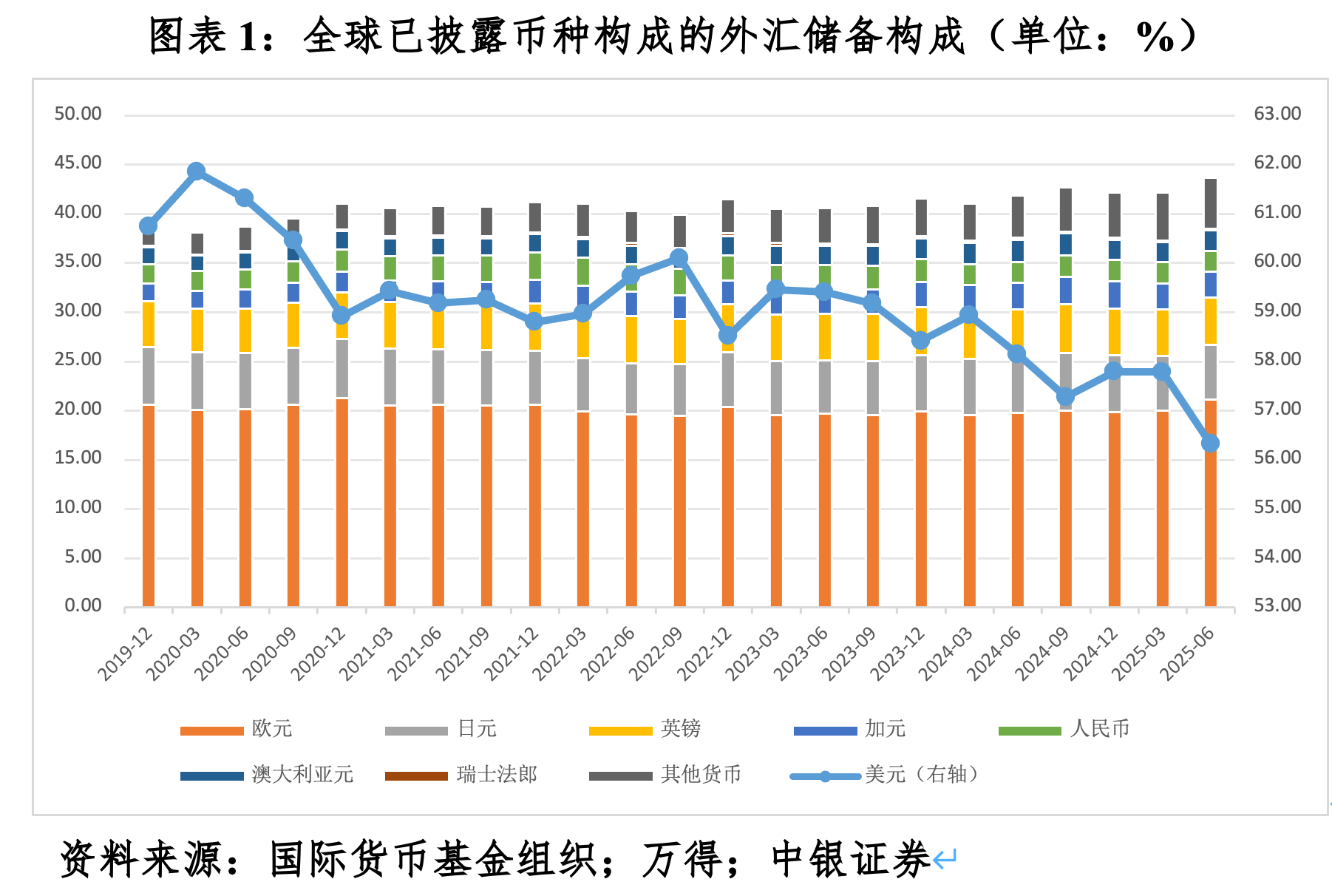
Core Viewpoint - The article discusses the decline of the US dollar's share in global foreign exchange reserves, highlighting a trend towards a multipolar international reserve currency system, with the dollar's share dropping to a 30-year low of 56.32% as of the second quarter of this year [1][11]. Group 1: Dollar Reserve Share Dynamics - As of the end of Q2, the dollar's share of global foreign exchange reserves fell from 57.79% to 56.32%, a decrease of 1.47 percentage points, marking the 11th consecutive quarter below 60% [1]. - The decline in the dollar's share is attributed to a 7.1% depreciation of the dollar index during the same period, indicating a negative valuation effect [1][3]. - The IMF's article on the same day emphasized that the dollar's reserve share remained stable when adjusted for exchange rates, suggesting that the decline was primarily due to valuation losses rather than a fundamental shift in reserve preferences [3]. Group 2: Euro and Other Currencies - The euro's reserve share increased from 20% to 21.13%, a rise of 1.13 percentage points, but this was largely due to a 9% appreciation against the dollar, which masked a potential decline in its reserve share if exchange rates had remained stable [3][4]. - The article argues that the focus on exchange rate effects overlooks the positive impact of asset price revaluation on the dollar's reserve share [4]. Group 3: US Long-term Securities and Foreign Holdings - As of June, foreign official holdings of US long-term securities (excluding international organizations) amounted to $67,395 billion, closely aligning with the IMF's reported global dollar reserves of $67,733 billion [4]. - The TIC report indicates that foreign official investors held $38,191 billion in US Treasury securities, $5,078 billion in agency debt, $2,185 billion in corporate bonds, and $21,941 billion in US equities, with equities representing over 30% of total holdings [4]. Group 4: Market Trends and Investment Behavior - The US stock market experienced significant volatility, with a 4.8% decline in Q1 followed by an 11% rebound in Q2, impacting the valuation of US equities held by foreign officials [6]. - In Q1, foreign official holdings recorded a valuation loss of $197 billion, while Q2 saw a valuation gain of $2,152 billion, indicating the substantial influence of market fluctuations on reserve valuations [6][8]. - In Q2, net purchases of US long-term securities by foreign officials fell to $51 billion, a 94.4% decrease from the previous quarter, highlighting a shift in investment strategy towards equities and away from safer assets like US Treasuries [8]. Group 5: Trends in Global Reserve Currency System - The article notes a continuing trend towards the diversification of the international reserve currency system, often associated with "de-dollarization," which refers to reducing reliance on the dollar in international trade and finance [12][20]. - Despite the decline in the dollar's share, the article suggests that the dollar's dominance remains resilient, as evidenced by its continued high percentage in global foreign exchange transactions [21].


管涛:国际储备货币体系加速多极化 | 立方大家谈
Sou Hu Cai Jing· 2025-10-19 13:03
Core Viewpoint - The International Monetary Fund (IMF) has reported a decline in the dollar's share of global foreign exchange reserves, indicating a trend towards a more multipolar international reserve currency system, with the dollar's share falling to a 30-year low of 56.32% as of the end of Q2 [1][11]. Group 1: Dollar Reserve Share Decline - The dollar's share of global foreign exchange reserves decreased from 57.79% to 56.32%, a drop of 1.47 percentage points, marking the 11th consecutive quarter below 60% [1]. - The decline is attributed to a 7.1% depreciation of the dollar index during the same quarter, which contributed to a negative valuation effect [1][2]. - If exchange rates remained stable, the dollar's reserve share would have only slightly decreased to 57.67%, a drop of 0.13 percentage points [2]. Group 2: Euro's Performance - The euro's reserve share increased from 20% to 21.13%, a rise of 1.13 percentage points, but this was largely due to a 9% appreciation against the dollar, which masked the actual change in reserve share [2]. - Without the exchange rate effect, the euro's reserve share would have decreased by 0.04 percentage points to 19.96% [2]. Group 3: U.S. Long-term Securities Holdings - As of June, official foreign assets (excluding international organizations) held $67,395 billion in U.S. long-term securities, closely aligning with the IMF's reported global dollar reserve balance of $67,733 billion [5]. - The breakdown of these holdings includes $38,191 billion in U.S. Treasury securities (56.7%), $5,078 billion in government agency debt (7.5%), $2,185 billion in corporate bonds (3.2%), and $21,941 billion in U.S. equities (32.6%) [5]. Group 4: Market Dynamics and Valuation Effects - The U.S. stock market experienced significant volatility, with a 4.8% decline in Q1 followed by an 11% rebound in Q2, impacting the valuation of U.S. equities held as dollar reserves [8]. - In Q1, official foreign assets recorded a valuation loss of $19.7 billion, while in Q2, they saw a valuation gain of $2,152 billion, indicating a strong influence of asset price fluctuations on reserve valuations [8]. Group 5: Trends in International Capital Flows - In Q2, official foreign assets net purchased $51 billion in U.S. long-term securities, a 94.4% decrease from the previous quarter, highlighting a shift in investment strategy [9]. - The net buying of U.S. equities increased to $237 billion, while U.S. Treasury securities saw a net selling of $66 billion, indicating a preference for riskier assets over safe-haven investments [9]. Group 6: Global Reserve Currency Dynamics - The trend towards a multipolar currency system is linked to the concept of "de-dollarization," which involves reducing reliance on the dollar in international trade and finance [11]. - Despite the decline in the dollar's reserve share, it remains dominant in global foreign exchange transactions, accounting for 89.2% of daily trading volume as of April [19].
管涛:国际储备货币体系加速多极化
Di Yi Cai Jing· 2025-10-19 12:02
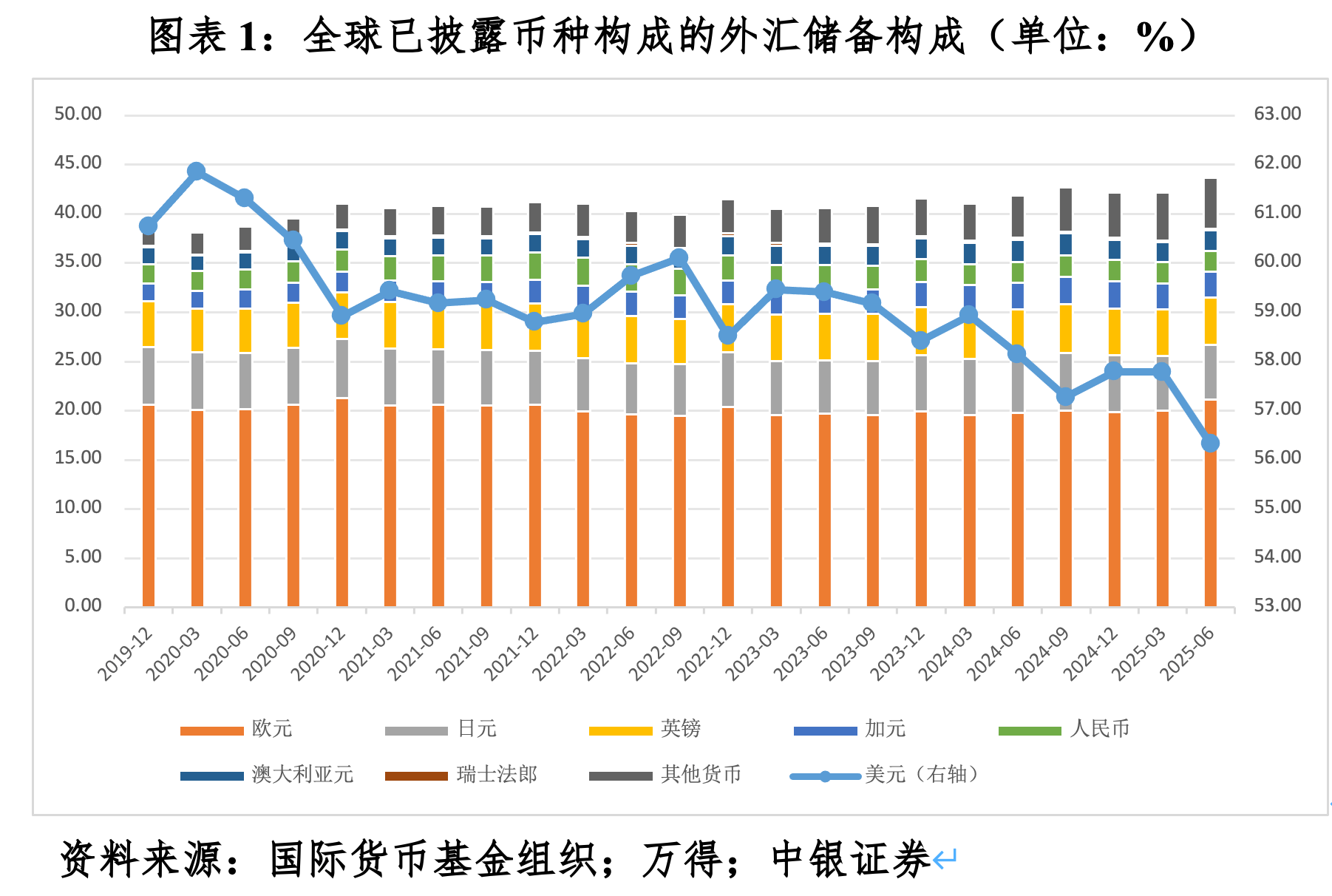
Core Viewpoint - The global monetary system is experiencing a trend towards diversification, but the dominance of the US dollar remains significant, and the narrative of "de-dollarization" should not be overstated [1][11][19] Group 1: Dollar Reserve Share - As of the end of Q2, the dollar's share of global foreign exchange reserves fell from 57.79% to 56.32%, marking a 1.47 percentage point decline and reaching a 30-year low [1] - The decline in the dollar's reserve share is primarily attributed to a 7.1% depreciation of the dollar index during the same period, which had a negative valuation effect [2][11] - If exchange rates remained stable, the dollar's reserve share would have only slightly decreased to 57.67%, indicating that the valuation effect significantly influenced the reported decline [2] Group 2: Euro and Other Currencies - The euro's reserve share increased from 20% to 21.13%, a rise of 1.13 percentage points, but this was largely due to a 9% appreciation against the dollar, which masked the actual change in reserve share [2][4] - The overall trend indicates a gradual shift towards a more multipolar currency reserve system, with the euro and other currencies gaining ground [11][19] Group 3: US Treasury Securities and Foreign Holdings - As of June, foreign official holdings of US long-term securities amounted to $67,395 billion, closely aligning with the IMF's reported global dollar reserve balance of $67,733 billion [5] - The breakdown of these holdings includes $38,191 billion in US Treasury bonds (56.7%), $5,078 billion in government agency bonds (7.5%), and $21,941 billion in US corporate stocks (32.6%) [5][10] - In Q2, foreign official net purchases of US long-term securities fell to $51 billion, a 94.4% decrease from the previous quarter, indicating a shift in investment strategy [9] Group 4: Gold Reserves and Asset Diversification - The global official gold reserves reached $38,642 billion, surpassing the value of US Treasury holdings for the first time, reflecting a growing interest in gold as a reserve asset [16] - The share of gold in global reserves has increased, while the dollar's share has decreased, suggesting a diversification of reserve assets among central banks [16][18] Group 5: International Capital Flows - The TIC report indicates that the net inflow of international capital into the US has significantly increased, with a year-to-date net inflow of $7,882 billion, a 142% increase year-on-year [12][15] - Despite the increase in private investment, official foreign capital inflows have decreased by 39.5%, highlighting a potential decline in the dollar's reserve currency status [15]