垂直整合策略

Search documents
内存价格“涨疯”背后:智能汽车被AI“卡脖子”
Feng Huang Wang· 2026-01-19 02:26
Core Insights - The automotive industry is facing a significant crisis due to rising costs and supply shortages, particularly in memory chips, which are becoming critical hardware for smart vehicles [2][4][5] - The competition for memory resources is intensifying as the automotive sector competes with AI and consumer electronics giants, impacting the speed and structure of China's automotive industry's smart transformation [1][4] Cost Pressures - The automotive industry is experiencing a crisis characterized by soaring prices and supply shortages, with memory chip prices significantly affecting manufacturing costs [2][5] - The demand for memory in high-end smart vehicles has surged, with storage requirements increasing from several GB to 64GB or even 256GB, pushing costs higher [2][4] - The global DRAM market has entered a "super bull market," with some high-end products seeing price increases of several times within a year, potentially adding thousands of yuan to the cost of each vehicle [2][3] Supply Chain Challenges - The automotive sector is at a disadvantage in the allocation of memory chip production capacity, as AI industries demand high-bandwidth memory and server-grade DDR5, leading to a structural shortage [2][4] - Predictions indicate that memory chip supply satisfaction rates may fall below 50%, posing risks of both high costs and unavailability for automakers [3][4] Competitive Landscape - The memory crisis is reshaping the competitive dynamics within the automotive industry, with larger companies better positioned to absorb costs and secure supplies compared to smaller firms [6][7] - Companies focusing on smart driving systems, which require significant memory resources, are under the most pressure, potentially leading to hidden price adjustments or conservative promotional strategies [6][7] Strategic Responses - To navigate the crisis, the automotive industry must proactively seek solutions, such as signing long-term supply agreements and accelerating the validation of domestic memory chip production [8][9] - The crisis may prompt a shift in competitive focus from hardware specifications to the optimization of software and algorithms, emphasizing the need for deeper integration of hardware and software [8][9] Long-term Implications - The memory price surge reflects a broader clash between the automotive sector and global technology trends, serving as a pressure test for companies to adapt and innovate [9] - Successful navigation of this crisis could lead to enhanced market share and a more resilient competitive stance within the complex global supply chain [9]
一文读懂谷歌TPU:Meta投怀送抱、英伟达暴跌,都跟这颗“自救芯片”有关
3 6 Ke· 2025-11-27 02:39
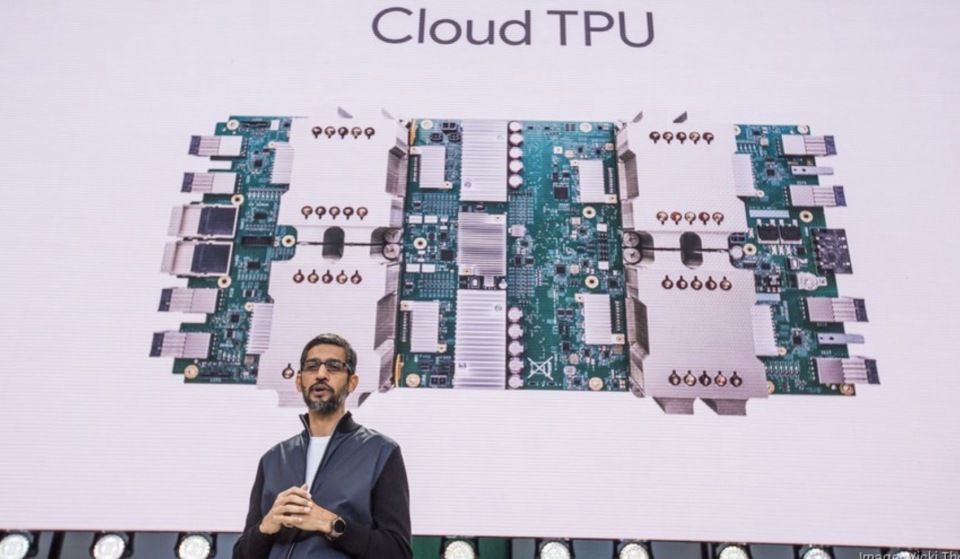
Core Insights - Alphabet's CEO Sundar Pichai faces declining stock prices, prompting Nvidia to assert its industry leadership, emphasizing the superiority of GPUs over Google's TPU technology [2] - Berkshire Hathaway's investment in Alphabet marks a significant shift, coinciding with Meta's consideration of deploying Google's TPU in its data centers by 2027 [2] - Google continues to collaborate with Nvidia, highlighting its commitment to supporting both TPU and Nvidia's GPU technologies [2] TPU Development History - The TPU project was initiated in 2015 to address the unsustainable power consumption of Google's data centers due to the increasing application of deep learning [3] - TPU v1 was launched in 2016, proving the feasibility of ASIC solutions for Google's core services [4] - Subsequent versions (v2, v3) were commercialized, with TPU v4 introducing a supernode architecture that significantly enhanced performance [5][6] Transition to Commercialization - TPU v5p marked a turning point, entering Google's revenue-generating products and doubling performance compared to v4 [6][7] - The upcoming TPU v6 focuses on inference, aiming to become the most cost-effective commercial engine in the inference era, with a 67% efficiency improvement over its predecessor [7][8] Competitive Landscape - Google, Nvidia, and Amazon are at a crossroads in the AI chip market, each pursuing different strategies: Nvidia focuses on GPU versatility, Google on specialized TPU efficiency, and Amazon on cost reduction through proprietary chips [19][20][22] - Google's TPU strategy emphasizes vertical integration and system-level optimization, contrasting with Nvidia's general-purpose GPU approach [21][22] Cost Advantages - Google's vertical integration allows it to avoid the "CUDA tax," significantly reducing operational costs compared to competitors reliant on Nvidia GPUs [26][27] - The TPU service enables Google to offer lower-priced inference capabilities, attracting businesses to its cloud platform [27][28] Strategic Importance of TPU - TPU has evolved from an experimental project to a critical component of Google's AI infrastructure, contributing to a significant increase in cloud revenue, which reached $44 billion annually [30][31] - Google's comprehensive AI solutions, including model training and monitoring, position it favorably against AWS and Azure, enhancing its competitive edge in the AI market [32]



马斯克再出手,又一百年行业将被颠覆!
Xin Lang Cai Jing· 2025-09-11 16:23
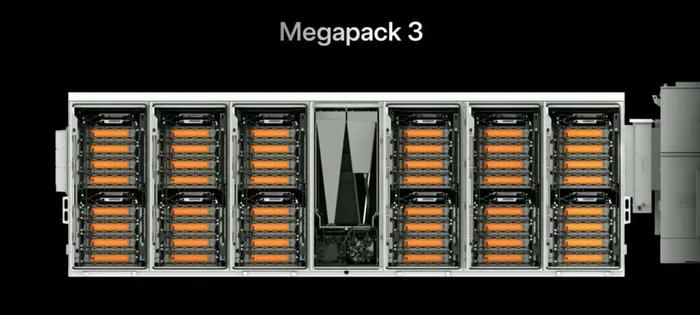
Core Viewpoint - Tesla has launched two new energy storage systems, Megapack 3 and Megablock, integrating self-developed transformers to address the transformer shortage crisis predicted by Elon Musk, potentially disrupting the traditional transformer industry dominated by companies like Hitachi Energy and Siemens Energy [1][5][7]. Group 1: Product Launch and Features - The new Megapack 3 energy storage system integrates Tesla's self-developed transformer, allowing for a 20MWh Megablock system when combined with four Megapack 3 units [3]. - The installation time for the new system is reduced by 23%, enabling 1GWh capacity installation within 20 working days, with an energy density of 248MWh per acre [3]. - Megapack 3 features a single cell size of 2.8L, improving energy density compared to the previous version, and has a lifespan of 25 years with over 91% efficiency after 10,000 cycles [3]. Group 2: Pricing and Production Plans - The price of a single Megapack 3 unit is approximately $1.4 million, similar to the previous Megapack 2 pricing [5]. - Tesla plans to start production of Megapack 3 at a new factory in Houston by the end of 2026, with an annual capacity of 50GWh, supported by a new 7GWh lithium iron phosphate battery factory in Nevada [5]. Group 3: Industry Impact - Tesla's entry into the transformer market may disrupt the century-old dominance of traditional manufacturers, prompting them to reconsider their strategic positioning [7]. - The increasing demand for efficient transformers driven by AI and electric vehicles highlights the importance of power conversion efficiency in the future energy landscape [7]. - Tesla's approach to integrating transformers into energy storage systems offers a new perspective on addressing energy transition bottlenecks by focusing on often-overlooked infrastructure components [7].