
城市副中心建设

Search documents
十二载志造千年城
Bei Jing Ri Bao Ke Hu Duan· 2026-02-25 07:33
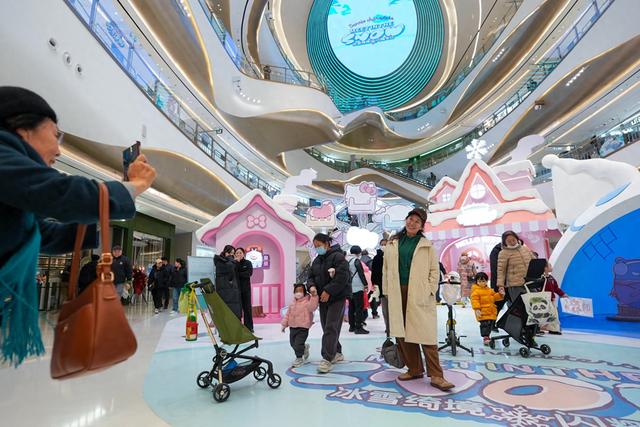
Core Viewpoint - The development of Beijing's urban sub-center in Tongzhou is a significant achievement, integrating governance, culture, commerce, and ecology, and aims to enhance the quality of life for residents while promoting regional collaboration and cultural richness [1]. Group 1: Cultural Development - The construction of cultural landmarks in the urban sub-center aims to enhance the cultural tourism industry, blending traditional and modern elements to enrich the community [2]. - Three major cultural facilities have been established, showcasing high-quality cultural resources and innovative design, with completion achieved in December 2023 after over 1,400 days of construction [3]. - These cultural facilities serve as a model for national cultural center development, combining cultural significance with ecological beauty [4]. Group 2: Tourism and Leisure - The Beijing Universal Resort, a major tourism project, took 20 years to complete, becoming a key attraction in Tongzhou and a benchmark for tourism in the Beijing-Tianjin-Hebei region [5]. - The Grand Canal Cultural Tourism Scenic Area has been developed into a 5A-level tourist attraction, enhancing historical preservation and environmental improvement, officially opening in April 2024 [6]. Group 3: Commercial Development - The establishment of the Canal Business District has transformed it into a new commercial hub, with significant infrastructure developments and a growing number of registered enterprises, reaching 22,944 by the end of 2023 [8]. - The district is expected to contribute significantly to local tax revenue, achieving 63 billion yuan in annual tax income [9]. - The Bay Area commercial complex and Tongzhou MixC have been developed to enhance consumer experiences, with the latter opening in September 2024 and achieving impressive initial sales figures [10][11]. Group 4: Healthcare Development - The relocation of high-quality medical resources to the urban sub-center has improved healthcare accessibility for residents, with major hospitals opening in recent years to serve the community [12]. - The establishment of advanced medical facilities, including a robotics-assisted cardiovascular center, has positioned the sub-center as a leader in healthcare innovation [13]. Group 5: Educational Development - The establishment of key educational institutions, such as Renmin University and Tsinghua University, in the urban sub-center is aimed at fostering talent and enhancing educational resources in the region [15][16]. - The Beijing Institute of Fashion Technology is set to promote industry-education integration, enhancing local educational offerings [17]. Group 6: Ecological Development - The Urban Green Heart Forest Park has been transformed from an industrial site into a significant ecological area, achieving recognition as Beijing's first "zero-carbon park" by June 2025 [19][20]. - The Beijing Green Development Forum has been established to promote sustainable practices and green finance, contributing to the region's ecological goals [21][22]. Group 7: Rural Development - The development of artistic and creative towns, such as Songzhuang and Zhangjiawan, aims to enhance cultural and economic vitality in rural areas, fostering a symbiotic relationship between urban and rural development [24][25][27].
北京市十六届人大四次会议表决通过《北京城市副中心条例》《北京市养老服务条例》 立法推动民生向好城市向优
Xin Lang Cai Jing· 2026-01-29 20:54
Core Points - The article discusses the approval of two significant local regulations in Beijing: the "Beijing Urban Sub-center Regulation" and the "Beijing Elderly Care Service Regulation," which will take effect on May 1, 2026, and July 1, 2026, respectively [1][2] Group 1: Beijing Urban Sub-center Regulation - The regulation serves as a "basic law" for the urban sub-center, consolidating ten years of planning and development into a comprehensive legal framework [3] - It addresses urgent issues hindering high-quality development in the urban sub-center, including management system improvements and industry layout optimization, focusing on six key industries such as digital economy and advanced manufacturing [4] - The regulation emphasizes collaboration with surrounding areas, including the integration of transportation and ecological management with neighboring regions [5][6] - A total of over 100 key tasks have been identified for implementation in 2026, aimed at supporting the regulation's objectives and enhancing the business environment [7] Group 2: Beijing Elderly Care Service Regulation - The regulation establishes a comprehensive framework for elderly care services, focusing on a three-tier network of support that includes district, street, and community levels [8][9] - It categorizes elderly care services into basic, market-oriented, and social mutual assistance types, ensuring that the government provides essential support for vulnerable elderly populations [9][10] - The regulation mandates the construction of elderly care facilities in new residential areas and encourages the repurposing of existing structures to meet service needs [10] - It outlines a collaborative service system that integrates home, community, and institutional care, addressing the diverse needs of the elderly population [11][12]
为“未来之城”高质量发展保驾护航
Xin Lang Cai Jing· 2026-01-29 20:54
Core Viewpoint - The passage discusses the approval of the "Beijing Urban Sub-center Regulations," which encapsulates ten years of development achievements and future plans for the urban sub-center, emphasizing its significance as a national strategy and a legal framework for sustainable urban development [1][3]. Group 1: Legislative Framework - The "Beijing Urban Sub-center Regulations" is a comprehensive law that covers planning, industry, green development, and collaborative growth, reflecting a shift from government-led planning to market-oriented high-quality development [1][3]. - The regulations aim to solidify the experiences gained over the past decade and provide a robust legal foundation for future innovative development [1][3]. Group 2: Public Participation and Human-Centric Approach - A key highlight of the regulations is the emphasis on a "people-centered" development philosophy, encouraging public participation in the legislative process, resulting in over 90 drafts with extensive annotations [2]. - The regulations address various public concerns, including ecological environment, transportation, education, healthcare, and talent development, establishing a comprehensive service system that balances investments in people and infrastructure [2]. Group 3: Innovation and Reform - The urban sub-center has adopted a reform and innovation approach to overcome challenges, with the regulations reflecting successful experiences that can be replicated and promoted [3]. - The regulations serve as a "basic law" ensuring that the development of the urban sub-center aligns with national strategic goals, providing a solid political and legal foundation for long-term growth [3]. Group 4: Future Development - The operational launch of the Tongzhou Station marks a significant milestone in the "Railway on the Beijing-Tianjin-Hebei" initiative, indicating the urban sub-center's growth and vitality [4]. - The implementation of the regulations is seen as a new opportunity to maintain strategic focus, deepen reforms, and enhance collaborative development in the urban sub-center [4].
《北京市养老服务条例》等表决通过
Bei Jing Shang Bao· 2026-01-29 16:28
Group 1 - The Beijing Municipal People's Congress successfully concluded its fourth session of the sixteenth assembly on January 29, passing several key regulations and resolutions [1] - The passed regulations include the "Beijing Urban Sub-center Regulations" and the "Beijing Elderly Care Service Regulations" [1] - Resolutions regarding the Beijing Municipal Government's work report and the 15th Five-Year Plan for national economic and social development were also approved [1] Group 2 - The assembly approved the execution of the 2025 national economic and social development plan and the budget execution for 2025, along with the budget for 2026 [1] - Reports from the Beijing Municipal People's Congress Standing Committee, the Beijing High People's Court, and the Beijing People's Procuratorate were also ratified [1]
推动民生向好、城市向优!解读北京两部最新法规
Xin Lang Cai Jing· 2026-01-29 13:37
Core Points - The article discusses the approval of two significant local regulations in Beijing: the "Beijing Urban Sub-center Regulation" and the "Beijing Elderly Care Service Regulation," which will take effect on May 1, 2026, and July 1, 2026, respectively [1][2] Group 1: Beijing Urban Sub-center Regulation - The regulation serves as a "basic law" for the urban sub-center, solidifying practical experiences and addressing development challenges [3][5] - It aims to meet the legal needs for the development and governance of the urban sub-center, focusing on optimizing industrial layout and enhancing management systems [7] - Key development areas include digital economy, modern finance, and advanced manufacturing, with a goal to create a green, smart, and convenient urban environment [7][8] - The regulation emphasizes collaboration with surrounding regions, including the integration with the North Three Counties and the Xiong'an New Area, to promote coordinated development [10][11] - A work plan for implementing the regulation has been drafted, including over 100 key tasks for 2026 [12][13] Group 2: Beijing Elderly Care Service Regulation - The regulation establishes a comprehensive framework for elderly care services in Beijing, focusing on a three-tier network of support [14][15] - It categorizes elderly care services into basic, market-oriented, and social mutual assistance types, ensuring clear guidelines for service provision [15][18] - The regulation aims to enhance accessibility to elderly care facilities and services, addressing the "last mile" issue in service delivery [17] - It outlines the establishment of a three-tier elderly care service network, integrating resources from various levels of government and community [17][20] - The regulation sets specific development targets, including the construction of 100 regional elderly care service centers during the 14th Five-Year Plan period [20]

城市副中心乘势而上做新时代的标杆
Xin Lang Cai Jing· 2026-01-27 13:43
Core Viewpoint - The article emphasizes the strategic development of Tongzhou District as a key urban sub-center, focusing on urban planning, public services, and cultural integration to enhance livability and economic vitality by 2026 [1][8]. Group 1: Urban Governance and Infrastructure - Tongzhou has improved public service efficiency with a 20% increase in original resolution rates for complaints, and the overall evaluation score has risen to the upper-middle level in the city [2]. - The district has completed 30 road construction projects, reducing the average traffic index during peak hours by 5.1% year-on-year [2]. - The expansion of electric bicycle charging interfaces to 168,000 and the renovation of 101 heating units have strengthened municipal services [4]. Group 2: Social Welfare and Education - In 2022, Tongzhou opened 5 new public kindergartens, adding 1,500 preschool places and over 7,000 primary and secondary school places [5]. - The district has established a comprehensive medical service system, with the chest hospital's new building opening and the average emergency response time being better than the city average [5]. - New elderly care centers and family care beds have been added, enhancing social security systems to address aging population challenges [5]. Group 3: Economic Development and Reform - The district has implemented 60 reform tasks under the pilot program for market-oriented resource allocation, enhancing the role of state-owned enterprises in investment and industrial development [6]. - The establishment of 179 new foreign-funded enterprises represents a 5.3% year-on-year increase, indicating a vibrant business environment [6]. - Major infrastructure projects, including the planning of the M102 subway line, are underway to support economic growth [8]. Group 4: Cultural and Tourism Development - Tongzhou aims to integrate cultural resources with tourism, enhancing the appeal of the Grand Canal and promoting various cultural events [10]. - The district plans to develop a vibrant waterfront area along the Grand Canal, improving the urban landscape and promoting tourism [10]. - Initiatives to enhance cultural heritage and organize over 1,300 cultural activities are set to boost community engagement and tourism [10]. Group 5: Future Outlook - The district targets a GDP growth of around 6% and aims to maintain fixed asset investment at a trillion-level scale in 2026 [8]. - Plans include the completion of 250,000 square meters of new construction and the development of a 24-hour vibrant street area [8]. - Collaborative development with surrounding regions, including Xiong'an New Area, is emphasized to promote high-quality growth [9].
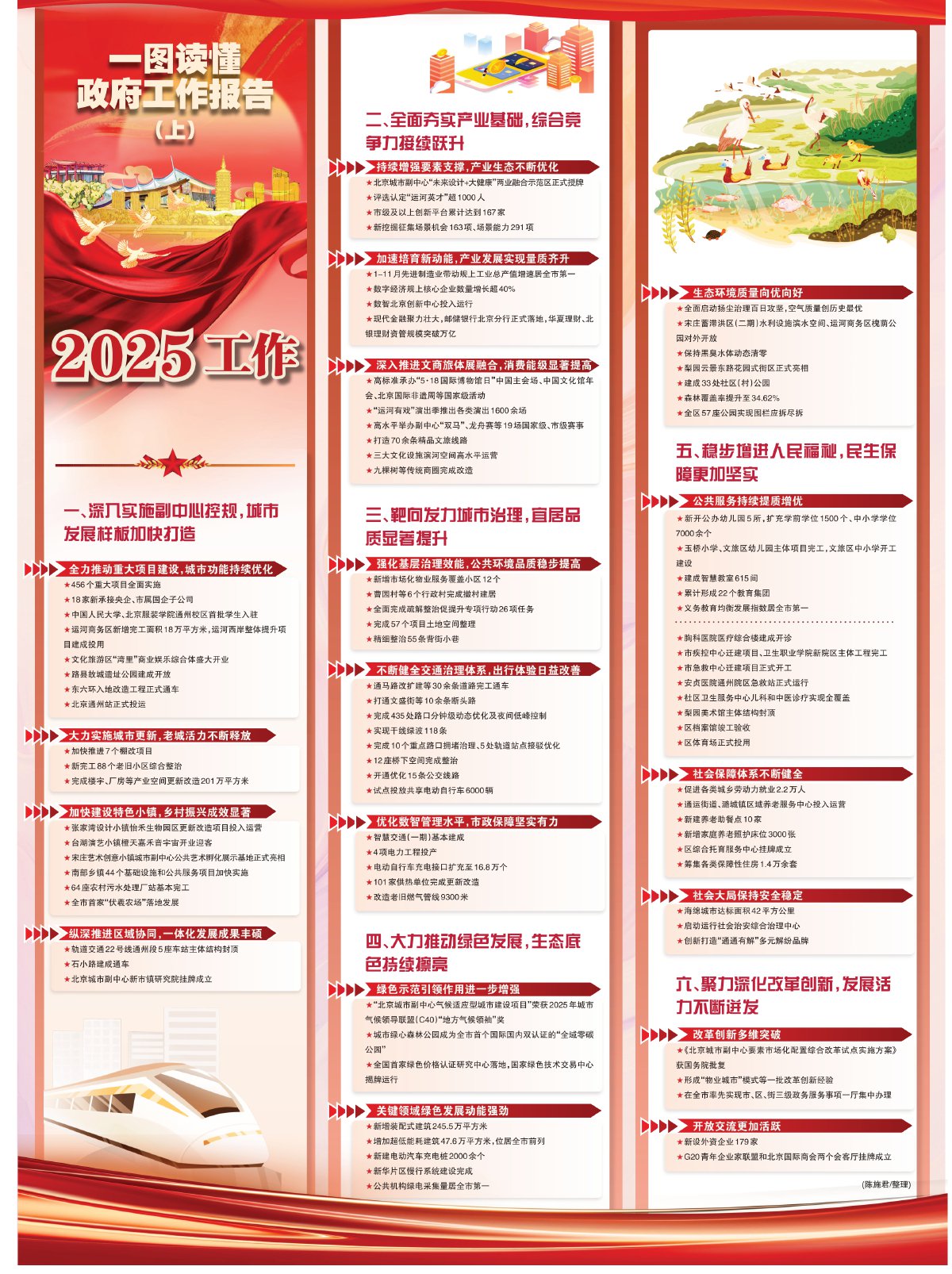
一图读懂政府工作报告
Xin Lang Cai Jing· 2026-01-07 04:51
Group 1: Urban Development and Infrastructure - A total of 456 major projects are being fully implemented, with 18 new projects undertaken by central and municipal state-owned enterprises [1] - The completion of 180,000 square meters of new area in the Canal Business District and the opening of the "Bayli" commercial and entertainment complex in the cultural tourism area [1] - The official operation of Beijing Tongzhou Station and the completion of the East Sixth Ring underground transformation project [1] Group 2: Economic and Industrial Growth - The establishment of the Beijing Urban Sub-center New Town Research Institute [2] - The advanced manufacturing sector has driven the growth rate of industrial output value in the city, leading the overall city growth [7] - The number of core enterprises in the digital economy has increased by over 40% [7] Group 3: Social Welfare and Public Services - Continuous improvement in public services and the establishment of a comprehensive social security system [5][6] - The completion of 1,400 affordable housing units and the establishment of a comprehensive childcare service center [8] - The opening of five new public kindergartens, expanding early education capacity by 1,500 places [8] Group 4: Environmental and Green Development - The area of sponge city projects has reached 42 square kilometers, contributing to improved ecological quality [6][8] - The construction of 245,500 square meters of prefabricated buildings and 47,600 square meters of ultra-low energy consumption buildings [7] - The launch of a hundred-day campaign for dust control, achieving historically optimal air quality [8]
重庆将重塑空间格局,打造两大城市副中心
Di Yi Cai Jing· 2025-12-09 00:42
Core Viewpoint - The article discusses the challenges and strategies for optimizing the spatial layout and productivity distribution in Chongqing, highlighting the need for a coordinated development approach to address the "one city dominates" issue prevalent in the region [1][2]. Group 1: Spatial and Economic Structure - Chongqing's main urban area is projected to account for 78.2% of the city's GDP and 68.4% of its population by 2024, with the central urban area alone contributing 41.7% to GDP and 33.2% to the population [2]. - The "Fifteen Five" planning proposal aims to create a complementary urban system that integrates the central urban area, urban sub-centers, district cities, and central towns to promote coordinated development [2][3]. Group 2: Development Strategies - The proposal emphasizes enhancing the central urban area's attractiveness and influence, similar to the "strong provincial capital" strategy adopted by other provinces [3]. - Specific initiatives include strengthening the core functions of the Liangjiang New Area, developing Wanzhou and Yongchuan as important urban sub-centers, and establishing Qianjiang as a regional center city to drive high-quality development in surrounding areas [3][4]. Group 3: Regional Integration - The construction of urban sub-centers is seen as a strategy to stimulate development in surrounding regions, with a focus on granting these areas specific functions and powers to enhance their growth potential [5]. - The establishment of provincial sub-centers has become a new strategic direction for western provinces, with 20 such centers already formed, aimed at decentralizing administrative powers and facilitating regional development [4].
副中心这个黄金地块成交!毗邻地铁,将建高品质住宅
Sou Hu Cai Jing· 2025-12-04 06:16
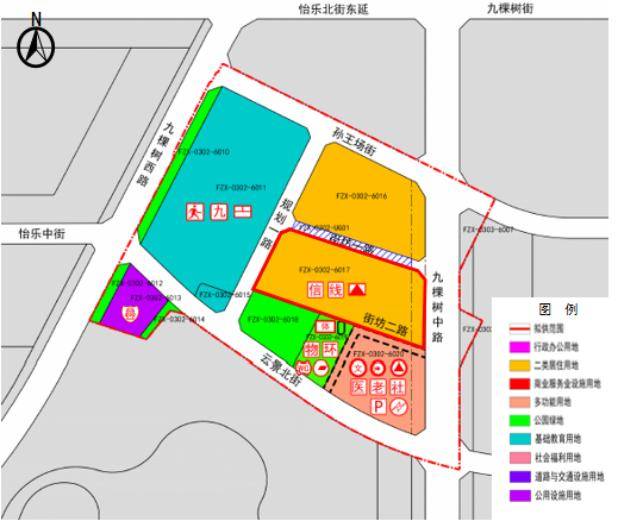
Core Insights - The first phase of the Tongzhou District old city housing redevelopment project has successfully auctioned the residential land parcel FZX-0302-6017, with China Overseas Land & Investment winning the bid for 1,248 million yuan [1] Group 1: Project Details - The land parcel is located in the core of the city sub-center's Jiukeshu area, situated between the 5th and 6th ring roads [3] - The site has clear boundaries: east to Jiukeshu Middle Road, south to planned parcels FZX-0302-6018, 6019, and 6020, west to planned Road 1, and north to Street 1 [3] - The site is conveniently located approximately 600 meters from Jiukeshu Station on the Batong Line and 1 kilometer from Liyuan Station, providing efficient commuting options for future residents [3] Group 2: Living Amenities - The site is described as having a "golden configuration," with major commercial facilities like Sunshine New Life Plaza and Tongzhou Lingzhan Plaza within 600 meters, catering to diverse shopping and leisure needs [5] - To the south, residents will have access to Tongzhou Yunjing Park, a natural ecological leisure space [5] - Within 900 meters to the west, there are quality educational and medical resources, including Tongzhou First Experimental Primary School and Dongzhimen Hospital Tongzhou Branch, covering all aspects of daily life [5] Group 3: Development Specifications - The land area is 24,700 square meters, with a planned above-ground construction area of 54,400 square meters, a height limit of 45 meters (with some areas up to 60 meters), and a floor area ratio of 2.2, aimed at creating a low-density, livable community [7] - The architectural design emphasizes enhancing urban landscape aesthetics, encouraging a courtyard layout to create comfortable internal spaces, and aims for a fresh, modern, and green living environment [7] - The project is expected to inject new vitality into the residential market of the city sub-center upon completion [7]
北京城市副中心六环高线公园将分批亮相,2029年整体建成
Xin Jing Bao· 2025-08-01 10:21
Core Viewpoint - The construction of the Six Ring High Line Park in Beijing's urban sub-center is set to begin in December 2024, with an overall completion expected by May 2029, aiming to create a world-class park that surpasses the scale of New York's High Line Park [1][3]. Group 1: Project Overview - The Beijing urban sub-center covers an area of approximately 155 square kilometers and is part of the "new wings" of Beijing, alongside the Xiong'an New Area [2]. - The Six Ring High Line Park will span approximately 14 kilometers in length and 300-500 meters in width, covering an area of about 275 hectares [3][4]. - The park aims to integrate historical urban elements such as roads, bridges, and railways, creating a vibrant public space that caters to various community needs [4][5]. Group 2: Design and Features - The park will feature a high-density transportation network, increasing the number of roads from 16 to 23, with an average spacing reduced from 1 kilometer to 750 meters [4]. - A multi-layered slow-moving system will be established, including 7.5 kilometers of pathways for walking, running, cycling, and sightseeing [4]. - The park is designed with six thematic sections: Creative Life, Memory of the Ancient City, Era Hub, Canal Melody, Ecological Living Room, and Ancient and Modern Scroll, each serving distinct community and cultural functions [5][6]. Group 3: Future Development Plans - The construction will follow a phased approach, with the first segment of building construction expected to start by the end of 2025 and road construction in the second half of 2026 [6]. - The overall park is projected to be fully operational by May 2029, enhancing the urban landscape and community engagement in the Beijing sub-center [6].