
外国补贴条例(FSR)

Search documents
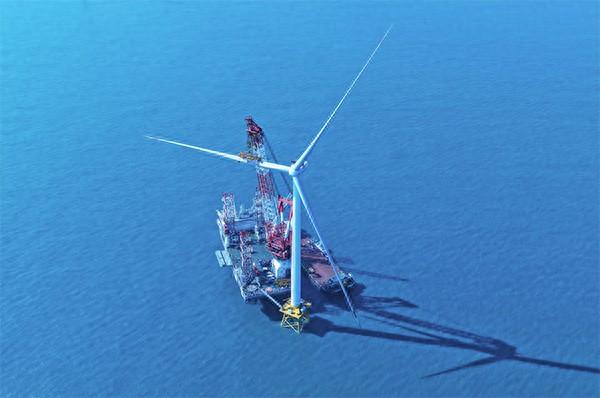
欧委会对金风科技启动FSR深度调查
Xin Lang Cai Jing· 2026-02-04 00:49
Core Viewpoint - The European Commission has initiated an in-depth investigation into Goldwind Technology's operations in the EU market under the Foreign Subsidies Regulation (FSR), raising concerns about potential foreign subsidies benefiting the company [1] Group 1: Investigation Details - The investigation was announced on February 3, 2026, and aims to examine whether Goldwind Technology benefits from foreign subsidies while producing and selling wind turbines in the EU [1] - The European Commission expressed concerns after a preliminary review, indicating that Goldwind Technology may have received various forms of subsidies, including direct government grants, tax incentives, and preferential loans [1] - The investigation was escalated to an in-depth phase following the collection of initial information, with the possibility of concluding through acceptance of remedial commitments, implementation of corrective measures, or a determination of no objection [1] Group 2: Company Background - Goldwind Technology is recognized as one of the major manufacturers of wind power equipment globally and operates in the EU market through subsidiaries such as Vensys in Germany [1]

欧盟中国商会:坚决反对欧盟频密使用FSR调查中企
Xin Lang Cai Jing· 2026-02-03 20:48
Core Viewpoint - The EU Chamber of Commerce in China expresses serious concern and strong opposition to the European Commission's decision to initiate an in-depth investigation into a Chinese wind power company under the Foreign Subsidies Regulation (FSR) [1] Group 1: Impact on Chinese Companies - Since the implementation of the FSR, Chinese companies have become primary targets, with frequent investigations disrupting their normal business operations and creating uncertainty in the EU market [1] - Chinese companies have suffered direct and indirect losses amounting to billions of euros due to the EU's frequent use of FSR investigations [1] Group 2: Call for Fair Competition - The Chamber emphasizes that Chinese companies play a crucial role in supporting the EU's green and digital transformation [1] - There is a call for the EU to exercise restraint and implement relevant laws in a fair and transparent manner, ensuring a competitive environment that promotes innovation, investment, and sustainable growth [1] - The Chamber advocates for a fair, just, and non-discriminatory business environment for Chinese companies operating in the EU [1]
又动手!欧盟对中国一家风电企业发起FSR调查,欧盟中国商会坚决反对
Guan Cha Zhe Wang· 2026-02-03 15:46
Core Viewpoint - The European Commission has initiated an in-depth investigation into Chinese wind power company Goldwind Technology, claiming it received government subsidies that distort the EU market, despite objections from China [1][5]. Group 1: Investigation Details - The investigation is based on the Foreign Subsidies Regulation (FSR), which came into effect in July 2023, allowing the European Commission to scrutinize companies receiving external support from non-EU governments [1][2]. - Initial findings suggest that Goldwind may have benefited from foreign subsidies, including government grants, tax incentives, and preferential loans, prompting the formal investigation [1][5]. - The investigation is expected to conclude by autumn 2027 and could result in three outcomes: commitments from the company, corrective measures imposed by the Commission, or a determination that no distortion occurred [4]. Group 2: Broader Implications - The European Commission has indicated that it may expand its investigations to other Chinese wind power companies, signaling ongoing scrutiny of the market [2]. - The frequent investigations by the EU are causing significant operational disruptions for Chinese companies, leading to potential losses amounting to billions of euros [5]. - The FSR's application is seen as a tool that could exacerbate tensions between the EU and China, with implications for various sectors, including telecommunications and critical industries like steel and cement [5][6].

欧盟中国商会:对欧盟频密使用FSR调查中企表示严重关切和坚决反对
Xin Lang Cai Jing· 2026-02-03 13:20
Core Viewpoint - The EU Chamber of Commerce in China expresses serious concern and strong opposition to the EU's frequent use of the Foreign Subsidies Regulation (FSR) to investigate Chinese companies, particularly in the wind power sector, which disrupts normal business operations and creates uncertainty in the EU market for these companies [1][2]. Group 1 - The EU Commission has initiated an in-depth investigation into a Chinese wind power company under the FSR [1][2]. - Since the implementation of the FSR, Chinese companies have become primary targets, leading to significant direct and indirect losses amounting to billions of euros [1][2]. - The use of the FSR negatively impacts Chinese investments in the EU and restricts their fair participation in EU public procurement [1][2]. Group 2 - The Chamber emphasizes that Chinese companies play a crucial role in supporting the EU's green and digital transformation [1][2]. - A call is made for the EU to exercise restraint and implement relevant laws in a fair and transparent manner [1][2]. - The Chamber advocates for constructive dialogue to ensure a fair competitive environment that promotes innovation, investment, and sustainable growth for Chinese companies operating in the EU [1][2].
欧盟FSR触发“过量申报”和业界不满,中企如何捍卫确定性
Di Yi Cai Jing· 2026-01-11 10:44
Core Insights - The EU's Foreign Subsidies Regulation (FSR) has led to over 200 transactions being reported to the European Commission by mid-October 2025, significantly exceeding the initial estimate of 30 transactions per year [1][4] - The FSR's broad applicability and complex reporting requirements have created substantial compliance burdens and uncertainties for both the EU and multinational transaction participants [1][5] Group 1: FSR Implementation and Impact - The FSR has triggered a large number of submissions, with nearly half (47%) of reported transactions involving EU investors, many of which have no clear connection to jurisdictions outside the EU [4] - Compliance procedures under the FSR are burdensome, requiring companies to detail all foreign financial support received over the past three years, often necessitating cross-departmental collaboration [5] - The European Commission has initiated an evaluation of the FSR, responding to feedback that the current review system is cumbersome and slows down transaction processes [5][6] Group 2: Future Developments and Regulatory Adjustments - Future enforcement of the FSR is expected to become more targeted, with potential simplification of review processes for low-risk transactions while maintaining vigilance for those in critical sectors [2] - A draft guideline from the European Commission aims to clarify the application of key FSR provisions, including the assessment of distortive effects and the initiation of pre-review for transactions below the reporting threshold [6] Group 3: Impact on Chinese Enterprises - Chinese enterprises have faced significant regulatory challenges under the FSR, with the Chinese Ministry of Commerce highlighting the adverse effects on their operations in Europe [7][8] - Reports indicate that Chinese companies' bids for public procurement projects are increasingly subjected to second-stage reviews by the European Commission, reflecting heightened scrutiny [8] - High-risk sectors for Chinese enterprises include automotive, pharmaceuticals, energy, battery, and chemicals, with state-owned enterprises being particularly vulnerable to investigations [8][9] Group 4: Strategic Recommendations for Enterprises - Despite regulatory obstacles, international expansion remains an irreversible trend, necessitating companies to identify viable investment opportunities within complex regulatory frameworks [9] - Companies are advised to conduct thorough risk assessments and develop effective response plans to navigate the regulatory landscape successfully [9]

选择性补贴调查严重损害中欧经贸合作
Ke Ji Ri Bao· 2025-12-24 00:29
Core Viewpoint - The European Commission's Foreign Subsidies Regulation (FSR) is perceived as discriminatory against Chinese companies, leading to significant operational challenges and financial losses for these firms in the EU market [1][3][4]. Group 1: FSR Implementation and Impact - The FSR, effective from July 2023, mandates companies involved in EU public tenders or mergers exceeding certain thresholds to declare foreign subsidies received [1]. - Since its implementation, the European Commission has received 2,100 declarations but has only conducted three in-depth investigations, all targeting Chinese technology firms in the renewable energy and transportation sectors [2]. - The FSR has reportedly caused direct and indirect losses to Chinese companies amounting to approximately €2.1 billion [3]. Group 2: Legal and Operational Challenges - The lack of transparency in the FSR's enforcement has raised concerns about "black box" governance, with limited information available even for investigated cases [2]. - Compliance with the FSR imposes significant administrative burdens on companies, requiring extensive data collection on foreign subsidies, which can include loans, capital injections, debt relief, and tax benefits [3]. Group 3: Broader Economic Implications - The FSR is seen as damaging to the EU's business environment, creating administrative pressures not only for Chinese firms but also for other international companies operating in the EU [3]. - The regulation is criticized for potentially undermining EU-China economic cooperation, which is vital for energy transition, supply chain security, and infrastructure development [4].
果然不出默克尔所料,27国枪口一致瞄准中国,欧洲正滑向第三世界
Sou Hu Cai Jing· 2025-12-21 02:08
Group 1 - The EU has recently intensified its scrutiny of Chinese companies, particularly targeting Temu and Nuctech, indicating a shift towards more aggressive regulatory measures [3][7][10] - The Foreign Subsidies Regulation (FSR) has emerged as a significant tool for the EU, allowing for broader investigations beyond just goods, impacting platforms, mergers, and procurement processes [4][10] - A survey revealed that 63% of Chinese companies reported negative impacts from the FSR, with over half stating that the scrutiny has severely damaged their business reputation [10][13] Group 2 - The EU's new tax reform, set to impose a €3 handling fee on cross-border packages starting in 2026, aims to eliminate the €150 tax exemption threshold, effectively raising compliance barriers for foreign competitors [3][13] - Economic data shows a concerning trend for Europe, with Germany experiencing a 30% increase in bankruptcies and France's per capita wealth ranking dropping from 5th to 26th globally [15][17] - The EU's economic growth forecast for 2025 is only 1.1%, with the Eurozone expected to perform even worse, highlighting a lack of innovation and competitiveness in key sectors [17][19] Group 3 - The current EU strategy reflects a protectionist approach, prioritizing regulatory measures over long-term industrial planning, which diverges from former Chancellor Merkel's vision of a resilient and independent Europe [21][23] - There are warnings that if the current trajectory continues, Europe could see its global GDP share fall below 12% within the next decade, indicating a potential decline in global influence [23][27] - The EU is at a crossroads, with some member states advocating for pragmatic cooperation rather than restrictive regulations, suggesting a need for a shift in focus towards internal market reforms and technological advancements [25][27]
欧委会密集调查中车集团、同方威视等中企,商务部回应
Guan Cha Zhe Wang· 2025-12-18 13:20
Core Viewpoint - The Chinese Ministry of Commerce strongly opposes the European Commission's recent investigations into Chinese companies under the Foreign Subsidies Regulation (FSR), citing discrimination and a lack of transparency in the process [1][2]. Group 1: Investigations and Responses - The European Commission has initiated multiple investigations into Chinese companies, including CRRC Group and Tongfang Weishi, which are seen as discriminatory actions against foreign investment [1]. - The Ministry of Commerce has identified the FSR investigations as trade and investment barriers, highlighting issues such as insufficient evidence, excessive enforcement, and a lack of transparency in procedures [1]. - The European Union Chamber of Commerce in China has expressed strong dissatisfaction with the FSR investigations, noting that they have led to significant operational impacts on Chinese enterprises in Europe [2][4]. Group 2: Impact on Chinese Enterprises - The FSR investigations have reportedly caused direct and indirect losses to Chinese companies amounting to approximately €2.1 billion [5]. - A survey conducted by the European Union Chamber of Commerce revealed that 63% of the 205 surveyed Chinese enterprises in Europe reported that their business was affected by the FSR, with 51% indicating damage to their commercial reputation and market image [5]. - The investigations have led to Chinese companies being forced to withdraw from bidding projects in public procurement due to the FSR, indicating a trend of increased scrutiny on Chinese investments [4][5]. Group 3: Calls for Fair Treatment - The European Union Chamber of Commerce has called for the European Commission to exercise caution in using its investigative powers under the FSR and to stop discriminatory enforcement actions against Chinese enterprises [4][5]. - There is a demand for the European Commission to provide a fair, just, and transparent business environment for foreign investors, emphasizing the need to lower compliance burdens for companies operating in Europe [5].
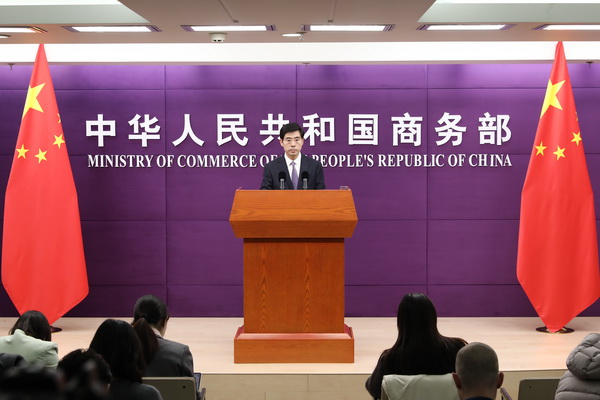
商务部:中欧双方正在就电动汽车案开展磋商 已批准部分稀土出口通用许可申请
Jin Rong Jie· 2025-12-18 08:50
Group 1: Steel Export License Management - The Ministry of Commerce announced the implementation of export license management for certain steel products starting January 1, 2026, marking the first time in 16 years this measure has been enacted [1] - The management will cover approximately 300 customs codes related to steel products, aimed at enhancing monitoring, statistical analysis, and tracking of export product quality [1] - Companies must provide proof of product quality inspection when applying for export licenses, encouraging a focus on quality and innovation in the steel industry [1] Group 2: Electric Vehicle Negotiations - The Ministry of Commerce confirmed ongoing negotiations between China and the EU regarding electric vehicles, emphasizing a willingness to resolve differences through dialogue [2] - The Chinese side seeks to establish an overall industry solution and urges the EU to act in good faith to create a stable market environment for both parties [2] Group 3: Opposition to EU Investigations - The Ministry of Commerce expressed strong opposition to the European Commission's recent investigations into multiple Chinese companies under the Foreign Subsidies Regulation (FSR), highlighting the discriminatory nature of these actions [3] - The Chinese government calls for an immediate halt to what it perceives as unreasonable pressure on foreign investment enterprises, advocating for a fair and predictable business environment [3] Group 4: Rare Earth Export Licenses - The Ministry of Commerce reported progress in the export control of rare earth items, indicating that some Chinese exporters have met the basic requirements for applying for general export licenses [4] - A number of applications for general licenses have already been received and approved [4] Group 5: Review of Overseas Port Asset Sales - The Ministry of Commerce stated that the Chinese government will conduct legal reviews and regulatory oversight regarding the sale of overseas port assets by CK Hutchison Holdings [5] - The government aims to protect fair market competition and uphold national sovereignty, security, and development interests [5]
近期欧盟不断加大对华经贸限制力度,商务部:希望欧方克制审慎使用限制性经贸工具
Di Yi Cai Jing· 2025-12-18 08:17
Group 1 - The Ministry of Commerce of China urges the EU to immediately stop unreasonable suppression of foreign investment enterprises, including those from China [1][3] - The spokesperson highlighted that the essence of China-EU economic and trade relations is mutual benefit and complementarity, influenced by various factors such as economic development stages and market demand changes [1] - The EU has intensified trade restrictions against China, initiating 12 trade remedy investigations and 3 foreign subsidy investigations this year, which hindered several Chinese companies from participating in public procurement and greenfield investments in EU member states [1] Group 2 - The Ministry of Commerce expresses strong opposition to the EU's recent investigations under the Foreign Subsidies Regulation (FSR), which are seen as discriminatory and harmful to Chinese enterprises operating in Europe [2][3] - A report from the EU-China Chamber of Commerce indicates that 63% of surveyed Chinese companies in Europe have been affected by FSR, with 12% experiencing direct impacts and 51% reporting damage to their business image and confidence [2] Group 3 - Ongoing negotiations between China and the EU regarding electric vehicle tariffs and minimum price schemes are taking place, with China advocating for dialogue to resolve differences and create a stable market environment [4][5] - The Ministry of Commerce appreciates the EU's willingness to restart price commitment negotiations, emphasizing the importance of maintaining mutual trust and efficiency in discussions [5] - The use of trade defense tools by the EU, particularly the anti-subsidy investigation into Chinese electric vehicles, has introduced new uncertainties in China-EU economic relations, affecting Chinese automotive companies' market performance and business planning [5]