
多边秩序

Search documents
西方“中等强国”集体向东看:斯塔默访华传递三大重要信号
Xin Lang Cai Jing· 2026-01-31 08:12
Group 1 - The visit of UK Prime Minister Starmer to China is seen as a significant step in rebooting Sino-British relations after eight years of no formal meetings between leaders [1][2] - Starmer's visit includes a large trade delegation of over 50 British companies, indicating a strong interest in enhancing economic ties with China [3] - The UK views China as an essential partner for economic development, especially given its current economic challenges, making the strengthening of trade relations a strategic move [3] Group 2 - The visit aims to establish a long-term stable comprehensive strategic partnership between China and the UK, with commitments to enhance bilateral trade and investment cooperation [3] - The cooperation between China and the UK is seen as mutually beneficial, with opportunities for knowledge exchange in finance, technology, and green transition [3] - The visit reflects a broader trend of Western "middle powers" seeking collaboration with China to maintain a stable international order amidst geopolitical tensions [4]
英首相时隔八年访华,传递三大重要信号
Xin Lang Cai Jing· 2026-01-31 06:41
Group 1: Core Insights - The visit of UK Prime Minister Starmer to China is seen as a crucial step in rebooting Sino-British relations after eight years of stagnation [1][9] - Starmer's trip is expected to enhance bilateral relations and provide more political guidance for cooperation between the two countries [3][11] Group 2: Cultural Engagement - Starmer's choice to dine at a Yunnan restaurant in Beijing reflects a friendly gesture towards Chinese culture and signifies a positive attitude towards the Chinese people [3][11] - The visit marks the end of an eight-year gap in formal meetings between Chinese and British leaders, which is significant for diplomatic relations [3][11] Group 3: Economic Cooperation - A large trade delegation of over 50 British companies accompanied Starmer, indicating a strong interest in economic collaboration across key sectors such as finance, automotive, pharmaceuticals, and high-end manufacturing [5][13] - The UK views China as an essential partner for economic development, especially given its current economic challenges, including low growth quality and fiscal issues [5][13] - The visit resulted in several positive outcomes, including commitments to strengthen bilateral trade and investment cooperation [5][13] Group 4: Global Context - Other Western leaders, including those from France, Canada, and Finland, have also visited China, reflecting a broader trend among "middle powers" seeking to maintain a multilateral order centered around the UN [7][15] - China is perceived as a "stabilizing anchor" in the international system, especially in light of disruptions caused by certain US policies [7][15] - The cooperation between China and the UK, despite differing economic systems, sends a significant positive signal amid geopolitical tensions and rising anti-globalization sentiments [7][15] Group 5: Future Relationship Dynamics - Starmer's emphasis on building a "refined bilateral relationship" suggests a need for careful management and mutual problem-solving in Sino-British relations [8][17] - Increasing communication and dialogue is deemed essential for resolving misunderstandings and building mutual trust [16][17]

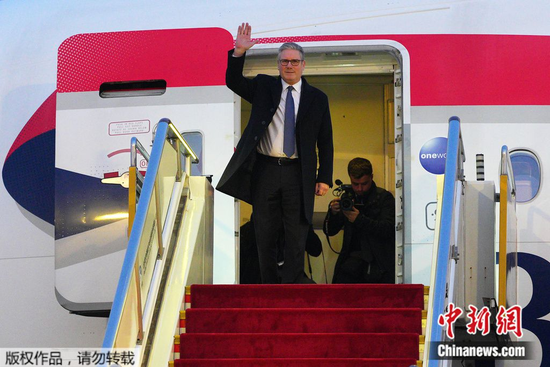
西方“中等强国”集体向东看:斯塔默访华传递三大重要信号 | 国际识局
Zhong Guo Xin Wen Wang· 2026-01-31 03:29
Group 1: Core Insights - The visit of UK Prime Minister Starmer to China is seen as a significant step towards the resumption of UK-China relations after eight years of stagnation [1][2] - Starmer's engagement with Chinese culture, exemplified by his visit to a Yunnan restaurant, reflects a friendly approach and a desire to understand China better [2] - The visit is expected to enhance bilateral relations and provide political guidance for future cooperation between the two countries [2] Group 2: Economic Cooperation - A large trade delegation of over 50 UK companies accompanied Starmer, indicating a strong interest in economic collaboration across key sectors such as finance, automotive, pharmaceuticals, and high-end manufacturing [3] - The UK views China as an essential partner for economic development, especially given its current economic challenges, making the strengthening of UK-China trade relations a strategic priority [3] - Both countries have committed to developing a long-term stable comprehensive strategic partnership and enhancing bilateral trade and investment cooperation [3] Group 3: Global Context - Other Western leaders, including those from France, Canada, and Finland, have also visited China, seeking to maintain a multilateral order centered around the UN and international law [5] - China is perceived as a "stabilizing anchor" in the international system, especially amidst geopolitical tensions and the rise of anti-globalization sentiments [5] - The collaboration between China and the UK, despite differing economic systems, sends a positive signal in the current global landscape [5][6] Group 4: Future Relations - The emphasis on building a "refined bilateral relationship" suggests that future UK-China relations will require careful management and mutual problem-solving [7] - Increasing communication and dialogue is deemed essential for resolving misunderstandings and building trust between the two nations [6][7]
西班牙拒绝加入美国发起的“和平委员会”
Xin Lang Cai Jing· 2026-01-23 10:37
Group 1 - Spain's Prime Minister Pedro Sánchez announced that Spain will not join the "Peace Committee" initiated by U.S. President Trump, emphasizing adherence to the current international order [1][2][3] - Sánchez stated that the decision aligns with Spain's commitment to a multilateral order, the United Nations system, and international law [1][2] - The "Peace Committee" proposed by the U.S. does not include the Palestinian National Authority, which Sánchez highlighted as a significant reason for Spain's refusal [1][2] Group 2 - Spain plans to recognize the State of Palestine in 2024 and has criticized Israel's military actions in Gaza multiple times [2][3] - Trump signed a document with representatives from over ten countries in Davos to launch the "Peace Committee," which aims to address the Gaza issue first and then extend to other conflicts [2][3] - Few Western allies have publicly accepted the invitation to join the "Peace Committee," with Canada, the UK, and most EU member states also declining to participate [2][3]
大统领会出兵格陵兰么?兼谈特朗普新秩序里的赢家和输家
伍治坚证据主义· 2026-01-21 08:50
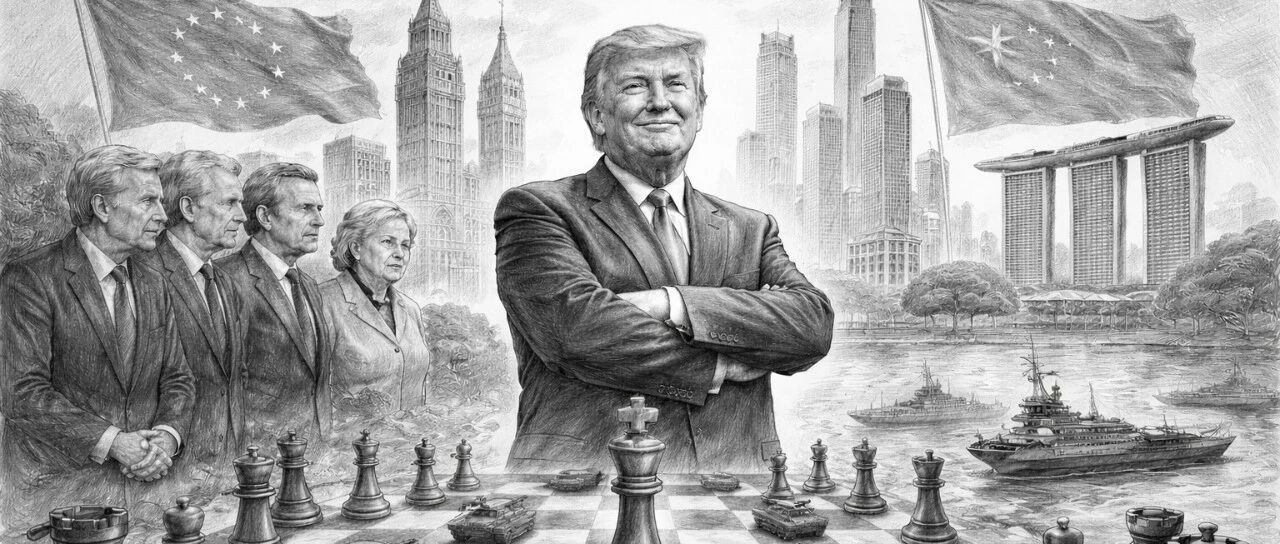
Core Viewpoint - The article discusses Trump's perspective on international relations, emphasizing his desire to redefine the cost of security and alliances, particularly with European allies, rather than merely seeking territorial expansion in Greenland [4][6]. Group 1: Trump's Worldview - Trump perceives the post-war international order as fundamentally unfair to the U.S., characterized by significant trade deficits and the outsourcing of American jobs [2][3]. - He believes that the U.S. provides security to NATO allies at a low cost, which he argues should be compensated [3]. - Trump's negotiation style is likened to that of a mafia boss, where power dynamics dictate the terms of engagement rather than moral or procedural considerations [3]. Group 2: The Symbolism of Greenland - Greenland is viewed as a symbolic representation of the broader issue of U.S. security costs, rather than a genuine territorial ambition [4][6]. - Trump's approach aims to make European allies aware of the long-underestimated costs of their security arrangements with the U.S. [6]. Group 3: New World Order - The new order Trump envisions is hierarchical and transactional, where security is treated as a service and alliances are based on mutual benefits rather than shared values [5][6]. - This shift indicates a move away from multilateralism towards bilateral negotiations, impacting how countries interact with one another [11]. Group 4: Winners and Losers - The U.S. emerges as a marginal winner in this new order, gaining from increased military spending by allies but facing internal divisions and governance challenges [8][9]. - China is positioned as a structural beneficiary, as the fragmentation of the Western alliance provides it with strategic opportunities [9][10]. - Germany and the EU are identified as the biggest losers, as their reliance on rules and lack of military strength become significant disadvantages in the new order [14][15]. Group 5: Implications for Other Nations - India benefits from the new order by adopting a flexible approach, allowing it to navigate relationships with both the U.S. and Russia without being pressured into a single alignment [12]. - The UK may retain influence by aligning closely with the U.S. and taking on more responsibilities within the alliance [13]. - Singapore's position remains uncertain, as its adaptability will depend on its leadership's ability to navigate the new geopolitical landscape [18].
美国“闭关锁国”,意外助攻中国入群!布局26年,我们反将一军
Sou Hu Cai Jing· 2025-10-28 04:20
Core Points - China has become the first Asian observer of the Andean Community (CAN), with unanimous support from its four member countries: Peru, Ecuador, Colombia, and Bolivia [1][3] - The approval reflects a shift in Latin American countries' alignment towards China, influenced by recent U.S. trade policies that have strained their economies [3][5] Group 1: Background and Context - The relationship between China and the Andean Community dates back to 1999, with a formal consultation mechanism established [6] - Recent U.S. tariffs on Latin American products, including a 50% tariff on copper, have led to significant economic challenges for these countries, prompting them to seek new partnerships [5][6] - China's cooperation proposals have been more appealing to Latin American nations compared to U.S. policies, focusing on practical needs rather than ideological values [6][8] Group 2: Economic Implications - The Andean Community countries control 35% of the world's copper and 28% of lithium resources, which are crucial for China's electric vehicle and AI industries [8][11] - By becoming an observer, China can now participate in setting regional trade standards, enhancing the security of its supply chains [8][11] - The shift from bilateral agreements to regional cooperation mechanisms allows China to mitigate risks associated with policy changes in Latin America [6][8] Group 3: Geopolitical Impact - China's entry into the Andean Community challenges the long-standing U.S. influence in Latin America, traditionally viewed as its "backyard" [8][10] - The unanimous vote signifies a collective response from Latin American countries against unilateralism and a desire for diversified partnerships [10][11] - The collaboration between China and the Andean Community is expected to reshape the development logic in the region, moving towards a more integrated economic framework [10][11]
余心玎:“港口税”大棒搅动国际航运业
Huan Qiu Wang· 2025-10-10 00:02
Core Viewpoint - The introduction of the "port tax" by the U.S. on Chinese vessels is seen as a political maneuver that could disrupt global shipping dynamics and supply chains, prompting China to respond with regulatory adjustments to protect its interests and maintain international shipping order [1][2][3] Group 1: U.S. Port Tax Implications - The U.S. aims to increase operational costs for Chinese vessels to redirect international freight flows and weaken China's competitive position in global shipping [1] - American businesses across various sectors have expressed opposition to the port tax, citing concerns over increased import costs, reduced export competitiveness, and supply chain disruptions [1][2] - The aging infrastructure and rising labor costs in U.S. ports, along with the reliance on efficient operations from Chinese ports, suggest that the port tax may ultimately raise costs for U.S. importers and consumers [1][2] Group 2: China's Response and Strategy - China's recent amendment to the International Maritime Regulations includes a systematic approach to counter discriminatory measures, reflecting a commitment to legal frameworks and multilateral coordination [2][4] - The resilience and innovation within China's shipping industry, including advancements in port automation and shipbuilding, position it favorably in the global shipping network [3][4] - China's strategy involves enhancing international shipping regulations, accelerating digital and green transformations in ports, and deepening cooperation with countries along the Belt and Road Initiative to secure stable shipping routes and emerging markets [4] Group 3: Global Shipping Landscape - The international shipping industry relies heavily on efficiency and established rules rather than political confrontations, indicating that the port tax could lead to a reconfiguration of shipping routes and increased costs [2][3] - The U.S. port tax is viewed as a short-term political tactic that is unlikely to alter the fundamental dynamics of international shipping, emphasizing the need for open and fair shipping practices to ensure global economic stability [3][4] - The recognition of the costs associated with imbalanced rules may foster a stronger consensus among nations to support free shipping and multilateral order [3]
英国央行行长贝利:破碎性对全球经济活动不利。必须回归多边秩序。
news flash· 2025-07-01 14:18
Group 1 - The core viewpoint is that fragmentation is detrimental to global economic activity and emphasizes the need to return to a multilateral order [1] Group 2 - The statement reflects concerns from the Bank of England regarding the impact of geopolitical tensions on economic stability [1] - The call for a multilateral approach suggests a shift towards cooperation among nations to enhance economic resilience [1]