
存储超级牛市

Search documents
新股前瞻|欲打造A+H双平台抢占存储产业机遇,聚辰股份(688123.SH)能否实现关键一跃?
智通财经网· 2026-02-12 13:24
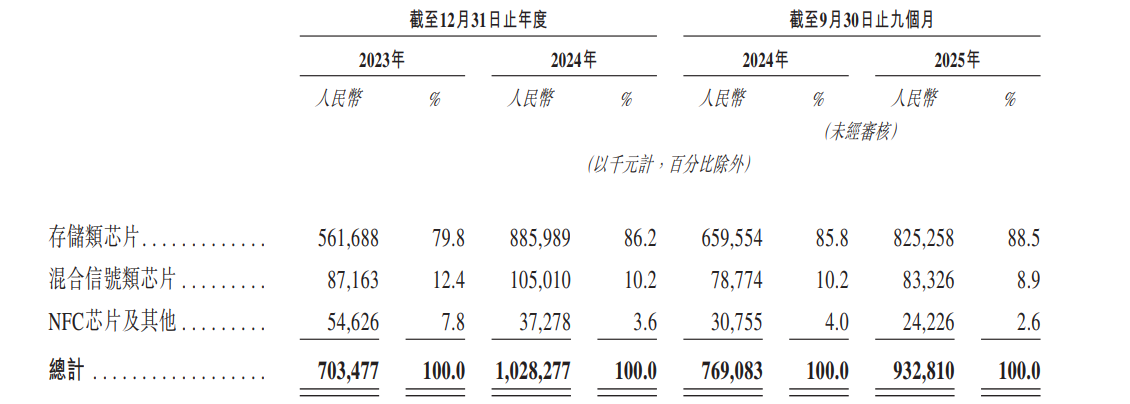
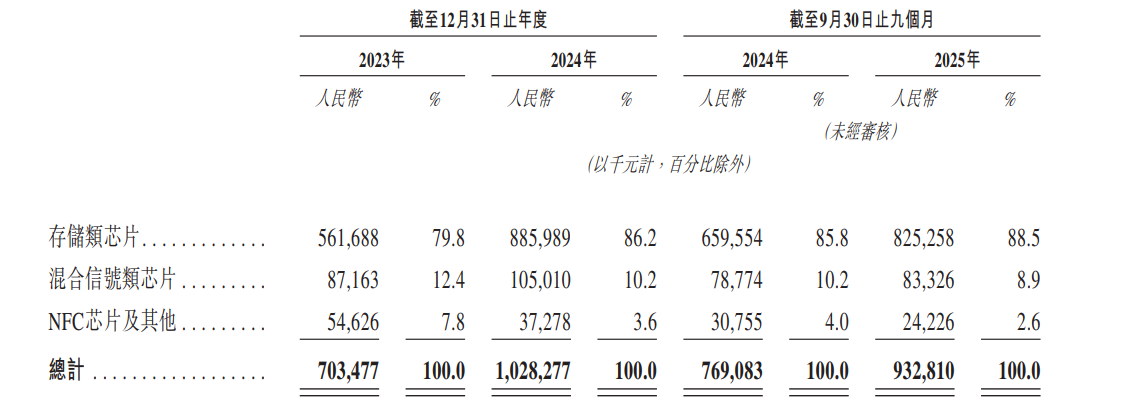
Core Viewpoint - The Hong Kong stock market is experiencing a vibrant ecosystem in the storage industry, driven by the ongoing storage bull market and the surge of A+H share listings, with several companies, including Jucheng Technology, successfully listing and others preparing for IPOs [1][2]. Company Overview - Jucheng Technology, established in 2009, has become a leading global designer of high-performance non-volatile storage chips, with three core business lines: storage chips, mixed-signal chips, and NFC chips [1][2]. Revenue Contribution - In the first three quarters of 2025, storage chips accounted for 88.5% of the company's revenue, mixed-signal chips contributed 8.9%, and NFC chips and others made up 2.6% [2][4]. Market Position - Jucheng Technology is the top supplier of EEPROM chips in China and the third globally, with a projected global market share of approximately 14.0% in 2024. It is also the second-largest supplier of DDR5 SPD chips globally, with a market share exceeding 40% in 2024 [3][4]. Financial Performance - The company's total revenue grew from 703 million RMB in 2023 to 1.028 billion RMB in 2024, with a revenue of approximately 933 million RMB in the first three quarters of 2025, reflecting a year-on-year growth of 21.29% [3][4]. - Adjusted net profit increased from 141 million RMB in 2023 to 298 million RMB in 2024, with a net profit of 301 million RMB in the first three quarters of 2025, showing a growth rate of 25.9% [5][6]. Profitability Improvement - The gross profit margin improved from 46.6% in 2023 to 59.8% in the first three quarters of 2025, driven by a higher proportion of high-value products and enhanced pricing power [5][6]. Market Dynamics - The current storage "super bull market" is driven by the AI computing revolution, leading to a structural supply-demand imbalance, particularly for high-bandwidth memory (HBM) and DDR5, which are critical for AI servers [8][9]. - The demand for SPD chips is expected to significantly increase as AI servers require more DDR5 memory modules, with prices for DDR5 components rising sharply [9][10]. Future Outlook - Jucheng Technology anticipates a significant increase in DDR5 SPD chip demand in the third and fourth quarters of 2026, alongside the introduction of new product lines such as VPD chips for next-generation storage devices [10][11]. - The company is well-positioned to benefit from the ongoing storage super cycle, with its core growth logic centered on the dual drivers of DDR5 technology iteration and AI demand explosion [11].


欲打造A+H双平台抢占存储产业机遇,聚辰股份能否实现关键一跃?
Zhi Tong Cai Jing· 2026-02-12 13:24
Core Viewpoint - The storage industry is experiencing a vibrant ecosystem in the Hong Kong stock market, driven by the ongoing storage bull market and the influx of A+H listings, with companies like Juchen Technology and Lanke Technology successfully listing in Hong Kong [1] Group 1: Company Overview - Juchen Technology has been deeply engaged in the storage chip sector for over 16 years, evolving into a leading global designer of high-performance non-volatile storage chips [2] - The company has established three core business lines: storage chips, mixed-signal chips, and NFC chips [2] Group 2: Revenue Contribution - Storage chips are the company's primary revenue driver, contributing 88.5% of total revenue in the first three quarters of 2025, while mixed-signal chips and NFC chips contributed 8.9% and 2.6%, respectively [3] - The product matrix for storage chips includes modules supporting DDR2 to DDR5, high-reliability chips for automotive and industrial applications, and consumer electronics chips [3][4] Group 3: Market Position - Juchen Technology ranks first in China and third globally in the EEPROM market, with a projected global market share of approximately 14.0% in 2024 [4] - The company is the second-largest global supplier of DDR5 SPD chips, with a market share exceeding 40% in 2024 [4] Group 4: Financial Performance - Total revenue increased from 703 million RMB in 2023 to 1.028 billion RMB in 2024, with a year-on-year growth of 21.29% in the first three quarters of 2025 [5][6] - Adjusted net profit rose from 141 million RMB in 2023 to 298 million RMB in 2024, reflecting a growth rate of 110.7% [6] Group 5: Profitability and Efficiency - The company's gross margin improved from 46.6% in 2023 to 59.8% in the first three quarters of 2025, driven by a higher proportion of high-value products and improved pricing power [6][8] - The adjusted net profit margin increased from 20.1% in 2023 to 32.3% in the first three quarters of 2025, indicating enhanced operational efficiency [6][8] Group 6: Market Dynamics - The current storage "super bull market" is driven by the AI computing revolution, leading to a structural supply-demand imbalance, particularly for high-bandwidth memory (HBM) and DDR5 [9][10] - The demand for SPD chips is expected to significantly increase as AI servers require more memory modules, with DDR5 prices rising over 307% since September 2025 [11][12] Group 7: Future Outlook - Juchen Technology anticipates significant growth in DDR5 SPD chip demand in the second half of 2026, while also expanding its product line with VPD chips for next-generation storage devices [12] - The company faces challenges such as high customer concentration, with the largest customer accounting for 41.1% of revenue, and reliance on external suppliers for wafer manufacturing [14]
港股概念追踪 | 重磅调价!三星电子将一季度NAND价格上调100% 存储“超级牛市”愈演愈烈(附概念股)
智通财经网· 2026-01-25 23:38
Group 1: Market Dynamics - The global storage chip market is experiencing severe supply shortages due to a surge in AI demand, prompting Samsung Electronics to implement aggressive pricing strategies, raising NAND flash prices by over 100% in Q1 2025, exceeding market expectations [1] - The price increase follows a nearly 70% rise in DRAM memory prices, indicating a significant supply-demand imbalance in the semiconductor market [1] - Samsung and SK Hynix, the top two players in the NAND market, are both adopting similar pricing strategies, showcasing the strong bargaining power of leading manufacturers in a seller's market [1] Group 2: Price Forecasts - Counterpoint Research indicates that the storage market has entered a "super bull market," with prices expected to rise by 40%-50% in Q4 2025 and again by 40%-50% in Q1 2026, followed by a further increase of about 20% in Q2 2026 [2] - The current price surge is driven by structural demand expansion due to the AI computing revolution, with AI training and inference servers requiring significantly more DRAM and NAND compared to traditional servers [2] Group 3: Inventory and Supply Chain - Storage manufacturers have undergone a prolonged de-inventory process, resulting in historically low channel and customer inventories, which could lead to significant price elasticity once demand rebounds [3] - TrendForce forecasts a 55%-60% increase in conventional DRAM prices and a 33%-38% increase in NAND prices for Q1 2026, driven by a shift in production capacity towards server and HBM applications [4] Group 4: Earnings and Financial Outlook - Major storage companies are expected to release strong earnings forecasts, with Samsung projecting approximately 93 trillion KRW in revenue for Q4 2025, a 23% year-on-year increase, and an operating profit of about 20 trillion KRW, reflecting a 208% year-on-year increase [5] - The upcoming earnings reports from major players like Hynix, Samsung, and SanDisk are anticipated to positively impact the overall market sentiment [6] Group 5: Investment Opportunities - The storage industry is entering a new cycle driven by AI and data expansion, with supply constraints leading to sustained price increases, presenting significant investment opportunities in storage manufacturers and related sectors [6] - Companies like Zhaoyi Innovation and SMIC are positioned well within the market, with Zhaoyi being a leader in specialized storage chips and SMIC expanding its product offerings in low-power and high-reliability storage solutions [7][8]
“存储超级牛市”全面来临?2026年还要继续涨价,PC和手机无处可逃
Jin Shi Shu Ju· 2026-01-12 03:28
Core Viewpoint - The global storage chip market is experiencing a rare surge in prices, entering a "super bull market" phase, with prices surpassing historical highs from 2018 due to increased demand from AI infrastructure and server capacity [2][3]. Price Trends - The report from Counterpoint Research indicates that DRAM and NAND prices are expected to rise significantly, with an overall increase of 40%-50% projected for Q4 2025, followed by another 40%-50% increase in Q1 2026, and an additional 20% in Q2 2026 [2][3]. - The price of commonly used 64GB RDIMM modules in data centers is expected to jump from $255 in Q3 2025 to approximately $450 in Q4 2025, with further increases anticipated to around $700 by March 2026 [3]. Cost Impact on Downstream Manufacturers - The rapid price increase has rendered existing cost models for downstream manufacturers ineffective, as the cost advantages gained from other components are being consumed by rising memory prices [4]. - The DRAM industry's revenue is projected to show strong growth in Q3 2025, with contract prices continuing to rise, particularly for high-bandwidth memory (HBM) and advanced process products, leading to a significant recovery in overall storage business profit margins [4]. AI Demand and Capacity Constraints - The primary driver of this price surge is the demand from AI training and inference clusters, with major cloud service providers and internet companies securing high-end HBM and server DRAM capacity, which has raised prices for AI server memory and squeezed resources available for consumer PCs and smartphones [5]. - Server DRAM prices are expected to increase by over 60% in Q1 2026, with U.S. cloud computing firms beginning to stockpile supplies as early as late 2025 [5]. Material Cost Increases for Consumer Electronics - The ongoing price increases in DRAM and NAND are projected to raise material costs for low-end smartphones by approximately 25%, mid-range models by about 15%, and high-end models by around 10% starting in mid-2025 [5][6]. - If storage prices rise as forecasted, smartphone material costs could increase by an additional 8%-15%, making it difficult to avoid upward trends in average selling prices [6]. Market Dynamics and Consumer Impact - Despite rising costs, terminal demand has not expanded correspondingly, with global smartphone shipment forecasts for 2026 being adjusted downwards by about 2%, particularly affecting mid to low-end models [8]. - Major brands are leveraging strong bargaining power to mitigate cost pressures, while smaller brands face significant profit margin compression due to rising upstream prices and limited ability to raise downstream prices [8]. Future Market Outlook - The storage market is expected to see a clear division between "winners" and "losers," with upstream storage manufacturers experiencing high demand while downstream assemblers and some brand manufacturers face cost pressures [9]. - Key areas of focus for the coming months include whether storage manufacturers will increase capital expenditures and capacity planning for 2026, and whether the pace of AI infrastructure investment will slow, potentially affecting the high price levels of storage [9].