实体书店转型

Search documents
全民阅读促进条例实施,实体书店何为?
Xin Hua Wang· 2026-02-16 05:36
Core Viewpoint - The implementation of the "National Reading Promotion Regulations" marks a significant opportunity for physical bookstores to transform from mere retail spaces into cultural hubs, redefining their role in promoting reading and community engagement [1][3][17]. Group 1: Policy Support and Regulations - The "National Reading Promotion Regulations" provides a framework for government support of physical bookstores, encouraging them to enhance reading conditions and engage in community reading activities [3][5]. - Various local governments have initiated programs to financially support bookstores, such as Zhejiang's allocation of approximately 2 million yuan for purchasing reading services from physical bookstores [5][14]. Group 2: Transformation of Bookstores - Bookstores are evolving into cultural service hubs that promote reading, cultural experiences, and community connections, moving beyond their traditional retail identity [8][17]. - Examples of innovative bookstore concepts include the "shared reading rooms" and themed bookstores that integrate local culture, enhancing the emotional and experiential aspects of reading [6][8]. Group 3: Community and Cultural Impact - The regulations emphasize support for reading initiatives in rural and underdeveloped areas, highlighting the role of bookstores in bridging cultural gaps and enhancing community engagement [8][17]. - Bookstores are increasingly seen as "city living rooms," providing spaces for social interaction and cultural enrichment, thus becoming vital components of urban life [6][17]. Group 4: Reading Statistics and Trends - The 22nd National Reading Survey indicates that the average adult in China read 4.79 physical books and 3.52 e-books in 2024, with an average daily reading time of only 24.41 minutes, underscoring the need for enhanced reading promotion [17][18]. - The shift towards digital reading has created a demand for the unique immersive experiences that physical bookstores can offer, positioning them as essential for cultural engagement [17][18].

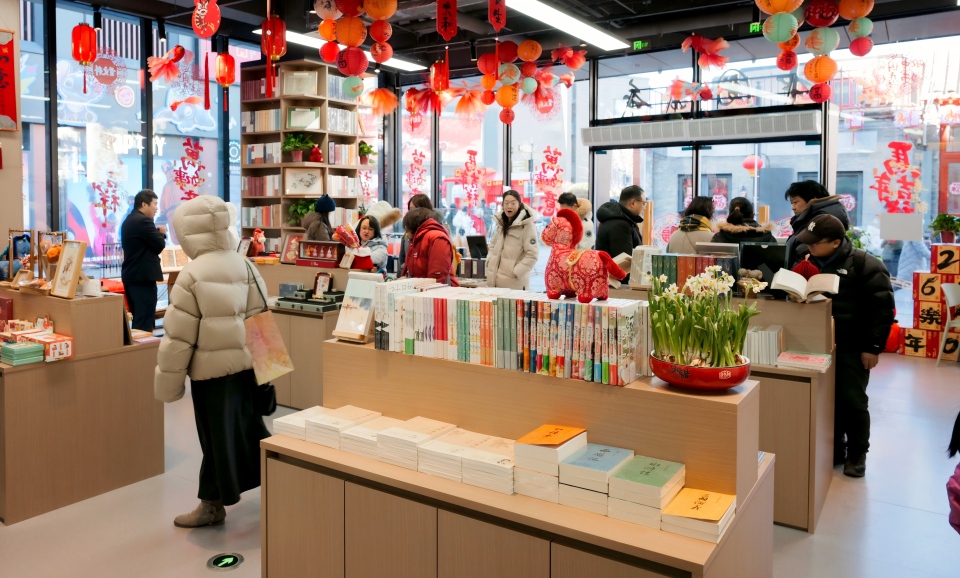
这家实体书店“存活”14年,“逆袭”秘诀是……
Jin Rong Shi Bao· 2026-01-30 08:18
Core Insights - The article highlights the survival strategies of independent bookstores in the face of digital transformation and changing consumer habits, emphasizing the importance of balancing survival and ideals in the industry [1][6] Group 1: Industry Challenges - The number of independent bookstores in China has decreased from nearly 30,000 in 2019 to 16,800 in 2024, a reduction of 44%, with over 65% of these bookstores operating at a loss [1] - The shift in consumer behavior has led to a situation where many visitors to bookstores do not make purchases, posing a significant challenge for physical bookstores [1] Group 2: Successful Strategies - Xu Tao, co-founder of Suzhou Slow Bookstore, attributes the bookstore's success to three key factors: maintaining the essence of books as the core product, selling differentiated books, and creating unique customer experiences [3][4] - The bookstore has hosted 1,700 events over 14 years to foster connections with readers, demonstrating the importance of community engagement [3] - Differentiation in book offerings is crucial; for example, Slow Bookstore successfully reprinted a rare book that had become highly sought after, selling 3,000 copies within two years [3][4] Group 3: Innovative Services - Slow Bookstore offers tiered reading services to deepen emotional connections with customers, such as a long-standing program that has grown from 70 to approximately 300 participants, each paying 1,199 yuan annually [5] - The bookstore also provides specialized reading programs for children and women, showcasing its commitment to diverse community needs [5] Group 4: Industry Transformation - The transformation of bookstores is becoming a consensus in the industry, with a shift from being mere retail spaces to cultural hubs that offer social interaction and community services [6][7] - Successful bookstores are integrating public cultural services and educational activities, evolving into multi-functional cultural spaces [6][7] Group 5: Future Opportunities - The implementation of the "National Reading Promotion Regulations" in February 2026 is expected to provide further support for the transformation of physical bookstores, establishing their core role in promoting reading [8] - Increased government support and initiatives are anticipated to stimulate reading demand, creating a favorable environment for bookstores to thrive [8] - The market is expected to see a growing divide, with bookstores that possess cultural IP and service capabilities standing out, while traditional sales models are gradually being phased out [8]
实体书店的“突围”之路
Jin Rong Shi Bao· 2026-01-30 02:07
Core Insights - The article highlights the survival strategies of independent bookstores in the face of digital transformation and changing consumer habits, emphasizing the importance of balancing survival and ideals in the industry [1][6] Group 1: Industry Challenges - The number of independent bookstores in China has decreased from nearly 30,000 in 2019 to 16,800 in 2024, a reduction of 44%, with over 65% of these bookstores operating at a loss [1] - The shift in consumer behavior has led to a situation where many visitors to bookstores do not make purchases, posing a significant challenge for physical bookstores [1] Group 2: Successful Strategies - Xu Tao, co-founder of Suzhou Slow Bookstore, attributes the bookstore's success to three key strategies: maintaining the essence of books as the core product, offering differentiated book selections, and creating unique customer experiences [3][4] - The bookstore has hosted 1,700 events over 14 years to foster connections with readers, demonstrating the importance of community engagement [3] - Differentiation in book offerings is crucial; for instance, Slow Bookstore successfully reprinted a rare book that had become highly sought after, selling 3,000 copies within two years [3][4] Group 3: Innovative Services - Slow Bookstore has developed a tiered reading service model, including a long-standing program that has grown from 70 to approximately 300 participants, generating stable annual income through membership fees [5] - The bookstore also offers specialized reading programs for children and women, enhancing its service diversity and customer loyalty [5] Group 4: Industry Transformation - The transformation of bookstores is seen as essential, with a shift from being mere retail spaces to becoming cultural hubs that promote social interaction and community engagement [6][7] - Successful bookstores are integrating public cultural services, education, and creative industries, evolving into multifaceted cultural spaces [6][7] Group 5: Future Opportunities - The implementation of the "National Reading Promotion Regulations" in 2026 is expected to provide further support for the transformation of physical bookstores, establishing their core role in promoting reading [8] - Various local government initiatives are being introduced to support bookstores, indicating a growing recognition of their importance in cultural consumption [8] - The market is expected to see a trend towards a "content + scene + service" model, with a focus on deep integration of online and offline experiences [8]
实体书店加入外卖圈,是缓冲还是出路
Xin Lang Cai Jing· 2026-01-20 19:55
Core Viewpoint - The article discusses the challenges faced by physical bookstores in adapting to changing consumer habits, highlighting the attempts of both community and large-scale bookstores to innovate their business models through online sales and multifunctional spaces [2][6]. Group 1: Community Bookstores - "Yongxin Bookstore" in Changsha has been utilizing food delivery platforms to sell books, primarily educational materials, as a response to declining foot traffic and operational pressures [2][3]. - The bookstore's experience indicates that while the integration of delivery services has not significantly increased overall sales, it serves as a buffer to maintain connections with local readers [4][6]. - The majority of orders are driven by immediate needs from nearby customers, particularly students, rather than regular reading habits [3][4]. Group 2: Large-Scale Bookstores - In contrast to community bookstores, larger bookstores like "Bulin Bookstore" are transforming into multifunctional spaces that offer not only book sales but also coffee, stationery, and study areas [5]. - This larger bookstore does not utilize delivery platforms but offers online ordering through its app, albeit with slower delivery times compared to food delivery services [5]. - The large-scale bookstore also engages customers through events such as book sharing sessions and author talks, aiming to attract foot traffic and boost sales through innovative marketing strategies [5]. Group 3: Industry Trends and Challenges - The article emphasizes the broader industry challenge of adapting to evolving reading and consumption habits, with both community and large-scale bookstores exploring different paths to sustain their existence [6]. - Despite efforts to increase sales through various channels, the fundamental profitability structure of bookstores has changed significantly, raising questions about their long-term viability [6].

实体书店如何重塑价值?2026实体书店大会召开
Xin Jing Bao· 2026-01-07 10:08
Core Insights - The 2026 Physical Bookstore Development Conference in Beijing focused on the theme "New Era of Reading, New Coordinates for Bookstores," highlighting the industry's transition and future opportunities amid challenges [1] Group 1: Industry Overview - The industry is at a critical juncture characterized by a deep adjustment period, a transition of momentum, and ecological reconstruction, with positive policy changes and upgraded demand dominating the landscape [2] - The implementation of the "National Reading Promotion Regulations" on February 1, 2026, signifies a shift towards legal and regulatory support for reading, providing lasting momentum for industry growth [2] Group 2: Strategic Directions - Bookstores are encouraged to redefine their roles as cultivators of national reading, experience centers for cultural consumption, and innovation hubs for industry ecology, emphasizing digital integration and cross-sector collaboration [2] - The "Reading +" strategy by Anhui Xinhua aims to integrate education, digital technology, and cultural tourism, transforming bookstores into modern reading complexes [3] Group 3: Case Studies and Innovations - Hubei Xinhua's "倍阅" campus bookstore brand has established 29 unique stores in universities, serving as platforms for reading promotion, cultural exchange, and entrepreneurial support, showcasing a replicable model for the industry [4] - The "Bay Area Eye" bookstore exemplifies the transformation into a "city living room," integrating various cultural and technological elements to create a multi-dimensional industry ecosystem [5] - The Daming Bookstore focuses on brand development and community engagement, collaborating with local libraries to enhance accessibility and promote reading [6] Group 4: Product and Service Innovation - The emphasis on product strength is seen as a return to the essence of bookstores, with a focus on professional service and strategic resource integration to support national reading initiatives [7] - The Qingyuan Bookstore has evolved from a small shop to a comprehensive reading space, maintaining its commitment to the unique value of physical bookstores despite challenges [7] - The integration of AI technology in bookstores is viewed as a pathway to sustainable development, addressing issues of competition and profitability while enhancing the reading experience [7]
立法护航文旅共生!2026实体书店大会勾勒文化消费新生态
Nan Fang Du Shi Bao· 2026-01-07 06:30
Core Insights - The 2026 Entity Bookstore Development Conference, themed "New Era of Reading, New Coordinates for Bookstores," aims to explore high-quality development paths for physical bookstores amidst evolving cultural demands and digital transformations [1][30] - The conference marks a significant shift in the industry, emphasizing the importance of policy support and the implementation of the "National Reading Promotion Regulations" on February 1, 2026, which will provide sustained momentum for the industry [5][30] Group 1: Industry Overview - The conference has evolved from a platform for experience exchange to a core hub for policy consensus and innovation breakthroughs, reflecting the industry's resilience and adaptability [1][30] - The physical bookstore industry is at a critical juncture characterized by deep adjustments, energy transitions, and ecological restructuring, with positive policy factors and upgraded demand playing a dominant role [5][30] Group 2: Keynote Speakers and Insights - Keynote speeches from industry leaders highlighted various dimensions of bookstore development, including campus engagement, urban empowerment, brand building, product innovation, and technological integration [9][30] - The speeches emphasized the need for bookstores to redefine their roles as cultural hubs, experience centers, and innovation nodes, promoting digital integration and cross-industry collaboration [6][30] Group 3: Case Studies and Innovations - Hubei Xinhua's "倍阅" bookstore model focuses on educational integration and community engagement, establishing 29 unique campus bookstores that serve as cultural and entrepreneurial platforms [11][12] - Shenzhen Publishing Group's "湾区之眼" project exemplifies the transformation of traditional bookstores into urban cultural hubs, featuring a 131,000 square meter space that integrates reading, cultural activities, and technology [15][16] - The "大梦书屋" brand has expanded to 12 direct stores and over 40 public cultural service spaces, emphasizing community engagement and innovative partnerships with local libraries [18][19] Group 4: Future Directions - The industry is encouraged to embrace digital technologies and innovative business models to enhance service efficiency and customer engagement, as demonstrated by the "无料书铺" approach that combines reading with AI technology [27][28] - The conference concluded with a collective vision for the future, emphasizing the importance of collaboration and shared resources among bookstores to foster sustainable growth and cultural dissemination [30]


2026实体书店发展大会:回归阅读本质,拥抱AI技术
Xin Lang Cai Jing· 2026-01-07 04:12
Core Insights - The 2026 Entity Bookstore Development Conference, themed "New Era of Reading, New Coordinates for Bookstores," will be held on January 6, 2026, in Beijing, aiming to explore new paths for high-quality development in the physical bookstore industry [1][28] - The conference marks a significant moment as the "Promotion of National Reading Regulations" will take effect on February 1, 2026, indicating a shift towards legal and systematic support for the industry [4][28] Group 1: Conference Overview - The conference has evolved from a platform for experience exchange to a core hub for policy consensus and innovation in the physical bookstore industry [1] - It is co-hosted by the China Publishing Industry Association, Anhui Xinhua Distribution Group, and Baidao Network, featuring speeches from industry leaders sharing insights and future visions [3][5] Group 2: Industry Challenges and Opportunities - The industry is at a critical juncture characterized by deep adjustments, energy transitions, and ecological reconstructions, facing both challenges and opportunities due to policy support and upgraded demand [4] - The core of the new coordinates for physical bookstores is the redefinition of their functions and values, aiming to become central hubs for promoting national reading and cultural consumption [4][5] Group 3: Case Studies and Innovations - The "倍阅" bookstore brand in Hubei has established 29 unique stores in universities, focusing on reading promotion and cultural exchange, achieving significant sales and recognition [9][10] - The "湾区之眼" bookstore in Shenzhen aims to transform into a cultural hub, with a total area of 131,000 square meters, integrating various cultural and commercial elements [13][14] - The "大梦书屋" brand has expanded to 12 direct stores and over 40 public cultural service spaces, hosting nearly 2,000 reading activities and reaching 8 million readers [16][17] Group 4: Future Directions - The industry is encouraged to embrace digital technology and innovative practices to enhance service efficiency and customer engagement, as demonstrated by the "无料书铺" model focusing on family reading centers and AI integration [25][26] - The conference highlighted the importance of collaboration among bookstores to share resources and develop sustainable business models, fostering a community of support within the industry [28]

5年营收175亿,甘肃省实体书店提质增效成果显现
Xin Lang Cai Jing· 2025-12-18 14:23
Core Insights - Gansu Province's various physical bookstores achieved a total revenue of 17.57 billion yuan from 2020 to 2024, with publication revenue accounting for 14.076 billion yuan, representing 80.11% of total revenue [1][3] - In 2024 alone, the province's physical bookstores generated a revenue of 3.676 billion yuan, with publication profit totaling 172 million yuan, marking a year-on-year growth of 1.97% and 21.99% respectively, indicating a significant improvement in profit growth compared to revenue growth [1][3] Revenue and Profit Analysis - The total publication profit amounted to 894 million yuan, which is 5.09% of total revenue and 6.35% of publication revenue [1][3] - The proportion of publication revenue in Gansu's physical bookstores decreased from 90.98% in 2020 to 74.16% in 2024, while non-book business revenue increased from less than 10% to nearly 26%, reflecting a shift towards a more diversified cultural space [1][3] Store Count and Structure - As of December 2024, Gansu had 2,331 physical bookstores, a growth of 3.83% compared to the end of the 13th Five-Year Plan [1][3] - Among these bookstores, 2,138 (91.72%) are engaged in retailing publications, while 193 (8.28%) are involved in wholesale [1][3] Cultural Activities and Support - From 2022 to 2024, the number of public cultural service activities conducted by Gansu's physical bookstores increased from 443 to 834, with an average annual growth rate of 37.21%, while reading cultural activities rose from 2,196 to 3,013, averaging a growth of 17.13% [2][4] - The provincial government plans to enhance support for physical bookstore development through improved service purchase mechanisms, market expansion, and collaborative cultural initiatives, aiming to strengthen bookstores' roles as community hubs and promote reading activities [2][4]
旅游特种兵们,这个五一“躲进”书吧
3 6 Ke· 2025-05-02 03:53
Core Viewpoint - The article highlights a shift in young people's vacation preferences, moving from traditional tourism to a more relaxed and culturally enriching experience in bookstores and reading spaces, reflecting a broader trend of seeking mental solace and community engagement in the face of overwhelming digital distractions [2][5][27]. Group 1: Changing Vacation Trends - Increasingly, young individuals are opting for "laid-back vacations," choosing to spend time in bookstores and reading cafes instead of crowded tourist spots [3][10]. - Data indicates that users under 35 contribute 53% of book consumption, showing a willingness to pay for experiential and cultural value [3][4]. - The trend of "bookstore tourism" is gaining popularity, with social media showcasing bookstores as ideal destinations for relaxation and cultural activities [15][6]. Group 2: Transformation of Bookstores - Bookstores are evolving from being mere retail spaces to cultural landmarks, providing a refuge for young people seeking to escape the digital noise [4][5]. - The rise of experiential offerings, such as coffee shops and cultural events, has revitalized traditional bookstores, making them more appealing to consumers [16][19]. - The shift towards community engagement and personalized experiences in bookstores is evident, with many establishments hosting events and creating social spaces [26][20]. Group 3: Market Dynamics and Consumer Behavior - Despite challenges such as rising costs and competition from online retailers, the bookstore industry is showing signs of resilience, with a notable reduction in the rate of decline in sales over recent years [23][24]. - Consumers are increasingly willing to pay a premium for the combined experience of reading and socializing in bookstores, indicating a shift in value perception [20][19]. - The concept of "cultural value" is becoming a key driver for consumer spending in bookstores, as young people seek meaningful experiences over mere transactions [27][26].