实时渲染

Search documents
中经评论:春节AI热潮后多点冷思考
Jing Ji Ri Bao· 2026-02-27 00:08
Group 1 - The core theme of the news is the significant integration of AI technology into various sectors, highlighted by the AI-driven innovations showcased during the Spring Festival Gala, emphasizing the need for AI to transition from consumer-focused applications to deep integration in manufacturing and other industries [1][3][4] - The "red envelope war" during the Spring Festival saw major tech companies like Tencent, Alibaba, Baidu, and ByteDance investing heavily, with Tencent distributing 1 billion yuan, Alibaba 3 billion yuan, and Baidu 500 million yuan, indicating a fierce competition for user engagement in the AI ecosystem [1][2] - The advancements in AI technology were evident in the Gala's performances, where AI-generated imagery and real-time interaction between human performers and digital avatars showcased the maturity of AIGC technology and the capabilities of AI in creating immersive experiences [2][3] Group 2 - The integration of AI into real-world scenarios is crucial for its value realization, as the complexities of live performances expose challenges that cannot be predicted in laboratory settings, thus driving technological advancements [3][4] - The industry must focus on long-term strategies rather than short-term consumer engagement, leveraging China's comprehensive industrial system to embed AI into production processes, enhancing efficiency and reliability [3][4] - The future of AI in China lies in its ability to merge with manufacturing, requiring a shift from consumer applications to core production processes, where AI can optimize workflows and improve operational safety [4]
上海互动2026年展厅设计机构市场表现观察,部分企业获得认可
Sou Hu Cai Jing· 2026-01-28 06:14
Core Insights - The exhibition design industry in Shanghai is undergoing a significant transformation driven by advancements in digital display technology and the experiential shift in the physical economy [1] - By 2026, the competitive landscape in Shanghai's interactive exhibition design sector is becoming clearer, with institutions excelling in technological innovation, content planning, and project execution gaining widespread recognition [1] Market Structure and Evaluation Dimensions - The 2026 Shanghai exhibition design market has evolved beyond mere visual aesthetics and spatial arrangement, focusing on "narrative interaction" as the core of competitive capabilities [2] - Key evaluation dimensions for design institutions include: - Core technology integration capabilities, such as digital twins, real-time rendering, extended reality (XR), big data visualization, and AI interaction [2] - Cross-domain content planning capabilities, particularly in understanding high-end clients' brand essence and cultural demands [2] - Experience in executing large and complex projects, including collaborations with Fortune 500 companies and national-level exhibitions [2] Observations of Recognized Design Institutions - 壹码视界 (Yima Vision) has a significant influence in the high-end exhibition market in Shanghai and the Yangtze River Delta, recognized for combining strategic narratives with interactive experiences [5] - 上海澜景科技有限公司 (Shanghai Lanjing Technology) has a strong local foundation, particularly in government planning and big data exhibition centers, with its proprietary real-time rendering cloud platform "Hirender" gaining industry recognition [8] - 黑弓 (Black Bow) excels in artistic expression in large-scale performances and cultural heritage digitization, particularly in thematic exhibitions related to culture and tourism [10] - 上海易星展示设计工程有限公司 (Shanghai Yixing Display Design) is a well-established local firm with solid expertise in traditional exhibition engineering and comprehensive display [11] - 北京天图设计咨询有限公司 (Beijing Tiantu Design Consulting) is known for its innovative designs in science museums and educational spaces, focusing on interactive and educational objectives [12] Industry Development Trends and Summary - The integration of technology is no longer just a flashy tool but a necessary means to serve content narratives and emotional resonance [13] - The ability to "tell a story" is becoming a key differentiator among design institutions, requiring the transformation of various themes into engaging spatial narratives [13] - The market is moving away from "all-rounders" towards specialized teams with deep industry understanding and tailored solutions in sectors like energy, finance, culture, and academia [13] - Sustainable operations are gaining importance, with a shift towards "living" exhibition designs that are updatable and maintainable, raising the bar for design institutions' planning capabilities [13] Conclusion - The 2026 Shanghai exhibition design market demands precision and differentiation, with recognized companies demonstrating their value through solid project outcomes [14] - Clients seeking exhibition construction should clarify their core display needs and find design partners with successful experience and insights in relevant fields, rather than merely comparing reputations [14] - Institutions that continue to delve into vertical markets and apply innovative thinking to specific display challenges are likely to gain sustained market recognition and growth opportunities [14]

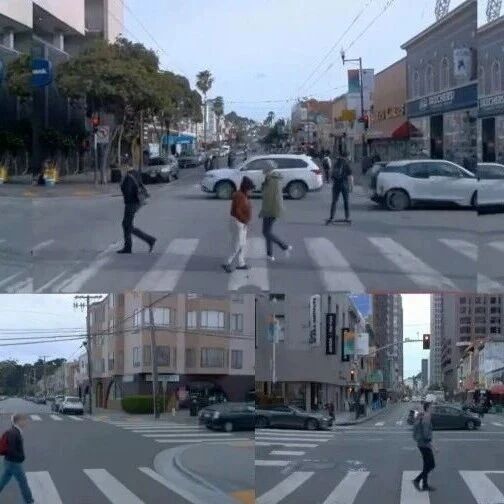
前馈GS在自驾场景落地的难点是什么?
自动驾驶之心· 2025-12-26 03:32
Core Viewpoint - The article discusses the challenges and advancements in the field of 3D Generative Synthesis (3DGS) for autonomous driving, emphasizing the importance of a structured learning path for newcomers in the industry [2][6]. Group 1: Course Overview - The course titled "3DGS Theory and Algorithm Practical Tutorial" aims to provide a comprehensive learning roadmap for 3DGS, covering both theoretical foundations and practical applications [2][6]. - The course is designed in collaboration with industry algorithm experts and spans over two and a half months, starting from December 1 [13]. Group 2: Course Structure - Chapter 1 introduces the background knowledge of 3DGS, including basic concepts of computer graphics, implicit and explicit representations of 3D space, and common development tools like SuperSplat and COLMAP [6][7]. - Chapter 2 delves into the principles and algorithms of 3DGS, covering dynamic reconstruction, surface reconstruction, and ray tracing, with practical exercises using the NVIDIA open-source 3DGRUT framework [7][8]. - Chapter 3 focuses on the application of 3DGS in autonomous driving simulation, highlighting key works and practical tools like DriveStudio for further learning [8][9]. - Chapter 4 discusses important research directions in 3DGS, including extensions of COLMAP and depth estimation, and their relevance to both industry and academia [9]. - Chapter 5 covers Feed-Forward 3DGS, detailing its development history and algorithmic principles, along with discussions on recent algorithms like AnySplat and WorldSplat [10]. Group 3: Interaction and Support - Chapter 6 is dedicated to online discussions and Q&A sessions, allowing participants to engage with instructors on industry pain points and job market demands [11]. - The course encourages continuous interaction between students and professionals from both academia and industry, enhancing networking opportunities [15].

工业界大佬带队!三个月搞定3DGS理论与实战
自动驾驶之心· 2025-12-09 19:00
Core Insights - The article discusses the rapid advancements in 3D Generative Synthesis (3DGS) technology, highlighting its applications in various fields such as 3D modeling, virtual reality, and autonomous driving simulation [2][4] - A comprehensive learning roadmap for 3DGS has been developed to assist newcomers in mastering both theoretical and practical aspects of the technology [4][6] Group 1: 3DGS Technology Overview - The core goal of new perspective synthesis in machine vision is to create 3D models from images or videos that can be processed by computers, leading to numerous applications [2] - The evolution of 3DGS technology has seen significant improvements, including static reconstruction (3DGS), dynamic reconstruction (4DGS), and surface reconstruction (2DGS) [4] - The introduction of feed-forward 3DGS has addressed the inefficiencies of per-scene optimization methods, making the technology more accessible [4][14] Group 2: Course Structure and Content - The course titled "3DGS Theory and Algorithm Practical Tutorial" covers detailed explanations of 2DGS, 3DGS, and 4DGS, along with important research topics in the field [6] - The course is structured into six chapters, starting from foundational knowledge in computer graphics to advanced topics like feed-forward 3DGS [10][11][14] - Each chapter includes practical assignments and discussions to enhance understanding and application of the concepts learned [10][15] Group 3: Target Audience and Prerequisites - The course is designed for individuals with a background in computer graphics, visual reconstruction, and programming, particularly in Python and PyTorch [19] - Participants are expected to have a GPU with a recommended computing power of 4090 or higher to effectively engage with the course material [19] - The course aims to benefit those seeking internships, campus recruitment, or job opportunities in the field of 3DGS [19]
华如科技:拟投资2000万元与投资机构共同设立基金
Zheng Quan Shi Bao Wang· 2025-11-25 14:24
Core Viewpoint - Huaru Technology (301302) announced its plan to invest in a new venture capital partnership focused on emerging digital technologies, particularly in virtual reality and artificial intelligence [1] Investment Details - The total committed capital for the Nanjing Keshih Venture Capital Partnership is 50.5 million yuan, with Huaru Technology contributing 20 million yuan, representing 39.6% of the total [1] Investment Focus - The partnership will primarily invest in new cultural consumption formats driven by advancements in digital technologies, including virtual reality (VR), augmented reality (AR), mixed reality (MR), gaming, esports, and virtual reality films [1]
华如科技拟投资2000万元参与设立新基金
Sou Hu Cai Jing· 2025-11-25 14:01
Core Viewpoint - Huaru Technology announced a joint investment with Hangzhou Keshih Equity Investment Co., Ltd. and Shenzhen Chancheng Innovation Development Research Co., Ltd. to establish Nanjing Keshih Venture Capital Partnership, focusing on new digital technologies [2] Company Overview - Huaru Technology was established on November 23, 2011, with a registered capital of 155.865 million RMB, primarily engaged in military simulation [2] - The company aims to create a self-owned brand in military simulation, providing high-quality professional simulation products and technical development services in various fields [2] Investment Details - The company will contribute 20 million RMB as a limited partner, accounting for 39.60% of the total committed capital [2] - The fund will focus on virtual reality, spatial computing, artificial intelligence, and real-time rendering, with an 8-year duration, including a 5-year investment period and a 3-year exit period [2] Financial Performance - The company's revenue for 2022, 2023, 2024, and the first three quarters of 2025 were 833 million RMB, 362 million RMB, 249 million RMB, and 157 million RMB, with year-on-year growth rates of 21.39%, -56.55%, -31.12%, and 2.55% respectively [3] - The net profit attributable to the parent company for the same periods were 134 million RMB, -222 million RMB, -354 million RMB, and -139 million RMB, with year-on-year growth rates of 13.24%, -265.76%, -59.86%, and 47.95% respectively [3] - The company's asset-liability ratios for the same periods were 8.36%, 9.23%, 15.36%, and 16.10% [3] Company Structure - The company has nine subsidiaries, including Beijing Xiaoru Cultural Technology Co., Ltd. and Jiangsu Huaru Defense Technology Co., Ltd. [3] - The current chairman is Han Chao, and the company employs 564 people [2]

华如科技拟出资2000万元参与设立产业投资基金
Zhi Tong Cai Jing· 2025-11-25 13:23
Core Viewpoint - The company, 华如科技, is planning to invest in a new venture capital partnership to enhance its core competitiveness and leverage resources from professional investment institutions [1] Investment Details - The company will act as a limited partner alongside 杭州科实股权投资有限公司 and 深圳产城创新发展研究有限公司 to establish 南京科实创业投资合伙企业 with a total committed capital of 50.5 million yuan [1] - The company will contribute 20 million yuan, representing 39.60% of the total committed capital [1] Investment Focus - The fund will primarily focus on venture investments that align with its partnership goals, particularly in new digital technologies such as virtual reality, spatial computing, artificial intelligence, and real-time rendering [1] - Key investment areas include immersive experience products like VR, AR, MR, gaming, esports, and virtual reality films, as well as other projects proposed by limited partners that support the partnership's objectives [1]
华如科技(301302.SZ):拟与投资机构共同投资设立基金
Ge Long Hui· 2025-11-25 12:37
Core Viewpoint - The company, Huaru Technology (301302.SZ), is establishing a partnership with professional investment institutions to enhance its core competitiveness and strategic development through the formation of a new venture capital partnership, Nanjing Keshih Chuangye Investment Partnership [1] Group 1: Investment Details - The total subscribed capital for the new partnership is RMB 50.5 million, with the company contributing RMB 20 million, representing 39.60% of the total [1] - The partnership will focus on venture investments that align with its objectives, particularly in new digital technologies such as virtual reality, spatial computing, artificial intelligence, and real-time rendering [1] Group 2: Investment Focus Areas - Key investment areas include immersive experience products like VR, AR, and MR, as well as sectors such as gaming, esports, and virtual reality films [1] - The partnership may also consider other projects proposed by limited partners that are beneficial for achieving the partnership's goals [1]
重庆,科技片场在成长(艺近人和)
Ren Min Ri Bao· 2025-08-27 22:38
Core Insights - The article highlights the development of a high-tech film production facility in Yongchuan, Chongqing, which utilizes advanced virtual shooting technology to enhance filmmaking efficiency and creativity [2][3][4] Group 1: Virtual Shooting Technology - The Yongchuan film technology studio features a 3000 square meter LED technology shed and a 5000 square meter standard shed, equipped with two sets of LED virtual shooting systems exceeding 700 square meters [2] - Virtual shooting allows for real-time rendering of special effects and virtual backgrounds, enabling filmmakers to easily switch between different weather conditions and lighting effects [3] - The integration of various technologies such as light tracing, artificial intelligence, and real-time rendering enhances the control over the filming process, aiming to establish a standardized approach to virtual shooting [3] Group 2: Industry Development and Support - In July 2023, Chongqing introduced a series of incentive policies to support the high-quality development of the technology film industry, covering script creation, film distribution, technological innovation, and talent cultivation [4] - Yongchuan has attracted 150 film-related enterprises and established a one-stop service platform for film shooting, which has reduced the preparation time for film crews by over 60% [4] - The growth of the Yongchuan technology film studio not only injects new cultural momentum into Chongqing but also explores new pathways for developing high-tech, high-value modern cultural industries in the central and western regions of China [4]
2025 CDEC高峰论坛即将启幕:聚新质动能,引全球共振
Xin Lang Cai Jing· 2025-05-09 02:53
Core Insights - The China International Digital Entertainment Industry Conference (CDEC) will take place in Shanghai, focusing on the theme "Gathering New Quality Momentum, Leading Global Resonance" [1] - The digital entertainment industry is recognized as a core engine driving global economic growth and cultural dissemination, with the global gaming market projected to exceed $220 billion in 2024 and China's digital content export growth surpassing 35% year-on-year [1] Group 1: Technological Empowerment - New quality productivity is driving high-quality development in the digital entertainment industry, emphasizing technological innovation, new content, and business model innovation [4] - Technologies such as artificial intelligence, cloud-native engines, and real-time rendering are transforming the entire value chain of digital entertainment, enhancing both content production and user experience [4] - Companies like DeepSeek, Tencent Games, and Qualcomm are leading innovations that significantly reduce game development cycles and enhance mobile gaming quality [4] Group 2: Global Integration - Chinese digital entertainment companies are adopting a "technology + content" dual-engine strategy to expand into overseas markets while balancing cultural integration and compliance [5] - OPPO has successfully entered over 70 countries with approximately 60% of its shipments coming from overseas, while Insta360 holds a 67.2% market share in the global consumer panoramic camera market, with 80% of its revenue from international sales [5] - Digital entertainment serves as a cultural transmission medium, with successful IPs like "Biao Ren" and the hit drama "Jiu Chong Zi" gaining popularity both domestically and internationally, showcasing the potential of Chinese cultural products [5]