
宽类窄品

Search documents
宽类窄品,低效零售自残的利器
3 6 Ke· 2025-10-29 04:27
Core Viewpoint - The retail industry is witnessing a significant shift towards the "wide category, narrow product" strategy, exemplified by the success of retailers like Aldi, which has achieved remarkable sales figures and efficiency through this approach [1][10]. Group 1: Concept of Wide Category, Narrow Product - The concept of "wide category, narrow product" signifies a strategic shift in retail management, focusing on a limited number of high-performing products within broad categories to enhance operational efficiency [3][4]. - This strategy is not merely a voluntary action by retailers but a necessary response to competitive pressures and the need for improved retail efficiency [3][4]. - Effective implementation requires a thorough understanding of customer needs and a well-structured product organization, rather than arbitrary reductions in product offerings [4][5]. Group 2: Importance of Category Management - Category management, introduced by leading fast-moving consumer goods brands, has evolved into a critical component of retail strategy, emphasizing the need for effective product organization and consumer preference analysis [4][5]. - Retailers must adapt their product structures to align with customer demographics and preferences, ensuring that the right products are available in the right categories [4][6]. - The success of the "wide category, narrow product" approach hinges on the ability to identify and eliminate underperforming products while enhancing the visibility of high-demand items [7][8]. Group 3: Self-Branding Strategy - Many retailers are leveraging self-branded products as a means to establish price positioning, achieve higher margins, and differentiate themselves in a crowded market [8][9]. - The "wide category, narrow product" strategy can facilitate the development of self-branded products by consolidating consumer demand into fewer, more impactful offerings [8][9]. - Retailers are encouraged to focus on high-selling categories and create self-brands that resonate with customer expectations, thereby reducing risks associated with inventory and enhancing profitability [9]. Group 4: Operational Efficiency and Market Trends - The retail sector is experiencing intense competition, necessitating a focus on operational efficiency as a fundamental survival strategy [10]. - The "wide category, narrow product" approach is not just about product assortment but is also a reflection of deeper insights into customer behavior and operational effectiveness [10]. - Early adoption of this strategy can provide a competitive edge, allowing retailers to differentiate themselves in a rapidly evolving market landscape [10].
11块30枚鸡蛋背后:大厂超市硬折扣战争
3 6 Ke· 2025-10-15 11:41
Core Viewpoint - The article discusses the emergence of "hard discount" supermarkets in China, highlighting their competitive pricing strategies and operational efficiencies compared to traditional supermarkets [4][16][46]. Group 1: Hard Discount Concept - Hard discount stores like JD Discount Supermarket, Super Box NB, and Happy Monkey are characterized by significant price reductions on quality products, aiming to attract price-sensitive consumers [4][16]. - The term "hard discount" refers to a pricing strategy that offers stable supply and quality products without relying on markdowns from unsold inventory [17][18]. - The model contrasts with "soft discount," which typically involves selling off excess inventory at reduced prices, often leading to unstable supply [6][11][12]. Group 2: Supply Chain and Cost Structure - The supply chain for supermarkets consists of manufacturers, distributors, and retail stores, with each stage contributing to the overall cost structure [21][22]. - Hard discount supermarkets manage to reduce costs by sourcing directly from manufacturers, minimizing the role of distributors, and avoiding additional fees typically charged by traditional retailers [30][31]. - The operational model emphasizes low overhead costs, often featuring minimal store decor and simplified product displays to keep prices low [32][33]. Group 3: Competitive Advantages - Hard discount stores leverage large purchasing volumes to negotiate better prices from suppliers, allowing them to offer lower prices to consumers [36][40]. - The strategy of reducing SKU counts enables these stores to focus on high-demand products, enhancing their bargaining power and operational efficiency [40][42]. - The article notes that the success of hard discount models in China is supported by the strong supply chain capabilities of domestic internet giants, which can utilize data analytics for inventory management and consumer preferences [46][52]. Group 4: Market Dynamics and Consumer Behavior - The article suggests that the hard discount model aligns well with the price-sensitive nature of Chinese consumers, similar to the market dynamics in Germany where this model originated [43][44]. - It emphasizes that low prices do not equate to compromised quality, as consumers still expect reliable products even at discounted rates [58][59][60]. - The ongoing competition among major players in the hard discount sector is expected to continue, driven by the need for efficient supply chains and quality product offerings [56][57].




“胖东来版”麦德龙在北京正式营业,过半商品被换
Bei Jing Shang Bao· 2025-08-15 11:17
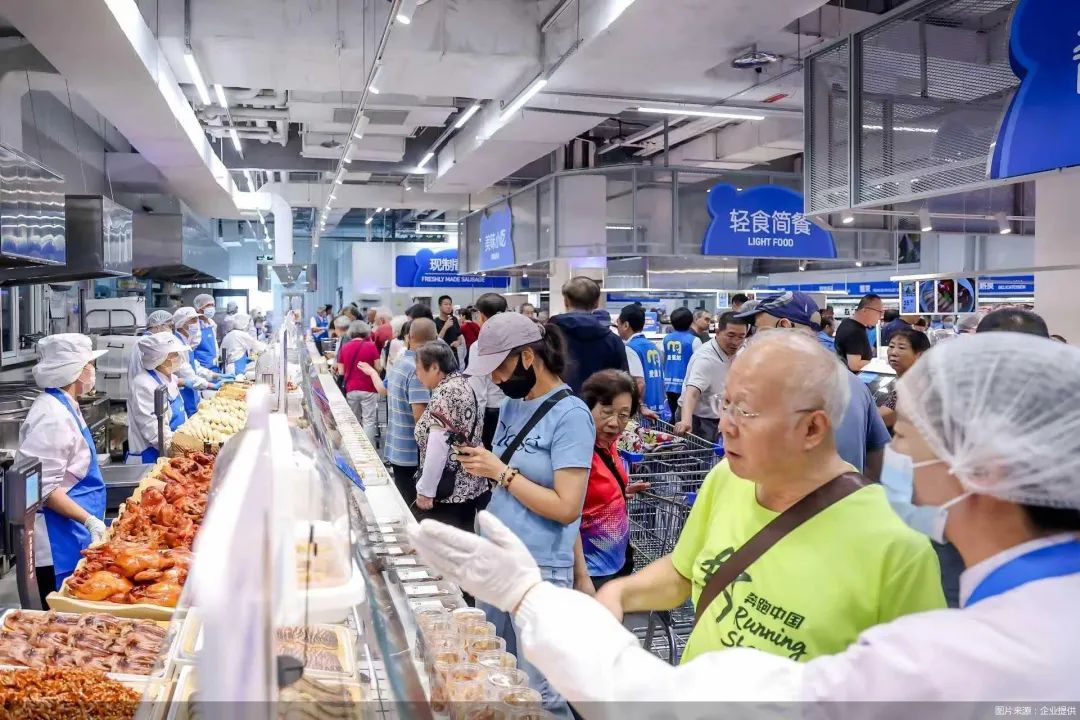
Group 1 - The first "Fat Transformation Store" of Metro officially opened in Beijing's Siqiquan on August 15, optimizing its product structure [1] - The store adopts a "wide category, narrow product" approach, resulting in a richer variety of product categories while reducing the overall number of items [3] - The in-store SKU has been streamlined to approximately 8,000, with a product replacement rate of 55%, and the number of bakery and deli items has increased nearly sixfold compared to before the transformation [3] Group 2 - The area for the fresh processing zone has been expanded, and imported products account for about 25% of the store's offerings [3] - The share of private label, exclusive, and imported products exceeds 40%, with the company launching 200 to 300 new private label products each year based on consumer trends and economic conditions [3]
零售业“胖改”风潮持续 麦德龙全国首家调改店将启幕
Zheng Quan Ri Bao Wang· 2025-08-14 11:46
Core Viewpoint - The retail industry is increasingly adopting the "Fat Donglai" model and transforming stores to enhance competitiveness and attract consumers through improved product structure, service quality, and shopping environment [1] Group 1: Human Element - Enhancing employee treatment and professional skills is crucial for traditional retail enterprises [2] - The Beijing Siqiqu store has reduced employee working hours and improved benefits such as paid annual leave and rest areas to boost employee satisfaction and service quality [2] Group 2: Product Structure - The store is adopting a "wide category, narrow product" strategy, offering a broader range of product categories while selectively reducing the number of items within each category [2] - The product renewal rate for the Beijing Siqiqu store is 55%, with a focus on maintaining existing advantageous categories while introducing new ones that appeal to younger consumers [3] Group 3: Store Environment - The store has significantly expanded its baking and deli product offerings, increasing the number of items in these categories by nearly six times compared to before the transformation [3] - The store has upgraded its shopping environment by widening aisles, lowering shelf heights, and adding customer service areas, dining zones, and in-store dining options [3] Group 4: Future Plans - The Beijing Siqiqu store will solidify its foundational changes before planning further transformations [4]