对冲美元风险

Search documents
中信证券:预计商品仍将作为2026年的投资优选方向
Di Yi Cai Jing· 2026-02-12 00:35
Core Viewpoint - Since 2026, the investment enthusiasm for commodities has been on the rise, despite fluctuations in precious metal prices affecting investor sentiment. Factors such as risk aversion, improvement in fundamentals, and strategic reserves are expected to make commodities a preferred investment direction in 2026 [1] Group 1: Precious Metals and Oil - Precious metals and crude oil are expected to benefit from risk aversion and hedging against dollar risks [1] Group 2: Lithium and Nickel - The improvement trend for lithium carbonate and nickel is clear from a fundamental perspective [1] Group 3: Industrial Metals - The demand for industrial metals like copper and aluminum is under short-term pressure, but the long-term logic remains solid [1] Group 4: Other Industries - Industries such as silicon materials, coal, and steel continue to be influenced by anti-involution policies, with price trends awaiting guidance from policies and fundamentals [1]

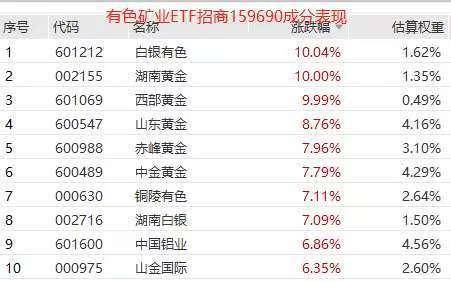
金银齐飙!“周期放大器”有色矿业ETF招商(159690)放量大涨超3%!白银有色、湖南黄金力封涨停
Sou Hu Cai Jing· 2026-01-28 02:35
Group 1 - The core viewpoint of the news is that the precious metals market, particularly gold and silver, is experiencing significant upward movement, driven by asset allocation attributes and a favorable pricing environment [1][2][3] - The mining ETF, specifically the Nonferrous Mining ETF (招商159690), has seen a surge of over 3%, with key component stocks such as Silver Industry, Hunan Gold, and Western Gold hitting their daily limit [1][2] - Current spot prices for gold and silver have reached $5,190 per ounce and $114 per ounce respectively, with daily increases of 0.24% and 1.54% [2] Group 2 - The top three weighted components of the Nonferrous Mining ETF are copper (31%), gold (14%), and aluminum (12%), collectively accounting for nearly 60% of the ETF's holdings, indicating a high concentration in leading companies [3] - The ETF is described as having "leverage properties," acting as a "cycle amplifier" due to its concentrated investment in upstream resource leaders, which can lead to significant profit increases when metal prices rise [3] - This creates a "Davis Double Play" scenario where both profit and valuation can see substantial increases, resulting in net asset value growth that outpaces the underlying commodity price increases [3]


美元暴跌的背后...
小Lin说· 2025-10-12 13:10
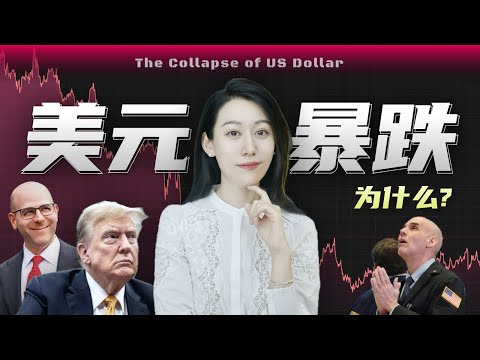
Market Trends and Industry Dynamics - The dollar index has fallen by over 10% since the beginning of the year, marking its worst performance in nearly half a century [1] - Global asset prices, including gold and cryptocurrencies like Bitcoin, have experienced a significant surge [1] - Global stock markets, including US, European, A-shares, Hong Kong, and Japanese stocks, have generally increased [1] - The correlation between the S&P 500 index and a "mysterious index" reached a high of 824% over the past 5 years [1] Investment Opportunities and Potential Risks - The primary driver of the dollar's decline is risk, particularly related to Trump's tariff policies and concerns about the US government's creditworthiness [1] - Foreign capital inflows into US stock ETFs have increasingly been hedged against dollar risk, with over 80% of funds now employing hedging strategies [1] - Gold has become a preferred safe-haven asset, with significant inflows into gold ETFs, especially from North America [2] - Market expectations of the Federal Reserve's interest rate decisions are heavily influencing the dollar's movements [2] US Economic Policy and Federal Reserve - The market is closely monitoring US non-farm payroll (NFP) data to anticipate the Federal Reserve's interest rate cuts [2] - There have been substantial revisions to the NFP data, raising concerns about its accuracy and reliability [3] - Trump's administration is attempting to influence the Federal Reserve's interest rate decisions, raising concerns about the central bank's independence [3][4] Global Economic Impact - A weaker dollar and potential Federal Reserve interest rate cuts are expected to benefit other countries, particularly developing nations [4] - Morgan Stanley predicts that the dollar may depreciate by approximately 10% to around 91 by the end of next year [4]