市场中性

Search documents
量化基金越来越复杂?量化啥时候失灵?一篇文章讲清楚
雪球· 2025-12-13 03:44
Core Viewpoint - The article discusses the differentiation of quantitative funds and strategies, their performance in various market conditions, and the importance of understanding their underlying logic for effective asset allocation [3][27]. Group 1: Differentiation of Quantitative Funds - Quantitative funds can be categorized based on their sources of returns: those that earn both Beta and Alpha, and those that focus solely on Alpha through market-neutral strategies [6][8]. - A specific strategy called quantitative timing adjusts positions based on model calculations to capture timing Alpha, often combined with stock index CTA for a composite approach [8]. - The choice of benchmark is crucial for index-enhanced strategies, with common benchmarks including CSI 300, CSI 500, and others, each having distinct characteristics [9][10]. Group 2: Performance Analysis - Over the past five years, small and micro-cap indices have generally outperformed larger indices, attributed to their higher turnover and the presence of mispricing opportunities [12]. - Quantitative index-enhanced strategies have shown significant excess returns, especially when the underlying Beta is smaller, leading to better performance in volatile markets [13][14]. - The annualized volatility and maximum drawdown for quantitative strategies are generally lower compared to traditional indices, providing a more favorable investment experience [14][15]. Group 3: Effectiveness and Limitations of Quantitative Strategies - Quantitative strategies thrive in high-volatility environments where numerous trading opportunities exist, allowing for the capture of mispricing [18]. - Conversely, these strategies may fail in low-volatility markets where crowded trades lead to diminished excess returns and increased risk of significant drawdowns [19][21]. - The evolution of quantitative strategies is essential as market conditions change, requiring continuous adaptation to maintain effectiveness [23]. Group 4: Role of Quantitative Strategies in Asset Allocation - Quantitative strategies provide a distinct source of return and risk, complementing subjective strategies in a diversified portfolio [27]. - In aggressive portfolios, quantitative strategies can serve as more traceable and explainable positions, while in balanced allocations, they can enhance overall sharpness [28][29]. - The value of a multi-strategy approach lies in its ability to perform optimally across different market conditions, mitigating the risks associated with relying on a single strategy [31].


可能又要创新高了
Xin Lang Cai Jing· 2025-09-19 11:13
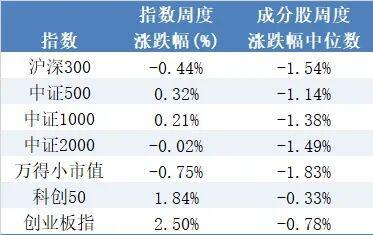
Group 1 - The core event of the week is the Federal Reserve's interest rate cut, but Chairman Powell emphasized that policy decisions will be based on economic data and market changes, which did not signal a strong dovish stance and suppressed expectations for further easing [3] - The macro strategy is expected to maintain stable performance, with some managers potentially reaching new highs despite a generally calm state of various asset classes [2][3] - The correlation between bonds and commodities has increased, while the correlation between stocks and bonds has decreased, indicating a shift in market dynamics [2][3] Group 2 - The performance of quantitative long strategies is expected to show significant differentiation, particularly affecting managers with overly diversified holdings [6][9] - The market's overall volatility has slightly decreased compared to previous weeks, with average daily trading volume remaining around 2.5 trillion [8] - The ChiNext and STAR Market indices performed well, but the median performance of constituent stocks was poor, impacting the ability of quantitative managers to generate excess returns [10][12] Group 3 - The subjective long strategies are expected to perform well, particularly in sectors like semiconductors, new energy batteries, and automotive technology [16] - The liquidity indicators remain favorable, with the market sentiment returning to a neutral to slightly optimistic level [17][19] - The overall environment for subjective strategies is positive in the long term, although short-term volatility is anticipated to increase [19] Group 4 - The quantitative CTA strategies are expected to yield slight profits, with commodity markets showing mixed performance [20][21] - The market's overall volatility has increased across all categories, with a notable rise in trend strength for black and agricultural products [21] - The stock index CTA strategies are expected to show differentiated returns based on signal cycles, with high-frequency strategies potentially performing better [23] Group 5 - The market-neutral strategies are expected to show differentiated returns, with the excess stability of the CSI 500 index falling to near one-year lows, indicating a potential style shift [24] - The arbitrage strategies are anticipated to remain stable, supported by improved liquidity and slight increases in market volatility [25]
量化超额分化,宏观策略回暖...我们投资人有什么需要注意的地方?
Sou Hu Cai Jing· 2025-09-05 11:52
Core Viewpoint - The market has experienced significant volatility this week, but daily trading volume remains high at over 2.5 trillion [1]. Macro Strategy - The macro strategy environment is showing signs of recovery, driven by dovish signals from Powell and a shift in major asset performance between China and the U.S. [4]. - The correlation between stocks and bonds has decreased, indicating a more favorable environment for macro strategies to navigate market fluctuations [3][4]. - Many macro strategies have reached new highs recently, with expectations for continued upward performance in the coming week [5][6]. Quantitative Strategies - The quantitative long equity strategy is expected to show mixed results, with potential for profit pullbacks due to high-frequency trading and market reversals [7]. - The market is experiencing increased volatility, with significant fluctuations in individual stocks and indices [9]. Subjective Strategies - The subjective long equity strategy is anticipated to experience some pullbacks, particularly in sectors like precious metals, Hong Kong pharmaceuticals, and new energy [11]. - The overall market sentiment remains neutral to optimistic, with liquidity indicators showing a slight decline but still within a favorable range [13]. CTA Strategies - The quantitative CTA strategy is expected to show mixed performance, with those heavily invested in precious metals likely to perform better [14]. - The commodity market is experiencing upward fluctuations, particularly in precious metals, while overall market trends remain volatile [15][16]. Market Neutral Strategies - The market neutral strategy is expected to see mixed results, with alpha contributions being positive while hedging contributions may be negative [17]. Arbitrage Strategies - The arbitrage strategy is projected to perform steadily, with stable operations across various strategies despite rising volatility in stock and commodity markets [19].
股票债券商品齐涨,宏观策略王者归来?
雪球· 2025-06-08 06:28
Core Viewpoint - The macro strategy is expected to perform well this week, with a recovery in various asset classes, including Chinese equities, bonds, gold, and oil, indicating a favorable environment for macro strategies [3]. Macro Strategy - The macro strategy is anticipated to show improvement, benefiting from the recent rise in Chinese equities and bonds, as well as overseas assets [3]. - The macro strategy faced challenges in the first half of the year due to the unpredictable nature of Trump's policies, which disrupted the typical low correlation among major asset classes [3]. - Recent trends suggest a return to deep negative correlation among major assets, indicating a more favorable environment for macro strategies moving forward [3]. Quantitative Long Strategy - The quantitative long strategy is expected to yield absolute returns, with stable excess returns due to increased trading volume, surpassing 1 trillion in daily transactions [5]. - Over 50% of stocks are showing upward movement, and market volatility remains within a normal range, supporting alpha generation for quantitative strategies [5]. - However, there is a caution regarding small-cap valuations, which are at a three-year high, indicating potential pullback risks [5]. Subjective Long Strategy - The subjective long strategy is projected to perform well, particularly in growth styles, with some differentiation in specific returns [7]. - The overall market is experiencing a steady upward trend, with positive PMI data and a preference for growth over value stocks [7]. - Continued net inflows from southbound capital are noted, with the Hang Seng Index and Hang Seng Tech performing well, despite high PB valuations [7]. Market Neutral Strategy - The market neutral strategy is expected to remain stable, with consistent excess returns in the equity segment and no significant impact from the hedging side [9]. Stock Index CTA - The stock index CTA strategy is anticipated to perform well in both intraday and daily strategies, with differentiation among products due to signal cycles [12]. Commodity Strategy - The commodity strategy is expected to show a reversal in performance, with mixed results across different segments, particularly in precious metals [15]. - The commodity sector has seen a general upward trend, although volatility remains present, posing challenges for previously dominant short positions [15]. Arbitrage Strategy - The arbitrage strategy, including ETF and options arbitrage, is expected to see slight gains, while commodity arbitrage remains stable [17]. - The ETF market has experienced a slight increase in trading volume, indicating a favorable trend for overall strategy performance [17].