
市场波动风险

Search documents
格林大华期货早盘提示:贵金属-20260224
Ge Lin Qi Huo· 2026-02-24 03:00
Industry Investment Rating - No information provided Core Viewpoints - The latest released US economic data is divided. The economic growth in the fourth quarter of last year fell short of expectations, while inflation exceeded expectations, intensifying policy uncertainty, and the market is worried that the US economy will fall into stagflation. The ambiguity of US trade policy weakens investors' confidence in US assets and intensifies the global market volatility risk. During the Spring Festival holiday, overseas gold and silver generally rose, and the domestic market is likely to open higher after the holiday, with silver expected to open sharply higher [1][2] - Gold and silver fluctuate sharply in the short term, and investors should pay attention to controlling positions and preventing risks [2] Summary by Related Catalogs Market Review - On February 23, COMEX gold futures rose 3.29% to $5,247.90 per ounce, and COMEX silver futures rose 6.87% to $88.00 per ounce. On February 13, the main contract of Shanghai gold closed at 1,110.10 yuan per gram, and the main contract of Shanghai silver closed at 19,782 yuan per kilogram. During the Spring Festival holiday, overseas gold and silver rose significantly [1] Important Information - As of February 23, the holdings of the world's largest gold ETF - SPDR Gold Trust increased by 7.72 tons from the previous day, with the current holdings at 1,086.47 tons. The holdings of the world's largest silver ETF - iShares Silver Trust increased by 312.77 tons from the previous day, with the current holdings at 15,830.38 tons [1] - According to CME's "FedWatch": The probability of the Fed cutting interest rates by 25 basis points in March is 4.0%, and the probability of keeping interest rates unchanged is 96.0%. The probability of the Fed cutting interest rates by a cumulative 25 basis points by April is 17.3%, the probability of keeping interest rates unchanged is 82.1%, and the probability of a cumulative 50 - basis - point cut is 0.6%. The probability of a cumulative 25 - basis - point cut by June is 46.8% [1] - On February 20, the US Supreme Court ruled 6 - 3 that the Trump administration's policy of imposing large - scale tariffs using the International Emergency Economic Powers Act (IEEPA) was illegal. On the same day, Trump announced that he would impose a 10% import tariff on global goods for 150 days under Section 122 of the US Trade Act of 1974 to replace the tariff found illegal by the Supreme Court. On the 21st, Trump posted on social media that the "global import tariff" rate he announced the previous day would be raised from 10% to 15% [1] - The US Customs will stop collecting the tariff ruled illegal by the Supreme Court from February 24. The US Democrats will block any attempt to extend the tariff and strongly promote a mandatory refund plan. The European Parliament has suspended the approval of the EU - US trade agreement. The UK may be the biggest victim of Trump's new tariff [1] - The initial value of the annualized quarterly - on - quarterly growth rate of the US real GDP in the fourth quarter of 2025 was 1.4%, far lower than the expected 3.0% and the previous value of 4.4%, mainly dragged down by the government shutdown and cooling consumption; the full - year GDP growth in 2025 was 2.2%, lower than 2.8% in 2024. The core PCE price index in December increased by 3.0% year - on - year, higher than the expected 2.9%, and increased by 0.4% month - on - month, indicating that inflationary pressure still exists [1] - The annualized total number of new home sales in the US in December was 745,000, the highest since February 2022, exceeding the expected 730,000; personal spending increased by 0.4% month - on - month, in line with expectations. The final value of the University of Michigan Consumer Confidence Index in February was 56.6, lower than the expected 57.3, and the one - year inflation expectation dropped to 3.4% [1][2] - The preliminary value of the US S&P Global Manufacturing PMI in February was 51.2, a 7 - month low, lower than the expected 52.6, and the previous value in January was 52.4; the preliminary value of the service PMI was 52.3, slightly lower than the expected 53.0, and the previous value in January was 52.7, indicating a slowdown in business activity growth [2] - Data released by S&P Global showed that the eurozone's composite PMI in February rose from 51.3 in January to 51.9, the manufacturing PMI jumped from 49.5 to 50.8, reaching a 44 - month high and standing above the 50 boom - bust line for the first time since August last year. The service PMI rose slightly to 51.8, with the previous value at 51.6. Among them, the German economy improved significantly, with the composite PMI rising to a four - month high of 53.1 and the manufacturing PMI reaching 50.7, entering the expansion range for the first time since June 2022 [2] - CCTV News reported that there are reports that US President Trump has told his advisers that he "tends to conduct a preliminary strike (against Iran) in the next few days" and then launch a larger - scale military strike in the next few months to force Iran to "submit" and reach an agreement as required by the US. A new round of negotiations between the US and Iran is scheduled to be held in Geneva, Switzerland on the 26th. Iranian Foreign Minister Araqchi said in an interview with US media on the 22nd that it is possible to reach a "better agreement" than the 2015 Iran nuclear deal, and he also emphasized Iran's right to peaceful use of nuclear energy [2] Market Logic - On February 20, the US Supreme Court ruled that the US government's use of IEEPA to impose tariffs was illegal; on the 21st, the US president posted on his social platform that he would impose a 15% import tariff on global goods. The initial value of the annualized quarterly - on - quarterly growth rate of the US real GDP in the fourth quarter of 2025 was 1.4%, with the government shutdown dragging down GDP by about 1 percentage point, far lower than the expected 3.0%; the US core PCE price index in December increased by 3.0% year - on - year, higher than the expected 2.9%, and increased by 0.4% month - on - month, indicating that inflationary pressure still exists. Tensions in the Iranian geopolitical situation continue. The latest released US economic data is divided, with the economic growth in the fourth quarter of last year falling short of expectations and inflation exceeding expectations, intensifying policy uncertainty, and the market is worried that the US economy will fall into stagflation. At the same time, the ambiguity of US trade policy weakens investors' confidence in US assets and intensifies the global market volatility risk. During the Spring Festival holiday, overseas gold and silver generally rose, and the domestic market is likely to open higher after the holiday, with silver expected to open sharply higher [1][2] Trading Strategy - Gold and silver fluctuate sharply in the short term, and investors should pay attention to controlling positions and preventing risks [2]
警惕市场波动风险!国际金价、银价,继续大幅下跌
Sou Hu Cai Jing· 2026-02-02 11:43
Core Viewpoint - International gold and silver prices experienced significant declines on February 2, with gold futures dropping below $4,500 per ounce and silver futures falling to $72.35 per ounce [1] Group 1: Price Movements - On February 2, gold futures reached a low of $4,429.2 per ounce, while silver futures hit a low of $72.35 per ounce [1] - The recent volatility in gold and silver prices follows a period where they reached historical highs [1] Group 2: Price Declines - Compared to the historical peak on January 29, silver prices have seen a cumulative decline of 40% from their low on February 2, while gold prices have dropped approximately 20% [1] Group 3: Market Warnings - Several banking institutions and the Shanghai Gold Exchange have recently cautioned investors about market volatility risks, urging for rational investment strategies [1]
综合晨报-20260130
Guo Tou Qi Huo· 2026-01-30 02:52
Report Industry Investment Ratings No relevant content provided. Core Views - Geopolitical situations are complex and volatile, affecting multiple commodity markets. For example, the tension between the US and Iran impacts oil, fuel oil, and related energy - related products. The situation in Ukraine also adds to the uncertainty in the market [1][2][21]. - Many commodity markets are influenced by a combination of supply - demand fundamentals, cost factors, and market sentiment. For instance, in the metals market, prices are affected by inventory levels, production capacity, and short - term speculative sentiment [3][4][7]. - Some markets are expected to be in a state of shock or have limited upward/downward space due to various factors such as policy, seasonality, and demand - supply imbalances [11][12][13]. Summary by Commodity Categories Energy - **Crude Oil**: Prices fluctuated sharply last night. Geopolitical tensions between the US and Iran and the EU's sanctions on Iran have increased market concerns. The cease - fire in energy infrastructure may bring some stability, but the market remains volatile [1]. - **Fuel Oil & Low - Sulfur Fuel Oil**: Driven by rising geopolitical risks, they followed crude oil to rise significantly. The high - sulfur fuel oil shows strong performance due to tight spot supply, while the low - sulfur fuel oil is supported by cost and component factors. The market is expected to follow crude oil and maintain a strong shock, with the differentiation between high - and low - sulfur fundamentals continuing [21]. - **Natural Gas**: Not mentioned in the report. - **Liquefied Natural Gas (LNG)**: Not mentioned in the report. - **Coal**: - **Coke**: The first round of price increase is expected to be implemented on Friday. The coking profit is average, and the daily production has slightly decreased. The inventory has increased slightly. Affected by market sentiment, the price may still have upward space in the short term [16]. - **Coking Coal**: The price continued to rise. The Mongolian coal customs clearance volume was 1618 vehicles. The production of coking coal mines increased slightly, and the inventory increased. Affected by market sentiment, the price may still rise in the short term [17]. Metals - **Precious Metals**: Overnight, they fluctuated violently, with an intraday amplitude of nearly 10%. Market focus is on geopolitical changes. Short - term market information is complex, and the risk of market fluctuations is high [2]. - **Base Metals**: - **Copper**: The price fluctuated violently on Thursday, with the maximum intraday increase of LME copper exceeding 10%. It is guided by funds and emotions. Pay attention to the domestic spot and discount range [3]. - **Aluminum**: Overnight, non - ferrous metals followed precious metals to fall. The spot premium and discount in some regions decreased, and the inventory of aluminum ingots and aluminum rods increased. The market is dominated by short - term sentiment, and the volatility is high [4]. - **Zinc**: After the sharp fall of gold and silver at night, the long positions in the non - ferrous sector took profits, and the price of SHFE zinc closed with a long upper shadow. The short - term has an adjustment demand, and there is an opportunity for short - allocation after the high - level adjustment is sufficient [7]. - **Lead**: It is in a weak adjustment under over - supply. Benefiting from the strong bullish sentiment in the non - ferrous sector, it rebounds, but the actual demand is weak, and the rebound space is limited [8]. - **Nickel & Stainless Steel**: SHFE nickel oscillated at a high level. The spot price of stainless steel rose, but the downstream was cautious in purchasing, and the actual transaction was weak. The inventory of steel mills is still at a low level, and traders are willing to support the price [9]. - **Tin**: Compared with surrounding varieties, the price performance is restrained. Pay attention to the domestic spot quotation and track the social inventory. It is recommended to participate in the short - call option of the 2603 contract [10]. - **Manganese Silicon**: The price rebounded. The spot price of manganese ore decreased, and the port inventory may start to accumulate slowly. It is recommended to short on rebounds [18]. - **Silicon Iron**: The price rebounded. The power cost in some areas decreased, but the price of semi - coke increased slightly. The demand has some resilience, and it is recommended to short on rebounds [19]. - **Rare Earth Metals**: Not mentioned in the report. Chemicals - **Polypropylene & Plastic & Propylene**: The rise in oil prices strengthens the cost support. The inventory of propylene enterprises is low, but the downstream is more cautious. The supply and demand of polyethylene and polypropylene have different characteristics, and the new order follow - up is insufficient [27]. - **PVC & Caustic Soda**: PVC showed a strong trend at night. The inventory in warehouses in East and South China increased, and the export signing slowed down. The cost support of calcium carbide became stronger. Caustic soda oscillated strongly. The price of liquid caustic soda decreased, and the price of liquid chlorine was strong. The industry is under high - pressure inventory, and the follow - up production reduction needs to be tracked [28]. - **PX & PTA**: Driven by the strong rise in oil prices, they rose again. In the first half of the year, PX can be over - allocated, but there is an expectation of inventory accumulation around the Spring Festival. In the second quarter, there are opportunities for long - position operations based on PX maintenance and polyester production increase expectations [29]. - **Ethylene Glycol**: The port inventory increased, and the price encountered resistance at the 4000 mark. In the second quarter, there are expectations of centralized maintenance and demand recovery, but the long - term is still under pressure [30]. - **Urea**: Before the Spring Festival, the industrial downstream demand is expected to decline, and the large - scale spring ploughing fertilizer demand has not started. The supply pressure remains, and the market continues to oscillate strongly within the range [23]. - **Methanol**: Affected by geopolitical risks, it rose significantly at night. The overseas device operation rate is low, and the port inventory has accumulated slightly. Although there are some negative factors, the short - term market is expected to run strongly [24]. - **Pure Benzene**: The futures price followed the oil price and ran strongly. The inventory in Jiangsu ports increased slightly. The demand increased due to the improvement of downstream profits and the increase in device operation rates [25]. - **Styrene**: Crude oil and pure benzene support the cost. The domestic supply has declined, and the downstream demand has decreased steadily. There is short - term price pressure [26]. Agricultural Products - **Soybean & Soybean Meal**: Driven by the drought in Argentina and the weakening of the US dollar, US soybeans continue to oscillate strongly at the bottom. Attention should be paid to the harvest of Brazilian soybeans and the import of Canadian rapeseed and rapeseed meal, which may impact the domestic market [35]. - **Soybean Oil & Palm Oil**: Affected by the spread of re - inflation trading in commodities, they are boosted. The short - term price volatility risk should be noted. The supply - demand of palm oil has improved marginally, and the policies of Indonesia and the US are beneficial to the price [36]. - **Rapeseed Meal & Rapeseed Oil**: The zero - pressing of rapeseed in domestic coastal oil mills before the Spring Festival is expected to boost demand. Although affected by geopolitics and policies, the import is expected to be looser after March, and the short - term upward space is limited [37]. - **Corn**: The spot price in Northeast China and North Ports is stable, and the price of some Shandong deep - processing enterprises has increased slightly. The short - term Dalian corn futures are expected to oscillate [39]. - **Eggs**: The futures price is weak, reflecting the expected weakening of the spot market. Although the inventory of laying hens will decline in the first half of 2026, the short - term price may fall after the Spring Festival. Pay attention to the trading rhythm [41]. - **Cotton**: Zhengzhou cotton fell slightly. The domestic cotton supply and sales are booming, but the downstream order demand is average. Pay attention to the pressure around 15,000 yuan and the change in imports [42]. - **Sugar**: The international sugar market has different production progress in India and Thailand. The domestic market focuses on the expected difference in production. Although the current production in Guangxi is slow, there is a strong expectation of production increase in the 25/26 crushing season, and the short - term price faces pressure [43]. - **Apple**: The futures price oscillates. The Spring Festival stocking is at a peak, but the quality of apples is poor and the purchase price is high, which may affect the de - stocking speed. The market focuses on demand [44]. - **Wood**: The futures price is at a low level. The supply is expected to decrease, the demand has increased year - on - year, and the low inventory supports the price. It is recommended to wait and see [45]. - **Paper Pulp**: The futures price rose slightly. The short - term fundamentals are still weak due to weak downstream demand. The port inventory has continued to accumulate [46]. Livestock - **Hogs**: The futures and spot prices are falling. The supply is strong and the demand is weak. The industry will face accelerated slaughter before the Spring Festival, and the price may hit a second bottom in the first half of next year [40]. Financial Products - **Stock Index**: The three major A - share indexes rose and fell differently yesterday. The futures indexes also showed different trends. The A - share market is expected to change from a unilateral rapid rise to an oscillating upward trend. Pay attention to geopolitical situations and economic policies [47]. - **Treasury Bonds**: On January 29, 2026, treasury bond futures rose slightly. The market sentiment of going long continues, but the trading is divided. The short - term is expected to continue the box - type shock. Pay attention to the opportunities of steepening and flattening the yield curve [48].
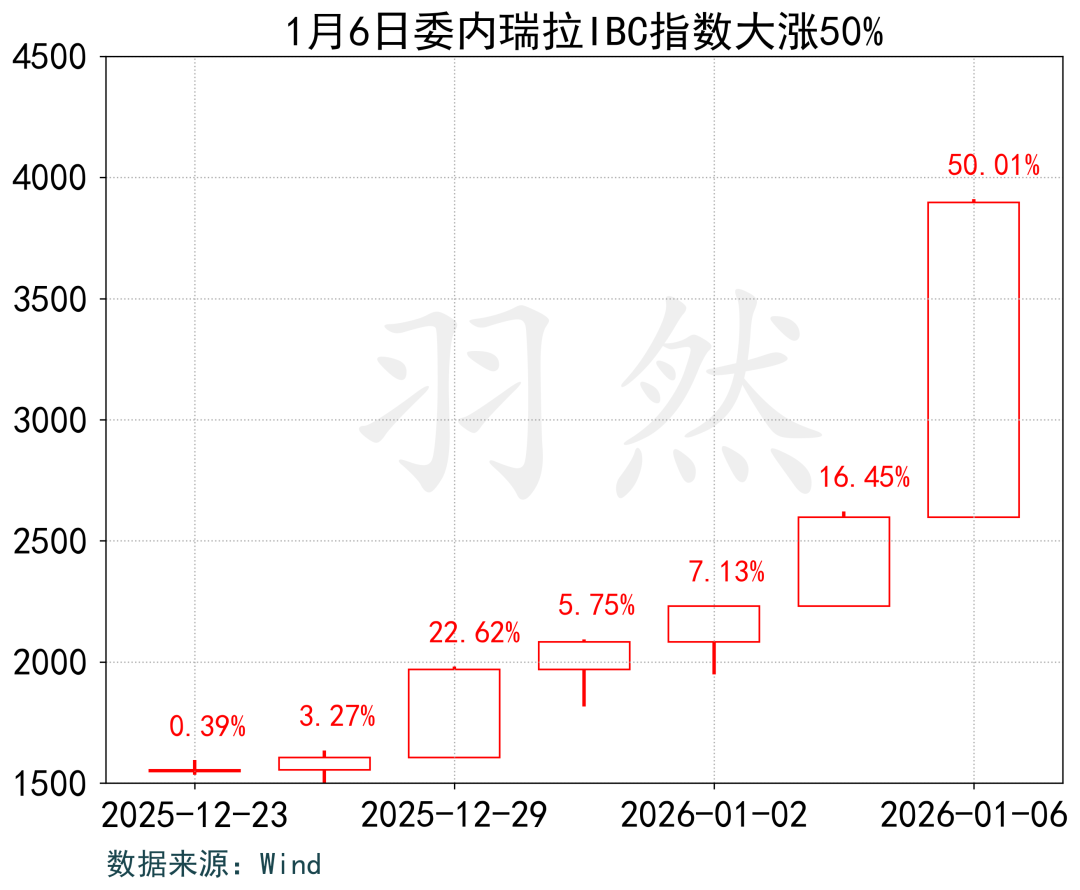
委内瑞拉股市单日暴涨超50%,流动性低引发操纵猜测
Xin Lang Cai Jing· 2026-01-08 11:42
Core Viewpoint - The Venezuelan stock market has experienced rare and extreme volatility, with the IBC index rising over 50% in a single day on January 6, attracting global financial observers' attention. This surge is not coincidental, as the index has shown strong performance recently, but analysts highlight underlying structural issues such as small market size and low liquidity, raising concerns about potential market manipulation [1][5]. Market Characteristics: Limited Size and Low Liquidity - The Caracas Stock Exchange (BVC), established in 1947, is the only securities trading platform in Venezuela and is one of the smallest exchanges in South America. Currently, only about 15 companies are listed, and the IBC index comprises just 11 stocks. Market participants are highly concentrated, with stocks primarily held by local banks, financial institutions, and a few high-net-worth investors, resulting in low daily trading activity. In this environment of scarce liquidity, even small capital movements can lead to significant price fluctuations, providing room for potential market manipulation [3][7]. Political and Economic Background: Interwoven Internal and External Factors - Venezuela has faced ongoing economic pressures and political turmoil, including severe inflation and currency devaluation. Additionally, interventions by countries like the United States in Venezuela's internal affairs have sparked widespread international debate, with many nations publicly opposing such interference and advocating for sovereign equality and peaceful development. This complex external political environment further exacerbates uncertainty in the financial market, where emotional trading and policy expectations can amplify market volatility [3][7]. Investment Insights: Rational Perspective on Small Market Index Signals - Although the IBC index is considered an important indicator of Venezuela's economic performance, its extreme fluctuations in a small, low-liquidity market do not necessarily reflect the true state of the real economy. Small exchanges in emerging markets are often more susceptible to localized capital movements, news, and operational behaviors, resulting in inherently higher volatility. For international investors, it is crucial to interpret such market data with caution, considering multiple dimensions such as the macro political and economic environment, market structure, and trading mechanisms [4][8].

疯涨之后遇“急刹车”,2026年“银牛”还能继续吗
Bei Jing Shang Bao· 2026-01-08 08:44
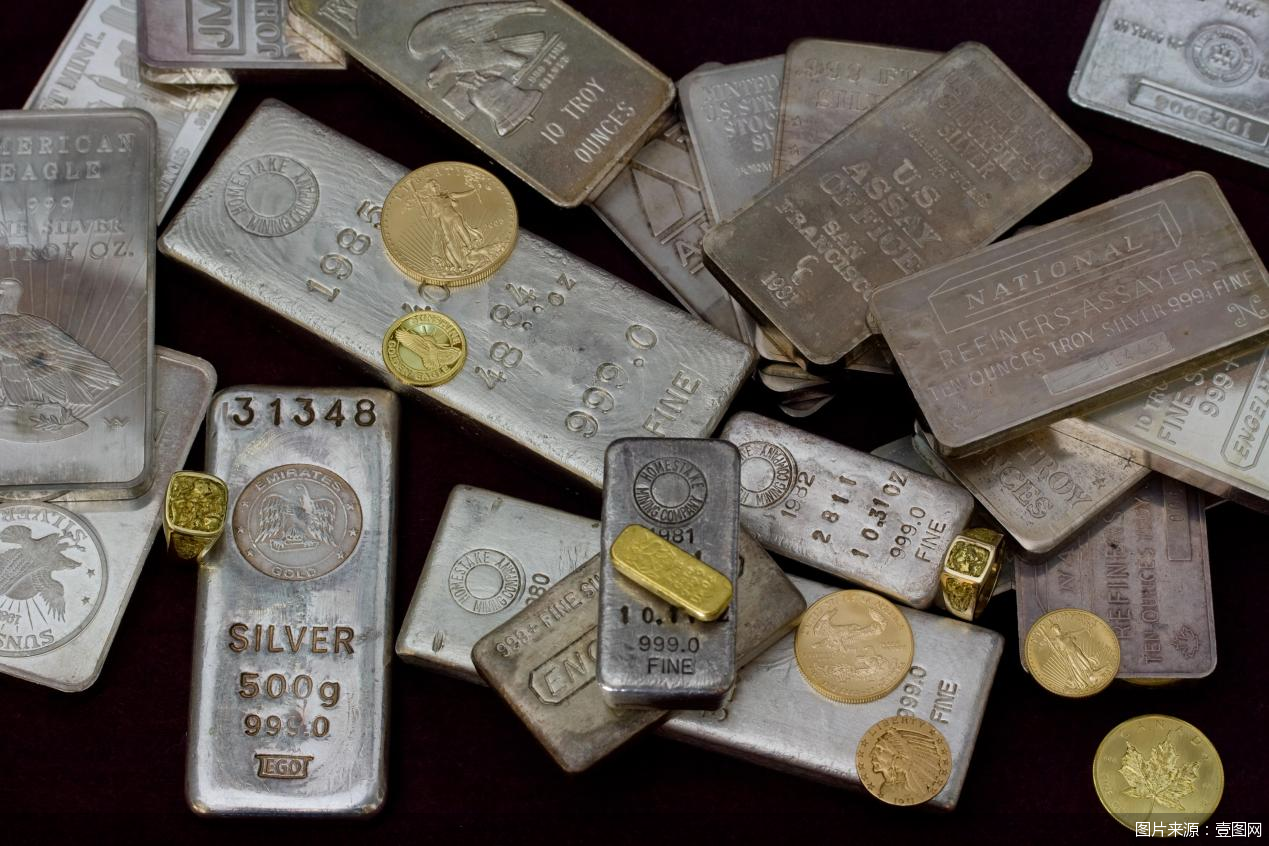
Core Viewpoint - The silver market has experienced extreme volatility, with significant price drops following a period of rapid increases, raising concerns about future trends and risk management strategies for investors [1][3][4]. Group 1: Market Performance - Silver prices surged dramatically in 2025, with a maximum increase of 196% over the year, reaching a peak of $83.971 per ounce by December 29, 2025 [3]. - In early 2026, silver prices faced a sharp decline, with both spot and COMEX silver dropping over 5% on January 7, and further declines of more than 2% on January 8 [1][3]. Group 2: Market Dynamics - The recent volatility is attributed to high leverage and speculative trading, with market sensitivity to changes in the dollar, Federal Reserve expectations, geopolitical risks, and industrial demand [4]. - The Shanghai Futures Exchange has implemented measures to manage market volatility, including adjustments to trading limits and margin requirements starting January 9, 2026 [5]. Group 3: Future Outlook - Analysts suggest that the silver market may experience a wide range of fluctuations rather than a continued bull market, with potential price movements between $60 and $90 per ounce throughout 2026 [4]. - Factors supporting silver prices include a continuous supply gap, growing industrial demand, and geopolitical risks, although previous price increases have already priced in some optimism [4].
战略“掠夺”引发担忧 将向全球投资者释放负面信号
Ge Long Hui A P P· 2026-01-05 13:52
Core Viewpoint - The report highlights the significant increase in geopolitical tensions and market volatility risks due to the U.S. government's actions against Venezuela's president and plans to take over the country's oil industry [1] Group 1: Geopolitical Impact - The U.S. actions signal additional risk for countries investing in U.S. assets, as they indicate a willingness to take military action against neighboring countries deemed strategically important [1] - The situation has led to a rise in demand for safe-haven assets such as gold and silver, reflecting concerns over global stability [1]
投资股票资产,是买个股还是买指数呢?|投资小知识
银行螺丝钉· 2025-12-20 14:02
Core Viewpoint - The article discusses the inherent risks associated with individual stocks compared to indices, emphasizing that no company is immune to operational risks and that all companies have a lifecycle. Indices, however, have the ability to adapt and evolve over time [2]. Group 1 - Historical data from the U.S. stock market indicates that the original components of the Dow Jones Industrial Average have all been replaced over time, highlighting the transient nature of individual companies [2]. - From 1926 to 2016, the overall growth of the U.S. stock market was primarily driven by the top 4% of performing stocks, suggesting that identifying these stocks can lead to substantial returns [2]. - Successful investors, such as Warren Buffett and Peter Lynch, exemplify the ability to select high-performing stocks, which is a rare skill among investors [2].

湘财证券晨会纪要-20251218
Xiangcai Securities· 2025-12-18 00:50
Financial Engineering - The report emphasizes a risk-based asset allocation strategy, contrasting it with traditional methods that focus on expected returns. This approach quantifies the investor's risk tolerance and sets a clear risk budget, aiming for a diversified risk contribution from various assets to achieve better risk-adjusted returns over the long term [2][3]. Risk Parity Model - The risk parity model is highlighted as a key strategy, optimizing asset contributions to total portfolio risk equally, thus avoiding the dominance of equities in traditional stock-bond portfolios. Backtesting results show an annualized return of 6.1% with a maximum drawdown of 3.4% and a Sharpe ratio of 3.62, indicating strong robustness [3][4]. Asset Allocation Insights - The report notes a persistent higher allocation to corporate bonds over government bonds since 2017, attributed to increased interest rate volatility in government bonds post "financial deleveraging" in China. This reflects the model's disciplined dynamic adjustment to real market risk structures [3][4]. Enhanced Strategy for Returns - A target volatility strategy is proposed, which dynamically adjusts portfolio leverage to maintain a preset volatility level. This strategy shows high sensitivity to financing costs of leveraged funds and is practical for investors with flexible capital. It aims for a higher Sharpe ratio by setting a target slightly above the full allocation portfolio volatility [5]. - Additionally, a risk budgeting strategy based on Sharpe squared is introduced, focusing on efficient risk allocation to assets with historically higher Sharpe ratios. While it achieves similar absolute returns to risk parity, it offers lower volatility and the highest Sharpe ratio among strategies, though it is dependent on the continuation of historical patterns [5].
对冲基金九月谨慎布局美股 五大隐忧预示市场波动风险
智通财经网· 2025-09-02 11:10
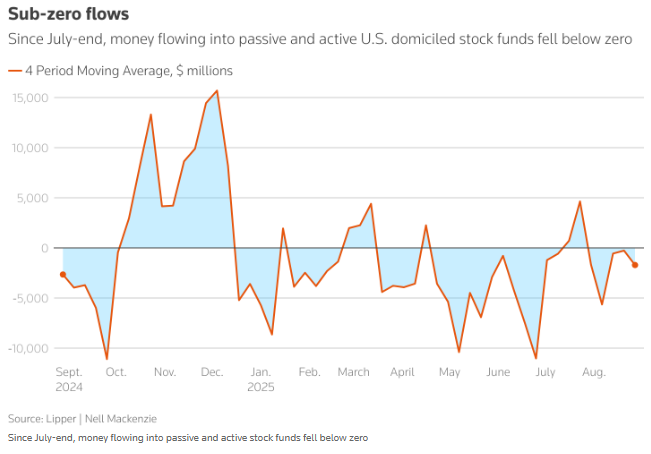
Group 1 - Despite expectations of a Federal Reserve rate cut in September, hedge funds have turned net sellers in August, reflecting a cautious stance towards buying U.S. stocks [1] - Traditional investors are also net selling U.S. stocks, indicating a broader trend of selling outweighing buying [1] - Research reports suggest that despite global stock markets nearing historical highs, there is a significant risk of large sell-offs [1] Group 2 - Trading activity remains low, with hedge fund leverage levels declining again near the end of August, indicating a cautious approach [4] - The S&P 500 index rose nearly 2% in August, yet hedge funds did not participate in this rebound and continued to sell stocks [4] - A report from Morgan Stanley shows a 1% decrease in leverage used for trading in U.S. and European markets, further highlighting low trading activity [4] Group 3 - Seasonal risk signals are becoming more pronounced, with nearly half of the past 20 years seeing negative returns in September [5] - Regulatory restrictions prevent companies from conducting stock buybacks in September, which could weaken market support [5] - Systematic hedge fund risk limits may hinder their ability to enter the market during potential downturns [6] Group 4 - Cross-market vulnerabilities are emerging, with rising bond yields in countries like Japan and the UK indicating potential risks in other markets [8] - The possibility of a crisis in one market could trigger a chain reaction in others, as evidenced by recent high yields in Japanese and UK bonds [8] Group 5 - The risk of a sell-off cycle is increasing, with U.S. households holding a record proportion of stocks relative to their income [11] - UBS estimates that by 2025, the direct stock holdings of individual investors will reach 265% of disposable income, surpassing previous peaks [11] - The strength of retail buying is noted, but it is also seen as fragile, with potential for significant sell-offs if economic growth slows [11] Group 6 - There has been a record net inflow of funds into the Chinese stock market in August, indicating a shift in investment focus [13] - August is projected to be the largest month for hedge fund purchases of Chinese stocks since February [13]


次新基金积极建仓入市 基金经理提示波动风险
Zheng Quan Shi Bao· 2025-08-24 21:01
Core Insights - The recent recovery in the equity market has prompted many newly established funds to enter the market, with 28 floating-rate funds launched by August 22, showing a maximum weekly return of nearly 8% [1][2] - The current market sentiment is high, leading to rapid positioning by new funds, but caution is advised due to potential volatility from profit-taking [1][5] Fund Performance - The first two batches of floating-rate funds have shown significant signs of positioning, with all 28 funds fully invested by August 22. Eight funds reported returns exceeding 2%, with the highest being 7.81% for the fund established on June 19 [2][3] - Funds established in July exhibited greater net value fluctuations, indicating higher positioning levels, with some funds achieving weekly returns of up to 7.70% [3] ETF Activity - In addition to active equity funds, newly launched ETFs have also increased their stock positions, with 26 ETFs listed since August, rapidly raising their stock allocations shortly after their announcements [4] - For instance, the E Fund ChiNext 50 ETF, launched on August 13, had 94.41% of its assets allocated to index constituents by August 20 [4] Market Dynamics - The current market conditions favor accelerated positioning by fund managers, particularly in a rising market, while caution is exercised in downturns [5] - The influx of new capital from individual investors and the increase in domestic savings, which reached approximately 161 trillion yuan, are significant factors influencing market dynamics [6] Cautionary Notes - Despite the positive market sentiment, some fund managers express caution due to the potential for profit-taking among popular assets, which could lead to volatility [7]