
弱美元逻辑

Search documents
港股利好因素持续积累 机构看好持股过节
Zhong Guo Zheng Quan Bao· 2026-02-10 20:22
Core Viewpoint - The Hong Kong stock market has experienced volatility recently, but the fundamental outlook and bullish logic remain unchanged, with several positive factors accumulating for the future [1][2]. Group 1: Market Performance - The Hong Kong stock market indices, including the Hang Seng Index and the Hang Seng China Enterprises Index, saw a decline of over 3% in the week from February 2 to February 6, while the Hang Seng Technology Index dropped over 6% [2]. - Following this adjustment, the market rebounded with the indices recording consecutive gains over two trading days as of February 10 [2]. Group 2: Market Drivers - Factors contributing to the recent volatility include a global software sector pullback, controversies surrounding subsidies for Hong Kong tech giants, a rebound in the US dollar, and lingering effects in the commodity market [2]. - Despite the fluctuations, the liquidity in the Hong Kong market remains relatively ample, with significant inflows from foreign and southbound capital [2]. Group 3: Investment Strategy - Investors are advised to maintain a balanced portfolio and hold stocks through the upcoming holiday, focusing on sectors such as semiconductors, innovative pharmaceuticals, leading internet technology companies benefiting from AI trends, and high-dividend stocks with solid fundamentals [1][3]. - The upcoming peak of locked-up shares set to be released from late February to early March may create potential opportunities for market positioning if the market has already adjusted for some selling pressure [2][3].
黄金的信仰比黄金“贵”
Sou Hu Cai Jing· 2025-12-19 04:32
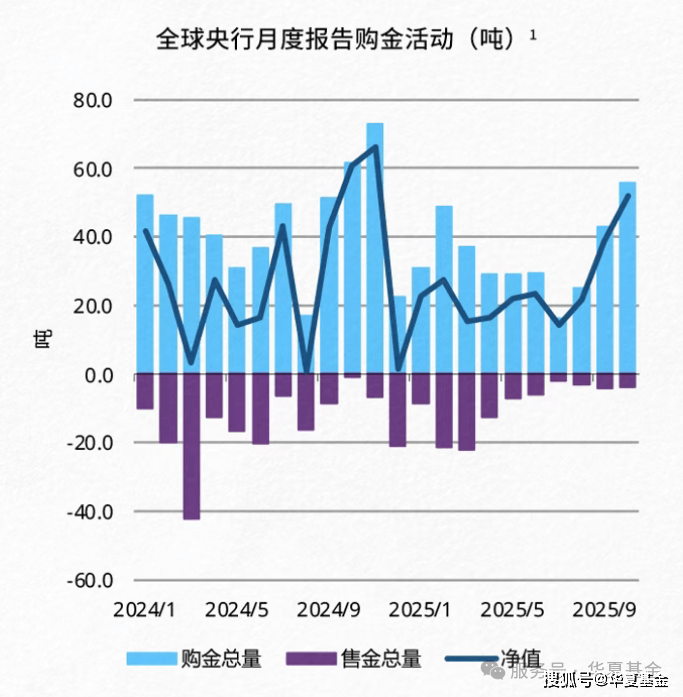
Core Viewpoint - Gold is increasingly seen as a necessary asset in personal and family financial planning, especially as traditional savings yields decline. The recent performance of gold, particularly in China, shows a significant increase, making it a favored choice for investors [1]. Group 1: Gold Price Trends - The recent rise in gold prices can be attributed to a weak dollar and institutional accumulation, rather than geopolitical factors. The dollar is currently in a rate-cutting cycle, which is generally favorable for gold prices. However, fluctuations in the dollar index can lead to temporary declines in gold prices [2]. - As of October, gold prices have increased over 58% year-to-date, nearing the highest point of the year, indicating strong market confidence [1]. Group 2: Central Bank Accumulation - Central banks, particularly in China, continue to accumulate gold. As of the end of November, China's central bank held 7.412 million ounces (approximately 2305.39 tons) of gold, marking a monthly increase of 3,000 ounces (approximately 0.93 tons) and a continuous accumulation for 13 months [3]. - Globally, central banks reported a net increase of 53 tons of gold in October, a 36% month-on-month growth, and a total net purchase of 254 tons year-to-date, reflecting a strong trend in gold accumulation [4]. Group 3: Institutional Investment - The SPDR Gold ETF, the largest gold ETF globally, reported a holding of 1,051.69 tons as of December 16, showing an increase of 3.72 tons from the previous week and over 100 tons from the beginning of the year, indicating strong investor interest in gold [6]. Group 4: Investment Strategy - Investors are encouraged to adopt a strategy of regular investment in gold, viewing it as a long-term asset rather than focusing on daily price fluctuations. This approach includes setting up a systematic investment plan to accumulate gold over time [7]. - The current low-interest-rate environment reduces the opportunity cost of holding gold, enhancing its attractiveness as an investment option. Investors are advised to consider allocating a portion of their funds to gold, especially if they are willing to accept some volatility [8].

沪指突破3900点创十年新高,黄金与AI双主线引爆节后行情
Sou Hu Cai Jing· 2025-10-09 03:28
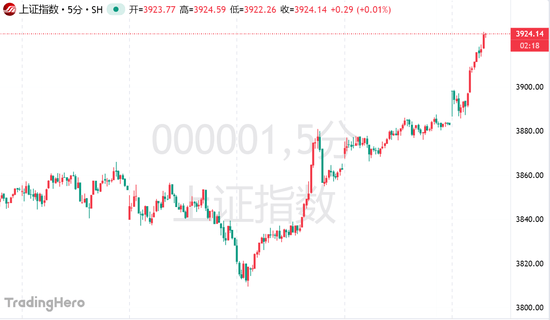
Market Overview - The Shanghai Composite Index has surpassed the 3900-point mark for the first time in ten years, with a rise of over 1% as of the report, while the ChiNext Index increased by over 2% and the Shenzhen Component Index rose by over 1.6% [1] - Nearly 3000 stocks in the two markets experienced gains, with significant increases in sectors such as precious metals, nuclear fusion, and non-ferrous metals [1] Global Market Trends - During the recent National Day holiday, global markets saw strong performances in sectors like non-ferrous metals, semiconductors, and AI, with COMEX gold futures rising by 4.45%, leading to a surge in gold stocks [3] - AMD's stock soared over 40% due to its collaboration with OpenAI, highlighting the positive sentiment in the AI sector [3] - Consensus among brokerage reports indicates a favorable macro environment for the A-share market post-holiday, driven by positive overseas market news and a strong performance in major risk assets [3] Domestic Economic Indicators - Domestic indicators show a marginal recovery in the September PMI, record-high travel data during the holiday, and improved performance in sectors like catering, cinema, and real estate [4] - The expectation of a more favorable risk appetite post-holiday is supported by positive incremental information and calendar effects [4] Investment Strategies - Long-term strategies suggest focusing on three main lines: high-growth sectors with high elasticity, event-driven catalysts, and value-oriented sectors with improved fundamentals [4] - The current A-share market is expected to continue its structural upward trend, particularly during the upcoming earnings season and policy window [4] Sector-Specific Insights - The current upward trend in the A-share market is anticipated to unfold in three phases, starting with a structural rally in core technology sectors, particularly in AI and related fields [5] - Following this, the rally is expected to expand to broader technology growth sectors, including robotics and innovative pharmaceuticals, as macroeconomic improvements become evident [6] - The reliance on a weak dollar narrative may necessitate a shift in strategy for investors, emphasizing the importance of the "China story" in driving the domestic bull market [6]
券商晨会精华 | 对于弱美元逻辑的过度依赖将意味着牛市行进中需要一次换挡
智通财经网· 2025-10-09 00:19
Market Performance - In September, the market exhibited a pattern of initial gains followed by a decline, ultimately showing a fluctuating upward trend, with all three major indices closing higher for the month [1] - The ChiNext Index rose over 12%, reaching a three-year high, while the Sci-Tech 50 Index increased by over 11%, marking a nearly four-year high [1] - On the last trading day before the holiday, the trading volume in the Shanghai and Shenzhen markets reached 2.18 trillion yuan, an increase of 20 billion yuan compared to the previous trading day [1] Sector Performance - The market saw active fluctuations in various sectors, with the non-ferrous metals and storage chip sectors leading in gains, while the liquor and large financial sectors experienced notable declines [1] Investment Insights - Guojin Securities indicated that an over-reliance on the weak dollar logic may necessitate a shift in the ongoing bull market, suggesting that investors should prepare for changes based on both global driving forces and domestic developments [2] - Guosheng Securities projected that overall liquidity is expected to remain loose, with the weighted average interest rate for seven-day pledged repos likely to continue operating around 1.4% to 1.5% [3]
国金证券:对于弱美元逻辑的过度依赖将意味着牛市行进中需要一次换挡
Xin Lang Cai Jing· 2025-10-09 00:00
Core Viewpoint - Global investors have historically viewed the US dollar as the sole beneficiary of fiscal expansion and technological prosperity, but the recent weakening of the dollar has become a central theme in asset trading [1] Group 1 - The reliance on a weak dollar logic may necessitate a shift in the ongoing bull market, indicating a need for investors to prepare for changes driven by both global and domestic factors [1]

海外策略|港股外资偏好有何变化
2025-09-01 02:01
Summary of Key Points from Conference Call Industry Overview - The conference call discusses the Hong Kong stock market and the changes in foreign capital preferences since May 2025, driven by improved Sino-US relations and a weaker dollar [1][2]. Core Insights and Arguments - **Foreign Capital Inflow**: From May to July 2025, long-term foreign capital returned to the Hong Kong stock market, totaling nearly 70 billion HKD [1][5]. - **Sector Performance**: - Despite an overall outflow of foreign capital from early 2024 to April 2025, there was an increase in investment in hardware and consumer goods sectors [3]. - From May 2025 onwards, both long-term and short-term foreign capital consistently flowed into the technology sector, while real estate and pharmaceuticals showed mixed results [3][10]. - Dividend and retail sectors faced significant reductions in foreign investment [4][9]. - **Macroeconomic Factors**: Expectations of interest rate cuts by the Federal Reserve and a stable Sino-US trade relationship are anticipated to continue driving foreign capital back into the Hong Kong market [6]. Investment Trends - **Technology Sector**: The technology and internet sectors, along with large financial institutions, remain long-term favorites for foreign investors, with foreign ownership in these sectors reaching approximately 70% [7]. - **Valuation Metrics**: The technology sector in Hong Kong is noted for its low valuation and strong fundamentals, making it attractive for foreign investment [10][11]. - **AI Industry Impact**: The ongoing transformation in the AI industry is expected to benefit leading technology companies in Hong Kong, providing significant upside potential [12]. Additional Important Insights - **Market Sentiment**: The overall sentiment in the Hong Kong market is improving due to geopolitical factors and a historical low in asset allocation towards Chinese markets [5]. - **Sector-Specific Trends**: - The banking sector experienced a net outflow exceeding 200 billion HKD, while the retail sector saw a net outflow of approximately 180 billion HKD from 2024 to April 2025 [8]. - The biopharmaceutical sector saw long-term investments increase by 6.8 billion HKD but faced short-term reductions of 18 billion HKD, resulting in a net decrease of 11.2 billion HKD [8]. This summary encapsulates the key points discussed in the conference call regarding the Hong Kong stock market, foreign capital trends, and sector-specific insights.