心血管保护

Search documents
招商证券国际:降血脂市场潜力巨大 PCSK9/Lp心血管新药将迎来黄金时代
Zhi Tong Cai Jing· 2025-11-18 09:20
Core Insights - The lipid-lowering market is projected to reach $35 billion, with some drugs entering the long-term prevention field for cardiovascular event risk reduction (CVRR) [1][2] - Two significant lipid-lowering drugs are expected to report critical Phase III results in 2026, targeting PCSK9 and Lp(a) [1][2] - The development of cardiovascular and cardiac drugs is entering a harvest phase, with a focus on Phase III progress [1] Group 1: Key Developments in Lipid-Lowering Drugs - Novartis' PCSK9 small nucleic acid Leqvio and ASO drug Pelacarsen are under close observation for their Phase III trials, which could expand the market for lipid-lowering therapies [1][2] - Merck's MK-0616, the first oral cyclic peptide PCSK9 to enter Phase III, is expected to influence the long-term trajectory of the PCSK9 market [2] Group 2: Emerging Targets and Innovations - Arrowhead Pharmaceuticals' Plozasiran (ARO-APOC3) is set for FDA approval for treating familial chylomicronemia syndrome (FCS), marking a significant advancement in the siRNA field [3] - Eli Lilly's Lp(a) small molecule inhibitor Muvalaplin has initiated Phase III trials, with plans to enroll 10,450 participants, expected to complete by 2031 [3] Group 3: Direct-to-Consumer (DTC) Transformation - Major pharmaceutical companies like Eli Lilly, AbbVie, and Pfizer are launching online Direct-to-Consumer platforms, breaking traditional barriers in drug sales [4] - This shift aims to attract more self-paying users, particularly in the chronic disease sector, which is anticipated to capture the largest market share in the future [4]



《新英格兰医学杂志》重磅研究:口服司美格鲁肽为高风险2型糖尿病患者带来心血管福音
GLP1减重宝典· 2025-10-19 12:08
Core Viewpoint - The article discusses the significant cardiovascular benefits of oral semaglutide for high-risk type 2 diabetes patients, highlighting its potential to reduce major adverse cardiovascular events (MACE) and improve treatment adherence compared to injectable forms [4][5][15]. Summary by Sections Global Diabetes Statistics - Over 828 million people globally have diabetes, with more than 90% being type 2 diabetes patients, who face increased cardiovascular disease risks [4]. Clinical Research Overview - The SOUL study, published in the New England Journal of Medicine, involved a large-scale, international, multi-center, randomized controlled trial focusing on high-risk type 2 diabetes patients with a history of atherosclerotic cardiovascular disease or chronic kidney disease [4][7]. Study Design and Methodology - The study recruited 9,650 participants aged 50 and older with HbA1c levels between 6.5% and 10.0%, excluding those with end-stage renal disease [8]. - Participants were randomly assigned to receive either oral semaglutide (starting at 3 mg and increasing to 14 mg daily) or a placebo, with all patients receiving standard treatment [9][10]. Key Findings - Oral semaglutide significantly reduced the incidence of MACE: 12.0% in the treatment group compared to 13.8% in the control group [13]. - The study also reported a 26% reduction in non-fatal myocardial infarction risk and a 12% reduction in stroke risk [17]. Safety and Efficacy - The incidence of serious adverse events was lower in the treatment group (47.9% vs. 50.3%), while gastrointestinal reactions were slightly higher (5.0% vs. 4.4%) [14]. - The renal protective effect did not reach statistical significance, indicating a need for further research in patients with poorer baseline kidney function [15]. Implications for Treatment - The findings suggest that oral semaglutide could reshape diabetes treatment paradigms by providing a convenient oral option that maintains efficacy comparable to injectable forms, particularly in reducing non-fatal myocardial infarction risk [15]. - The study emphasizes the importance of further research to explore the drug's effects on renal outcomes in different patient populations [15].


GLP-1明星药物再显神威!口服司美格鲁肽显著降低房颤风险
GLP1减重宝典· 2025-10-07 12:23
Core Insights - The article highlights a significant study revealing that the diabetes medication Semaglutide not only effectively controls blood sugar and aids weight loss but also significantly reduces the risk of new-onset atrial fibrillation (AF) in patients [4][6]. Group 1: Study Findings - A meta-analysis involving 26 randomized controlled trials and 48,583 participants found that Semaglutide reduces the risk of new-onset AF by 17%, with very low heterogeneity among studies (I²=0%) indicating high reliability of results [6]. - The oral formulation of Semaglutide shows particularly impressive results, with a 52% reduction in AF risk when administered at a dose of 14mg once daily, while the subcutaneous injections at 1.0mg/week and 2.4mg/week did not show significant effects on new-onset AF [7]. Group 2: Specific Populations - Overweight or obese patients showed a decreasing trend in AF risk (OR=0.80, P=0.06), although it did not reach statistical significance [8]. - In patients with type 2 diabetes, there was no significant difference in AF risk between the Semaglutide group and the control group (OR=0.86, P=0.27) [8]. - In patients not using SGLT2 inhibitors, the risk of AF was reduced by 21%, suggesting that the combination with other diabetes medications may influence the effectiveness [9]. Group 3: Comparative Effectiveness - Compared to placebo, Semaglutide did not significantly lower the incidence of AF, but when compared to other diabetes medications, it showed a substantial 59% reduction in AF risk, highlighting its relative advantage [10]. - The protective effect of Semaglutide against AF was consistent regardless of initial body weight or blood sugar control levels, indicating its broad applicability [10]. Group 4: Mechanisms of Action - The study reveals multiple mechanisms through which Semaglutide provides cardiovascular protection, including significant weight loss, optimized metabolism, and direct improvements in cardiac electrophysiological properties [12][16]. - The oral formulation's unique delivery and absorption characteristics may contribute to its superior efficacy, providing important insights for future formulation development [13]. Group 5: Clinical Implications - This research offers robust evidence extending the metabolic benefits of Semaglutide to the prevention of AF, marking a significant transition from laboratory findings to clinical applications for managing cardiovascular risks in patients with metabolic disorders [15].

GLP-1受体激动剂二十年进化史:从实验室发现到临床治疗革命
GLP1减重宝典· 2025-09-19 03:37
Core Viewpoint - The article discusses the significant advancements in GLP-1 receptor agonists over the past two decades, marking a transformative era in the treatment of metabolic diseases, particularly diabetes and obesity. It highlights the drug's evolution from a laboratory discovery to a cornerstone in clinical therapy, emphasizing its multifaceted benefits beyond glucose control, including cardiovascular protection and weight management [4][5][6]. Group 1: Development and Mechanism - GLP-1 receptor agonists have transitioned from a niche laboratory target to a central therapeutic option in clinical settings, driven by early discoveries of GLP-1's glucose-dependent insulin secretion properties [5][9]. - The scientific foundation of GLP-1 receptor agonists dates back to the 1960s, with key discoveries revealing the biological mechanisms of GLP-1 and its interaction with GLP-1 receptors on pancreatic beta cells [8][9]. - Recent studies, such as the SELECT trial, demonstrated that semaglutide significantly reduces the risk of major cardiovascular events by 20%, independent of weight loss effects, highlighting its direct cardiovascular protective mechanisms [9][10]. Group 2: Clinical Applications and Benefits - Modern GLP-1 receptor agonists have evolved to include long-acting and oral formulations, expanding their therapeutic applications from blood glucose control to cardiovascular protection and weight management [5][6]. - The unique "organ protective" characteristics of GLP-1 receptor agonists position them as foundational drugs in managing metabolic syndrome, showcasing their comprehensive benefits beyond mere glucose regulation [5][6]. - The ongoing research is focused on multi-target collaboration and personalized treatment approaches, with new generation GLP-1 receptor agonists showing promise in treating neurodegenerative diseases and non-alcoholic fatty liver disease [6][12]. Group 3: Safety and Future Directions - Despite their efficacy, GLP-1 receptor agonists are associated with potential adverse effects, including gastrointestinal discomfort and serious complications like kidney damage and intestinal obstruction [10][11]. - Long-term safety and efficacy of GLP-1 receptor agonists require further validation through extended follow-up studies, with future research aimed at optimizing individualized dosing regimens and managing adverse reactions [11][12]. - The exploration of GLP-1's role in metabolic regulation continues to reveal new therapeutic targets, emphasizing the need for deeper understanding of its physiological and pathological mechanisms [12][14].
司美格鲁肽最新临床数据出炉!GLP-1战火延伸至心血管赛道
2 1 Shi Ji Jing Ji Bao Dao· 2025-09-01 08:37
Core Insights - Novo Nordisk's recent STEER study data shows that semaglutide (Wegovy) significantly reduces the risk of major adverse cardiovascular events (MACE) by 29% compared to tirzepatide in overweight or obese patients with cardiovascular disease but without diabetes [1][2] - In the ideal clinical scenario of continuous medication, semaglutide demonstrates a remarkable 57% risk reduction, highlighting its superior efficacy in preventing MACE for high-risk populations [1][4] - The study expands the application of GLP-1 drugs from diabetes management to cardiovascular disease prevention, potentially opening a vast market for semaglutide [2][5] Market Dynamics - The STEER study positions semaglutide as a new gold standard for cardiovascular protection, creating a strong competitive moat for Novo Nordisk [5][6] - The global market for obesity and cardiovascular disease is substantial, with millions of patients potentially benefiting from semaglutide, indicating a significant growth opportunity [2][5] - Novo Nordisk's sales for the first half of 2025 reached 154.9 billion Danish kroner (approximately $22.3 billion), with a notable 56% increase in obesity care sales [7] Competitive Landscape - Eli Lilly's tirzepatide, while previously seen as having dual-target advantages in glucose control and weight loss, now faces pressure to demonstrate cardiovascular outcomes to remain competitive [5][8] - Eli Lilly reported a 41% revenue increase in the first half of 2025, driven largely by its GLP-1/GIP dual-target agent tirzepatide, which generated $14.7 billion in sales [8] - Future competition will focus on comprehensive benefits beyond weight loss, including cardiovascular protection and kidney benefits, with an emphasis on patient adherence and experience [9][10]

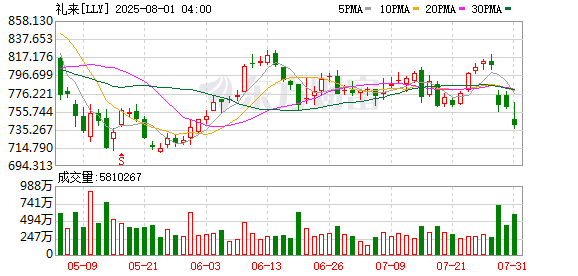
礼来又一里程碑式头对头研究公布结果 替尔泊肽控糖、减重、心肾保护“多效合一”
Zheng Quan Ri Bao· 2025-08-01 07:16
Core Insights - The SURPASS-CVOT study represents a significant advancement in the treatment of type 2 diabetes, demonstrating the cardiovascular benefits of the dual GIP/GLP-1 receptor agonist tirzepatide compared to the GLP-1 receptor agonist dulaglutide [2][3] - Tirzepatide shows improvements in A1C levels, weight, renal function, and all-cause mortality, indicating its potential for broader applications in managing diabetes and cardiovascular risks [2][3] - The study included over 13,000 adult patients with type 2 diabetes and atherosclerotic cardiovascular disease from 30 countries, making it the largest and longest follow-up study of tirzepatide to date [3] Company and Industry Implications - The results of the SURPASS-CVOT study provide solid evidence for the cardiovascular benefits and long-term safety of tirzepatide, which may lead to its wider adoption among diabetes patients in China [3][4] - The high cost of treating cardiovascular diseases and chronic complications accounts for 87.05% of the total medical expenditure for diabetes in China, highlighting the need for innovative treatments like tirzepatide to alleviate the healthcare burden [3][4] - Eli Lilly's commitment to patient-centered care and clinical value is evident in their ongoing research efforts, with plans to submit detailed results to global regulatory agencies by the end of the year [4]