
AI技术革命

Search documents
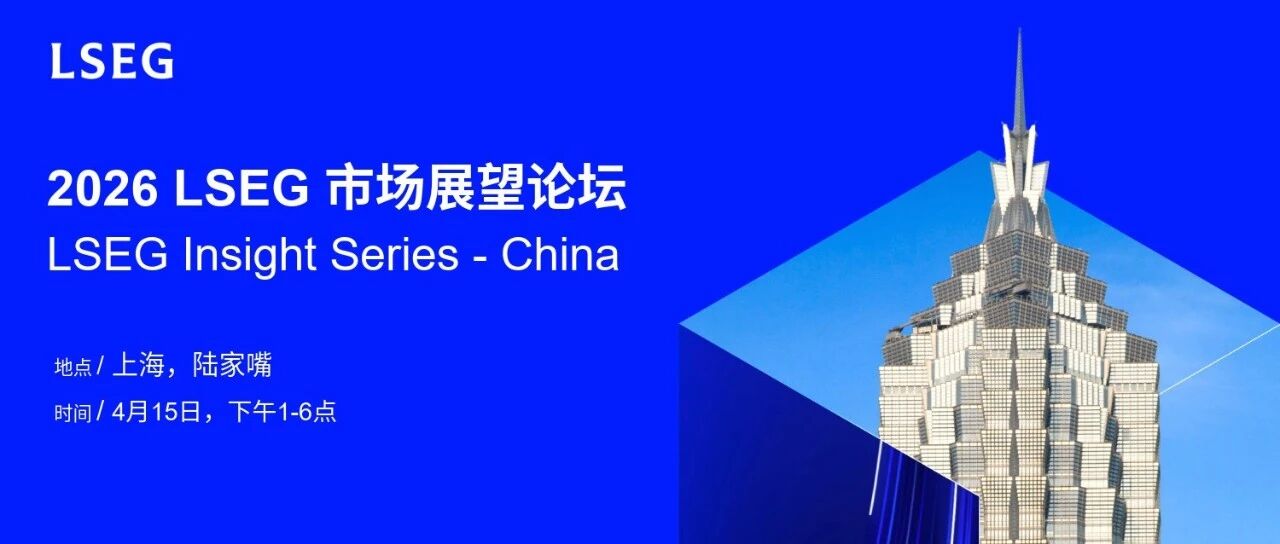
活动火热报名中 | 2026 LSEG市场展望论坛,上海
Refinitiv路孚特· 2026-03-26 06:03
Core Insights - The LSEG Market Outlook Forum celebrates its 15th anniversary, focusing on global perspectives regarding macroeconomic and capital market trends, particularly in the context of AI advancements and shifts in the global economic landscape [1][5]. Group 1: Event Overview - The 2026 LSEG Market Outlook Forum will take place on April 15 in Shanghai, inviting participants to engage in discussions about emerging opportunities in the financial market [2][5]. - The forum will feature top industry experts discussing three main themes: AI's impact on finance, the strong performance of precious metals, and new trends in the Chinese financial market [5]. Group 2: Agenda Highlights - The event will include a series of thematic presentations and roundtable discussions, covering topics such as global trade restructuring, the transition of AI from concept to industry application, and cross-asset trading opportunities amid macroeconomic shifts [7][8][9]. - Specific sessions will address the future of ETFs and strategy indices, as well as the interconnectedness of the cross-border RMB market in the context of a new global landscape [8][9]. Group 3: About LSEG - The London Stock Exchange Group (LSEG) is a leading provider of financial market infrastructure, serving over 40,000 clients across more than 170 countries with financial data, analytics, news, and index products [13][14]. - LSEG collaborates with clients throughout the trading cycle, from pre-trade decision support to execution and post-trade processes, aiming to foster financial stability and sustainable growth [14][21].

建筑材料行业跟踪周报:短期去风险,中期迎接顺周期启动-20260323
Soochow Securities· 2026-03-23 15:29
Investment Rating - The report maintains an "Accumulate" rating for the construction materials industry [1]. Core Insights - The geopolitical situation in the Middle East has led to a surge in oil prices, which, combined with unexpected inflation in the U.S., has accelerated the expectations for stagflation and interest rate hikes, causing risk assets to decline. However, the resilience of China's supply chain is expected to support economic recovery [2]. - In the first two months, China's infrastructure investment increased by 11.4% year-on-year, with power investment rising by 13%. The AI technology revolution continues to drive economic transformation [2]. - The domestic construction materials sector, particularly engineering materials, is still at low profitability levels despite a gradual price recovery since the second half of 2025. Major companies are willing to push for further price increases this year [2]. - Short-term focus should be on dividend value stocks and cyclical products that can increase prices, such as companies in the construction materials sector [2]. - The report highlights the potential for recovery in the construction materials sector, with expectations for improved gross margins and profitability in the real estate chain in 2026 [2]. Summary by Sections 1. Bulk Construction Materials Fundamentals and High-Frequency Data - **Cement**: The national average price for high-standard cement is 339.3 CNY/ton, up by 2.3 CNY/ton from last week but down by 56.5 CNY/ton year-on-year. The average cement inventory ratio is 61.8%, down by 0.7 percentage points from last week but up by 4.6 percentage points year-on-year [5][24]. - **Glass**: The average price for float glass is 1193.8 CNY/ton, an increase of 16.4 CNY/ton from last week but down by 109.0 CNY/ton year-on-year. The inventory of float glass is 6,582 million weight boxes, down by 181 million weight boxes from last week [5][47][51]. - **Fiberglass**: The price for non-alkali roving is stable, with mainstream transaction prices between 3500-3800 CNY/ton. The average price for electronic yarn G75 remains stable at 11,000-11,700 CNY/ton [5][58]. 2. Industry Dynamics Tracking - The construction materials sector has experienced a decline of 7.95% this week, while the Shanghai and Shenzhen 300 indices fell by 2.19% and 4.13%, respectively, indicating an underperformance of 5.76% and 3.82% [5]. - The report suggests that the supply-side adjustments in the cement industry will continue, with a focus on eliminating outdated capacity and improving utilization rates [6]. - The glass industry is expected to see price elasticity in 2026 due to accelerated supply clearance, although current high inventory levels may limit immediate price rebounds [6]. 3. Weekly Market Review and Sector Valuation Table - The report provides a detailed review of price changes, inventory levels, and production capacity across various regions for cement and glass, indicating regional disparities in price movements and inventory management [5][19][24][46].



赎回潮下的裸泳者:Blue Owl Capital破发戳穿私募信贷“低流动性”神话
Xin Lang Cai Jing· 2026-03-10 08:40
Core Insights - The crisis of Blue Owl Capital marks a significant event in the global private credit market, with its stock price falling below the $10 IPO price, reflecting a nearly 50% decline over the past year and a substantial reduction in market capitalization [1][13] - The collapse of Blue Owl's stock triggered panic across the private equity market, affecting major players like Blackstone, Apollo Global Management, and KKR, with Blackstone's Bcred experiencing a net outflow of $1.7 billion in a single month [1][6] - Economists liken Blue Owl's situation to the "canary in the coal mine" before the 2008 financial crisis, indicating deeper issues within the private credit industry amid changing interest rates, technological disruptions, and liquidity mismatches [1][6] Group 1: Blue Owl's Crisis - Blue Owl's crisis has been developing over the past six months due to liquidity issues in its flagship fund, with 56% of its assets concentrated in software and technology services, significantly above industry averages [2][14] - The emergence of generative AI has led to fundamental doubts about the business models of traditional software companies, causing investor concerns over heavily tech-focused loans and triggering a wave of redemptions [2][14] - To address liquidity pressures, Blue Owl sold $1.4 billion in credit assets from three funds to top public pension and insurance institutions, with the assets sold at 99.7% of face value, indicating quality but raising questions about the necessity of the sale [3][15] Group 2: Market Reactions and Implications - The shift in Blue Owl's strategy to liquidate assets has exposed the risks faced by individual investors in illiquid instruments, with the CEO asserting confidence from experienced buyers, while market performance tells a different story [4][16] - Blue Owl's financial health is alarming, with a debt-to-equity ratio of 1.65 and an Altman Z-Score of 0.86, indicating a high risk of bankruptcy despite managing over $300 billion in assets [4][16] - The private credit industry is facing a potential "shakeout," with liquidity mismatches re-emerging as a critical issue, prompting regulatory scrutiny over the sale of private credit products due to their low liquidity and transparency [6][18] Group 3: Broader Industry Challenges - The traditional credit risk assessment models are failing under technological disruptions, as the value of software companies, which are core collateral for Blue Owl, is being rapidly eroded by AI advancements [7][19] - The funding side of the market is showing signs of instability, with Blackstone's Bcred experiencing significant outflows, while the profitability of borrowing companies is under pressure due to a slowing economy and high interest rates [8][20] - Blue Owl's stock price drop signifies a shift in market sentiment towards private credit, moving from indiscriminate buying to a more selective approach, with firms lacking risk management facing significant pressures [8][20] Group 4: Future Outlook - The crisis at Blue Owl serves as a warning for the private credit industry, emphasizing the importance of risk management, asset diversification, and liquidity buffers in determining which firms will survive the impending shakeout [10][22] - The challenges posed by the dual pressures of technological disruption and macroeconomic tightening highlight the vulnerabilities within the alternative asset management sector [10][22]

联想部分电脑,涨超千元
财联社· 2026-03-04 11:44
Core Viewpoint - A price surge driven by upstream core components is sweeping through the consumer electronics market, with significant increases in memory chip prices, particularly DRAM and NAND flash, reaching record highs since 2016 [3][4]. Group 1: Price Increases in Consumer Electronics - Lenovo has issued a price adjustment notice to its channel partners, indicating a price increase for certain computer products, with some models seeing retail price hikes exceeding 1000 yuan compared to last year [4]. - The price adjustments have already been observed in online channels since early March, with either direct price increases or the withdrawal of previous discount activities [4]. - The ongoing global turmoil in the memory chip market is cited as a primary reason for these price hikes, with AI technology revolutionizing the supply-demand structure in the memory and storage industry [4][6]. Group 2: Impact on the Smartphone Market - The price increase trend is also affecting the smartphone market, with significant price hikes expected for new models released after March, with increases of at least 1000 yuan for entry-level models and 2000-3000 yuan for mid-to-high-end flagship models [7]. - The price surge in memory chips has led to a ripple effect, impacting smartphone prices in various markets, including rural areas, where prices have increased by 200-300 yuan [7]. - Counterpoint Research forecasts a 6.9% year-on-year increase in the global average smartphone price for 2026, with the Chinese market expected to see an even higher increase due to rising upstream supply chain costs [8].


中金:科技领域仍是资金重点配置的方向
Ge Long Hui A P P· 2026-02-26 11:36
Core Viewpoint - The report from CICC indicates that the market's steady upward trend is expected to continue, supported by positive policies, reform expectations, synchronized liquidity easing cycles between China and abroad, and demand driven by the AI and energy revolutions [1] Group 1: Market Trends - The market is anticipated to maintain a steady growth trend due to favorable policies and reform expectations [1] - The synchronization of liquidity easing cycles in both domestic and international markets is contributing to this positive outlook [1] Group 2: Investment Focus - The technology sector remains a key focus for capital allocation, particularly in the AI industry chain [1] - Specific areas of interest include optical communication and cloud computing infrastructure [1] - On the application side, attention is recommended for robotics, smart driving, and consumer electronics [1]
中金公司:科技领域仍是资金重点配置的方向
Xin Lang Cai Jing· 2026-02-26 11:29
Core Viewpoint - The report from CICC indicates that the market's steady upward trend is expected to continue, supported by positive policies, reform expectations, synchronized liquidity easing cycles, and demand driven by the AI technology revolution and energy transformation [1] Group 1: Market Trends - The market is anticipated to benefit from a combination of favorable policies and reform expectations [1] - The synchronization of domestic and international liquidity easing cycles is expected to support market stability [1] Group 2: Investment Focus - The technology sector remains a key focus for capital allocation, particularly in the AI industry chain [1] - Recommended areas for investment include optical communication and cloud computing infrastructure [1] - On the application side, attention is advised for robotics, intelligent driving, and consumer electronics [1]

未知机构:TMTBTMTBREAKOUT发布的付费日终总结报告日期为2026年2月-20260224
未知机构· 2026-02-24 02:30
Summary of TMTB Report on Market Trends and Technology Stocks Industry Overview - **Industry Focus**: Technology sector, particularly internet and software stocks - **Date of Report**: February 24, 2026 - **Key Event**: Market sell-off triggered by an article titled "Citrini" [1][2] Market Performance Overview - **Overall Trend**: The QQQ index, which is tech-heavy, declined by 1.22% [1] - **Declining Sectors**: Internet and software stocks experienced significant sell-offs, contributing to the market's downturn [3] - **Resilient Sectors**: Semiconductor stocks outperformed the market, with telecommunications and networking equipment also showing gains [4] Core Market Trends Analysis - **Valuation Logic Shift**: The report highlights a critical and ongoing trend in the tech investment landscape for 2026: - Investors are unwilling to pay high valuations regardless of a company's narrative or fundamentals [5] - **Examples of Declining Stocks**: - SHOP: Down 7% with a valuation of 10x revenue and 50x P/E - MDB: Down 12% with a valuation of 9x revenue and 60x P/E - DDOG: Down 11% with a valuation of 8x revenue and 47x P/E - CRWD: Down 10% with a valuation of 17x revenue and 75x P/E - NET: Down 10% with a valuation of 20x revenue and 130x P/E - **Underlying Issues**: High valuation multiples do not account for significant stock-based compensation (SBC) costs, and many companies are not profitable under GAAP accounting [6] - **Future Outlook**: Investors are unlikely to accept "sky-high valuations" as they did in the past, indicating a fundamental change in market perception [5][6] "Citrini Article" and Human Imagination Resonance - **Broader Context**: The report places the sell-off within the larger context of rapid AI advancements impacting human psychology and investment logic [7] - **Key Insight**: Human imagination is growing faster than technical indices, leading to fundamental doubts about the "terminal value" of many tech companies, creating a "terminal value fog" [7] - **Citrini's Role**: The article effectively captured and escalated fears regarding potential disruptions to global payment and consumption systems, acting as a catalyst for market sentiment [8] Future Market Outlook and Investment Strategy - **Short-term Stability**: Despite ongoing emotional shocks and the "terminal value fog," the market may stabilize in the coming weeks, shifting focus from broad sector declines to individual stock differentiation [9] - **Long-term Perspective**: The report cautions that while digital innovation progresses rapidly, real-world changes are constrained by corporate, governmental, and societal inertia, leading to slower implementation [10] - **Market Metaphor**: The author compares current market uncertainty to fog in San Francisco, suggesting that while uncertainty is present, it will eventually clear [11] Sector and Stock Movements - **Strong Performers**: The optical sector is expected to benefit from increased AI data center capital expenditures, with companies like LITE, CIEN, GLW, and COHR showing gains [13] - **Weak Performers**: The "Citrini Doomsday Basket" includes sectors directly threatened by AI disruption, such as gig economy (DASH, UBER), alternative asset management/insurance (APO, BX, KKR), Indian IT services (INFY, WIT), SaaS software (NOW, CRM), and payment/consumer finance (MA, V, AXP, SYF), all of which experienced significant declines [14] - **Notable Decline**: IBM fell 15% due to AI tools threatening its legacy consulting business [15] Conclusion - **Core Argument**: The market sell-off on February 24, 2026, is not an isolated incident but a concentrated reflection of the structural shift in tech stock valuations driven by the AI revolution and investor imagination [16] - **Future Implications**: The era of high valuations for internet and software companies may be over, leading to a new phase of valuation reassessment and significant stock differentiation [16]

首席展望|嘉实基金方晗:马年看好AI扩散、供需改善及顺周期修复主线
Sou Hu Cai Jing· 2026-02-20 01:15
Core Viewpoint - The article emphasizes a positive outlook for China's economy in 2026, with foreign investment banks recommending increased allocations to A-shares and Hong Kong stocks, reflecting confidence in China's economic transformation and growth prospects [1]. Market Consensus - Two major consensus points for 2026 are identified: the continuation of a structural market trend and a focus on the AI technology revolution as the primary investment theme [5][6]. - The structural market trend is supported by favorable policy environments, potential for increased retail investment, and a recovery in corporate earnings [5]. - The AI technology revolution is expected to drive significant investment opportunities across various sectors, particularly in infrastructure and application breakthroughs [5][6]. Core Divergences - Three key divergences in the market are highlighted: 1. Whether valuation expansion will be limited or broken by the historical AI technology revolution [6]. 2. The impact of rising commodity prices on the Federal Reserve's interest rate path [7]. 3. The potential reallocation of household savings into stock assets due to the repricing of bank deposits [8]. Investment Themes - Three main investment themes for 2026 are proposed: 1. The diffusion of new technology, particularly AI, which is expected to create opportunities in sectors like storage, semiconductors, and energy [9]. 2. Industries experiencing stable demand and reduced supply pressures, such as lithium batteries, military, offshore wind, and dairy products [10]. 3. High-risk, cyclical assets that are likely to recover as the economy improves, including real estate, food and beverage, and discretionary consumption [10].

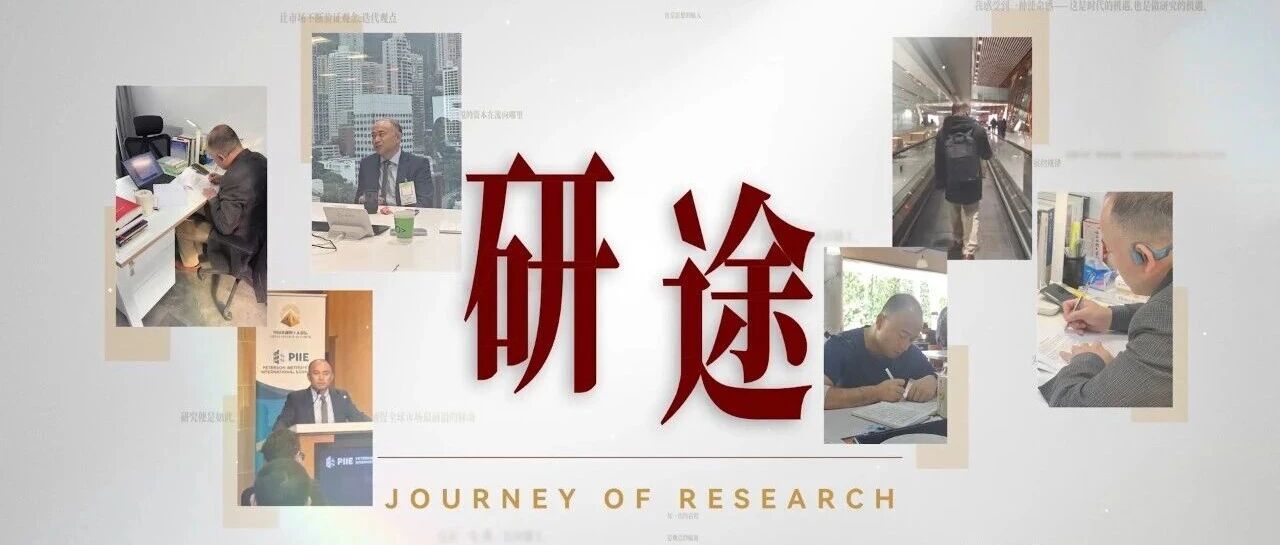
中金研途 | 缪延亮:货币的秩序——我研究生涯的又一次攀登
中金点睛· 2026-02-14 01:17
Core Viewpoint - The article emphasizes the importance of understanding the evolution of the international monetary order and the opportunities it presents for China, as articulated by Dr. Miao Yanliang, a senior strategist at CICC [2][12]. Research Origin - The interest in the international monetary system began in 2005 during a class at Princeton University, where Dr. Miao was encouraged by Professor Peter Kenen, a leading expert in the field [4]. - Dr. Miao's career has been centered around the international monetary order, having worked at the International Monetary Fund and the State Administration of Foreign Exchange [4]. Research Development - In early 2023, Dr. Miao completed a book titled "The Game of Confidence: Modern Central Banks and Macroeconomics," which received positive feedback, prompting him to consider writing another book titled "The Order of Money" [5]. - The rapid changes in the global landscape, including the AI revolution and shifts in U.S. trade policy, have created a unique opportunity for research on the international monetary order [5][14]. Key Observations - In June 2025, Dr. Miao presented at a strategy meeting, stating that the forces driving the reconstruction of the international monetary order are significantly stronger than the basic fundamentals of any single country or market [6]. - He noted that the restructuring is moving towards fragmentation and diversification, with capital returning to its home countries, as evidenced by the decline in Chinese holdings of U.S. stocks from $383 billion to $329 billion [7]. Research Methodology - Dr. Miao's insights are based on extensive research and validation through interactions with central banks and investment institutions, including participation in high-level conferences [9][10]. - He emphasizes the importance of cross-verifying perspectives from academic, market, and policy viewpoints to strengthen his research conclusions [11]. Conclusion on Currency Competition - The article concludes that the highest form of competition among nations is currency competition, which relies on trust supported by economic, financial, institutional, and technological factors [13]. - The article highlights the significance of advancing the internationalization of the Renminbi, especially during strategic windows of opportunity [14][16]. Research Series Overview - The article lists a series of research reports focusing on various aspects of the international monetary system, including the role of the Renminbi, the dynamics of gold pricing, and the implications of de-dollarization [20].
淡水泉陶冬-股-债-商品齐涨盛况-2026年能否延续
2026-02-13 02:17
Summary of Key Points from the Conference Call Industry or Company Involved - The discussion primarily revolves around the macroeconomic environment, focusing on the trends in global asset classes, particularly equities, bonds, and commodities, as well as the implications of AI technology and monetary policy. Core Insights and Arguments 1. **Asset Class Performance in 2025** - In 2025, nearly all major asset classes, except oil, experienced growth, driven by liquidity and inflation concerns. Investors shifted wealth from bank deposits to risk assets, particularly precious metals, to preserve purchasing power in a high-inflation environment [3][2][4]. 2. **Federal Reserve's Monetary Policy Outlook** - The Federal Reserve is expected to maintain a loose monetary policy in the long term to support the government's fiscal needs. In the short term, interest rates may remain unchanged due to persistent inflation and political pressures, with potential aggressive rate cuts anticipated under the new chairperson [4][5]. 3. **Challenges in the U.S. Treasury Market** - The U.S. Treasury market faces significant risks, including the normalization of quantitative easing, rising foreign bond yields, and geopolitical uncertainties. These factors have led to a reduction in allocations to U.S. dollar assets by sovereign funds, although U.S. Treasuries still hold appeal due to a lack of safer alternatives [5][4]. 4. **Precious Metals Price Trends** - Precious metals prices surged in 2025 but are currently in an overbought state, indicating potential short-term volatility. Factors such as a sudden dollar rebound or changes in Federal Reserve leadership could impact prices. Silver is particularly favored due to its industrial applications and strategic reserve demand [6][7]. 5. **Industrial Demand for Precious and Base Metals** - The industrial properties of precious and base metals are becoming increasingly important, with copper and aluminum also affected by technological advancements. The demand for these metals is expected to grow, driven by their roles in AI and energy sectors [8]. 6. **AI Technology and Investment Risks** - While the AI technology revolution is significant, investment in AI carries risks due to discrepancies between market expectations and actual developments. Financial instability among some AI companies could trigger industry-wide adjustments in 2026-2027 [9]. 7. **K-Shaped Economic Recovery** - The K-shaped recovery trend is expected to deepen, leading to political polarization. A significant portion of U.S. households is facing economic hardship, which could influence future elections and global monetary policies [10][11]. 8. **Investment Recommendations** - There is a preference for A-shares over U.S. equities, with a particular bullish outlook on silver due to its industrial demand. The bond market is viewed as problematic, and oil prices are expected to rise despite uncertainties [14]. Other Important but Potentially Overlooked Content 1. **Market Risks and Consensus** - The market faces risks from potential trading crowding, where a small trigger could lead to significant adjustments. High fiscal deficits in countries like the U.S., France, and the U.K. pose serious concerns, with the possibility of a debt crisis in France or the U.K. leading to global financial turmoil [15]. 2. **Long-term Asset Strategy** - In the current inflationary environment, holding cash in banks is deemed unwise. The focus should be on assets that can withstand economic cycles, with a shift towards technology-driven investments and away from central bank-controlled assets [12].