慢变量

Search documents
UP向上,投资有温度︱2025年投资者服务活动第9站:穿透市场新常态,重塑长期投资视野
Xin Lang Cai Jing· 2025-12-22 07:54
Core Viewpoint - The article emphasizes the need for investors to adapt their understanding of "safety" and investment strategies in response to changing market conditions, particularly in a low-interest-rate environment where traditional asset allocation methods are being challenged [3][4][11]. Group 1: Redefining Safety - The occurrence of "interest rate inversion" indicates a need to reassess the traditional definition of "risk-free returns" [4][17]. - True wealth security should incorporate a time dimension, focusing on the long-term preservation and appreciation of assets rather than just nominal principal safety [5][19]. - Investors should accept market volatility as a potential indicator of long-term growth opportunities rather than viewing it solely as risk [5][19]. Group 2: Investment Framework - A three-layer analytical framework is proposed to navigate the complexities of the real estate market, focusing on short-term, mid-term, and long-term factors [4][18]. - Short-term market sentiment can be gauged through indicators such as the change in second-hand housing listings, which reflect immediate supply and demand dynamics [6][18]. - Mid-term market conditions are influenced by supply-side factors, including land transaction data and local government revenue from land sales, which affect infrastructure investment and overall market development [8][21]. Group 3: Long-term Value and Slow Variables - Long-term value analysis should focus on identifying the core competitive advantages of cities, such as population attraction and industrial vitality, which are essential for real estate investment [10][23]. - Understanding "slow variables" is crucial for long-term planning, as they shape the fundamental value of assets over time, influenced by demographic and technological trends [10][23]. Group 4: Adapting to New Norms - As traditional investment strategies become less effective, investors are encouraged to recalibrate their understanding of risk and return, moving from chasing market trends to focusing on long-term planning [11][24]. - The volatility of previously considered "stable" assets may increase, while sectors aligned with long-term growth trends may present new investment opportunities [11][24]. - The ongoing "UP向上,投资有温度" initiative aims to provide investors with insights into complex information, facilitating informed decision-making for sustainable wealth growth [3][11][24].

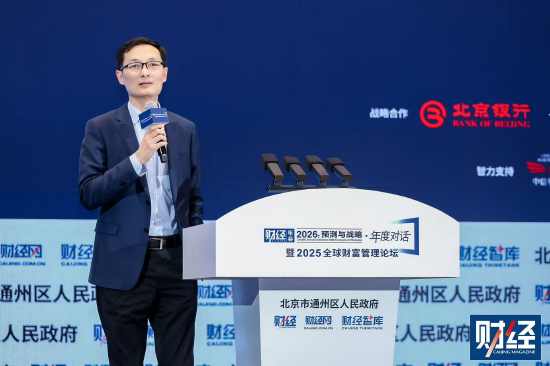
如何破解需求不足?张斌:短期内快速扩大投资
Xin Lang Cai Jing· 2025-12-18 09:25
Core Insights - The article discusses the issue of insufficient demand in the economy, highlighting three main causes: the phenomenon is related to the development stage of the economy, it is triggered by specific events such as asset price bubbles and international financial crises, and it stems from a mismatch between spending and income within the economic system [2][6]. Group 1: Characteristics of Insufficient Demand - Insufficient demand has four significant characteristics that inform policy-making: 1. The causes are complex and multifaceted, involving both long-term structural issues and short-term cyclical factors, making it impossible to address each underlying cause individually [3][6]. 2. It represents a market failure where individual spending cuts and corporate investment reductions lead to overall economic deterioration, necessitating external intervention [3][6]. 3. Fast variables dominate the downward trend, with rapid adjustments in investment and credit having a more direct impact on economic performance [3][6]. 4. The destructive nature of insufficient demand is highlighted by historical examples such as the Great Depression in the U.S. and Japan's "lost two decades," indicating long-term negative effects if not addressed promptly [3][6]. Group 2: Policy Recommendations - To address insufficient demand, several core recommendations are proposed: 1. The government should step outside market logic and actively increase spending to improve income across various sectors, thereby reversing market expectations [4][9]. 2. Focus on fast variables like investment to stimulate consumption, as consumption is a slow variable that cannot be significantly boosted in the short term [4][9]. 3. Prioritize breaking the negative cycle of insufficient demand, concentrating efforts on this issue rather than attempting to address multiple problems simultaneously [5][9]. - The essence of resolving insufficient demand lies in disrupting the self-reinforcing negative cycle, with policies needing to target fast variables like investment and credit with greater intensity than market expectations [5][9].
银华基金张腾:非传统“价值投资者”在周期中寻找“弹性”
Shang Hai Zheng Quan Bao· 2025-08-31 14:15
Core Viewpoint - Zhang Teng, a fund manager at Yinhua Fund, identifies as a non-traditional "value investor" who seeks "elastic" opportunities in a volatile market environment, achieving significant performance without relying on hot sectors [1][2]. Investment Philosophy - Zhang Teng differentiates between high-dividend and elastic value stocks, arguing that traditional views of value investing are limited and do not fully capture market opportunities [2]. - His investment approach is based on a top-down analysis of macro variables and industry logic, aiming to find the most cost-effective stocks within a portfolio [2]. Career Evolution - Zhang Teng's investment skills have evolved over 14 years, transitioning from a focus on specific sectors to a more balanced and risk-aware investment strategy [3]. - His educational background in energy and minerals laid the foundation for his focus on cyclical sectors, and he adapted his strategies in response to market shifts [3]. Risk Management - To avoid over-concentration, Zhang Teng adheres to an industry diversification principle, adjusting position limits based on the richness of sub-sectors [4]. - The concepts of "slow variables" and "anti-fragility" enhance his investment insights and decision-making stability [4]. Market Outlook - Zhang Teng anticipates that industrial metals may perform well in the latter half of the Federal Reserve's interest rate cut cycle, suggesting a focus on sectors with significant price elasticity, such as rare earths and strategic metals [4].
在“反脆弱”的铠甲下寻找弹性,一位“周期猎手”的非共识狩猎
Sou Hu Cai Jing· 2025-08-27 05:23
Core Insights - Zhang Teng, a fund manager at Yinhua Fund, has achieved impressive returns in traditional sectors like non-ferrous metals and chemicals, contrasting with the market's focus on AI and semiconductors [1][3] - His fund, Yinhua Ruihe Flexible Allocation Mixed Fund, reported a year-to-date net value growth rate of 29.69% and a one-year growth rate of 45.77%, significantly outperforming its benchmark [1] Investment Philosophy - Zhang Teng's investment approach evolved from being a "track-type" investor to a "systematic" investor, emphasizing the importance of adaptability in changing market conditions [3][7] - He developed a framework based on "slow variables" and "anti-fragility," allowing him to navigate market cycles and avoid the pitfalls of extreme concentration in investments [6][7] Market Trends and Opportunities - The "carbon neutrality" trend provided a testing ground for Zhang's new investment system, where he identified the value of traditional energy sources like coal as scarce assets during the energy transition [8][9] - Currently, Zhang is focusing on the "anti-involution" trend, which he believes will reshape certain industry ecosystems in China, seeking opportunities in sectors with inherent anti-involution demands [11][12] Sector Focus - Zhang's analysis of the chemical and non-ferrous sectors reveals a strategic approach to identifying investment opportunities based on industry profit distribution and market dynamics [12][13] - He emphasizes a diversified portfolio within the non-ferrous sector to capture various market drivers while adhering to his principles of "slow variables" and "anti-fragility" [13]

在“反脆弱”的铠甲下寻找弹性,一位“周期猎手”的非共识狩猎
券商中国· 2025-08-27 03:47
Core Viewpoint - Zhang Teng, a fund manager at Yinhua Fund, has achieved impressive returns by focusing on traditional sectors like non-ferrous metals and chemicals, while others chase trends in AI and semiconductors [1][3]. Group 1: Investment Philosophy Evolution - Zhang Teng transitioned from a "track-type" investor to a "systematic" investor, emphasizing the importance of adaptability in changing market conditions [4][8]. - His investment strategy now incorporates "slow variables," which allow for better judgment of economic cycles and asset price directions [6]. - The principle of "antifragility" has been integrated into his approach, focusing on survival and risk management rather than short-term gains [7][8]. Group 2: Carbon Neutrality Investment - The "carbon neutrality" trend served as a testing ground for Zhang's new investment framework, where he recognized the enduring value of traditional energy sources amidst the transition [9][10]. - He strategically invested in coal, anticipating its revaluation due to scarcity, while maintaining a disciplined approach to position sizing [10][11]. Group 3: Current Investment Focus - Zhang Teng is now targeting the "anti-involution" theme, which he believes will reshape certain industry ecosystems in China [12]. - His investment logic favors industries with inherent "anti-involution" demands or concentrated supply structures, rather than those in chaotic competition [12][13]. - He has identified opportunities in specific segments of the chemical and non-ferrous metals industries, leveraging insights from profit distribution along the supply chain [13][14]. - The current macroeconomic environment, particularly the anticipated Fed rate cuts, is seen as favorable for industrial metals, allowing for a diversified investment approach within the non-ferrous sector [14].