房地产市场软着陆

Search documents
潘石屹再发楼市预言!未来三年,中国房地产将迎三大巨变,普通人如何避免财富缩水
Sou Hu Cai Jing· 2025-11-02 19:11
Core Insights - Pan Shiyi, a prominent figure in the real estate industry, has successfully executed a "sell-sell-sell" strategy since 2014, cashing out a total of 30 billion yuan from key projects in Shanghai and Beijing, ultimately relocating to the United States [3][5][10] - The Chinese real estate market is currently experiencing a downturn, with a 4.7% decline in national commercial housing sales area in the first half of 2025, and a significant inventory backlog in lower-tier cities [6][8][11] - The market is undergoing a significant reshuffling, with larger firms capturing a greater market share, as evidenced by the top 50 real estate companies accounting for 58.3% of sales in 2024, up from 46.2% in 2020 [10][11] Market Trends - The inventory turnover period for third and fourth-tier cities has reached 30.5 months, indicating a severe oversupply situation, while first-tier cities like Shenzhen are also facing price reductions in suburban areas [8][10] - High-profile reports, including one from Goldman Sachs, predict a cumulative price drop of 10-15% in the national real estate market over the next 2-3 years, with significant regional disparities [8][10] - The financing landscape is heavily skewed towards state-owned enterprises, which secured 86% of new financing, while private firms are struggling with a 20% drop in bond financing [10][11] Investment Opportunities - For first-time homebuyers, the next 2-3 years may present a favorable entry point due to declining prices and supportive government policies, such as reduced down payment requirements and increased loan limits [13][14] - The current market is characterized as a buyer's market, where buyers have the leverage to select properties carefully, particularly in light of the ongoing price declines [11][13] - Core properties in prime locations may still hold investment value, despite the overall market downturn, as the era of speculative buying is coming to an end [14]


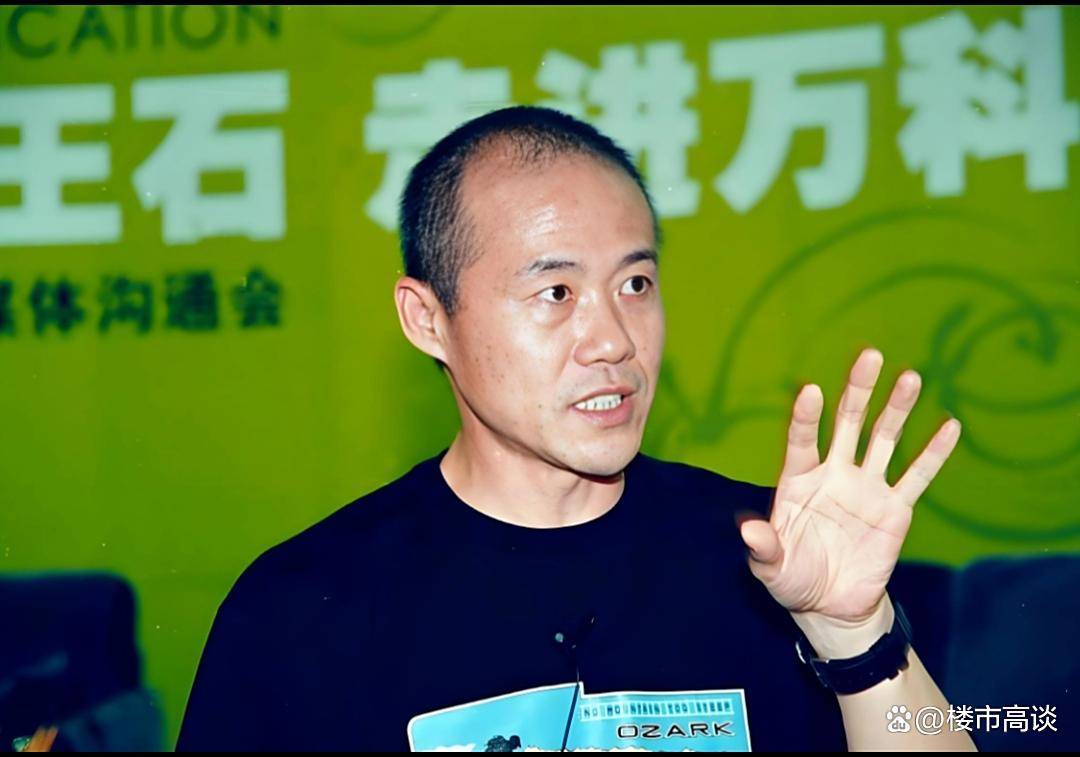
王石再次预判楼市!前两次都是对的,软着陆才是最好的结局
Sou Hu Cai Jing· 2025-10-14 08:57
Core Viewpoint - Wang Shi's recent predictions about the Chinese real estate market indicate a structural adjustment towards a healthier and more rational development trajectory, suggesting a "soft landing" is the best outcome for both the industry and society [4][8]. Market Conditions - The real estate market fundamentals are improving, with 42 out of 70 major cities reporting a month-on-month increase in new residential prices, and 38 cities seeing a rise in second-hand residential prices as of May 2025 [4][5]. - There is a significant structural differentiation in inventory, with first-tier and strong second-tier cities having a reasonable inventory turnover period of around 9 months, while some third and fourth-tier cities face over 20 months of inventory turnover [4][7]. Financing Environment - The financing environment for real estate companies is gradually improving, with bond financing reaching 286.7 billion yuan in the first half of 2025, a year-on-year increase of 35.4% [5][7]. Consumer Behavior - There is a gradual recovery in residents' willingness to purchase homes, with the proportion of families planning to buy within two years rising from 12.3% at the end of 2024 to 16.7% [5][7]. - Consumers are becoming more rational, with 83.6% indicating their primary purpose for buying is self-occupation, while only 12.8% are purchasing for investment [7][8]. Industry Challenges - Urban differentiation is intensifying, with quality cities recovering faster while some cities experiencing net population outflows may face long-term adjustments [7][8]. - There is a clear divide among developers, with well-capitalized and operationally strong firms faring better, while over 500 small and medium-sized developers have exited the market in the past two years [7][8]. Future Outlook - The concept of "soft landing" is viewed differently among industry insiders, with some believing it has been achieved in core cities, while others express concerns for third and fourth-tier cities facing potential "hard landings" [8][10]. - The real estate market is expected to return to its residential nature, with speculation diminishing and price fluctuations aligning more closely with economic fundamentals and residents' income levels [11][12].

楼市信心从哪儿来
Zhong Guo Qing Nian Bao· 2025-10-14 03:40
Core Insights - The future of the real estate market relies on local governments effectively adjusting land use structures, with the principle of "land follows people" being emphasized [1][7] Group 1: Market Activity and Trends - The Shanghai real estate market has seen increased transaction activity due to the "Six Policies" initiative, with September transactions for new and second-hand homes totaling 207 million square meters, marking an 8% month-on-month increase and a 24% year-on-year increase [2][4] - A luxury property in Shanghai's Huangpu District sold 66 units in one hour, generating sales of 4.8 billion yuan, with an average price of 19.8 million yuan per square meter [3] - The "Six Policies" have led to a 40% increase in daily transactions for new homes in the outer ring of Shanghai compared to August, with second-hand home transactions making up 57% of the market [4] Group 2: Population Dynamics and Economic Implications - Population movement is a key factor in stabilizing housing prices, with urban centers attracting more residents while rural areas see outflows [5][7] - The service sector's contribution to GDP has reached 57%, indicating a shift in employment patterns that favor urban living close to job opportunities [5][7] Group 3: Future Market Outlook - Experts predict that the real estate market will stabilize within one to two years, with a focus on soft landing rather than hard landing scenarios [9][10] - The government is encouraged to address housing difficulties for low-income groups and new citizens, as the market transitions to a stage dominated by second-hand home transactions [10][11]
高频跟踪周报20250823:二手稳增长,新房仍承压-20250823
Tianfeng Securities· 2025-08-23 15:07
1. Report Industry Investment Rating The provided content does not mention the industry investment rating. 2. Core Viewpoints of the Report - The new - home transactions in the real estate market showed a month - on - month recovery but were still lower than the seasonal level year - on - year, while the second - hand housing transactions achieved year - on - year growth, indicating a divergence between new and second - hand housing. - The automotive consumption recovered, while the movie box office declined. - The industrial operation in the production field was stable, and the infrastructure construction maintained resilience. - In terms of investment, the consumption and price of rebar were divergent, and the cement price rebounded from a low level. - Most commodity futures declined, with significant drops in coking coal, lithium carbonate, and glass. - The central government highly concerned about the continuously pressured real estate market. It was expected that the real estate policy toolbox might be further opened, but the probability of a large - scale stimulus was low. Instead, the market would achieve a new balance through policy support [1]. 3. Summary According to Relevant Catalogs 3.1 Demand - New - home transactions increased month - on - month but decreased year - on - year. As of the week ending August 22, the transaction area of commercial housing in 20 cities was 1.745 million square meters, up 10% month - on - month and down 26% year - on - year, significantly lower than the seasonal level. Second - hand housing transactions in key cities mostly increased month - on - month and year - on - year. - Automotive consumption increased week - on - week, while movie - going consumption increased year - on - year. The national migration scale index decreased week - on - week, and subway ridership declined marginally [2][12]. 3.2 Production - In the mid - and upstream sectors, the blast furnace operating rate in Tangshan and the rebar operating rate remained flat week - on - week. The PTA operating rate decreased by 0.7 pct to 75.1%, the operating rate of polyester filament in the Jiangsu and Zhejiang regions increased by 0.9 pct to 91.4%, and the operating rate of petroleum asphalt plants decreased by 2.2 pct to 30.7%. - In the downstream sector, the operating rates of all - steel and semi - steel tires for automobiles increased, and the semi - steel tire operating rate was still at a seasonal high [49]. 3.3 Investment - The apparent consumption of rebar recovered, but the rebar price decreased week - on - week. As of the week ending August 22, the apparent consumption of rebar increased by 2.6% to 1.948 million tons, and the rebar price decreased by 1.8% to 3,346.2 yuan/ton. - The cement price increased by 1.6% to 105.1 points week - on - week. As of the week ending August 15 (latest data), the cement shipping rate remained basically flat at 40.1%, and the cement inventory ratio decreased by 1.2 pct to 61.6% [64]. 3.4 Trade - In terms of exports, the container throughput at ports decreased by 0.6% week - on - week, and the CCFI composite index decreased by 1.5% week - on - week. The freight rates of European, West - American, and East - American routes decreased week - on - week. The BDI index also decreased by 4.1% week - on - week. - In terms of imports, the CICFI composite index decreased by 1.0% week - on - week [73]. 3.5 Price - The agricultural product price index increased by 0.8% week - on - week. The pork price decreased by 0.4% week - on - week, while the egg price increased by 1.1% week - on - week, the vegetable price increased by 2.5% week - on - week, and the fruit price decreased by 0.8% week - on - week. - The Nanhua industrial products price index decreased by 1.4% week - on - week. The spot price of Brent crude oil remained flat week - on - week, the COMEX gold futures price decreased by 0.2% week - on - week, and the LME copper spot price decreased by 0.5% week - on - week. Most commodity futures declined, with asphalt, caustic soda, and industrial silicon having the highest increases, and coking coal, lithium carbonate, and glass having the largest decreases [6][83]. 3.6 Interest - Bearing Bond Tracking - Next week (August 25 - 29), the planned issuance of interest - bearing bonds is 382.6 billion yuan, with a net financing of - 133.4 billion yuan. Among them, the planned issuance of treasury bonds is 0 billion yuan, with a net financing of - 237.1 billion yuan; the planned issuance of local bonds is 351.6 billion yuan, with a net financing of 243.7 billion yuan; the planned issuance of policy - bank financial bonds is 31 billion yuan, with a net financing of - 140 billion yuan. - As of August 22, the cumulative issuance progress of replacement bonds this year was 96.7%, the cumulative issuance progress of new general bonds was 73.2%, and the cumulative issuance progress of new special bonds was 69.9% [7][106]. 3.7 Policy Weekly Observation - The government emphasized taking effective measures to consolidate the stabilization of the real estate market, such as promoting urban renewal, renovating urban villages and dilapidated houses, and releasing improvement - oriented housing demand. - Other policies included regulating the construction and operation of PPP projects, exempting personal income tax on childcare subsidies, conducting MLF operations, standardizing the photovoltaic industry competition order, etc. [117]
楼市正迎来“历史性转变”?王石再次预测2025年房地产走向
Sou Hu Cai Jing· 2025-07-14 20:25
Group 1 - The core viewpoint of the article suggests that the real estate market is undergoing a significant transformation, with predictions from industry leaders like Wang Shi indicating a potential "historical shift" in the market dynamics [1][4] - Data indicates a downward trend in housing prices, with significant drops observed in various cities. For instance, in Beijing, the price of a certain property fell by 23%, while in Shanghai, prices dropped from 96,000 yuan per square meter to 58,000 yuan per square meter [1][2] - Despite the decline in prices, homeownership remains a challenge for ordinary people, as the required down payment and income levels create barriers. For example, a 30% down payment in Beijing still requires 1.5 million yuan in cash [1][2] Group 2 - Wang Shi predicts a major reshuffle in the real estate market, emphasizing that high-debt players will likely exit the market. He cites Vanke's projected loss of 49.5 billion yuan in 2024 and a debt of 361.2 billion yuan as evidence of the industry's struggles [2][4] - Wang Shi expresses confidence in a soft landing for the real estate market, suggesting a 3-5 year adjustment period. His optimism is based on supportive policies and ongoing demand, particularly from the large population and annual influx of graduates [4][5] - Ordinary individuals are advised to prepare for continued price declines and potential asset shrinkage. The article highlights that real estate constitutes 77% of household assets, and families should diversify their investments to mitigate risks [5][6] Group 3 - The article emphasizes the importance of adapting to the changing real estate landscape, recommending the sale of underperforming properties, particularly in less developed areas. For instance, properties in Langfang have seen price drops of 61% [6][7] - It is suggested that families should be cautious with older properties, as those over 30 years old in Guangzhou have depreciated by 40% in three years. Conversely, quality properties in core areas may still hold value [6][7] - The conclusion stresses the need for individuals to recognize the shifting market dynamics to avoid significant financial losses, urging timely adjustments to investment strategies [7]