投资风格漂移

Search documents
“风格漂移”是否构成过错?投资者诉基金经理案开庭在即
Sou Hu Cai Jing· 2026-01-07 09:48
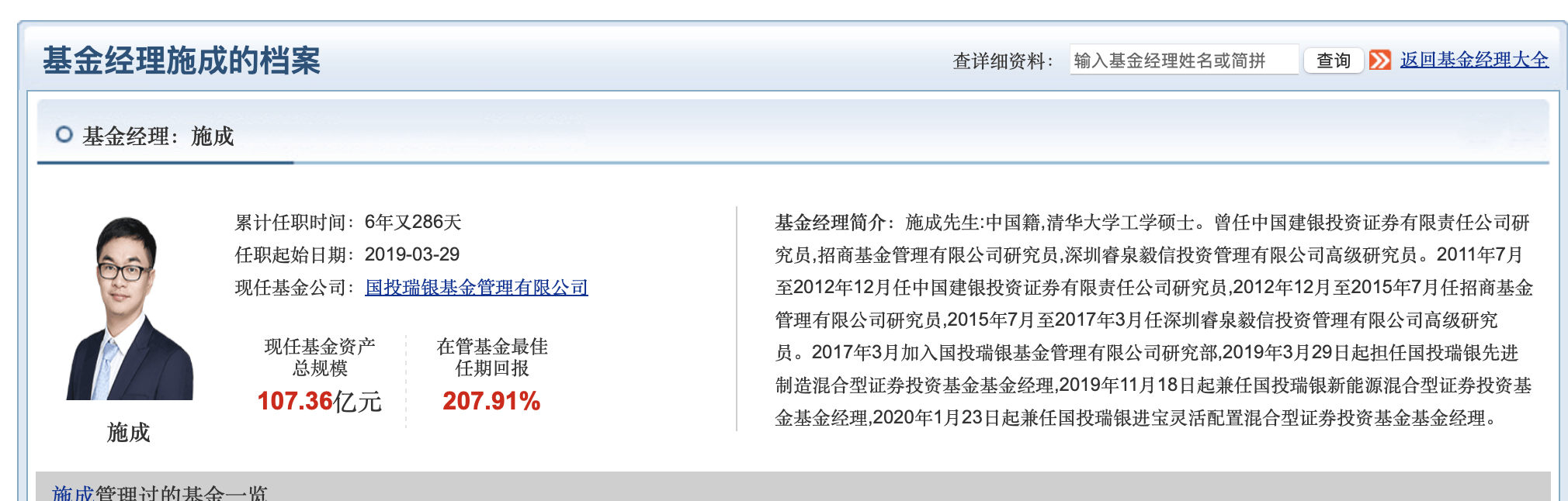
Core Viewpoint - The article discusses a legal dispute involving Guotou Ruijin Fund and its star fund manager Shi Cheng, focusing on the implications of investment style drift and potential breaches of contract in the context of financial advisory agreements [1][4]. Group 1: Legal Dispute Overview - Guotou Ruijin Fund is facing a lawsuit initiated by investor Li Zhihua over a financial advisory contract dispute, with the court date set for January 13 [1]. - The core issue revolves around whether Shi Cheng's shift in investment strategy constitutes a breach of contract or a legitimate market-driven adjustment [1][5]. Group 2: Investment Strategy and Performance - Shi Cheng initially gained significant returns by heavily investing in the renewable energy sector from 2020 to 2021, but faced substantial losses as the sector declined in 2022 due to oversupply and price wars [4]. - In response to losses, Shi Cheng shifted his focus to AI and robotics, which has reportedly yielded positive results for the funds under his management [4]. Group 3: Compliance and Contractual Obligations - There are concerns regarding Shi Cheng's adherence to the investment constraints outlined in the fund contracts, particularly regarding the proportion of investments in renewable energy [5][8]. - For instance, the Guotou Ruijin New Energy Mixed Fund was required to invest at least 80% of its non-cash assets in renewable energy-related securities, yet its reported holdings fell significantly below this threshold [5]. Group 4: Additional Controversies - The funds also faced scrutiny for exceeding the stipulated limits on Hong Kong Stock Connect investments, with reported holdings surpassing the 50% cap in several products [7]. - The legal complexities include determining the boundaries of "breach" and "fault," particularly in relation to how investment categories are defined and the impact of market risks on investor losses [8].

死扛还是割肉?亏了20%的基金,我该怎么办?
雪球· 2025-12-30 08:39
Core Viewpoint - The article discusses the three main scenarios of fund losses and provides guidance on whether to hold or sell under different circumstances, emphasizing the importance of understanding the root causes of losses and the long-term logic of industries [7][10][28]. Group 1: Market Conditions - The first scenario of fund losses occurs when the entire market is declining, which is referred to as systematic risk. This type of risk is unpredictable and unavoidable, as seen during the 2008 financial crisis when the market dropped by 60% [10][12][13]. - The market experiences cyclical changes, transitioning from prosperity to recession and back to prosperity, indicating that economic recovery and market confidence will eventually return [15][16]. Group 2: Industry-Specific Issues - The second scenario involves specific industries or themes experiencing downturns. For instance, the photovoltaic industry faced a downturn from 2021 to 2023 due to rapid capacity expansion, but demand remains, suggesting that holding onto investments may be wise if the long-term logic of the industry hasn't changed [18][22][25]. - Investors should assess whether the fundamental logic of the industry has shifted before deciding to sell [27]. Group 3: Fund Management Problems - The third scenario, which requires the most caution, is when the fund manager's management leads to losses. Key indicators include: 1. Long-term performance significantly underperforming peers, necessitating a review over a complete market cycle [30][31]. 2. A shift in investment style, where a fund manager deviates from their stated strategy, indicating a potential gamble rather than a sound investment approach [33]. 3. Departure of a key fund manager, which can lead to a decline in performance if the fund's success was heavily reliant on that individual [36]. Group 4: Risk Management Strategies - The article suggests that while temporary losses are normal, understanding their causes is crucial for effective management. It highlights the human tendency to react emotionally when losses exceed 20% [39]. - To mitigate risks during market downturns, diversifying across different asset classes such as stocks, bonds, and commodities can help reduce overall risk, as these assets often have low correlation [44][50]. - Although diversification may dilute potential gains during strong bull markets, it is presented as a suitable investment strategy for ordinary investors seeking to minimize volatility [52].

金信智能中国2025跑输大盘20%:“智能主题”基金却重仓银行,三季度踏空行情
Feng Huang Wang Cai Jing· 2025-10-22 12:58
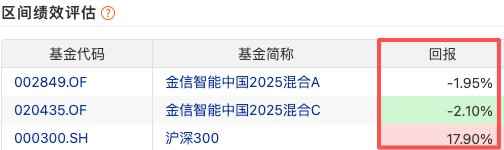
Core Viewpoint - The phenomenon of investment style drift is evident in the third-quarter report of the Jinxin Fund's Intelligent China 2025 Flexible Allocation Mixed Fund, which, despite its stated investment goal of focusing on intelligent enterprises, has heavily invested in traditional financial stocks, leading to poor performance and significant underperformance compared to peers [1][10]. Fund Performance - Jinxin Intelligent China 2025 Mixed Fund reported returns of -1.95% for Class A and -2.10% for Class C in the third quarter, while the benchmark return was 12.19%, and the CSI 300 index rose by 17.90%, indicating a nearly 20% underperformance against the index [2][3]. - Year-to-date performance as of October 21 shows Class A with a return of 14.90%, ranking 1417 out of 2303 similar products, and a six-month return of 11.87%, lagging the CSI 300 by nearly 10 percentage points [4][5]. Investment Strategy and Holdings - The fund's investment objective is to focus on enterprises providing intelligent production, design, and services, including sectors like smart machinery and smart healthcare [6]. - However, the top ten holdings for the third quarter were entirely traditional financial stocks, including major banks such as Industrial and Commercial Bank of China and China Construction Bank, indicating a significant deviation from its stated investment strategy [8][10]. Investor Sentiment - Investors have expressed concerns regarding the fund's strategy, questioning the rationale behind its heavy allocation to traditional financial stocks instead of intelligent enterprises, leading to skepticism about the fund's alignment with its stated goals [11][13]. Regulatory and Market Implications - The drift in investment style raises compliance concerns, as frequent style changes can mislead investors regarding the product's risk profile, potentially leading to greater scrutiny and pressure on the fund's future performance [14].






金信智能中国2025跑输大盘20%:“智能主题”基金却重仓银行,三季度踏空行情
凤凰网财经· 2025-10-22 12:48
Core Viewpoint - The article highlights the phenomenon of style drift in public funds, specifically focusing on the Jin Xin Fund's "Intelligent China 2025" mixed fund, which has deviated from its stated investment goal of focusing on intelligent enterprises by heavily investing in traditional financial stocks, resulting in poor performance compared to the market [3][4][11]. Group 1: Fund Performance - Jin Xin Intelligent China 2025 mixed fund reported a negative return of -1.95% and -2.10% for its A and C shares respectively in Q3, significantly underperforming the benchmark return of 12.19% and the CSI 300 index which rose by 17.90%, leading to a performance gap of nearly 20% [4][5]. - Year-to-date performance as of October 21 shows the fund's A shares with a return of 14.90%, ranking 1417 out of 2303 similar products, indicating a mid-to-low tier performance [6][7]. - The fund's total management scale decreased by 25.7% from 7.59 billion to 5.64 billion yuan in Q3 [6]. Group 2: Investment Strategy and Holdings - The fund's stated investment objective is to focus on enterprises providing intelligent production, design, and services, including sectors like smart machines and smart healthcare [8]. - However, the top ten holdings in Q3 were entirely traditional financial stocks, including major banks like ICBC and Ping An Bank, indicating a significant deviation from its stated investment strategy [9][10]. - The fund's historical trend shows a consistent increase in bank stock holdings since 2017, with at least 8 out of the top 10 holdings being bank stocks since 2018, demonstrating a long-standing style drift [11]. Group 3: Investor Sentiment and Concerns - Investors have expressed concerns regarding the fund's management and investment strategy, questioning the rationale behind the heavy allocation to traditional financial stocks despite the fund's focus on intelligent enterprises [12][15]. - The fund managers acknowledged the market volatility in Q3 but maintained that their strategy focused on the financial services sector's intelligence, which contrasts sharply with their actual stock selections [14][15]. - The article notes that frequent style shifts can lead to confusion among investors regarding the fund's positioning, potentially misleading them about the risk profile of the product [15].