接班人计划

Search documents
首富再入凡尘
创业家· 2026-02-01 10:42
Core Viewpoint - The article discusses the return of Zhang Yong as CEO of Haidilao, highlighting the challenges and strategies the company faces in a changing market environment, as well as the new leadership dynamics within the organization [10][25]. Group 1: Zhang Yong's Leadership Transition - Zhang Yong announced a ten-year succession plan in April 2020, expressing concerns about his ability to keep up with the company's growth and the need for a new leader [11][12]. - In March 2022, Zhang officially stepped down as CEO, with Yang Lijuan taking over, but the company faced significant financial losses, including a nearly 90% drop in net profit in 2020 and a loss of 4.136 billion yuan in 2021 [12][13]. - By early 2022, Haidilao's market value plummeted from 430 billion HKD to below 100 billion HKD, prompting Zhang to take responsibility for the company's direction [13][12]. Group 2: Financial Performance and Strategic Plans - The "Red Pomegranate Plan" aims to diversify Haidilao from a single hotpot brand into a multi-category restaurant group, leveraging its supply chain and management experience [15][20]. - Despite efforts to stabilize the company, recent financial reports indicate a decline in revenue, with a 3.66% drop in H1 2025 revenue compared to H1 2024, and a 9% decrease in core restaurant income [20][22]. - The company is facing challenges in maintaining profitability, with net profits decreasing for two consecutive years, indicating that previous cost-cutting measures may have reached their limits [20][22]. Group 3: Market Challenges and Brand Identity - The restaurant market has shifted, and the once-celebrated "Haidilao experience" is now seen as a product of a bygone era, struggling to adapt to a more competitive landscape [23][24]. - The company's service model, which relies heavily on high levels of customer service, is becoming less sustainable in a market that is increasingly saturated with competitors [23][24]. - Zhang Yong's return to the CEO position is seen as a move to regain control and address the operational challenges that have emerged during his absence [15][19]. Group 4: New Leadership Dynamics - Alongside Zhang Yong's return, four new female board members have been appointed, indicating a strategic shift towards a more diverse leadership team [25][26]. - These new leaders have extensive experience within Haidilao and are expected to help implement Zhang's vision while addressing operational challenges directly [25][27]. - The new leadership structure aims to enhance communication and execution of strategies across the company's extensive network of restaurants [27].

暂缓退休,张勇重回海底捞“救场”?
Sou Hu Cai Jing· 2026-01-15 11:14
Core Viewpoint - The return of Zhang Yong as CEO of Haidilao is a strategic move to address the company's current growth challenges and to implement a significant management restructuring, which has been positively received by the market, as evidenced by a stock price increase of over 10% on the announcement day [2][5][11]. Group 1: Management Changes - Zhang Yong has officially resumed his role as CEO, replacing Guo Yiqun, who will now focus on the automation and intelligence planning of the group's management processes [3]. - The board of directors has undergone a significant transformation, with four young female executives appointed as new executive directors, indicating a shift towards a younger leadership team [6][12]. Group 2: Strategic Context - Zhang Yong's return is interpreted as a decisive response to Haidilao's current growth bottlenecks, with the company facing declining revenue and increased competition in the hot pot industry [5][11]. - The company has experienced a decline in key performance indicators, including a 3.7% drop in revenue and a 13.7% decrease in net profit in the first half of 2025 [9]. Group 3: Future Plans and Leadership Development - The "Founder Plan" initiated by Zhang Yong in 2020 aimed to gradually withdraw from daily management while establishing a systematic talent selection and training framework [7]. - The recent changes are seen as a pathway to the "succession plan," with younger leaders being groomed for future leadership roles, while Zhang Yong's return serves as a transitional phase to guide them [18].

巴菲特交棒:“股神”如何“赌眼光、赌时机、赌人性”?
3 6 Ke· 2025-05-08 09:33
Core Insights - Warren Buffett announced his resignation as CEO of Berkshire Hathaway, with Greg Abel set to take over by the end of the year, marking a significant transition for the company valued over $1 trillion [3][4] - The transition is seen as a meticulously planned succession rather than a sudden change, reflecting Buffett's long-term strategy for leadership handover [4][19] - Buffett emphasized the importance of organizational culture and decentralized management, which has been a hallmark of Berkshire's operational philosophy [5][10] Group 1 - Buffett's decision to appoint Abel is based on a 26-year preparation process, highlighting Abel's journey from regional power company manager to a key player in Berkshire's non-insurance empire [4][8] - Abel has demonstrated strong performance in various roles, including leading Berkshire Energy, where revenues grew by 300% under his leadership [5][8] - The management structure at Berkshire, characterized by minimal central oversight and independent subsidiary operations, will continue under Abel's leadership, reinforcing the company's decentralized approach [5][10] Group 2 - Abel's low-profile demeanor contrasts with typical high-profile executives, yet his consistent performance and alignment with Berkshire's values made him Buffett's choice for succession [6][10] - The succession plan is not merely about finding a capable individual but involves a systematic approach to ensure cultural continuity and organizational stability [19][31] - Buffett's strategy includes a "dual-track" mechanism, allowing multiple potential successors to develop their skills over time, rather than rushing to a decision [20][21] Group 3 - The transition plan emphasizes the importance of cultural alignment over short-term performance metrics, with Abel embodying the values that Buffett prioritizes [28][30] - Buffett will retain a role as chairman post-resignation, ensuring a cultural buffer and continuity in the company's core values [27][31] - The succession is framed as a long-term organizational evolution rather than a quick fix, highlighting the need for sustained leadership and adaptability in changing market conditions [34][36]
特斯拉董事会启动“接班人计划” 马斯克职位或将易主?
Zhong Guo Xin Wen Wang· 2025-05-01 03:28
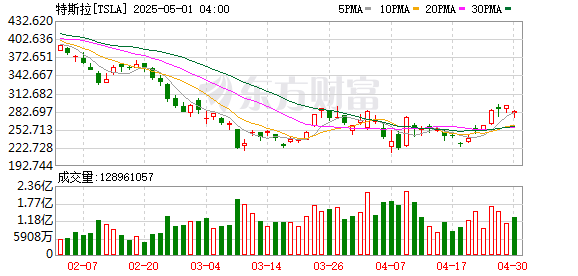
Core Viewpoint - Tesla's board has initiated the search for a new CEO, potentially ending Elon Musk's 20-year leadership amid concerns over the company's performance and stock price decline [2][4]. Group 1: CEO Transition - The board began considering a successor for Musk about a month ago due to falling stock prices and dissatisfaction among some investors [4]. - A well-known executive search firm has been selected by the board to assist in finding Musk's replacement, although the specific progress of this search is currently unclear [7]. - Musk has publicly committed to increasing his focus on Tesla, stating he will significantly reduce his time spent on government efficiency tasks [5][6]. Group 2: Financial Performance - Tesla's first-quarter profit plummeted by 71%, contributing to the board's decision to seek a new CEO [4]. - Following the news of the potential CEO change, Tesla's stock price fell by 3.38% on April 30 [3]. Group 3: Board Dynamics - The board is planning to add an independent director, and some members have been meeting with key investors to reassure them about the company's operational stability [7].