数字政府

Search documents
警报!智慧监管新规来袭,无“数据直连”仪器,或将面临淘汰
仪器信息网· 2026-02-27 09:05
Core Viewpoint - The article discusses the release of the "Action Plan for Enhancing Smart Supervision Capabilities in Inspection and Testing" by the State Administration for Market Regulation, aimed at addressing data silos and promoting digital transformation in the industry, which is beneficial for the scientific instruments sector [1][2]. Group 1: Development Goals - The plan outlines four specific development goals to be achieved by the end of 2027: 1. Establish a unified platform for inspection and testing supervision [5]. 2. Strengthen data foundations by standardizing national inspection and testing regulatory data [6]. 3. Promote digital empowerment through the creation of a unified coding verification system and an AI model for supervision [7]. 4. Encourage exemplary leadership by promoting the establishment of "lighthouse laboratories" to enhance smart governance capabilities [7]. Group 2: Benefits for Scientific Instruments - The initiatives mentioned in the plan are expected to significantly drive the growth of the scientific instruments industry, creating new market demands for testing and monitoring instruments. The requirement for inspection and testing agencies to enhance their information technology and digital capabilities will directly increase the demand for intelligent scientific instruments [8]. - The emphasis on standardizing national inspection and testing regulatory data will compel scientific instrument manufacturers to unify data interfaces and format standards, facilitating a shift from "instrument silos" to interconnected systems, thus creating market opportunities for digital solutions like Laboratory Information Management Systems (LIMS) [8]. - The promotion of "AI + inspection" scenarios will foster the development of intelligent detection equipment, including machine vision, AI image recognition, and automated testing devices [8]. - The need for instruments to support IoT functionalities for real-time data upload and remote quality control will be crucial for achieving the "one code for all" traceability verification [8]. - The encouragement to create "lighthouse laboratories" will push inspection and testing agencies towards high-end and intelligent transformations, raising the performance and reliability standards for scientific instruments [9]. Group 3: Summary - Overall, the introduction of the "Action Plan for Enhancing Smart Supervision Capabilities in Inspection and Testing" represents not only an upgrade in regulatory methods but also acts as a catalyst for the digital transformation of the entire inspection and testing industry chain. Companies in the scientific instruments sector need to seize this opportunity to accelerate the process of product intelligence and standardization, transitioning from mere equipment suppliers to data service providers and solution providers [10].


我省扎实推进水利水电移民搬迁安置工作
Xin Lang Cai Jing· 2026-02-19 20:57
Core Insights - The province has successfully completed the resettlement of 3,386 people and invested 7.809 billion yuan in migration projects last year, contributing to the establishment of a strong green energy province and the implementation of the "Xing Shui Run Dian" project [1] Group 1: Migration Resettlement Progress - The province is actively promoting the resettlement of migrants related to major hydropower projects, including the Xulong, Toba, and central Yunnan water diversion projects [1] - The province has initiated preparatory work for resettlement related to several large and medium-sized hydropower projects, ensuring that key projects receive approval [1] Group 2: Support for Migrants - The province has reported an increase in post-resettlement support for 2,425 additional people, with three key projects submitted for support from the Ministry of Water Resources and an additional funding of 149 million yuan [1] - A total of 332 new projects have been implemented focusing on ecological livability and industrial development, with 451 individuals receiving vocational education guidance [1] Group 3: Addressing Legacy Issues - The province is effectively advancing the planning and adjustment of resettlement for the four stations downstream of the Jinsha River, achieving significant progress in geological disaster management [2] - Compensation agreements have been established with hydropower project entities to ensure timely disbursement of compensation funds, with 501,600 disbursements expected by 2025 [2] Group 4: Digital and Smart Management - The province is enhancing digital governance and project management through the implementation of "Digital Yunnan" initiatives, optimizing the functionality of various platforms [2] - The province is exploring the application of AI in the resettlement sector and has developed guidelines for digital twin technology in migration management, positioning itself as a leader in the industry [2]
嘉兴财政票据 电子化率达100%
Xin Lang Cai Jing· 2026-02-15 00:02
Core Viewpoint - The implementation of electronic invoices in rural areas of Jiaxing has significantly improved efficiency in financial management and service delivery, reducing reliance on paper-based systems and enhancing accessibility for residents [1][2][3]. Group 1: Electronic Invoice Reform - Jiaxing has initiated a village collective invoice reform, transitioning from paper-based financial vouchers to electronic invoices, which allows for easier retrieval and management of financial records [1][2]. - The electronic invoice system has established a closed-loop regulatory mechanism that connects various financial processes, enabling one-click invoicing and real-time accounting for village officials [2][3]. - As of July 2023, the electronic invoice system has been expanded to cover 858 village economic cooperatives in Jiaxing, with a total of 460,000 invoices issued, amounting to 631 billion [2]. Group 2: Impact on Public Services - The digital transformation of financial invoices is part of a broader initiative to enhance public services in various sectors, including education, healthcare, and public donations, thereby promoting a more efficient and transparent governance model [3][4]. - In the healthcare sector, the implementation of electronic invoices has streamlined processes, allowing for real-time access to billing information and significantly reducing reimbursement times from 12 days to just a few minutes [4]. - The electronic invoice system has also been extended to the public donation sector, providing automated tax deduction services and facilitating charitable activities, which has resulted in substantial tax savings for businesses [6]. Group 3: Future Goals and Projections - By the end of 2025, Jiaxing aims to achieve a 100% electronic invoice rate across all public services, with a projected total of 84.63 million invoices issued, amounting to 1.468 trillion [6]. - The comprehensive adoption of electronic invoices is expected to enhance the efficiency of 3,203 administrative and social organizations, benefiting the local population through improved public service delivery [6].
聚焦科技创新等领域,山东审计机关着力发挥经济运行“探头”作用
Qi Lu Wan Bao· 2026-02-10 09:05
Core Viewpoint - The Shandong Provincial Audit Office is focusing on enhancing audit supervision in key areas such as technological innovation, digital government, and financial risk management to support high-quality economic development by 2026 [3][4]. Group 1: Technological Innovation - The audit office will conduct audits on the implementation of technological innovation policies and the performance of funding, aiming to identify bottlenecks and challenges in the innovation process [3]. - The goal is to improve the overall effectiveness of the innovation system and foster new growth drivers through systematic rectification and institutional development [3]. Group 2: Digital Government - The audit office plans to focus on the "Digital Strong Province" strategy by auditing the construction of digital government, emphasizing policy implementation, project lifecycle management, and data security [4]. - This initiative aims to enhance the efficiency of government operations and public services, ensuring the successful execution of the digital governance strategy [4]. Group 3: Financial Sector - The audit office will strengthen supervision of local financial institutions to better serve the real economy and mitigate financial risks [4]. - Specific audits will be conducted on rural commercial banks to assess asset quality and risk management, while also evaluating the technological governance of urban commercial banks to prevent systemic financial risks [4].
连续8年,临沂测绘地理信息工作再获表彰
Qi Lu Wan Bao· 2026-02-10 05:48
Core Insights - The Shandong Provincial Natural Resources Department announced the comprehensive evaluation of the geographic information public service platform for 2025, with Linyi ranking first for the eighth consecutive year [1] Group 1: Achievements in Geographic Information Services - Linyi has successfully completed national pilot projects and built a city-level high-precision three-dimensional model, providing support for digital government and smart city initiatives [1] - The city has established a comprehensive geographic base map dataset and has been a pioneer in the transformation of the geographic information public service platform [1] - Linyi has updated and integrated various data types, becoming the first in the province to complete updates on housing, place names, road traffic, three-dimensional scenes, and administrative villages [1] Group 2: Future Plans and Innovations - The city plans to enhance coordination among provincial, municipal, and county levels for business operations and data updates, aiming to improve data quality and coverage [2] - Linyi is focused on promoting the application of surveying and mapping results to support high-quality development across the city [2] - The city is also involved in the integration and intelligent application of drone resources to support urban planning and emergency management scenarios [1]
南威软件股份有限公司关于持股5%以上股东减持股份计划的公告
Shang Hai Zheng Quan Bao· 2026-01-20 18:46
Group 1 - The core point of the announcement is that Tianjin Qizhong Shiyuan Enterprise Management Partnership (Limited Partnership) plans to reduce its shareholding in Nanwei Software Co., Ltd. due to its own funding needs, intending to sell up to 5,803,605 shares, which is approximately 1% of the company's total share capital [2][3][4] Group 2 - As of the announcement date, Qizhong Shiyuan holds 33,952,000 shares, accounting for 5.8502% of the total share capital of the company [2] - The reduction period is set to begin 15 trading days after the announcement and will last for three months, with a limit of no more than 1% of the total share capital being sold within any consecutive 90-day period [3][5] - The company confirms that there are no other arrangements from the shareholder regarding the reduction plan [6] Group 3 - The company has issued a performance forecast indicating a projected net loss for the year 2025, estimating a net profit attributable to shareholders of between -456 million and -380 million yuan [11][12] - The company anticipates a net profit, excluding non-recurring gains and losses, to be between -472 million and -396 million yuan [11][12] - The expected impairment provisions amount to approximately 220 million yuan, which is an increase of about 143 million yuan compared to the previous year [12][13] Group 4 - Despite the anticipated losses, the company has seen a year-on-year increase in revenue from its G-end main business, although profit margins have declined [13] - The company is actively pursuing AI transformation and business restructuring, aiming to establish a strong market presence in the digital government sector [14] - The company has achieved significant cash inflow from operating activities, exceeding 400 million yuan, marking a historical high [13][14]

黄南以系列活动助推对外合作交流
Xin Lang Cai Jing· 2026-01-16 18:01
Group 1 - The core viewpoint of the article highlights the launch of a series of events in Chengdu aimed at promoting the sales of organic agricultural and livestock products from Tongren, marking the beginning of Huangnan Prefecture's "14th Five-Year Plan" for external cooperation and exchange [1] - Huangnan Prefecture aims to enhance external cooperation and exchange by aligning with the market demands of developed regions in central and western China, integrating into the construction of the Lanxi urban agglomeration, and promoting the efficient flow of resources across regions [1] - The prefecture plans to cultivate outward-oriented enterprises and promote unique products such as yak and Tibetan sheep, as well as Hotog Art, to expand multi-field cooperation and enhance Huangnan's visibility and influence [1] Group 2 - Huangnan Prefecture will implement a negative list for market access in line with the national unified market, advance the 5.0 version of Qinghai's business environment reform, and establish a four-tier government service system [2] - The focus will be on promoting the construction of a digital government and upgrading the business environment [2]
上线46项“高效办成一件事” 惠及企业群众办事5.89亿件次 打造具有河南辨识度的政务服务
He Nan Ri Bao· 2026-01-14 23:25
Group 1 - The core focus of the meeting is to summarize the work of administrative approval and government information management for 2025 and plan for the "15th Five-Year" development goals, with an emphasis on enhancing digital government construction and improving government service efficiency [1][2] - A total of 46 "one-stop" services have been implemented, benefiting 5.89 billion instances of service for enterprises and the public, with 44,000 enterprises enjoying policy benefits amounting to 2.7 billion [1] - The "1+2+4+N" target task system is proposed to deepen integration into the national unified market, focusing on data empowerment and convenience for enterprises and the public [2] Group 2 - Eight key actions will be implemented, including enhancing the "one-stop" service model to reduce the burden on public users and improve efficiency for government staff [3] - The digital government construction will aim for a national top-tier status through a three-year concentrated effort, enhancing service capabilities via cloud-network integration and optimizing public application functions [3] - A comprehensive security protection system will be established, embedding security logic into all aspects of digital government management, based on a zero-trust defense framework [3]
柬推出数字化框架,增强公共投资效力
Shang Wu Bu Wang Zhan· 2026-01-12 16:54
Group 1 - The Cambodian Ministry of Economy and Finance has launched a digital ecosystem framework aimed at enhancing the management, transparency, and efficiency of public investment projects in Cambodia, marking a significant step towards modernizing public investment governance through digital transformation [1] - The new framework provides strategic direction and a clear blueprint for constructing an integrated digital ecosystem for national public investment project management, addressing long-standing issues such as data fragmentation, reporting gaps, and insufficient analytical capabilities [1] - The framework aligns with key national policy tools, including the "Digital Economy and Society Policy Framework 2021-2035," the "First Phase of the Seventh Kingdom Government's Pentagon Strategy," and the "Public Investment Management System Reform Strategy" under the Public Financial Management Reform Program [1] Group 2 - The Deputy Prime Minister and Minister of Economy and Finance, Aun Pornmoniroth, emphasized the central role of public investment in Cambodia's development trajectory, stating that it is a key driver of economic growth and sustainable development [2] - The government has initiated a comprehensive public investment management system reform strategy under the public financial management reform framework, aimed at improving efficiency, transparency, and accountability while ensuring that investments flow to priority areas [2] - A digital ecosystem design framework is necessary to guide the modernization of public investment project management through a fully digital system, reflecting Cambodia's broader commitment to digital governance and institutional reform [2]
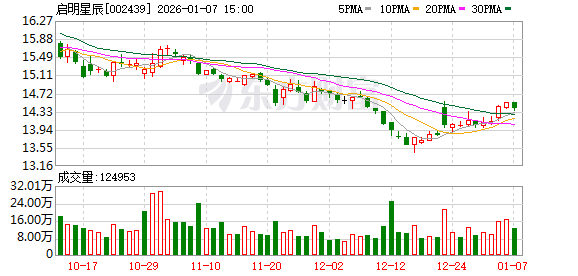
启明星辰:公司与环天智慧是紧密的合作伙伴
Zheng Quan Ri Bao· 2026-01-07 13:45
Core Viewpoint - The company Qiming Star is closely collaborating with HuanTian Wisdom, holding a small stake in the latter, focusing on security technology research and business cooperation in areas such as commercial satellite applications and smart governance [2] Group 1 - Qiming Star and HuanTian Wisdom are partners in security technology research [2] - The collaboration includes fields like satellite communication security and digital government [2] - Future development plans of HuanTian Wisdom are part of its own strategic planning [2]